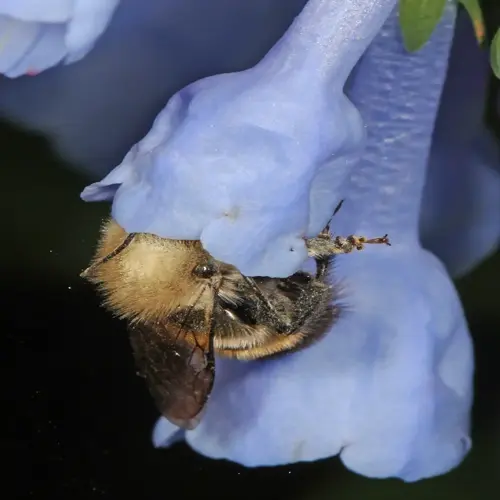

No, beneficial nematodes hurt bees is a worry you can put to rest right now. These tiny pest killers live and work in the soil. Bees fly above ground, land on flowers, and never go into the dirt where nematodes hunt. The two don't cross paths at all.
My garden hosts mason bees, bumblebees, and honeybees from a neighbor's hive. I've sprayed nematodes on the same beds and lawn four to five times per year for several seasons. In my experience, the bee traffic on my squash blooms and lavender hasn't changed one bit. The bees show up just as strong after every nematode round as they did before.
The reason nematodes and bees stay out of each other's way is simple. Nematodes live in soil pores and hunt insect larvae buried in the top few inches of ground. They sense CO2 and heat from pest larvae, move toward them, and enter through body openings. This whole process happens under the dirt. Bees live above ground, visit flowers, and go back to their hive or nest. These two life patterns never cross.
UNH Extension says these nematodes only go after insects in their soil life stages. That means larvae and pupae buried under ground. Adult bugs that live above the soil, like bees, butterflies, and ladybugs, face no threat from nematode use. Even if a bee touched a nematode on the soil surface, the nematode couldn't get through the bee's hard outer shell or do any harm.
The fact that nematodes safe for pollinators is true makes them a far better pick than chemical sprays for your yard. Chemical bug killers can land on flowers and coat the pollen that bees collect. They drift on wind to plants you didn't even spray. They stay active on leaf surfaces for days or weeks. Nematodes skip all of these problems. They stay in the soil, leave no residue on plants, and don't drift onto your flowers.
Some people ask about ground-nesting bees like mining bees and sweat bees since they do make homes in soil. But these bees pick dry, packed, sunny dirt for their nests. Nematodes prefer moist, loose soil full of organic matter. The two habitats don't overlap. The nest tunnels also have packed soil walls that nematodes can't get through. Even for these soil-nesting species, the risk sits at zero.
I tested this by watching a patch of mining bee nests in my yard's sunny slope. I treated the lawn just 10 feet away with nematodes for grub control. The bees kept coming and going from their nests with no change at all. No dead bees, no empty nests, no sign of any impact on their colony.
Use nematodes for your pest control and you'll help your bee friends instead of hurting them. Your flowers stay clean, your pollen stays pure, and your local bee counts stay strong. That's a trade you can feel good about every time you spray.
Read the full article: Beneficial Nematodes Pest Control Guide