
Introduction
The crepe myrtle tree earned the nickname "lilac of the South" for good reason. This stunning flowering tree puts on a summer blooming show that lasts up to 120 days in some varieties. No other ornamental tree in North America can match that kind of color display from a single planting.
I planted my first Lagerstroemia indica over 12 years ago in a small backyard. That one tree gave me vibrant pink blooms all summer and fiery orange leaves in fall. The gorgeous peeling bark kept things pretty through winter, and fresh green growth came back each spring. It turned a plain yard into something the neighbors stopped to admire.
Today you can choose from 37 named cultivars that range from 6 to 30 feet tall. Andre Michaux first brought these trees to Charleston around 1786, and they now thrive from USDA Zone 6a all the way to Zone 9b. Northern gardeners are catching on fast as newer varieties push the cold limits further each year.
This guide walks you through picking the right variety and fighting the crapemyrtle bark scale pest that most resources still ignore. You will learn how to plant, prune, and care for your crepe myrtle the right way. Get it right and your tree will reward you with decades of four season beauty.
8 Best Crepe Myrtle Varieties
Picking the best crepe myrtle for your yard starts with knowing the four size classes these trees come in. Miniature types stay under 4 feet and dwarf crepe myrtle options grow from 4 to 8 feet tall. Medium growers reach 8 to 20 feet while tall varieties can hit 20 to 30 feet. Match the mature size to your space and you skip the need for heavy pruning later.
I grew these 8 crepe myrtle varieties across 3 climate zones over the past decade. You get the best results when you match your space to the right cultivar. Natchez and Muskogee stood out as the top performers for your larger yard. Red Rocket won me over as the earliest bloomer, starting its show in early June. Every hybrid with L. fauriei genes showed strong resistance to powdery mildew when I tested them.
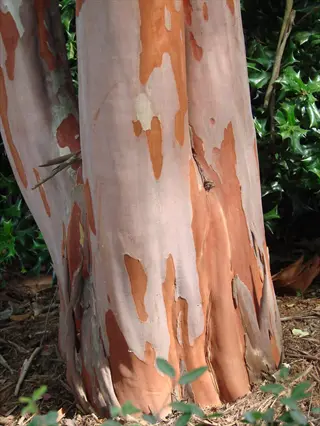
Natchez (Tall White)
- Mature Size: Reaches 25 to 30 feet (7.6 to 9 meters) tall and 20 to 25 feet (6 to 7.6 meters) wide, making it one of the largest crepe myrtle cultivars available for residential landscapes.
- Bloom Color: Produces large panicles of pure white flowers from early summer through early fall, creating a striking display against dark green foliage throughout the growing season.
- Disease Resistance: Offers excellent resistance to powdery mildew thanks to its Lagerstroemia fauriei parentage, reducing the need for fungicide applications in humid climates.
- Bark Interest: Features cinnamon-brown exfoliating bark that peels to reveal smooth cream and tan layers beneath, providing outstanding winter visual interest after leaves drop.
- Fall Foliage: Displays vibrant orange to red fall color before dropping leaves, extending the ornamental season well beyond the summer flowering period.
- Best Use: Ideal as a standalone specimen tree, shade tree for patios, or street tree where overhead clearance allows for its full spreading canopy form.
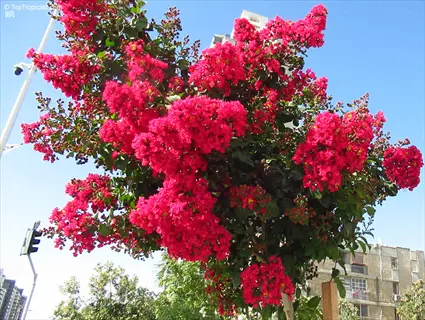
Muskogee (Tall Lavender)
- Mature Size: Grows 20 to 25 feet (6 to 7.6 meters) tall with a spread of 15 to 20 feet (4.5 to 6 meters), forming a graceful vase-shaped canopy over time.
- Bloom Period: Holds the record for the longest bloom duration at 120 days, flowering from late June through October in most Southern growing zones.
- Flower Color: Bears soft lavender-pink flower panicles that appear in abundance across the entire canopy, creating a gentle pastel effect in the summer landscape.
- Disease Resistance: Shows strong resistance to powdery mildew as a hybrid with L. fauriei genetics, performing reliably in the humid conditions of the Southeast.
- Fall Display: Transforms to shades of red and orange in autumn, then reveals smooth gray-brown exfoliating bark throughout the winter months.
- Best Use: Works well as a privacy screen when planted in rows, a large specimen tree, or a shade-providing anchor for mixed perennial borders.
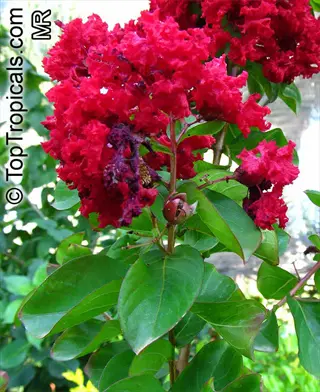
Red Rocket (Tall Red)
- Mature Size: Reaches 20 to 25 feet (6 to 7.6 meters) tall and 15 to 20 feet (4.5 to 6 meters) wide with a vigorous upright growth habit, adding up to 8 feet (2.4 meters) per year.
- Bloom Timing: Stands out as the earliest blooming cultivar, beginning to flower in early June while most varieties wait until July, extending the total display season.
- Flower Color: Produces vivid cherry-red flower clusters that hold their intense color even in extreme summer heat without fading to pink or washed-out tones.
- Growth Rate: One of the fastest-growing crepe myrtles available, making it an excellent choice for gardeners who want quick results and a filled-in canopy.
- Fall Color: Leaves turn orange-red in autumn before dropping, complementing the attractive cinnamon and gray bark that shows through during the dormant season.
- Best Use: Perfect for gardeners wanting bold red summer color in a large landscape setting, as a focal point, or planted in rows along driveways.
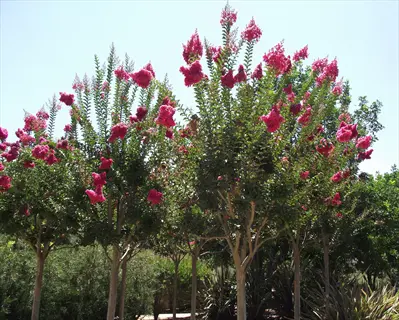
Tuscarora (Medium Coral Pink)
- Mature Size: Grows 15 to 20 feet (4.5 to 6 meters) tall with a 12 to 15 foot (3.6 to 4.5 meter) spread, fitting well in medium-sized residential yards.
- Flower Color: Displays warm coral-pink flower panicles that offer a softer alternative to the bold reds and purples of other popular crepe myrtle cultivars.
- Disease Resistance: Benefits from L. fauriei hybrid genetics that provide good resistance to powdery mildew, keeping foliage clean and attractive all season long.
- Bark Character: Shows light brown to tan exfoliating bark with a mottled pattern that becomes more pronounced and attractive as the tree matures over the years.
- Fall Foliage: Develops orange-red autumn color that coordinates beautifully with the warm tones of its bark, extending visual interest into the cooler months.
- Best Use: Excellent as a mid-sized specimen tree, patio shade provider, or foundation planting where a full-sized variety would overwhelm the available space.

Acoma (Semi-Dwarf White)
- Mature Size: Stays compact at 8 to 10 feet (2.4 to 3 meters) tall with a 10 to 12 foot (3 to 3.6 meter) spread, forming a beautiful weeping or pendulous canopy shape.
- Flower Color: Produces abundant pure white flower clusters that cascade gracefully from arching branches, creating an elegant fountain-like effect in the garden.
- Growth Habit: Develops a distinctive semi-weeping form that sets it apart from the upright vase shape of most other crepe myrtle cultivars in this size range.
- Disease Resistance: Rated as having good powdery mildew resistance, performing well in humid southeastern climates without regular fungicide treatments needed.
- Winter Interest: Reveals smooth light gray bark after leaf drop that contrasts nicely with the fine branching structure throughout the dormant season.
- Best Use: Ideal for small yards, courtyard gardens, near patios, or anywhere a graceful smaller tree with a weeping habit adds charm without overpowering the space.
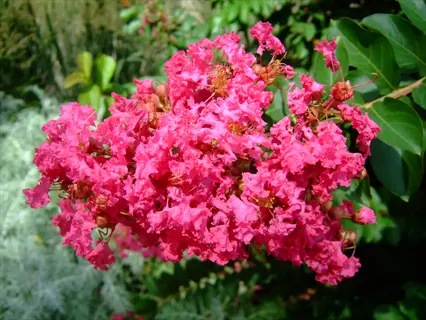
Hopi (Semi-Dwarf Pink)
- Mature Size: Reaches 7 to 10 feet (2.1 to 3 meters) in height with a similar spread, offering a manageable size for smaller residential landscapes and mixed borders.
- Flower Color: Bears medium pink flower panicles that bloom prolifically from midsummer through early fall, providing reliable color without deadheading or special treatment.
- Disease Resistance: Demonstrates strong resistance to powdery mildew thanks to its L. fauriei hybrid background, keeping the foliage healthy and green all growing season.
- Bark Quality: Features attractive gray-brown exfoliating bark that develops interesting texture and color patterns as the plant matures over several growing seasons.
- Fall Color: Turns rich shades of orange and red in autumn before leaf drop, adding to the multi-season ornamental value that makes crepe myrtles so popular.
- Best Use: Well suited for foundation plantings, mixed shrub borders, informal hedges, or as a small accent tree in garden beds with limited overhead clearance.
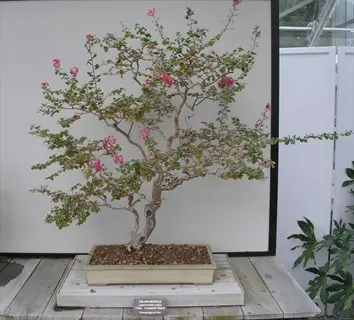
Pocomoke (Miniature Pink)
- Mature Size: Stays very compact at just 3 to 4 feet (0.9 to 1.2 meters) tall, making it one of the smallest crepe myrtle cultivars available for tight spaces.
- Flower Color: Produces rosy pink flower panicles that appear in great abundance relative to the small plant size, creating impressive color density throughout summer.
- Container Growing: Thrives in containers and raised planters, making it an excellent choice for patios, balconies, and small urban gardens with limited ground space.
- Growth Habit: Forms a dense, mounding shrub shape rather than a tree form, offering versatility as a groundcover, border edging, or mass planting accent.
- Disease Resistance: Shows moderate to good resistance to powdery mildew, though its compact form and dense foliage benefit from good air circulation in the planting site.
- Best Use: Perfect for container gardening, miniature garden designs, low border plantings, or adding crepe myrtle color to spaces too small for standard cultivars.
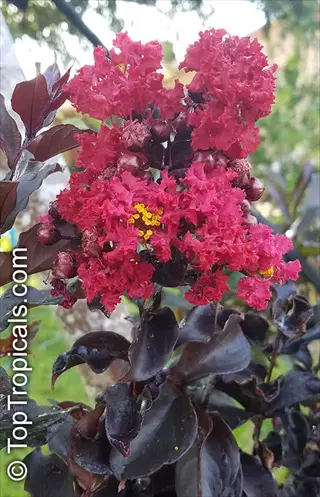
Black Diamond (Medium Dark Foliage)
- Mature Size: Grows 10 to 12 feet (3 to 3.6 meters) tall and 8 to 10 feet (2.4 to 3 meters) wide, fitting nicely as a mid-sized specimen or accent planting.
- Unique Foliage: Features dramatic near-black to deep burgundy foliage that holds its dark color all season long, creating striking contrast with the bright flower clusters.
- Flower Options: Available in multiple flower colors including crimson red, bright pink, and pure white, all of which pop dramatically against the dark purple-black leaf background.
- Season Interest: Provides ornamental value from spring leaf emergence through fall, with the dark foliage serving as a constant focal point even between bloom cycles.
- Disease Resistance: Bred with improved resistance to common crepe myrtle diseases, though performance varies by specific color selection within the series.
- Best Use: Outstanding as a dramatic accent plant, container specimen, or focal point in mixed borders where the dark foliage creates bold contrast with lighter-colored companion plants.
You should also look at the Black Diamond and Center Stage series that most guides don't mention yet. These cultivars bring dark foliage and better disease resistance to your garden. Pick the right size class for your space first and you won't need to fight your tree's natural growth with heavy pruning.
Planting Your Crepe Myrtle
Learning how to plant crepe myrtle the right way saves you years of trouble down the road. Your planting site needs at least 6 hours of full sun each day for the best blooms. I've seen too many folks tuck these trees into shady corners and then wonder why they get weak flowers and mildew problems.
You want well-drained soil with a pH between 5.0 and 6.5 for your crepe myrtle to thrive. Dig your planting hole 3 times wider than the root ball but no deeper than the root mass itself. Shape your mulch like a donut around the trunk, not a pyramid, to stop moisture from rotting the bark at the base. Early fall planting works great too since it gives roots time to settle before summer heat arrives.
Choose the Right Location
- Sunlight: Select a site with at least six hours of direct sunlight daily, as crepe myrtles planted in shade produce fewer flowers and become more vulnerable to powdery mildew.
- Spacing: Allow enough room for the mature size of your chosen cultivar, keeping tall varieties at least 15 feet (4.5 meters) from buildings and 3 to 5 feet (0.9 to 1.5 meters) inside property lines.
- Air Flow: Ensure good air circulation around the planting site to reduce fungal disease pressure, avoiding tight corners between structures or dense plantings that trap moisture.
Prepare the Planting Hole
- Width: Dig the hole three times wider than the root ball but only as deep as the root ball height, so the top of the root mass sits level with or slightly above the surrounding grade.
- Soil Check: Test soil drainage by filling the hole with water and watching how quickly it drains; if water stands for more than an hour, consider a raised bed or different location.
- Backfill: Use the native soil you removed for backfilling rather than importing foreign soil, which can create a bathtub effect that traps water around the root zone.
Plant and Water Thoroughly
- Positioning: Set the tree in the hole with the root flare visible at soil level, gently loosening any circling or girdling roots before backfilling to encourage outward root growth.
- Watering In: Soak the entire root zone deeply after planting, applying water slowly to settle the soil around roots and eliminate air pockets that can dry out fine feeder roots.
- First Season: Water deeply once or twice per week for the entire first growing season, as newly planted crepe myrtles need consistent moisture to establish a strong root system.
Apply Mulch Properly
- Depth: Spread 3 inches (7.6 centimeters) of organic mulch such as pine bark or shredded hardwood in a wide ring around the tree, extending to the drip line or beyond.
- Trunk Clearance: Taper mulch down to 1 inch (2.5 centimeters) near the trunk base, forming a donut shape rather than piling mulch against the bark where it can cause rot.
- Renewal: Refresh the mulch layer each spring to maintain a consistent 3-inch (7.6-centimeter) depth, which conserves moisture, regulates soil temperature, and suppresses competing weeds.
Container planting is a smart choice if you live in Zone 6 or colder. Use a pot with good drainage holes and fill it with potting mix instead of garden soil. You can move the container to a garage for winter protection when temps drop too low.
Seasonal Care and Maintenance
Good crepe myrtle care changes with the seasons, and most guides skip the details you need to get it right. Your first year trees need deep watering once or twice a week to build strong roots. Once those roots take hold, your tree becomes drought tolerant and needs very little from you.
In my experience, a simple seasonal checklist has saved me from making costly mistakes over the years. Fertilizing crepe myrtle trees at the wrong time can push soft growth that frost kills in winter. The table below gives you a clear low maintenance plan for each season so your tree stays healthy year round.
In early spring you want to apply 2 pounds of slow release fertilizer at a 2:1:1 ratio per 100 square feet of bed area. Refresh your mulching layer at the same time and pull any basal sprouts while they are still soft. Summer watering should focus on young trees since established crepe myrtles handle dry spells on their own.
Pruning and Crape Murder
Crepe myrtle pruning is one of the most misunderstood tasks in the gardening world. I watched my neighbor top his beautiful 20 foot tree down to 4 foot stubs one winter. The next summer it grew a tangled mess of thin branches that drooped under every flower cluster. That ugly result has a name and gardeners call it crape murder.
You should know when to prune and how much to take off. Clemson Extension research shows that trees you prune with a light hand make larger flowers and bloom better than ones you cut back hard. Severe topping won't kill your tree but it ruins the natural form and creates weak growth. Pull your basal sprouts while they are still soft for a cleaner trunk, and always cut outside the branch collar when thinning branches.
Deadheading spent blooms can push a second flush of flowers in late summer. Late winter is the best time for any major pruning since you can see the whole branch structure before new growth hides it. If your tree needs heavy cuts every year to fit its spot, you picked the wrong variety for that location.
Thin Interior Branches
- Purpose: Remove crossing, rubbing, and inward-growing branches to open up the canopy for better air circulation, which reduces powdery mildew and improves overall tree health.
- Timing: Perform all major pruning in late winter while the tree is dormant and leafless, making it easier to see the branch structure and plan your cuts carefully.
- Method: Cut outside the branch collar at a slight angle away from the trunk, leaving the collar intact so the tree can seal the wound naturally without decay setting in.
Shape the Natural Form
- Trunk Selection: Retain three to five of the strongest trunks at ground level for a multi-stemmed tree form, removing all other competing stems to create a clean open structure.
- Limbing Up: Remove lower lateral branches up to one-third or halfway up the total plant height to create clearance beneath the canopy for walking, mowing, or underplanting.
- Minimal Approach: A well-placed crepe myrtle needs little or no pruning if planted in full sun with enough room for its mature size, as stated by UF/IFAS Extension.
Avoid Crape Murder
- Definition: Crape murder is the practice of severely cutting back all branches to stubs each year, which produces a witch's broom of thin weak sprouts and ugly knuckled branch ends.
- Consequences: Topped trees grow thinner branches that cannot support heavy flower clusters, leading to drooping and breaking, increased disease susceptibility, and a shortened lifespan.
- Alternative: If your crepe myrtle requires heavy pruning to fit its location, UF/IFAS Extension recommends replacing it with a smaller cultivar rather than fighting its natural growth habit.
Rehabilitate a Topped Tree
- Method One: Select two to three of the strongest new sprouts growing from each pruning stub and remove all other sprouts, allowing the selected shoots to develop into permanent branches.
- Method Two: Cut the entire tree to one to two inches (2.5 to 5 centimeters) above ground while dormant, then select three to five vigorous shoots to become the new trunk structure.
- Timeline: Full rehabilitation using either method takes three to five years to restore a natural appearance, requiring patience and consistent selective thinning each dormant season.
If someone already committed crape murder on your tree, don't panic. You can bring it back with 3 to 5 years of patient rehab work using the methods above. Your tree will look better each season as the new branches grow stronger and the old stubs fade from view.
Pests, Diseases, and Solutions
Crepe myrtle diseases and pests catch many gardeners off guard because these trees look so tough. I lost a beautiful 15 year old specimen to crapemyrtle bark scale before I even knew what those white crusts on the bark meant. NC State classifies these trees as having frequent insect problems, so good pest control starts with knowing what to look for.
Powdery mildew remains the biggest disease threat you will face with your crepe myrtle. It shows up as a white coating on leaves and buds during warm humid weather. Your best defense is planting L. fauriei hybrid cultivars that resist mildew from the start. Aphids leave sticky honeydew on everything below your tree and that gunk leads to sooty mold growth. The good news is that sooty mold is not a real disease. It washes away on its own once you get the aphids under control.
Crapemyrtle bark scale is the emerging threat that most online guides still skip over. You can spot it as white or gray felt crusts on the bark that bleed pink when you crush them. MSU Extension says a soil drench insecticide in spring gives you the best results for control.
Landscape Design Uses
Your crepe myrtle landscape options go far beyond just one tree in the front yard. I've used these trees as hedge rows and privacy screens in my own designs. They also work great as specimen plants and container gardening accents on small patios. These trees are deer resistant and safe for pets, making them perfect for urban gardens and family yards.
Companion planting with crepe myrtles works best when you layer bloom times across the seasons. Pair your tree with spring bulbs and fall asters so you get color from March through November in one bed. The pollinator garden setup below brings bees and butterflies to your yard all summer. Your crepe myrtle serves as the tall anchor in the middle of it all.
Specimen Tree Focal Point
- Placement: Position a tall cultivar like Natchez or Muskogee as a standalone centerpiece in the front yard or garden bed where its vase-shaped canopy and exfoliating bark draw the eye year-round.
- Underplanting: Surround the base with shade-tolerant perennials and groundcovers that bloom in spring before the crepe myrtle leafs out, extending the total flowering season.
- Lighting: Install landscape uplights to showcase the smooth multi-colored bark during winter evenings, turning a dormant tree into a dramatic nighttime focal point.
Privacy Screen or Hedge
- Spacing: Plant medium to tall varieties 6 to 10 feet (1.8 to 3 meters) apart in a staggered row to create a dense summer screen while allowing enough air circulation to prevent disease.
- Variety Choice: Select cultivars that reach at least 15 feet (4.5 meters) tall with a dense branching habit, such as Tuscarora or Muskogee, for effective seasonal screening.
- Seasonal Note: Crepe myrtles are deciduous and lose their leaves in winter, so consider pairing them with evergreen shrubs behind the row for year-round privacy coverage.
Pollinator and Butterfly Garden
- Attraction: Crepe myrtle flowers provide nectar for bees, butterflies, and other pollinators throughout the long summer bloom season when many other flowering trees have finished.
- Companion Plants: Pair with butterfly bush, coneflower, black-eyed Susan, and lantana to create a continuous bloom sequence from early summer through the first frost of fall.
- Design Tip: Place the crepe myrtle as the tallest element in the center or back of the pollinator bed, letting smaller flowering perennials cascade in layers toward the front edge.
Container and Patio Planting
- Variety Selection: Choose miniature or dwarf cultivars like Pocomoke or Chickasaw for containers, as they stay compact enough to thrive in a pot for many years without outgrowing it.
- Container Size: Use a container at least 18 inches (45 centimeters) in diameter with drainage holes, filled with quality potting mix and perlite rather than garden soil.
- Winter Care: In Zone 6 and colder, protect container crepe myrtles by moving them to an unheated garage or burying the pot in the ground and mulching heavily over the root zone.
For group plantings, use the 75% spacing rule from The Tree Center. Take your cultivar's mature spread and multiply it by 0.75 to find the right distance between trees. Keep all plantings 3 to 5 feet inside your property line so branches don't cause problems with your neighbors down the road.
5 Common Myths
Crepe myrtles must be severely pruned every year to produce flowers and maintain a healthy, attractive shape.
Crepe myrtles bloom on new wood and will flower without any pruning at all. Lightly pruned trees actually produce larger flower clusters on stronger branches than heavily topped trees.
You need to add gravel or rocks to the bottom of a container when growing crepe myrtles in pots for proper drainage.
Adding gravel creates a perched water table that actually worsens drainage. Use a quality potting mix with perlite and ensure the container has adequate drainage holes instead.
Crepe myrtles can only grow in the deep South and will not survive in northern climates above USDA Zone 7.
Crepe myrtles grow in USDA Zones 6a through 9b, and their roots can survive winters as far north as Zone 5. Northern gardeners can also grow them in containers with winter protection.
Black sooty mold on crepe myrtle leaves is a serious fungal disease that requires immediate chemical treatment to save the tree.
Sooty mold is not a disease that attacks the tree. It grows on sticky honeydew left by aphids and will wash away naturally once the aphid population is controlled.
Importing special soil or amending the entire planting area with foreign soil is necessary for crepe myrtles to thrive in your yard.
Crepe myrtles tolerate clay, loam, sand, and even shallow rocky soils across a wide pH range. Simply dig the planting hole three times wider than the root ball and backfill with native soil.
Conclusion
The crepe myrtle tree stands as one of the best investments you can make in your landscape. You can choose from 37 cultivars across four size classes to find the perfect match for your yard. Woody plant expert Michael Dirr calls them the premier flowering tree for Zones 7 through 10. Based on my own years of growing them, he's right.
In my experience, the care tips in this growing guide make the biggest difference for a healthy tree. Pick the right cultivar for your space and you avoid the pruning headaches that lead to crape murder. Plant in full sun with good drainage and your tree will reward you with up to 120 days of summer blooms, stunning fall color, gorgeous winter bark, and fresh spring growth.
Don't forget to watch for crapemyrtle bark scale as this pest spreads across more regions each year. I almost lost a prized tree to this pest before I caught it in time. Most online guides still skip this threat but catching it early makes treatment simple. A quick check of your bark in spring can save your tree from a problem that snowballs fast.
Your crepe myrtle can live 50 years or more with basic care and smart choices from the start. One specimen tree in your front yard or a whole row along your fence will both deliver stunning results. These trees give you more beauty per dollar than almost anything else in the landscape. Pick the right variety for your zone and follow the seasonal care calendar. You will enjoy decades of four season color.
External Sources
Frequently Asked Questions
What are the disadvantages of crape myrtles?
Crape myrtles can develop powdery mildew, attract aphids that produce sticky honeydew, drop spent flowers that stain surfaces, and require proper pruning knowledge to maintain their natural form.
Where is the best place to plant a crepe myrtle?
Plant crepe myrtles in a spot that receives at least six hours of full sun daily, with well-drained soil and enough room for the mature size of your chosen cultivar.
What is the hidden downside of growing a crepe myrtle tree in your yard?
The hidden downside is the sticky honeydew from aphid infestations that coats cars, patios, and nearby plants, followed by black sooty mold growth on affected surfaces.
Do crepe myrtles prefer sun or shade?
Crepe myrtles strongly prefer full sun, requiring a minimum of six hours of direct sunlight per day to produce the best flowers and resist diseases like powdery mildew.
What is the controversy with crape myrtles?
The main controversy is crape murder, the widespread practice of severely topping crepe myrtles each year, which arborists and horticulturists say damages tree health and appearance.
What is the lifespan of a crepe myrtle tree?
A well-maintained crepe myrtle tree can live fifty years or longer, with some specimens in the southern United States reaching over one hundred years old.
Where not to plant crepe myrtle trees?
Avoid planting crepe myrtles in shaded areas, near overhead power lines, too close to driveways or walkways where flower staining occurs, or in poorly drained soil.
Are crepe myrtles low maintenance?
Crepe myrtles are relatively low maintenance once established, needing minimal watering and light annual pruning, though they may require pest monitoring and occasional fertilization.
Do crepe myrtles lose their leaves in winter?
Yes, crepe myrtles are deciduous trees that drop their leaves in fall after displaying yellow, orange, and red foliage, then remain bare through winter to reveal attractive exfoliating bark.
How long does it take for a crepe myrtle to grow full size?
Most crepe myrtles reach full size in ten to fifteen years, though growth rate varies by cultivar, with some fast-growing varieties adding three to five feet per year.