Not in the way that kills people. Swallowing a piece is the lethal route, and CDC notes that poisonings typically result from eating the plant. Water hemlock skin absorption is still a fair thing to ask about, and the same CDC report says cicutoxin may be absorbed through the skin. So your answer is a qualified yes. Skin is not the route that fills the case reports, but nobody has ruled the route out either, and that gap is reason enough to keep your bare hands off a cut root.
"Do I need gloves for this, or am I fine?" he asked me at the culvert where the ditch runs under the field road, two stems already bunched in one bare fist. He told me the whole ditch bank had come out barehanded that morning. I gave him the line from the CDC report. The toxin may cross skin, and the poisonings on record come from swallowing a piece. The stems went back down on the gravel. Then came a walk to the truck for gloves and a long shirt.
The evidence does not line up neatly, and you should hear both halves of it. The dermal note has been in print since 1994. NC State Extension, in the plant toolbox entry for Cicuta maculata, rates the plant as not a cause of contact dermatitis. A UF/IFAS extension agent once told a homeowner flat out that touching the plant could not hurt. That was one agent answering one caller, and the federal note still stands, so I would not build a habit on the reassurance. Your fair reading of cicutoxin skin contact is that the skin route stays possible while eating the plant stays the killer.
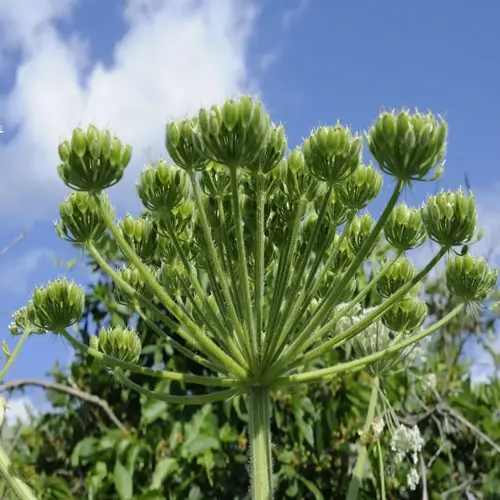
There is a physical reason to care about a blade. USDA's Poisonous Plant Research Laboratory describes small chambers inside the thick rootstalk. Each one holds a brown or straw-colored liquid that is highly poisonous. The liquid stays sealed in there until a stem or a root gets broken or cut. Snap a stalk with your shovel and the stuff is out and wet on whatever you are holding. That is the moment the plant stops being something you brushed past and becomes something running down your glove.
All parts are poisonous, and University of Utah Health Poison Control puts the roots and the lower stems at the top of that list. That maps onto the way you are likely to meet this plant. Nobody digs hemlock on purpose. You clear a ditch bank, or you haul a clump of weeds out of soft wet ground, and a root comes up in your hand. The cut root is your hazard, not the leaf you nudged with a boot.
The rule for handling water hemlock safely fits on one line. Wear gloves and keep your arms covered any time you cut, dig or pull. Waterproof gloves, not cloth ones that soak through in ten minutes. Keep your hands off your face while you work, and treat your shovel and your pruners as dirty until you have washed them. If the stand sits where nobody walks, I would leave the plant standing rather than dig out the root.
Know this much before you start. No antidote exists for cicutoxin, and treatment is supportive. A hospital manages the symptoms and waits the toxin out. That is why your whole approach here leans on prevention instead of repair. Poison Control answers at 800-222-1222 at any hour of the night. What to do in the minutes after your skin does touch the plant is a longer topic, and worth reading before you pick up a shovel.
Read the full article: Water Hemlock: How to Identify and Stay Safe