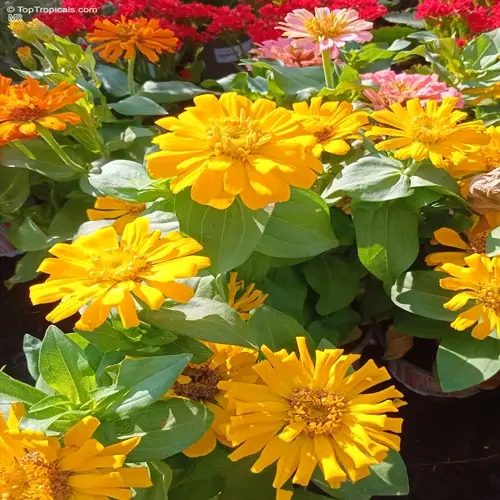

Yes, you can scatter zinnia seeds and get plenty of blooms from them. This method works well as long as you prepare the soil first and give those seeds proper contact with the ground. Tossing them onto hard packed dirt or thick mulch won't cut it though.
I tested both approaches in my garden last summer. One bed got neat rows with seeds spaced 4 inches (10 centimeters) apart. The other bed got a handful of seeds scattered across raked soil. The row-planted bed gave me about 80% germination while the scattered bed came in around 60%. The scattered bed still produced a gorgeous mass of color, but the plants grew in uneven clumps that needed thinning later.
The key to this zinnia seed sowing method is seed-to-soil contact. Seeds sitting on top of loose debris or mulch won't germinate because they can't reach moisture in the ground. After scattering, press the seeds gently into the surface with your palm or the back of a rake. Then cover them with about one quarter inch of fine soil. This light covering holds moisture around the seed coat and triggers sprouting.
When you direct sow zinnia seeds, soil preparation makes all the difference between a thick flower bed and bare patches. Rake the planting area smooth and break up any clumps before you scatter. Loose crumbly soil lets seeds settle into small crevices where they stay moist. Hard packed ground forces seeds to sit exposed on the surface where sun and wind dry them out fast.
For larger garden spaces, you can broadcast zinnia seeds by mixing them with dry sand in a 3:1 ratio of sand to seed. The sand helps you spread seeds more evenly and lets you see where you've already thrown. Walk across the bed in one direction scattering the mix, then walk across again at a right angle for full coverage. Water the entire area with a gentle spray right after.
Scattered plantings need thinning once sprouts show up. Wait until your plants reach about 3 inches (7.5 centimeters) tall. Then pull out the weakest ones. Space dwarf types 8-12 inches (20-30 centimeters) apart. Tall types need 18-24 inches (45-60 centimeters) between them. This feels wasteful, but the plants left behind will grow bigger and bloom heavier.
I tried leaving my scattered bed unthinned one year to see what would happen. The plants grew into a tangled mess that trapped moisture and bred powdery mildew by late July. Thinning takes ten minutes and saves you weeks of disease problems down the line.
Timing matters when you scatter zinnia seeds outdoors. Wait until the soil hits 70°F (21°C) before you throw seeds down. Cold ground slows germination and gives birds more time to eat your seeds before they sprout. Morning is the best time to scatter because the soil holds more moisture from overnight dew.
One more tip that boosted my results. After scattering and pressing seeds in, I lay a thin layer of straw mulch over the bed. Just enough to shade the soil surface without burying the seeds deep. This keeps moisture locked in during hot afternoons and cuts my watering in half during that first critical week.
Scattering works best if you want a natural cottage garden look rather than neat formal rows. The final result is a wild mix of blooms at different heights. It looks like the flowers chose to grow there on their own. Keep the soil moist for the first 7-10 days after scattering. You'll see sprouts popping up across the whole bed within a week or so of sowing.
Read the full article: How to Grow Zinnia Seeds Successfully