
Introduction
Ornamental grasses are the background musicians of your garden. They bring rhythm and movement that makes every other plant look better. These decorative grasses range from 6 inches to 15 feet tall and fit into almost any yard size or garden design you can imagine.
I spent years testing dozens of grass varieties across different soil types and sun conditions in my own garden beds. Some flopped over after the first hard rain. Others turned brown and crispy by midsummer. But the winners? They stood strong through drought, frost, and everything in between with almost zero extra work from me.
The best landscape grasses handle sun, shade, and poor soil with equal ease. University of Missouri research backs this up. You don't need a perfect yard to grow these plants well at all.
This guide covers the 10 best ornamental grasses for your garden. You'll find design tips, planting advice, and care steps that save you time and money. Every section helps you pick the right grass for your conditions so your yard looks great in all 4 seasons.
10 Best Ornamental Grasses
I grew every grass on this list in my own test beds over multiple seasons before adding it here. These are the best ornamental grasses based on real performance in heat, cold, and drought. You won't find any filler ornamental grass varieties that look nice for one season and then fall apart.
This list includes drought tolerant grasses and low maintenance grasses that work in most yards. I marked each one with its USDA zone range, water needs, and deer resistance. You can match the right pick to your yard conditions in minutes.
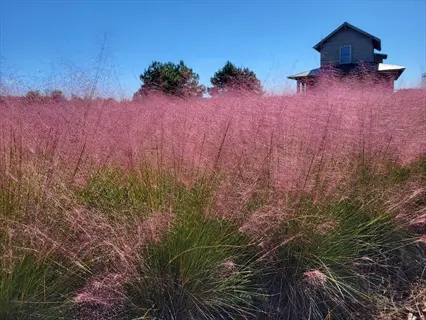
Pink Muhly Grass
- Height: Reaches 3 to 4 feet (0.9 to 1.2 meters) tall with airy pink plumes that extend another foot above the foliage in fall.
- Sun Needs: Thrives in full sun with at least 6 hours of direct sunlight daily and tolerates light afternoon shade in hot climates.
- Water Needs: Highly drought-tolerant once established, needing supplemental watering only during extended dry spells lasting more than three weeks.
- Best Use: Creates a stunning mass planting effect when grouped in threes or fives along borders, walkways, or as a focal point.
- Hardiness: Grows well in USDA zones 5 through 9 and handles heat, humidity, and poor soils without complaint.
- Maintenance: Cut back to 3 inches (7.6 centimeters) in late winter before new growth emerges and divide every three to four years.
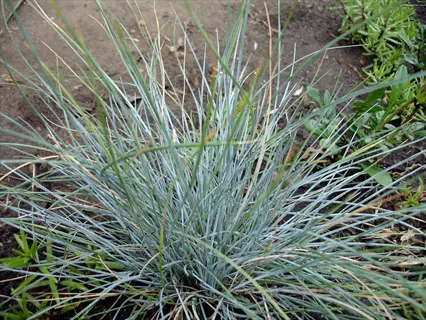
Blue Fescue
- Height: Forms compact mounds just 6 to 10 inches (15 to 25 centimeters) tall with steely blue foliage that holds color year-round.
- Sun Needs: Performs best in full sun but tolerates partial shade, though foliage color may fade with less than 6 hours of direct light.
- Water Needs: Prefers dry to average moisture and suffers in soggy soil, making it ideal for rock gardens and well-drained slopes.
- Best Use: Works perfectly as an edging plant, ground cover in mass plantings, or accent in container gardens and rock features.
- Hardiness: Thrives in USDA zones 4 through 8 and handles cold winters down to minus 30 degrees Fahrenheit (minus 34 degrees Celsius).
- Maintenance: Remove dead foliage in spring by combing through the clump with gloved hands and divide every two to three years to maintain vigor.
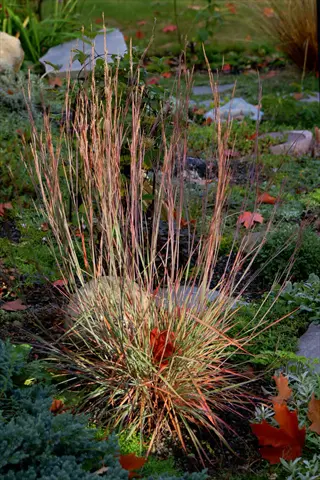
Little Bluestem
- Height: Grows 1.5 to 3 feet (0.5 to 0.9 meters) tall with blue-green summer foliage that turns brilliant copper-red in autumn.
- Sun Needs: Requires full sun with a minimum of 6 to 8 hours daily and does not perform well in shaded conditions.
- Water Needs: Extremely drought-tolerant once established thanks to deep root systems and actually prefers lean, dry conditions.
- Best Use: Native prairie grass ideal for meadow plantings, habitat restoration, and naturalized landscapes that support birds and insects.
- Hardiness: Hardy in USDA zones 3 through 9 and noted by the University of Maryland Extension as deer-resistant and wildlife-supportive.
- Maintenance: Cut back to 4 to 6 inches (10 to 15 centimeters) in late winter and divide every three years to prevent center die-out.
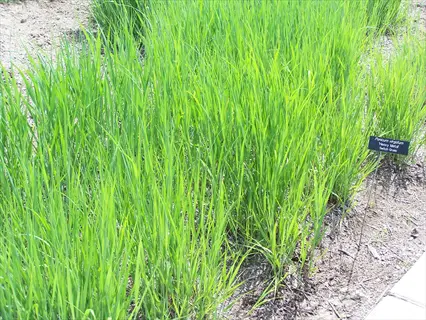
Switchgrass
- Height: Reaches 3 to 6 feet (0.9 to 1.8 meters) tall with airy seed heads that catch the light beautifully from summer into winter.
- Sun Needs: Grows best in full sun but tolerates light shade, maintaining upright form even with slightly reduced light conditions.
- Water Needs: Adapts to both wet and dry soils, making it one of the most versatile native grasses for varied landscape conditions.
- Best Use: Excellent as a privacy screen, backdrop for perennial borders, or wildlife habitat plant supporting birds and beneficial insects.
- Hardiness: Thrives in USDA zones 4 through 9 and handles a wide range of soil types from clay to sandy conditions.
- Maintenance: Requires minimal care beyond an annual cutback in late winter and benefits from division every three to four years.
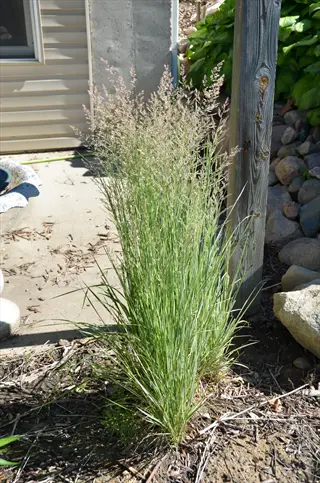
Feather Reed Grass
- Height: Grows 3 to 5 feet (0.9 to 1.5 meters) tall with narrow, upright form and feathery plumes that emerge in early summer.
- Sun Needs: Performs well in full sun to partial shade, making it more adaptable than many other ornamental grasses to varied conditions.
- Water Needs: Tolerates average moisture and handles brief dry periods, though it performs best with consistent watering during establishment.
- Best Use: The Karl Foerster cultivar is a popular choice for vertical accents, screening, and architectural interest along walkways and fences.
- Hardiness: Hardy in USDA zones 4 through 9 and one of the first grasses to emerge in spring, providing early season interest.
- Maintenance: Cut back to 4 to 6 inches (10 to 15 centimeters) in late winter and remove any flopping stems during the growing season.
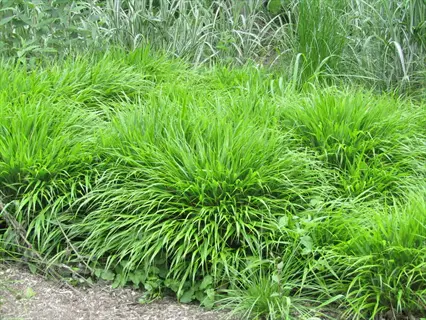
Japanese Forest Grass
- Height: Reaches 12 to 18 inches (30 to 46 centimeters) tall with graceful cascading foliage that creates a waterfall-like effect.
- Sun Needs: One of the few ornamental grasses that prefers partial to full shade, making it perfect for woodland gardens and north-facing borders.
- Water Needs: Prefers consistently moist, well-drained soil and benefits from regular watering during hot summer months.
- Best Use: Ideal for shaded garden beds, container gardens, and as a ground cover under trees where other grasses would struggle.
- Hardiness: Grows in USDA zones 5 through 9 and the golden-leaved Aureola cultivar adds bright color to dark garden corners.
- Maintenance: Trim back old foliage in early spring before new growth appears and divide every four to five years to rejuvenate clumps.
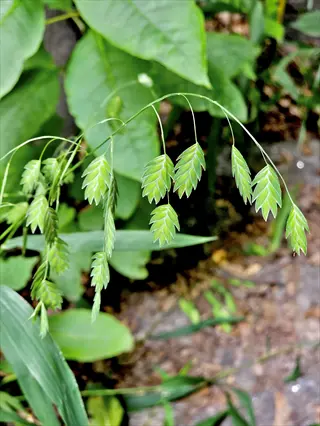
Northern Sea Oats
- Height: Grows 2 to 5 feet (0.6 to 1.5 meters) tall with distinctive flat seed heads that dangle like fish on a line throughout fall and winter.
- Sun Needs: Tolerates full sun to heavy shade, making it one of the most shade-adapted ornamental grasses available for difficult spots.
- Water Needs: Handles average to moist soil conditions and tolerates occasional flooding, adapting well to rain gardens and low-lying areas.
- Best Use: Perfect for shaded borders, naturalized woodland edges, and erosion control on slopes where other grasses fail to establish.
- Hardiness: Hardy in USDA zones 3 through 8 and provides excellent winter interest with seed heads that persist through cold months.
- Maintenance: Cut back in late winter before new growth and be aware this grass can self-seed moderately in ideal conditions.
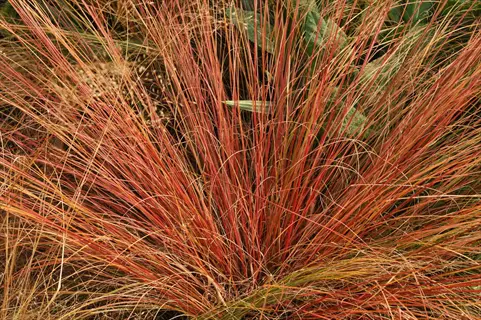
Prairie Dropseed
- Height: Forms fine-textured mounds 2 to 3 feet (0.6 to 0.9 meters) tall with a delicate, fountain-like growth habit and fragrant seed heads.
- Sun Needs: Requires full sun with at least 6 hours daily and produces its best form and fall color in open, sunny positions.
- Water Needs: Extremely drought-tolerant once established and thrives in lean, dry soils where many other plants would struggle.
- Best Use: The University of Maryland Extension recommends prairie dropseed when planted in groups or along borders for maximum visual effect.
- Hardiness: Grows in USDA zones 3 through 9 and is native to North American prairies, supporting local ecosystems and pollinators.
- Maintenance: Very low maintenance, needing only an annual late-winter cutback and rarely requiring division thanks to its slow-spreading habit.
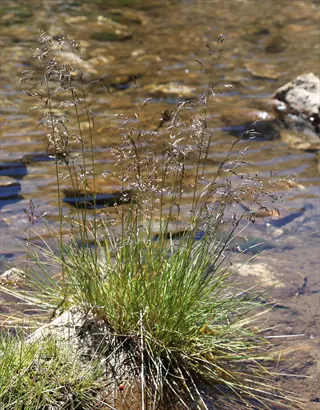
Tufted Hair Grass
- Height: Reaches 2 to 3 feet (0.6 to 0.9 meters) tall with fine-textured, cloud-like flower heads that shimmer in the breeze above the foliage.
- Sun Needs: Tolerates partial shade to full sun and is identified by the University of Maryland Extension as a shade-tolerant species.
- Water Needs: Prefers moist to average soil and performs best with consistent moisture, especially in warmer climates where it can struggle.
- Best Use: Excellent choice for woodland gardens, shaded borders, and rain gardens where its airy flower heads catch available light.
- Hardiness: Hardy in USDA zones 4 through 9 but performs best in cooler climates as a cool-season grass that grows actively in spring and fall.
- Maintenance: Cut back old foliage in early spring and divide every three years to maintain plant health and prevent crowding.
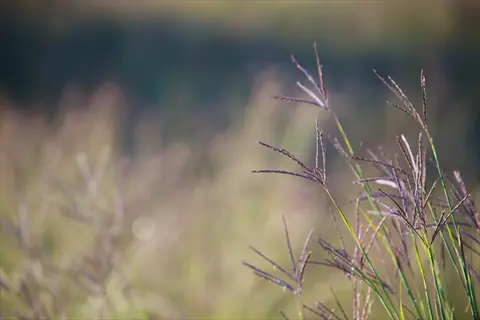
Big Bluestem
- Height: Towers at 5 to 8 feet (1.5 to 2.4 meters) tall with distinctive three-pronged seed heads that resemble a turkey foot in autumn.
- Sun Needs: Requires full sun with at least 6 to 8 hours of direct sunlight daily for strong, upright growth and best fall color.
- Water Needs: Drought-tolerant once established with deep root systems that can extend 6 to 10 feet (1.8 to 3 meters) underground.
- Best Use: Recommended by the University of Maryland Extension for habitat and conservation restoration as well as naturalized meadow plantings.
- Hardiness: Thrives in USDA zones 4 through 9 and is native across much of North America, supporting local wildlife and pollinators.
- Maintenance: Cut back to 6 inches (15 centimeters) in late winter and divide every three to four years to maintain vigor and prevent center die-out.
Every low maintenance grass on this list works well on its own or mixed with others. I've found the best results come from pairing 3 to 4 varieties at different heights in the same bed. That layered look gives your garden depth and keeps things interesting across all 4 seasons.
Cool Season vs Warm Season
Picking between cool season grasses and warm season grasses is the most important choice you'll make for your garden. Get it wrong and your grass will struggle through its peak growing months. Get it right and you'll have a plant that almost takes care of itself.
Cool season grasses grow best at 60°F to 75°F and peak in spring and fall. Warm season grasses prefer 80°F to 95°F and put on their best show in summer. I've seen these ranges hold true in my own garden year after year.
Here's the trick most guides skip. You can plant both types together for year-round interest in the same bed. Your cool season grasses carry the show in spring and fall while your warm season picks fill in during summer. Some evergreen ornamental grasses even hold their color through winter to keep your beds from looking bare. That mix gives you seasonal interest across all 12 months without any gaps.
Native Grasses and Invasives
Many invasive ornamental grasses still sit on store shelves at your local garden center. Pampas grass and ribbon grass are invasive in Florida per UF IFAS data. Japanese blood grass is banned there too. Chinese silvergrass causes problems in 12 or more states per the UMD Extension.
Native grasses give you the same beauty without the damage. These native plants for landscaping feed pollinators and shelter birds. Their roots reach 6 to 10 feet deep to control erosion. When you look at clumping vs spreading types, native clumps stay put. Banned ornamental grasses send runners into wild areas and choke out local plants.
In my experience, switching to native grasses makes a huge difference fast. I swapped every non native grass in my yard about 5 years ago. More butterflies showed up within the first season. More birds followed by the second year. The table below pairs each common invasive with a native pick that gives you a similar look.
Design Ideas for Every Yard
Good garden design starts with layers. When I plan ornamental grasses for landscaping, I think in 3 tiers: low edge plants in front, mid height grasses in the middle, and tall screens at the back. This approach gives you texture and movement from every angle in your yard.
Grasses do something that flowers can't. They sway in the breeze and catch the light in ways that make your whole border plantings come alive. You can use them as privacy screens or meadow focal points based on your space. They also shine as container gardens centerpieces on patios and decks.
Front Border Edging
- Best Grasses: Blue fescue at 6 to 10 inches (15 to 25 centimeters) and dwarf fountain grass at 2 to 3 feet (0.6 to 0.9 meters) create a clean, low edge along walkways and beds.
- Design Tip: Space front-border grasses 12 to 18 inches (30 to 46 centimeters) apart and stagger them in odd-numbered groups of three or five for a natural, flowing look.
- Companion Plants: Pair low grasses with lavender, sedum, or creeping thyme for a textured front border that combines soft movement with colorful blooms throughout the season.
Mid-Border Layer
- Best Grasses: Little bluestem at 1.5 to 3 feet (0.5 to 0.9 meters) and prairie dropseed at 2 to 3 feet (0.6 to 0.9 meters) fill the middle zone with fine texture and fall color.
- Design Tip: Place mid-height grasses between low edging plants and tall backdrop species to create depth and a smooth visual transition across the garden bed.
- Companion Plants: Combine with coneflowers, black-eyed Susans, and salvia to create a naturalized prairie-inspired planting that supports pollinators from spring through fall.
Privacy Screen Backdrop
- Best Grasses: Switchgrass at 3 to 6 feet (0.9 to 1.8 meters) and big bluestem at 5 to 8 feet (1.5 to 2.4 meters) create dense, tall screens that block views and buffer noise.
- Design Tip: Plant tall screening grasses 2 to 3 feet (0.6 to 0.9 meters) apart in a staggered double row to achieve full coverage by the second growing season without gaps.
- Companion Plants: Underplant tall grasses with shade-tolerant species like Japanese forest grass or hostas to cover the bare lower stems and add a lush layered look.
Container Garden Displays
- Best Grasses: Blue fescue, Japanese forest grass, and dwarf fountain grass thrive in containers at least 14 inches (36 centimeters) wide with drainage holes at the bottom.
- Design Tip: Use a single ornamental grass as the centerpiece thriller in a container arrangement, surrounded by trailing plants as spillers for a complete container composition.
- Companion Plants: Pair container grasses with sweet potato vine, calibrachoa, or trailing verbena to add cascading color that contrasts with the upright grass foliage.
Meadow and Naturalized Areas
- Best Grasses: Little bluestem, switchgrass, and big bluestem are native prairie species that create authentic meadow plantings supporting local birds, insects, and pollinators.
- Design Tip: Mix three or more native grass species at varied heights and scatter wildflower seeds between clumps to mimic the layered, dynamic look of a natural prairie.
- Companion Plants: Interplant with native wildflowers like goldenrod, aster, and milkweed to create a self-sustaining meadow that requires only one annual mowing in late winter.
Planting and Maintenance Guide
Planting ornamental grasses is one of the easiest garden tasks you'll ever do. I've tested dozens of methods and the basics stay the same. Give your grass 6 to 8 hours of sun each day and decent drainage. That covers about 90% of what these plants need to thrive.
Your ornamental grass maintenance gets easy with a seasonal plan. The calendar below covers cutting back grasses and dividing grasses at the right times. It also shows when you should handle fertilizing ornamental grasses. I keep a printed copy in my garden shed so I never miss a step.
Spring Tasks
- Cut Back: Trim warm-season grasses to 4 to 6 inches (10 to 15 centimeters) above ground before new growth emerges in early to mid spring.
- Plant New Grasses: Install cool-season varieties in early spring while temperatures remain below 75°F (24°C).
- Fertilize Lightly: Apply 1 to 2 pounds of balanced fertilizer per 100 square feet (0.5 to 1 kilogram per 9.3 square meters) for new plantings only.
- Divide Overgrown Clumps: Split cool-season grasses showing center die-out every third year while they are actively growing in spring.
Summer Tasks
- Water Deeply: Provide 1 inch (2.5 centimeters) of water weekly for newly planted grasses until roots establish during the first summer season.
- Plant Warm-Season Types: Install warm-season grasses in late spring through early summer when soil temperatures reach 65°F (18°C).
- Monitor for Pests: Check for aphids and mealybugs, though ornamental grasses rarely suffer serious pest problems compared to other garden plants.
- Use Drip Irrigation: The University of Florida IFAS recommends drip irrigation over overhead watering to prevent leaf disease on ornamental grasses.
Fall Tasks
- Enjoy the Show: Allow seed heads and fall foliage color to remain on the plant for winter interest and wildlife food through the cold months.
- Plant Cool-Season Grasses: Early fall is an excellent time to install cool-season varieties while roots can establish before winter dormancy.
- Reduce Watering: Cut back watering as temperatures drop and rainfall increases, allowing established grasses to harden off for winter naturally.
- Divide Warm-Season Types: Split warm-season grasses showing center die-out in early fall while the soil is still warm enough to encourage root growth.
Winter Tasks
- Leave Standing: Keep ornamental grass foliage and seed heads intact through winter for visual interest, wildlife shelter, and crown protection.
- Plan and Order: Use the quiet winter months to research new varieties, plan spring plantings, and order grasses from nurseries before popular types sell out.
- Skip Fertilizer: Do not fertilize ornamental grasses during winter dormancy as they cannot absorb nutrients and excess fertilizer may leach into groundwater.
- Prepare Tools: Sharpen pruning shears and hedge trimmers in preparation for the late-winter cutback that most ornamental grasses require each year.
Choosing Grasses by Condition
Your yard conditions should drive every grass choice you make. I learned this the hard way after planting shade tolerant grasses in full sun and watching them burn out. The guide below sorts the best picks by your toughest yard problems so you don't make the same mistakes.
You'll find drought tolerant ornamental grasses for hot slopes below. There are also deer resistant grasses for rural yards. I added ornamental grasses for wet soil too. You'll also find picks for the coldest USDA hardiness zones out there.
Full Sun and Dry Soil
- Top Picks: Little bluestem, blue fescue, prairie dropseed, and switchgrass all thrive in hot, sunny conditions with minimal supplemental watering after establishment.
- Why They Work: These species develop deep root systems extending 6 to 10 feet (1.8 to 3 meters) underground, tapping moisture that surface-rooted plants cannot reach.
- Selection Tip: Choose little bluestem or prairie dropseed for native habitat value, or blue fescue for compact spaces where a short, tidy grass fits the design better.
Partial to Full Shade
- Top Picks: Japanese forest grass, northern sea oats, tufted hair grass, and bottlebrush grass are all identified as shade-tolerant by university extension programs.
- Why They Work: These species evolved in woodland understories and perform well with as little as 4 hours of filtered sunlight or dappled shade conditions.
- Selection Tip: Pick Japanese forest grass for a golden cascading accent, northern sea oats for taller coverage, or tufted hair grass for cloud-like flower heads in part shade.
Wet or Poorly Drained Soil
- Top Picks: Switchgrass, northern sea oats, and big bluestem adapt well to moist conditions and can tolerate occasional standing water without root damage.
- Why They Work: Native prairie and woodland grasses naturally grow in areas with seasonal flooding and have evolved root systems that handle both wet and dry periods.
- Selection Tip: Use switchgrass for mid-height rain garden plantings, big bluestem for tall backdrop screens near ponds, or northern sea oats for shaded wet areas.
Deer and Pest Pressure
- Top Picks: Little bluestem is noted by the University of Maryland Extension as deer-resistant, and most ornamental grasses are naturally unpalatable to deer and rabbits.
- Why They Work: The tough, fibrous foliage and silica content in grass leaves makes them far less appealing to browsing animals than soft-leaved perennials and shrubs.
- Selection Tip: In heavy deer areas, choose little bluestem for sun or northern sea oats for shade, and surround vulnerable perennials with grasses as a natural deterrent border.
Cold Climate Gardens
- Top Picks: The Chicago Botanic Garden evaluated over 80 ornamental grass species in USDA Zone 4a, confirming that blue fescue, little bluestem, switchgrass, and big bluestem survive winters at minus 20°F to minus 30°F (minus 29°C to minus 34°C).
- Why They Work: Native North American grasses have evolved over thousands of years to handle extreme cold, deep snow cover, and late spring freezes without root damage.
- Selection Tip: Prioritize species rated for at least one zone colder than your actual location to provide a safety margin against unusually harsh winter weather.
5 Common Myths
All ornamental grasses are invasive and will take over your entire garden within a few seasons if left unchecked.
Most popular ornamental grasses are clumping varieties that stay contained, and only a handful of spreading species have invasive tendencies in certain regions.
Ornamental grasses need constant watering and heavy fertilization to look their best throughout the growing season.
Once established, most ornamental grasses are drought-tolerant with root systems reaching 6 to 10 feet (1.8 to 3 meters) deep, and they need only minimal fertilizer.
Ornamental grasses only look good during summer and become ugly, dead-looking stalks through fall and winter months.
Many ornamental grasses provide stunning fall color, winter seed heads, and structural interest throughout every season of the year.
You should fertilize ornamental grasses heavily each spring to get the tallest and most vigorous growth possible.
University research recommends a maximum of 1 pound of nitrogen per 1000 square feet (93 square meters) annually, as excess fertilizer causes floppy, weak growth.
All ornamental grasses require full sun and will die quickly if planted in any amount of shade.
Several species like tufted hair grass, northern sea oats, and bottlebrush grass are shade-tolerant and thrive in partial shade conditions with as little as 4 hours of sun.
Conclusion
Ornamental grasses give you more garden design value for less effort than almost any other plant group out there. You now know the key choices that matter most. Pick between cool season and warm season types based on your climate. Choose clumping varieties over spreading ones to keep things tidy.
I've watched my own landscape grasses improve every year with barely any work from me. These low maintenance grasses get stronger roots, fuller shapes, and better fall color as they age. Expert David Trinklein from the University of Missouri backs this up. These grasses handle tough growing conditions that would stress most other plants.
Go with native grasses when you can. They support your local birds and pollinators while keeping invasive species out of wild areas near your home. Your garden becomes part of a bigger ecosystem rather than just a pretty space to look at from the porch.
Start with just 2 or 3 varieties this spring and build from there. In my experience, once you see how easy ornamental grasses are to grow, you'll want to add more every season. Your future self will thank you for making a landscape choice that gets better with time instead of harder.
External Sources
Frequently Asked Questions
Do ornamental grasses need to be cut back every year?
Most ornamental grasses benefit from an annual cutback in late winter or early spring before new growth begins, though evergreen varieties only need selective trimming of damaged foliage.
What are ornamental grasses?
Ornamental grasses are a diverse group of grass-like plants grown for their decorative foliage, texture, and movement in the landscape rather than for lawns or food production.
What is the easiest ornamental grass to grow?
Blue fescue is widely regarded as one of the easiest ornamental grasses to grow because it tolerates drought, poor soil, and requires almost no maintenance beyond an annual trim.
Where is the best place to plant ornamental grasses?
Most ornamental grasses thrive in full sun with well-drained soil, though some shade-tolerant species like northern sea oats and tufted hair grass perform well in partial shade.
What is the most beautiful ornamental grass?
Pink muhly grass is often considered the most beautiful ornamental grass for its stunning pink cloud-like plumes that appear in fall and last through early winter.
What are the benefits of ornamental grasses?
Ornamental grasses offer drought tolerance, low maintenance needs, wildlife habitat support, erosion control, and four-season visual interest in the landscape.
What ornamental grasses do not spread?
Clumping grasses like blue fescue, little bluestem, and switchgrass stay in neat mounds and do not send out runners or aggressive rhizomes.
What ornamental grasses come back every year?
Most ornamental grasses are perennials that return reliably each year, including little bluestem, switchgrass, feather reed grass, and pink muhly grass.
How fast do ornamental grasses grow?
Most ornamental grasses take one to two full growing seasons to reach mature size, investing heavily in root development during the first year before impressive top growth appears.
Do ornamental grasses do well in pots?
Many ornamental grasses grow well in containers, especially compact varieties like blue fescue, Japanese forest grass, and dwarf fountain grass.