
Introduction
Choosing the best perennial flowers for your garden saves you money and effort for years to come. These flowering perennials come back each spring from their roots. You skip the chore of replanting new flowers every season. A smart perennial garden works like a savings account that pays bigger dividends with each passing year.
I've spent over a decade building perennial gardens in 3 different climate zones. Through all that trial and error, I learned which plants thrive and which ones fail. Most guides give you a quick list of flowers and send you on your way. This guide goes further with real soil science, proven care methods, and data on how perennial flowers boost your home value.
Your perennials need soil with a pH between 6.0 and 7.0 to grow strong roots. They also need about 1 inch of water per week once roots take hold. The best perennial flowers feed pollinators that support over $34 billion in farm crops each year.
Below you'll find top picks for every garden spot, from full sun borders to shaded corners. You'll also get a seasonal bloom plan and planting steps. Care tips and division tricks round out this guide to help your flowering perennials grow stronger every year.
10 Best Perennial Flowers
Building a perennial garden is like casting performers for a stage show. Each plant takes its spotlight in a different season. Together they create nonstop color from spring through fall. The best perennial flowers on this list cover sun lovers, shade plants, cut flowers, and ground covers.
I tested dozens of varieties in my own beds before picking these 10 plants. Each one earned its spot through strong blooms and easy care across many zones. You'll find specific cultivar names so you can shop with confidence at your local garden center.
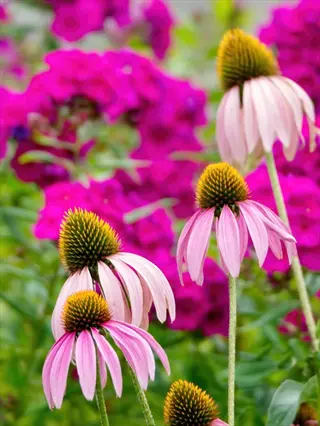
Coneflower (Echinacea)
- Hardiness: Thrives in USDA zones 3 through 9, making it one of the most adaptable perennials for gardens across nearly every region of the country.
- Bloom Season: Produces vibrant daisy-like flowers from midsummer through early fall, with each plant blooming for 6 to 8 weeks when deadheaded regularly.
- Growing Conditions: Prefers full sun and well-drained soil but tolerates poor, rocky soil and drought once roots are established after the first growing season.
- Wildlife Value: Attracts butterflies, bees, and hummingbirds during summer blooms, and goldfinches feed on dried seed heads left standing through winter months.
- Varieties: Popular cultivars include Magnus with its large rose-pink petals, White Swan for cottage gardens, and PowWow Wild Berry for compact spaces.
- Care Tips: Space plants 18 to 24 inches (46 to 61 cm) apart in groups of three or more for visual impact, and divide clumps every 4 to 5 years.
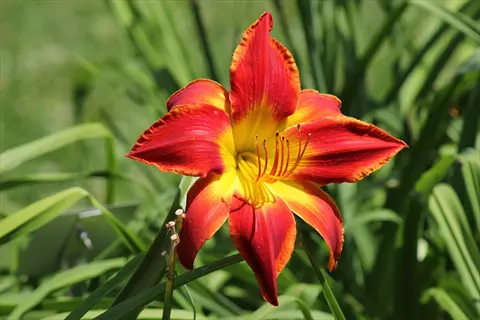
Daylily (Hemerocallis)
- Hardiness: Grows reliably in USDA zones 3 through 10, earning its reputation as one of the most carefree and forgiving perennial flowers available.
- Bloom Season: Individual flowers last only one day, but each stalk produces multiple buds that open in succession over 3 to 4 weeks during summer.
- Growing Conditions: Performs best in full sun with at least 6 hours of direct light, though lighter-colored varieties tolerate partial shade without fading.
- Versatility: Works as a border plant, ground cover on slopes, or mass planting along driveways, with mature clumps reaching 2 to 4 feet (0.6 to 1.2 m) tall.
- Varieties: Stella de Oro is the most popular reblooming cultivar, while Happy Returns offers lemon-yellow flowers and Pardon Me features miniature red blooms.
- Care Tips: Divide every 3 to 5 years when blooms become smaller, and remove spent flower stalks to encourage reblooming varieties to produce more flowers.
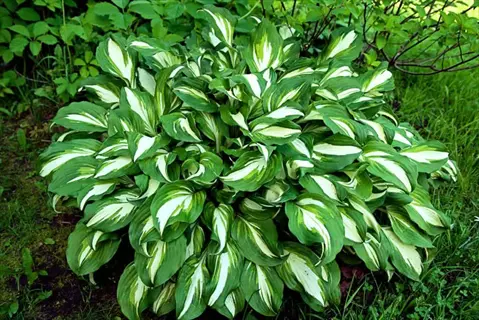
Hosta
- Hardiness: Thrives in USDA zones 3 through 9 and is the go-to perennial for shady garden spots where most flowering plants struggle to grow.
- Foliage Appeal: Grown primarily for stunning foliage in shades of green, blue, gold, and variegated patterns that provide visual interest from spring through fall frost.
- Growing Conditions: Prefers partial to full shade with moist, well-drained soil rich in organic matter, though some gold varieties tolerate morning sun.
- Size Range: Varieties range from miniature 4-inch (10 cm) mounds to giant specimens reaching 4 feet (1.2 m) wide, fitting any garden space or container.
- Varieties: Blue Angel offers dramatic blue-green leaves up to 18 inches (46 cm) long, while Sum and Substance produces chartreuse leaves resistant to slugs.
- Care Tips: Apply slug deterrent in early spring, water at the base to keep leaves dry, and divide clumps every 4 to 5 years to maintain plant vigor.
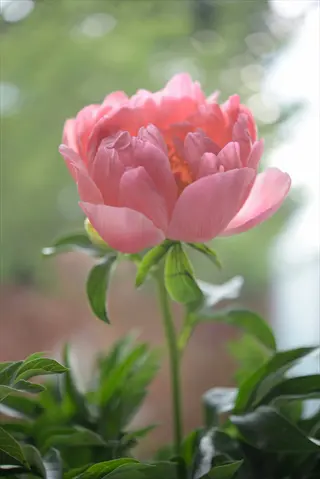
Peony (Paeonia)
- Hardiness: Grows in USDA zones 3 through 8, with established plants living for 50 years or more when planted at the correct depth in the garden.
- Bloom Season: Produces large, fragrant blooms in late spring to early summer, with flowers reaching 6 to 10 inches (15 to 25 cm) across in full double forms.
- Growing Conditions: Requires full sun with at least 6 hours of direct light, well-drained soil, and good air circulation to prevent fungal diseases on foliage.
- Planting Depth: Plant tubers with eyes exactly 1.5 inches (3.8 cm) below the soil surface; planting too deep is the most common reason peonies fail to bloom.
- Varieties: Sarah Bernhardt produces classic double pink blooms, Festiva Maxima offers white petals flecked with red, and Bartzella is a popular intersectional hybrid.
- Care Tips: Support heavy blooms with peony rings installed in early spring, and avoid moving established plants since they take years to reestablish flowering after transplanting.
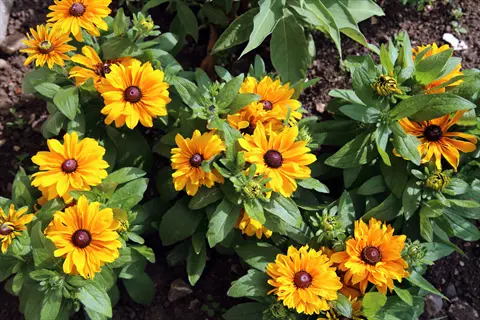
Black-Eyed Susan (Rudbeckia)
- Hardiness: Thrives in USDA zones 3 through 9 and is native to North America, making it naturally adapted to local soil conditions and climate patterns.
- Bloom Season: Blooms from midsummer through early fall with bright golden-yellow petals surrounding dark brown center cones that last for 8 to 10 weeks.
- Growing Conditions: Prefers full sun and average soil, tolerating heat, humidity, drought, and poor soil conditions that would stress most other garden perennials.
- Wildlife Value: Provides essential nectar for butterflies and native bees during late summer, and seed heads feed birds like goldfinches and sparrows through winter.
- Varieties: Goldsturm is the most widely planted cultivar with uniform 24-inch (61 cm) height, while Denver Daisy grows taller with bicolor petals.
- Care Tips: Allow plants to self-sow for natural spreading, cut back stems to 4 inches (10 cm) in late winter, and divide every 3 to 4 years to prevent overcrowding.
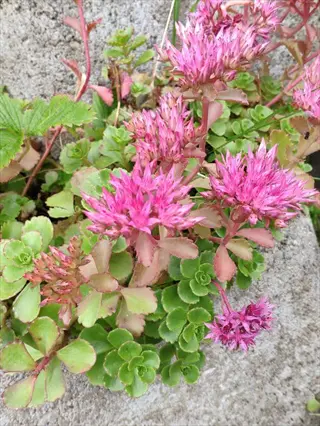
Sedum (Stonecrop)
- Hardiness: Grows in USDA zones 3 through 10, with exceptional drought tolerance that makes it ideal for hot, dry spots and rock gardens with thin soil.
- Bloom Season: Tall varieties like Autumn Joy bloom from late summer through fall, starting pink and aging to deep copper-red, extending garden color into October.
- Growing Conditions: Requires full sun and well-drained soil, actually performing better in lean, sandy soil than rich garden beds that cause floppy, weak stems.
- Types: Upright sedums grow 18 to 24 inches (46 to 61 cm) tall for borders, while creeping sedums spread as ground covers between stepping stones and rock walls.
- Varieties: Autumn Joy is the classic tall sedum, Dragon's Blood is a popular red creeping variety, and Angelina offers bright chartreuse trailing foliage.
- Care Tips: Avoid overwatering as root rot is the most common problem, and pinch tall varieties back by half in early June to create sturdier, more compact plants.
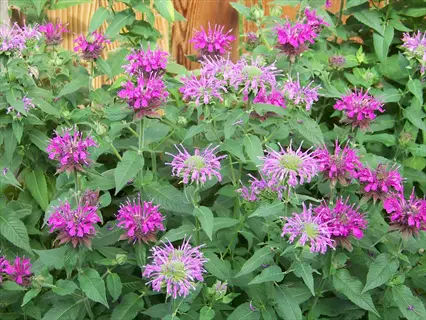
Bee Balm (Monarda)
- Hardiness: Grows in USDA zones 3 through 9, native to North America and historically used by Indigenous peoples and colonists as a medicinal tea plant.
- Bloom Season: Produces spiky, crown-shaped flowers from midsummer through late summer in shades of red, pink, purple, and white over 4 to 6 weeks.
- Growing Conditions: Prefers full sun to light shade with moist, well-drained soil and good air circulation to reduce powdery mildew on crowded foliage.
- Wildlife Value: Among the top perennials for attracting hummingbirds, and red varieties are especially effective at drawing these pollinators from across the garden.
- Varieties: Jacob Cline is a mildew-resistant red, Raspberry Wine offers deep pink blooms, and Petite Delight stays compact at 15 inches (38 cm) tall.
- Care Tips: Thin stems at the base in spring to improve air circulation, divide every 2 to 3 years since bee balm spreads aggressively through underground runners.
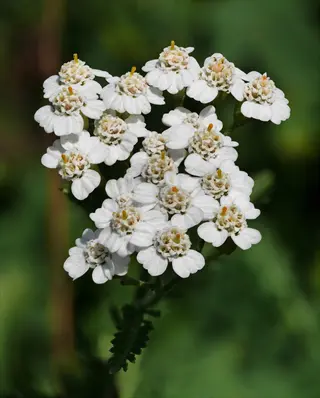
Yarrow (Achillea)
- Hardiness: Thrives in USDA zones 3 through 9, tolerating poor soil, heat, drought, and neglect better than almost any other flowering perennial in the garden.
- Bloom Season: Flat-topped flower clusters bloom from early summer through midsummer, and cutting spent heads often triggers a second flush of flowers in fall.
- Growing Conditions: Needs full sun and lean to average soil with excellent drainage; rich, moist soil causes weak stems and aggressive spreading that crowds neighbors.
- Dual Purpose: Flowers work beautifully as fresh cut arrangements and also dry exceptionally well, retaining color for months in dried flower displays indoors.
- Varieties: Moonshine has silvery foliage with lemon-yellow flowers, Paprika offers fiery red-orange blooms, and Coronation Gold produces deep gold flower heads.
- Care Tips: Space plants 18 to 24 inches (46 to 61 cm) apart, deadhead regularly to prevent aggressive self-seeding, and divide every 3 years to control spreading.
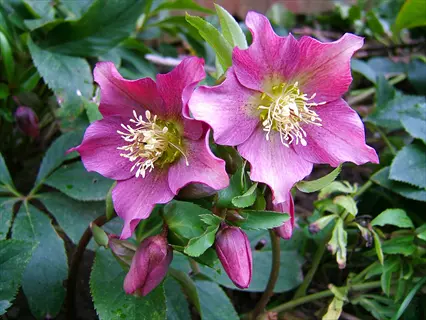
Hellebore (Christmas Rose)
- Hardiness: Grows in USDA zones 4 through 9, blooming as early as late winter when snow may still cover the ground, providing the first garden color of the year.
- Bloom Season: Flowers appear from late winter through early spring, with nodding cup-shaped blooms lasting 8 to 10 weeks in shades of white, pink, purple, and green.
- Growing Conditions: Prefers partial to full shade with rich, moist, well-drained soil that mimics the woodland floor where these plants grow naturally in the wild.
- Evergreen Foliage: Leathery, dark green leaves remain through winter in most zones, providing year-round structure and interest even after flowers have finished blooming.
- Varieties: Lenten Rose (Helleborus orientalis) is the easiest to grow, while Winter Jewels series offers double flowers in a wide range of spotted patterns.
- Care Tips: Remove old foliage in late winter before flowers emerge for best display, avoid transplanting established clumps, and mulch with leaf mold or compost annually.
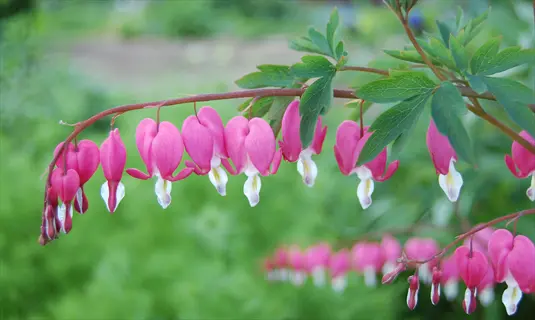
Bleeding Heart (Dicentra)
- Hardiness: Thrives in USDA zones 3 through 9, preferring cool woodland conditions and making it the perfect companion for hostas and ferns in shaded garden beds.
- Bloom Season: Arching stems carry rows of heart-shaped flowers in mid to late spring, with old-fashioned varieties blooming for 4 to 6 weeks before going dormant.
- Growing Conditions: Prefers partial to full shade with rich, moist soil high in organic matter; foliage may yellow and die back in hot summer conditions above 85 degrees Fahrenheit (29 degrees Celsius).
- Garden Design: Plant alongside late-emerging perennials like hostas or ferns that fill the gap left when old-fashioned bleeding hearts go dormant by midsummer.
- Varieties: Gold Heart offers striking golden foliage with pink flowers, while Luxuriant is an everblooming fringed type that stays compact and blooms spring through fall.
- Care Tips: Mark plant locations before dormancy to avoid accidental digging, keep soil consistently moist with 2 to 3 inches (5 to 7.6 cm) of mulch, and avoid dividing frequently.
These 10 plants give you a solid mix of sun lovers, shade stars, and tough ground covers. Try pairing a coneflower with a daylily in your sunny border for weeks of color. A black-eyed susan beside a sedum gives you blooms from midsummer into October. I also grow lavender near my yarrow beds since both love lean soil and full sun. Group hostas with hellebore under a tree canopy for shade garden beauty all year long.
Seasonal Bloom Planning
Planning your perennial bloom time is like setting up a relay race. Each plant hands the color baton to the next one so you get continuous bloom from March through November. I missed this step in my first garden and ended up with a bed full of flowers in June but nothing in September.
The trick is to pick at least 2 spring blooming perennials, 3 summer blooming perennials, and 2 fall blooming perennials. Group plants with similar water needs together for easy care. Colorado State Extension calls this hydro zoning, and it saves you time and water all season long. The table below maps out which plants bloom when so you can plan for year-round color.
Start with hellebore and bleeding heart for early spring color. Then let peonies and iris take over in late spring. Your summer blooming perennials like coneflower and bee balm fill the hottest months. Sedum and asters close out the show in fall. This simple 4 season approach gives you a garden that never looks bare.
Soil and Planting Guide
Good soil preparation is like building a solid foundation for a house. The stronger you make the base, the better your plants grow above it. I've watched gardeners skip this step and wonder why their perennials struggle year after year. Getting the soil right before you learn how to plant perennials makes all the difference.
The best time for when to plant perennials is early spring or early fall. Both seasons give roots enough time to settle in before heat or cold stress hits. Add organic matter deep into your beds and test your soil pH before you put a single plant in the ground. Spacing perennials at the right distance keeps them healthy as they mature.
Test and Adjust Soil pH
- Why It Matters: Most perennials perform best in soil with a pH between 6.0 and 7.0, and testing before planting prevents years of poor growth from incorrect acidity levels.
- How To Test: Purchase a soil testing kit from your local extension office or garden center, collect samples from multiple spots in the bed, and send for analysis.
- Adjusting pH: Add garden lime to raise pH in acidic soil or sulfur to lower pH in alkaline soil, following test result recommendations for exact application rates.
Incorporate Organic Matter
- Recommended Amount: Add approximately 3 cubic yards of organic matter for every 1,000 square feet (93 square meters) of garden bed, incorporating it 12 inches (30 cm) deep.
- Best Materials: Use well-aged compost, sphagnum peat moss, or rotted leaf mold to improve both drainage in clay soils and moisture retention in sandy soils.
- Timing: Prepare beds 2 to 4 weeks before planting to allow amendments to integrate with native soil and beneficial microorganisms to establish in the planting area.
Follow Proper Spacing
- Tall Plants: Perennials growing 3 feet (0.9 m) or taller need 2 to 3 feet (0.6 to 0.9 m) of spacing between plants to allow mature root systems room to develop.
- Medium Plants: Varieties reaching 2 to 3 feet (0.6 to 0.9 m) should be spaced 1.5 to 2 feet (0.5 to 0.6 m) apart to prevent overcrowding while filling the bed.
- Short Plants: Compact perennials under 2 feet (0.6 m) tall can be placed about 1 foot (0.3 m) apart, working well as border edging and ground cover in garden beds.
Apply Mulch Correctly
- Ideal Depth: Spread 2 to 3 inches (5 to 7.6 cm) of organic mulch around plants to conserve moisture, regulate soil temperature, and suppress weed growth throughout the season.
- Critical Rule: Keep mulch pulled back 1 to 2 inches (2.5 to 5 cm) from plant crowns and stems, as piling mulch against crowns traps moisture and promotes rot.
- Best Materials: Shredded bark, wood chips, or chopped leaves work well as mulch, breaking down slowly to add organic matter back into the soil over time.
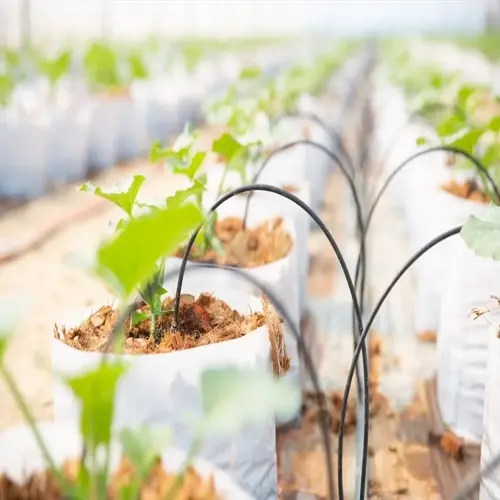
I learned the hard way that mulching perennials too close to their crowns causes rot faster than almost anything else. Keep that 2 inch gap around each stem and your plants will thank you with stronger growth. A drip system on a timer takes the guesswork out of soil preparation and watering for the whole season.
Care and Maintenance Tips
Good perennial care works like car maintenance for your garden. Small tasks done on a schedule prevent big problems down the road. Even low maintenance perennials need some attention to keep blooming strong. I lost a whole bed of phlox one summer because I skipped basic care for just a few weeks.
Watering perennials takes just 1 inch per week once their roots are set. Use a rain gauge to track how much water your beds get from storms. Too much fertilizer is a common mistake that causes soft, weak growth with fewer flowers. Stick with a 10-10-10 or 5-10-5 formula in late spring and you'll see better blooms.
Deadheading perennials means cutting off spent flower heads before seeds form. This pushes the plant to make more blooms instead of wasting energy on seeds. For plants like phlox and asters, thin a few stems at the base in spring to boost air flow. This simple trick cuts down on disease and gives you bigger, stronger flowers. You can also remove side buds to get fewer but larger blooms from your best plants.
Winter care perennials need is less than most people think. Leave stems and seed heads standing through cold months since they shelter helpful insects. Add just 1 inch of mulch after the first frost to protect roots. Fertilizing perennials stops in early fall so new growth has time to harden off before freezing temps arrive.
Division and Propagation
Dividing perennials feels strange at first. Cutting apart a healthy plant seems wrong, much like pruning a fruit tree back hard. But the result is 2 stronger plants that bloom better than the single crowded clump you started with. Most perennials need plant division every 3 to 5 years to stay at their best.
I start multiplying perennials in my garden each time I see blooms getting smaller or a bald spot forming at the crown center. Each piece you split off needs 3 to 5 strong shoots with healthy roots attached. Work on cloudy days and water dry soil the day before you plan on splitting plants. Knowing when to divide perennials makes the difference between success and losing your best plants. Perennial propagation through division is the fastest way to fill your beds for free.
Spring and Summer Bloomers
- When To Divide: Divide these perennials in late summer or early fall after they finish flowering, giving roots 6 to 8 weeks to establish before the ground freezes.
- Examples: Peony, iris, bleeding heart, catmint, and daylily should all be divided after their bloom cycle ends, typically between August and October.
- Special Note: Peonies require replanting at an exact depth of 1.5 inches (3.8 cm) with eyes facing up, and they may take 2 to 3 years to resume blooming.
Fall Bloomers
- When To Divide: Divide fall-blooming perennials in early spring just as new growth emerges, giving the entire growing season for roots to reestablish before flowering.
- Examples: Asters, chrysanthemums, sedum, and goldenrod should be divided in March or April when shoots are 2 to 3 inches (5 to 7.6 cm) tall.
- Special Note: Fall bloomers divided in autumn often fail to establish before winter, leading to weak plants or total loss in cold climates.
Signs Your Plants Need Division
- Smaller Blooms: When flower size noticeably decreases compared to previous years, the root system has likely become overcrowded and is competing for nutrients.
- Bald Crown Center: A doughnut-shaped growth pattern with a dead or bare center surrounded by a ring of growth is the clearest sign a clump needs splitting.
- Floppy Stems: When plants that previously stood upright begin falling over or requiring staking for the first time, overcrowded roots cannot support strong stem growth.
Plants That Should Not Be Divided
- Baptisia (False Indigo): Has extremely deep taproots that break easily during division attempts, and damaged plants rarely recover; propagate from seed instead.
- Established Peonies: Mature peonies resent disturbance and may take 3 or more years to resume blooming after being divided, so avoid moving unless truly necessary.
- Hellebores: These woodland perennials have brittle root systems and self-sow readily, making seed collection and transplanting seedlings a better multiplication strategy.
Pollinator and Wildlife Value
Your perennial garden does more than look pretty. It serves as a wildlife habitat that feeds bees, birds, and butterflies all season long. I counted bee species in my garden last year and spotted over 12 types in one afternoon. Think of your flower beds like a restaurant for pollinators. A varied menu of blooms keeps them coming back. Pollinators add over $34 billion to farm production in the U.S. each year.
About 35% of food crops around the world depend on animal pollinators. Planting pollinator-friendly perennials in your yard supports this chain in a real way. Native plants for pollinators work best since local insects grew up alongside them. Coneflower, bee balm, and black-eyed susan are top picks. Bee-friendly flowers with open petals give bees easy access to pollen and nectar.
You can attract butterflies and attract hummingbirds to your yard with a few smart choices. Plant red bee balm and salvia near a window so you can watch hummingbirds feed. Leave stems and seed heads standing through winter since they shelter helpful insects during cold months. Clusters of 3 to 5 plants of each type make it easier for pollinators to find your blooms.
5 Common Myths
Perennial flowers are completely maintenance-free once planted and never need any attention after the first season.
Perennials are lower maintenance than annuals but still require watering, occasional fertilizing, mulching, and division every 3 to 5 years to stay healthy and bloom well.
All perennial flowers need full sun to grow, so shady gardens cannot support a successful perennial flower bed.
Many perennials like hostas, bleeding hearts, astilbe, and hellebores thrive in partial to full shade, and grouping plants by light needs creates a balanced garden.
Perennial flowers bloom continuously from spring through fall, providing nonstop color throughout the entire growing season.
Most individual perennials bloom for 2 to 6 weeks per season, but planting a mix of early, mid, and late bloomers creates the appearance of continuous color.
You should cut back all perennial stems and clean up the entire garden bed immediately after the first fall frost arrives.
Leaving healthy stems and seed heads through winter provides habitat for pollinators and wildlife, and a 1 inch (2.5 cm) layer of mulch after frost protects plant crowns.
Perennial flowers are more expensive than annuals because you need to buy mature plants that cost significantly more upfront.
While individual perennials may cost more initially, they return each year for many seasons, making them far more cost-effective than replanting annuals annually.
Conclusion
A perennial garden is like a savings account that grows richer every year. The best perennial flowers you plant today reward you with bigger blooms and stronger roots each spring. You save money over time because you skip the cost of buying and planting new annuals every season. Low maintenance perennials give you more beauty for less work than any other garden approach.
Your perennial flowers also boost your home value in a big way. A Virginia Tech study found that homes with quality gardens sell for 5.5% to 11.4% more than homes with bare yards. Plant variety makes up 22% of that added value while design accounts for 42%. A well planned perennial garden checks both of those boxes at once.
I learned this lesson the hard way in my first garden. Give your plants about 3 years to get established and you'll see the full payoff. The first year they sleep, the second year they creep, and the third year they leap. I've seen this pattern play out in every bed I've grown.
Start small with 5 or 6 of the best perennial flowers from this guide. Build your beds over time and let each season teach you what works in your yard. Your perennial garden will grow stronger and more stunning with every year that passes.
External Sources
Frequently Asked Questions
What flower is a perennial?
A perennial is any flower that lives and blooms for more than two years, returning each spring from its root system.
What flowers can come back every year?
Coneflowers, daylilies, hostas, peonies, black-eyed Susans, and many other perennials reliably return each year.
What is the meaning of perennial flower?
A perennial flower is a plant that lives for more than two growing seasons, blooming repeatedly from the same root system.
What are annuals vs perennials?
Annuals complete their life cycle in one season and must be replanted, while perennials return year after year from their roots.
What is the most hardy perennial flower?
Black-eyed Susans, coneflowers, and daylilies are among the hardiest perennials, thriving across a wide range of zones.
What is a good flower that comes back every year?
Coneflowers, daylilies, and hostas are excellent choices that return reliably each year with minimal care.
What are the disadvantages of perennials?
Perennials take up to 3 years to fully establish, have shorter bloom windows than annuals, and need periodic division.
Which plant gives 12 months of flowers?
No single perennial blooms all 12 months, but combining early, mid, and late bloomers creates continuous garden color.
Are roses perennial?
Yes, roses are perennial shrubs that return each year from established root systems when properly cared for.
Will perennials come back every year?
Yes, healthy perennials return each spring from their root systems, though some need division every 3 to 5 years.