Houseplant · Acanthaceae
Zebra Plant
Aphelandra squarrosa
Bold white-striped leaves and a warm golden bloom, all in return for the humid, cozy air you can learn to give it.
Bright indirect
64–81°F · 18–27°C
USDA 11–12
4–6 ft · 1.2–1.8 m
Overview
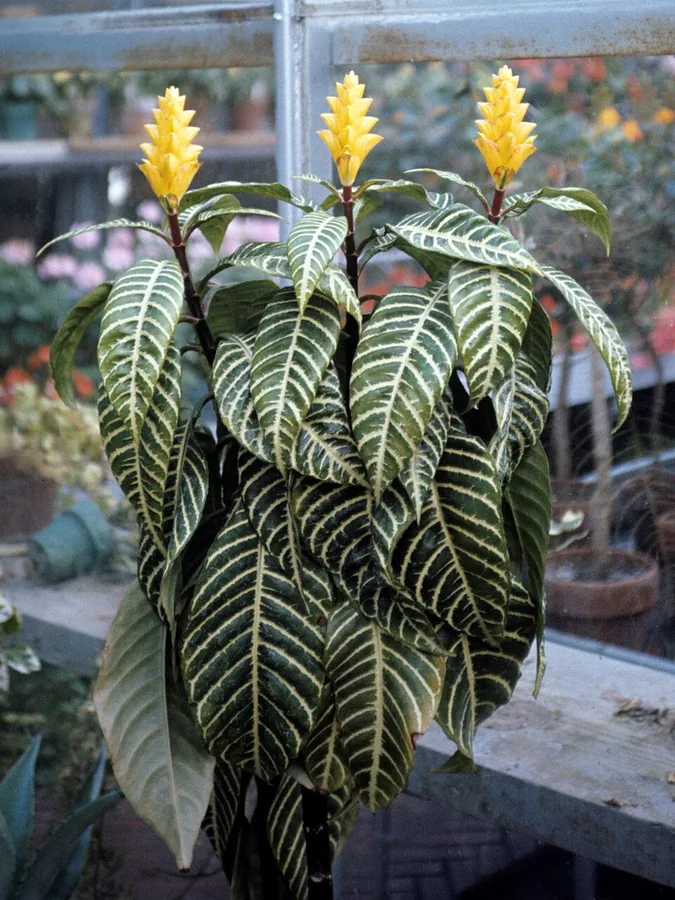
One look and the name makes sense. Deep green leaves are threaded with crisp white veins, banded much like a zebra, and that foliage alone is reason to love it. When flowering time comes, a tall golden spike rises from the middle and holds its color for weeks.
There is no need to feel daunted by its reputation. It hails from the warm, damp floor of a Brazilian forest, so it simply wants that same moist, humid air indoors, and that single need is what catches most people out. Let the air turn dry or the soil lurch from soaked to parched and the lower leaves will brown, but read those signs early and you can put it right.
Meet its wishes and it gives back generously, even if it is not the most carefree starter plant. It grows slowly, does not live for many years, and earns its demanding label honestly. Many growers root a couple of cuttings along the way, so a young plant is always ready to carry on when the first one tires.
Care
The short version: bright indirect light, cozy warmth above 65°F (18°C), and humidity kept generously high. Hold the soil evenly moist all year without ever soaking or parching it, and offer a light feed across the growing season.
Light
Set it in bright indirect light, close to a window but shielded from direct sun, and it will feel right at home. It can cope in partial or full shade if that is what you have, though the striping stays richest where soft light reaches it through the day.
Water
Aim to keep the soil evenly moist through every season, never bone dry and never sitting in water, and you and the plant will get along fine. After it flowers, during its quiet rest, water a touch less rather than stopping. Swing too far either way and the lowest leaves brown and let go, but that is easy to correct once you steady the routine.
Soil
A peaty, free-draining mix full of organic matter gives the roots what they like. This plant leans acidic, happiest at a pH at or below 6.0, so a blend sold for acid-loving plants is a safe, easy choice.
Temperature
Keep it comfortably warm, somewhere between 64°F and 81°F (18°C to 27°C), and never below 65°F (18°C). Cold snaps and sneaky drafts are the quickest way to lose a few leaves, so a steady, sheltered spot pays off.
Humidity
Here is the one that matters most, and the reason the plant has a fussy reputation. It craves high humidity, well beyond what a heated room provides, so rest the pot on a tray of damp pebbles or keep it somewhere naturally moist such as a bathroom.
Feeding
Through the growing season, beginning in late winter, offer a weak liquid feed every couple of weeks. A gentle, regular little meal suits it far better than a rare strong dose, which can upset the roots.
Pruning
Once the golden spike has faded, trim the plant back to around 12 to 18 inches (30 to 46 cm) and leave about two rows of leaves in place. It may look bare for a moment, but that firm cut is exactly what coaxes fresh, bushy growth up from the base.
Repotting
Give it a fresh pot once a year and it will thank you. When roots begin circling, the soil dries quicker than before, or new growth seems to pause, those are friendly signs it is ready for more room.
Size & spacing
Left to its own devices it can climb 4 to 6 feet (122 to 183 cm) tall and spread 4 to 5 feet (122 to 152 cm) wide, though its slow pace and your regular trims usually keep it tidier. Leave a little space around it so air can drift past the leaves.
Troubleshooting
Almost every worry with a zebra plant comes back to air that has gone too dry or too cold, and the leaves are the first to say so, usually at their tips and along the bottom. Find your symptom below and settle the cause early, before more leaves let go.
Lower leaves turning brown and dropping away
When the bottom leaves fade to brown and fall, dry air is usually behind it, since this rainforest native struggles in the parched warmth of a heated room. A cold draft or soil left completely dry will loosen those lower leaves too. Lift the humidity, hold it warm above 65°F (18°C), and give it a drink before the mix runs dry.
Fix:
- Raise humidity by setting the pot on a tray of wet pebbles or moving it to a bathroom
- Keep temperatures above 65°F (18°C) and away from cold drafts
- Maintain consistent soil moisture without letting it fully dry or waterlog
Crisp brown edges on leaves that are otherwise well
If only the tips and margins crisp up while the rest of the plant looks healthy, the surrounding air has simply gone too dry. Stand the pot on a tray of wet pebbles or move it to a steamy room like a bathroom, and the leaves that unfurl next will come in clean.
Fix:
- Increase humidity around the plant with a pebble tray or humid room
Leaves scorching beside a vent or open door
Gusts of hot or cold air pull moisture from the foliage faster than the plant can replace it, leaving a scorched look. Shift it away from heating and cooling vents, doorways, and any breezy corner, and settle it somewhere calm and humid instead.
Fix:
- Relocate away from heating/cooling drafts to a humid, stable spot
Toxicity
Here is a reassuring note for homes with pets. The ASPCA lists the zebra plant as non-toxic to cats, dogs, and horses, and no known toxins put the other animals or the people in the house at risk. A curious nibble does no harm, though it is far happier admired than eaten.
Safe for
People · Cats · Dogs · Horses · Rabbits · Livestock · Birds
Cats None
Cats are safe here. The ASPCA files the zebra plant as non-toxic to them, so a chewed leaf is no cause for alarm.
Dogs None
A dog can mouth or swallow a leaf without coming to harm, since the ASPCA rates this one non-toxic for them.
Horses None
Horses have nothing to fear from it either, as the ASPCA counts the zebra plant among the plants that are non-toxic to them.
Rabbits None
With no toxin in the leaves, a rabbit that sneaks a bite should be perfectly fine, even though this is not something grown for it to eat.
Livestock None
Grazing animals run no risk of poisoning from this houseplant, which in practice seldom ends up anywhere near them.
Birds None
A pet bird can land on the foliage or nibble at it with no toxic effect to worry about.
People None
It carries no known toxins, so a small child who tastes a leaf is safe, though the plant is meant for looking at rather than the dinner table.
Varieties
The zebra plant on your shelf is nearly always the plain species, and that is the one you are most likely to bring home.
Aphelandra squarrosa
Its deep green leaves are marked with striking white veins that read like zebra stripes, and when it blooms a long-lasting spike of yellow bracts stands tall above the foliage.
How to propagate
Because this plant does not live for years on end, learning to take a cutting is part of keeping it near. Happily, it roots from the very stems you cut off when you prune.
Stem cuttingsModerate
Use cuttings taken from stems pruned after flowering · Several weeks to root in warm, humid conditions
The stems you cut away after flowering are exactly what you root, and given warmth and steady humidity they take hold over several weeks. That habit is worth having, because the plant grows slowly and tends toward a short life, so a cutting or two keeps a fresh young zebra plant ready as the parent begins to fade.
Myths
A zebra plant must go through a strict winter dormancy or it will die.
No enforced dormant stretch is needed at all. Once the flowers finish, the plant enjoys a calm rest, which really just means easing back on watering for a while. Trim back, but keep watering, or the roots dry out and those lower leaves start to drop.