Shrub · Clethraceae
Summersweet
Clethra alnifolia
Offer it steady moisture and a little shade, and summersweet rewards you with sweet-scented spikes long after other shrubs have called it a year.
Partial shade
Every 3–7 days
USDA 3–9
3–8 ft · 0.9–2.4 m
Overview
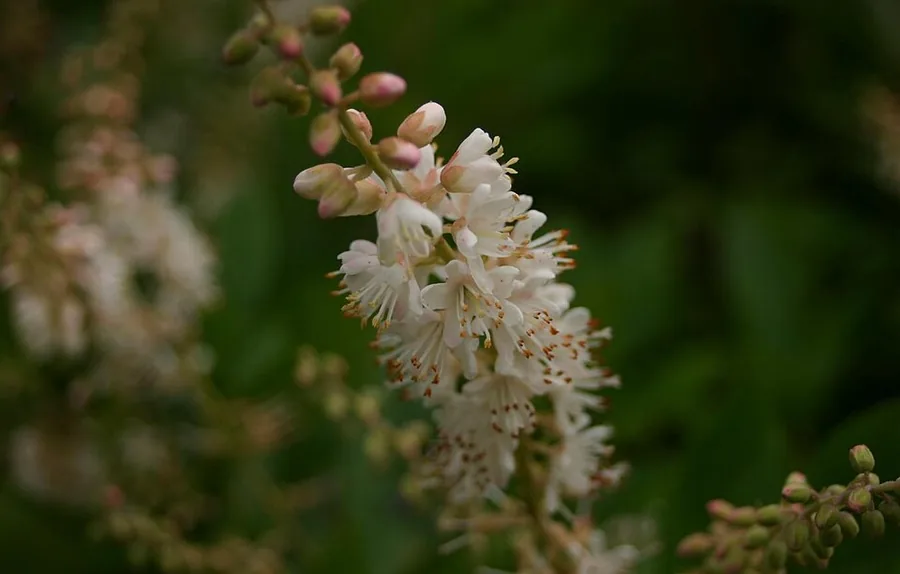
If you are new to shrubs, summersweet is a gentle place to begin. It earns its name in July and August, when soft bottlebrush spikes of fragrant white or pink flowers open right as the rest of the garden begins to tire. The plant belongs to the Clethraceae family and grows wild along the eastern seaboard in damp woodland and beside quiet streams. That marshy upbringing is really the heart of caring for it, because here is a shrub that genuinely welcomes damp roots.
This is an easy plant to share your garden with, and small mistakes rarely set it back. It weathers a wide sweep of cold, from zone 3 all the way to zone 9, brushing off hard winters and taking clay, salt, and standing water that would defeat fussier shrubs. Its flowers keep bees and butterflies coming through summer, and the leaves warm to a clean golden yellow before they fall.
Give it the moist, acidic ground it enjoys and it asks for very little more from you. The one thing it truly dislikes is a hot, dry spot, where the leaves bronze and spider mites find their way in. Settle it somewhere damp with a bit of afternoon shade and it will slowly grow into a fragrant, easygoing colony you can be proud of.
Care
The short version: partial shade to full sun, in moist to wet, acidic soil that you never let dry out. Keep it watered through the heat, prune in late winter, and offer one gentle feeding in spring.
Light
Summersweet is happiest in partial shade, yet it takes everything from full sun to deeper shade in stride. A little direct light brings on more flowers, though it keeps blooming where many shrubs would give up, which makes it a kind choice for a shadier corner you were unsure about.
Water
Keep the soil evenly moist to wet and never let it bake dry. Water about every 3 to 7 days, and more often while a young plant is settling in or during a dry stretch. At heart this is a streamside shrub, so damp roots suit it far better than thirst ever will.
Soil
Give it moist to wet, acidic ground that is rich in organic matter. A pH anywhere from 4.5 to 7.0 keeps it content, and unlike more delicate shrubs it takes heavy clay and soggy, low-lying corners without complaint.
Temperature
Cold is nothing to fear with this plant. The shrub stays hardy from roughly -29°F to 100°F (-34°C to 38°C), which carries it comfortably through zone 3 winters and warm southern summers alike.
Humidity
Ordinary outdoor air is all it asks for, so there is no reading to fuss over. What truly counts is moisture at the roots, since dry air together with dry soil is what invites spider mites in.
Feeding
A single spring feeding is plenty to keep it happy. Reach for a balanced or acidifying fertilizer meant for acid-loving plants, which helps hold the soil on the slightly sour side it prefers.
Pruning
Because it flowers on new wood, prune in late winter or early spring to shape it and keep its size in hand without giving up any blooms. Pull off the root suckers as well, unless you are glad to let it spread into a colony.
Repotting
Grown out in the garden, summersweet rarely needs a thing done to its roots. In a pot, repot only when the roots circle around, push out through the drainage holes, or water runs straight through without soaking in.
Size & spacing
A grown shrub reaches 3 to 8 feet (91 to 244 cm) tall and spreads 4 to 6 feet (122 to 183 cm) across. Leave room for that full width, and remember it will sucker outward past where you first set it.
When to plant
Plant summersweet in spring or fall, while the weather stays mild and the roots have time to settle before the next spell of heat or cold arrives. The fragrant flowers come along on their own in July and August, on growth the shrub makes in that very season.
Northern hemisphere
Southern hemisphere
Typical months for a temperate climate: start earlier in warm zones, later where spring frosts linger.
- Plant: Spring or fall
- Harvest: July to August
Hardiness
USDA hardiness zones: 3–9
Temperature: down to -40°C
Troubleshooting
Nearly every worry with summersweet leads back to one gentle truth: a spot that has grown too hot and too dry. Learn to read the leaves early and most troubles ease on their own once the moisture is right. Look for what you are seeing below, then step in kindly before the stress takes hold.
Speckled, bronzing leaves with a hint of webbing
Try not to worry, because this is almost always spider mites, and they only settle in once a plant has been left too hot and too dry. Give the leaves a firm rinse with the hose to wash the mites away, then keep the soil nicely moist so the shrub no longer tempts them back. If a stubborn patch lingers, insecticidal soap or horticultural oil will finish the job, and the plant recovers.
Fix:
- Spray foliage with a strong stream of water to dislodge mites
- Improve soil moisture and avoid hot, dry sites
- Apply insecticidal soap or horticultural oil to affected foliage if needed
Wilting and yellowing where the ground bakes dry
Take heart, because this is drought stress, and it points to the planting spot rather than anything you did wrong. Summersweet longs for steady moisture and droops quickly when the heat turns the ground dry. Water a little more often to keep the roots evenly damp, tuck a layer of mulch around the base to hold what moisture is there, and if the same shrub keeps struggling, gently move it to a cooler, damper, partly shaded home where it can thrive.
Fix:
- Increase watering frequency to keep soil evenly moist
- Mulch to conserve moisture and keep roots cool
- Relocate to a moister, partly shaded site if chronically stressed
Toxicity
Here is welcome news for homes with animals and little ones. Summersweet is not on the ASPCA toxic-plant lists and is treated as non-toxic and pet-safe. The most a stray nibble is likely to bring is a brief, mild stomach upset, the same as with nearly any plant in the garden.
Safe for
People · Cats · Dogs · Horses · Rabbits · Livestock · Birds
Cats None
You can relax about the cat, since summersweet stays off the ASPCA toxic list and poses no real threat. Should a curious cat chew a leaf, the most that follows is a passing bit of tummy upset, just as almost any plant might cause.
Dogs None
Your dog is welcome to share the garden without any concern here. The shrub holds no known toxin, though a dog that gulps down a large mouthful of leaves might drool a little or pass a soft stool for a while.
Horses Safe
Horses do just fine alongside summersweet, as it carries no harmful compounds. A few leaves nibbled here and there while grazing will not bother them at all.
Rabbits Safe
Rabbits are perfectly welcome to browse close to the plant. Nothing in it is poisonous, so an odd nibble of a leaf leaves them none the worse.
Livestock Safe
Cattle, goats, and sheep can graze happily beside summersweet with nothing to fear. The leaves hold none of the toxins that tend to trouble grazing animals.
Birds Safe
Garden and wild birds are safe among the branches, which tend to invite bees and butterflies to the sweet-smelling spikes. There is nothing on the plant to put them at risk.
People Safe
Summersweet is gentle around people too. It is not grown to be eaten, yet a curious child who tries a leaf will meet nothing worse than a possible mild stomach ache.
As with any plant, ingestion of large amounts of plant material may cause mild, transient stomach upset.
Varieties
A handful of named summersweet selections show up at nurseries, sorted mostly by size and by the color of their flowers. These are the ones well worth getting to know.
Hummingbird
A friendly little dwarf that settles in around 2 to 4 feet tall and covers itself in thick white flower spikes.
Ruby Spice
You can count on its deep pink flowers to keep their rich color right through bloom rather than fading pale.
Pink Spire
Its pink buds open gently into soft pink, sweet-scented spikes.
Sixteen Candles
Neat upright white spikes rise cleanly above the leaves on a compact, well-behaved shrub.
Companions
Summersweet pairs best with other natives that share its love of wet, acidic ground, the kind of partners that thrive in a rain garden or a damp, shaded border.
Plant near
Itea virginica (Virginia sweetspire): Shares the same moist, acidic soil and sun-to-part-shade conditions for wet-site and rain-garden plantings.
Ilex verticillata (winterberry): Native shrub that thrives in the same wet to moist soils and pairs well in naturalized and pollinator plantings.
How to propagate
Making more summersweet is refreshingly simple, and the very suckering habit that some gardeners fight is exactly what puts free plants within easy reach.
DivisionEasy
Late winter to early spring · 1 to 2 growing seasons
The gentlest way to start is to lift the rooted suckers that pop up around the edge of a clump. Ease them out in late winter or early spring and set them back in the ground, and they will grow into a full shrub over 1 to 2 growing seasons.
Stem cuttingsModerate
Early summer (softwood) · Several weeks to root, then 1 season to establish
If you would like to try cuttings, take soft new growth in early summer and root it under mist or a simple humidity cover. Roots appear within a few weeks, and after that the young plant needs about a season to settle in.
SeedModerate
Sow collected seed in fall or after cold stratification · 1 to 2 seasons
Scatter the fine seed on the surface in fall, or after a spell of cold stratification, because it wants both light and a chill to wake up. Give it 1 to 2 seasons to reach a good size, and know that named cultivars will not come back true from seed.
Myths
Summersweet will only flower well in full sun.
Happily, this is one of the rare flowering shrubs that blooms dependably in part shade. You will still enjoy fragrant, late-summer spikes in the very corners where most shrubs would simply sulk.
You should prune summersweet right after it flowers to encourage more blooms.
Since it flowers on fresh, current-season wood, the kindest time to prune is late winter or early spring. A trim then costs you none of the coming season's flowers, so you can shape it with a clear conscience.