Ornamental · Poaceae
St. Augustine Grass
Stenotaphrum secundatum
With a little warmth, regular water, and a high mow, St. Augustine grass fills in soft and thick, like a living carpet underfoot.
Full sun
Every 3–7 days
60–365 days
USDA 8–10
Overview
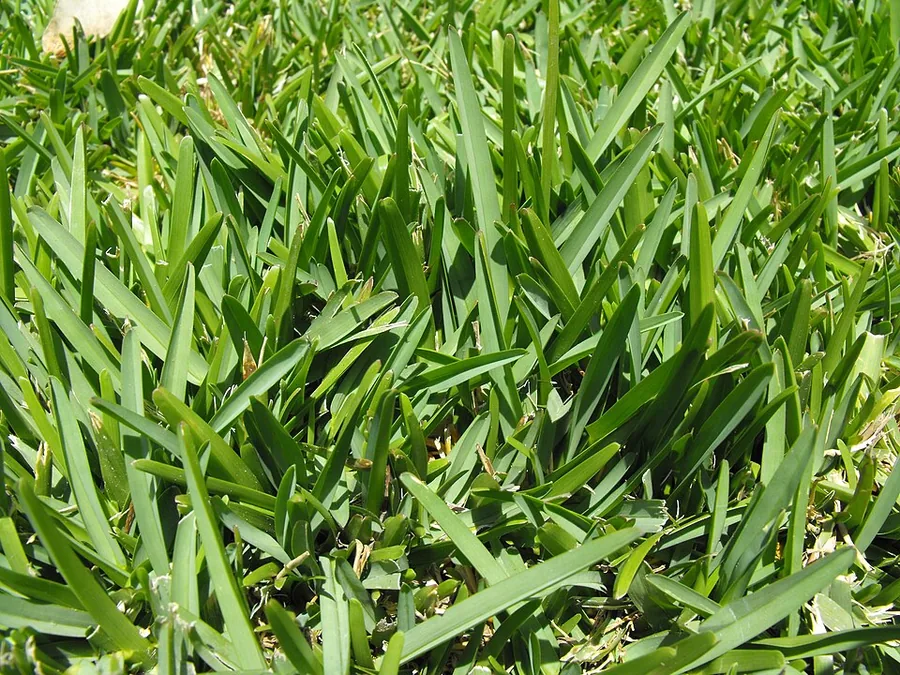
If this is your first lawn, take heart: St. Augustine grass is a forgiving place to begin. It is the go-to turf across the hot, humid Southern states, a coarse-bladed grass that creeps along on above-ground runners called stolons and knits itself into a soft, dense mat. It greens up early in the season and keeps that color through the worst of the summer heat, which is why it blankets so many yards along the Gulf Coast and in Florida. It also handles a bit of shade more gracefully than most warm-season grasses, though it will always fill in thickest where good sun reaches it.
This is a perennial that lives for warmth and simply is not made for the cold. It flourishes when the weather is hot, then eases into a brown, dormant rest once winter chill arrives, and a hard freeze can thin or even take out a lawn left unprotected. Do not let that worry you; it is the same trait that makes it so at home in the Gulf states, where the cold rarely lingers long enough to do harm.
The lush, quick cover does ask a little care in return, and that is nothing to fear. St. Augustine grass likes steady water and regular feeding, and it does attract more pests and diseases than some lawns, with the southern chinch bug at the top of the list. Mow it high, water it deeply, and keep a light hand with nitrogen, and it will thank you with a thick, even carpet of green.
Care
The short version: settle it into sun or a bit of shade, keep the soil evenly moist with about 1/2 to 3/4 inch of water each time, mow it tall at 3 to 4 inches, and feed it nitrogen across the warm months without going overboard.
Light
St. Augustine grass is happiest in full sun, yet it tolerates partial shade more kindly than most warm-season lawns. Offer it all the sun you reasonably can so it grows in thick and full, because heavy shade tends to leave it thin and a little frail.
Water
Aim to keep the soil evenly moist, watering as soon as the blades fold, wilt, or take on a blue-gray cast, and give it around 1/2 to 3/4 inch at each go. It likes consistent moisture and only shrugs off mild dry spells, so try not to let it stay parched for long.
Soil
This grass settles into a wide range of soils, though it does best in well-drained ground at a medium to low pH, roughly 6.0 to 7.5. Where the soil runs alkaline it can pale a bit, and a simple dose of iron usually brings the green right back.
Temperature
As a warm-season grass, it keeps growing happily through heat as high as about 95°F (35°C). Cold is its soft spot, so it fades into a brown winter dormancy, and a hard freeze near 25°F (-4°C) can thin or kill an exposed lawn.
Humidity
It feels right at home in high humidity, which is one reason it does so well along the muggy Gulf Coast. That same damp, warm air can encourage a few of its fungal troubles, so good airflow and mowing when the blades are dry matter more than the humidity on its own.
Feeding
Give it nitrogen through the warm season, somewhere between 2 to 6 applications a year depending on where you live. Ease up on the fast-release soluble kind, since a heavy dose tends to fuel chinch bug damage more than the lawn itself.
Pruning
Keep standard cultivars tall, around 3 to 4 inches, and trim the dwarf types a touch shorter at about 2 to 2.5 inches. Try never to shear off more than a third of the blade in a single mow, since cutting harder stresses the grass and lets weeds sneak in.
Repotting
none
Size & spacing
Once mowed, the blades sit only about 3 to 4 inches (8 to 10 cm) high, but the stolons keep reaching sideways, so one plant can spread roughly 1 to 3 feet (30 to 100 cm) as it laces together into a mat.
When to plant
Because this grass runs on warmth, the easiest time to start it is while it is growing strong. Lay your sod, plugs, or sprigs in spring or from late summer into early fall, and just steer clear of cold snaps and hot, parched stretches. It will green up again each spring and settle into a brown rest when winter cold rolls in, which is perfectly normal.
Northern hemisphere
Southern hemisphere
Typical months for a temperate climate: start earlier in warm zones, later where spring frosts linger.
- Plant: Lay sod, plugs, or sprigs during active warm-season growth in spring or late summer/early fall (late fall to spring in south Florida); avoid cold and hot, dry extremes.
- Harvest: Grown as turf; not flowered or harvested. Greens up in spring and goes dormant/brown in winter cold.
Hardiness
USDA hardiness zones: 8–10
Temperature: down to -12°C
Troubleshooting
Most St. Augustine grass worries turn up as patches of yellowing or dying turf, and the season and weather usually point to the culprit. Once you learn to read the timing and the shape of the damage, telling a summer chinch bug from a fall fungus gets much easier. Find the picture that matches yours below, then step in gently before the patch grows.
Spreading yellow-brown patches in the hot, sunny corners
When patches like this creep outward, the culprit is almost certainly the southern chinch bug, which harms St. Augustine grass more than any other pest. It sips sap along the warm, dry edges through the peak of summer, and the browning turf pushes outward from there. Take heart and act early: treat the patch along with the healthy grass hugging it the moment damage shows, lighten up on fast-release nitrogen, and water generously, since a good soaking or heavy rain sets the bugs back.
Fix:
- Treat affected and surrounding turf with a labeled insecticide as soon as injury appears, targeting both nymphs and adults
- Avoid excess soluble nitrogen, which accelerates chinch bug buildup
- Irrigate adequately, since heavy irrigation or rainfall suppresses populations
- Consider a resistant cultivar such as Floratam when renovating
Mottled yellow lawn that stays pale even after a feeding
A lawn that goes blotchy yellow and simply will not green up after feeding may have St. Augustine Decline, a virus that no chemical can cure. Before you assume the worst, rule out a shortage of iron or manganese on alkaline soil, which a little iron will set right. If it truly is SAD, replant with a resistant cultivar such as Floratam or Raleigh, tuck the plugs in on 2 to 3 foot centers, and let the healthy grass gradually crowd out the sick.
Fix:
- Replant with a SAD-resistant cultivar (for example Floratam, Floralawn, Raleigh, or Seville), plugging it in on 2 to 3 foot centers to crowd out diseased grass
- Rule out iron/manganese deficiency on alkaline soil with supplemental iron
- Use clean, virus-free sod or plugs
Round brown patches in cool, damp weather with leaves that slip loose
Circular patches that surface during the cool, wet spells of fall and spring usually mean large patch, a fungus in the Rhizoctonia family. The telltale sign sits right at the patch edge, where the blades slide free of dark, rotted sheaths with almost no tug. Ease off feeding until summer when the grass is growing hard, cut back on watering, and loosen any packed soil with aeration so it can drain.
Fix:
- Limit fertilizer to summer when turf is actively growing
- Avoid mowing too low and avoid over-irrigation
- Aerate to reduce compaction and improve drainage
- Apply a preventive fungicide in fall when soil temperatures favor the pathogen
Gray oval spots rimmed in dark purple on the blades
Those tan-to-gray spots ringed in purple are the calling card of gray leaf spot, a fungus that flares up in warm, wet weather on lawns fed a bit too much nitrogen. Mow only while the blades are dry and bag the clippings for as long as the spots are active. The real, lasting cure is to dial the nitrogen back and keep the leaves from sitting wet for long stretches.
Fix:
- Mow at the proper height and only when grass is dry
- Bag and dispose of clippings while disease is active
- Reduce nitrogen and avoid prolonged leaf wetness
- Apply a labeled fungicide if needed
Toxicity
Here is some reassurance for pet owners: St. Augustine grass is an ordinary lawn turfgrass with nothing poisonous about it. Cats, dogs, horses, and the rest can lie on it and nibble it with no danger at all. A pet that wolfs down a mouthful may bring it back up now and then, but that is just the blades tickling the stomach rather than any toxin, and the pollen is the only part that might trouble someone prone to grass allergies.
Safe for
People · Cats · Dogs · Horses · Rabbits · Livestock · Birds
Cats None
A cat can graze on this lawn grass without any harm at all. The worst you might notice is the occasional hairball or a bit of vomiting brought on by the blades themselves, which is mechanical and not poisoning.
Dogs None
Dogs are perfectly safe playing on it and around it. A few will crop a mouthful and bring it back up, but that is simply the grass scratching the stomach rather than any toxin.
Horses Safe
Horses can graze St. Augustine grass freely, with no risk of poisoning.
Rabbits Safe
Rabbits can nibble the blades with no worry, since this is a plain turfgrass that holds nothing toxic.
Livestock Safe
Cattle, goats, and sheep can all graze it comfortably and come to no harm.
Birds Safe
Backyard birds and poultry are welcome to peck about in it, as nothing in the plant can hurt them.
People Safe
It is gentle on people too, though the pollen may stir up hay-fever symptoms in anyone who tends toward grass allergies.
The grass is not poisonous. Pets that nibble lawn grass may occasionally vomit, but this is mechanical, not poisoning. Grass pollen can trigger hay-fever-type allergies in sensitive people and pets.
Varieties
St. Augustine grass comes in a handful of named cultivars, and the best fit really depends on your local climate and the pests you tend to battle. Here are the ones worth getting to know.
Floratam
The most widely planted of the bunch, Floratam is a coarse, vigorous grass that stands up to the SAD virus, though it does not take cold or shade well.
Palmetto
A well-loved choice with a bit more cold hardiness, Palmetto is not resistant to insects and can wrestle with disease in humid climates.
Raleigh
Developed at NC State for cooler northern spots, this cold-hardy, SAD-resistant grass can still be troubled by chinch bugs and large patch.
Seville
A fine-bladed, deep green dwarf, Seville brushes off SAD but stays open to chinch bug and webworm damage.
Captiva
Bred as a dwarf at the University of Florida, Captiva resists southern chinch bugs and grows low enough that it asks for less mowing.
How to propagate
You will not be reaching for a seed packet with this one. It travels on its own runners, so plugs, sprigs, and sod are how you start a fresh lawn or mend a bare spot.
DivisionEasy
During active warm-season growth in spring or late summer/early fall · Several weeks to a few months for plugs/sprigs to fill in; sod establishes fastest
Begin a new lawn in spring or from late summer into early fall, while the grass is growing hard. Since it spreads on its own, you set it out vegetatively as sod, plugs, or sprigs, slicing sod into little squares for plugs and spacing them 6 to 24 inches apart, with closer plugs filling in sooner. Sod stitches together fastest, while plugs and sprigs need several weeks to a few months to close over, and none of it is ever started from seed.
Myths
St. Augustine grass can be seeded just like other lawn grasses.
In practice it produces almost no viable seed, so sowing it hardly ever takes. The reliable route is to establish it vegetatively, laying sod or setting in plugs and sprigs instead.