Shrub · Aquifoliaceae
Sky Pencil Holly
Ilex crenata
A slender green column that fits where nothing else will, asking for little more than acidic soil and a bit of winter kindness.
Full sun
Every 5–10 days
USDA 5–8
4–10 ft · 1.2–3 m
Overview
If you have never grown a shrub before, Sky Pencil Holly is a kind place to start. It is a Japanese holly shaped like a tall, slim pencil, rising to 4 to 10 feet (1.2 to 3 m) while staying only 1 to 3 feet (30 to 90 cm) across. That skinny footprint lets it settle happily beside a front door, along a tight path, or in a matched pair on either side of a gate, where a rounder bush would simply take over.
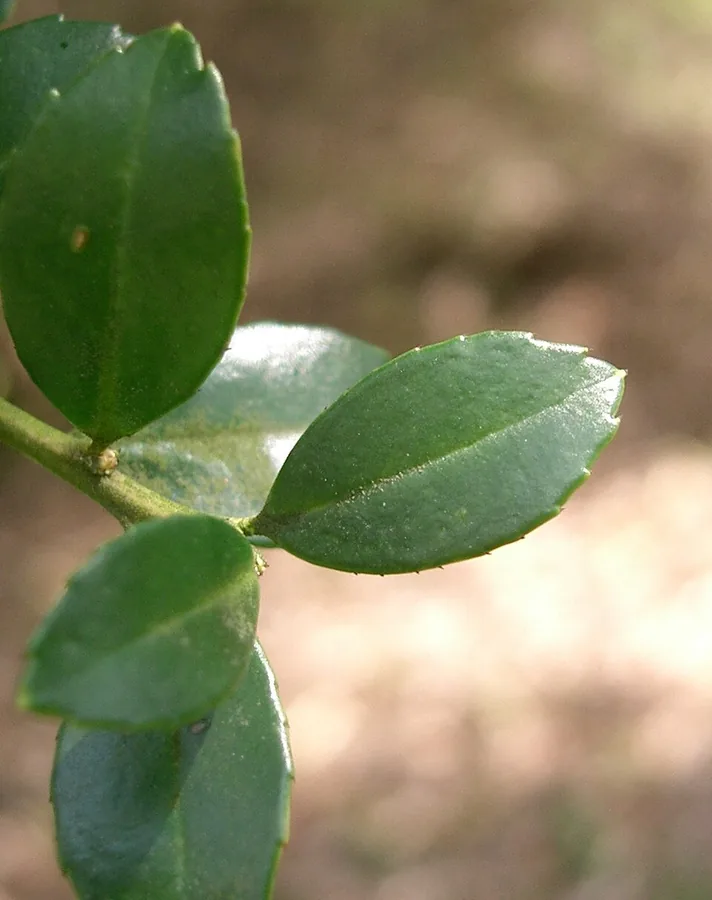
The little leaves are glossy and evergreen, so the plant keeps its color right through the year, and because it grows slow you rarely have to fuss over its shape. One thing that surprises new growers: this is an all-female cultivar, which means it can only carry its tiny black berries if a male holly happens to be planted nearby. On its own it stays a clean green spire with no fruit, and that is perfectly healthy.
Cold gardens suit it well, since it shrugs off cold down to roughly -9°F (-23°C) in zones 5 to 8. Its one soft spot is that lovely slim shape, which heavy snow or a hard, drying wind can push out of line. Set it in acidic soil that drains freely, give it a sheltered corner, and it will forgive the odd mistake and keep going.
Care
The short version: give it full sun to a little shade, keep the acidic, free-draining soil evenly damp, feed once in early spring, and loosely bind the stems together before winter so the narrow column holds its shape.
Light
Give Sky Pencil Holly full sun wherever you can, since bright light is what keeps the column packed tight and standing tall. It will still do fine in partial shade, though in too little light it can grow loose and a touch thin, and that is nothing to worry about.
Water
Aim to keep the ground evenly moist, offering a drink about every 5 to 10 days and adjusting for how hot and dry the week turns out. A brief dry patch will not set it back, but real drought leaves it struggling, and it really cannot bear standing in waterlogged soil, which is what invites rot at the roots.
Soil
Set it into light, acidic, well-drained soil around a pH of 5.0 to 6.5, and it will settle in happily. Clay or sandy ground suits it too, but alkaline soil yellows the foliage and wears the plant down over time.
Temperature
This is a tough, cold-hardy holly, at ease anywhere from about -9°F to 95°F (-23°C to 35°C). That hardiness keeps it standing through zone 5 to 8 winters, though a sharp, drying wind in the cold months can still brown the foliage, so a sheltered spot is a real help.
Humidity
Everyday outdoor air is all this shrub needs, so there is no humidity figure to chase. What helps far more is good airflow around the plant, especially through those heavy, muggy stretches of summer.
Feeding
One feeding of balanced, acid-forming shrub fertilizer in early spring is all this holly asks for. It grows at such an easy pace that a single spring meal carries it comfortably through the rest of the year, so you can put the bag away.
Pruning
The best part is that this plant keeps its neat spire without any help, so hard pruning is almost never called for. Trim it lightly in spring just to tidy the outline, and before the cold sets in, loop a soft tie around the stems so a load of snow and ice cannot pry the column open.
Repotting
Growing in a pot, this holly is glad to move up every 2 to 3 years, or sooner if you spot roots winding around inside or poking out of the drainage holes. When growth slows or water starts rushing straight through, lift it into a slightly bigger pot with fresh, acidic potting mix.
Size & spacing
At maturity you can look forward to a slender column standing 4 to 10 feet (1.2 to 3 m) tall yet only 1 to 3 feet (30 to 90 cm) across. Since it takes up so little room from side to side, you can line several up to form a slim hedge or a leafy screen without crowding the bed.
When to plant
Because Sky Pencil Holly is evergreen, there is no crop to wait on, only a friendly window for planting. Aim for spring or fall, choosing a stretch of mild weather so the roots take hold before summer heat or a hard freeze sets in. Soft, quiet blooms arrive in May and June, and berries appear only when a male holly stands nearby, so do not fret if you see none.
Northern hemisphere
Southern hemisphere
Typical months for a temperate climate: start earlier in warm zones, later where spring frosts linger.
- Plant: spring or fall
- Harvest: May to June
Hardiness
USDA hardiness zones: 5–8
Temperature: down to -29°C
Troubleshooting
In the right spot this holly gives you very little grief, but a soggy site or a rough winter can bring out its handful of weak points. Most of the trouble appears on the foliage or the tall stems, so a quick look now and then lets you step in early. Find your plant's symptom below and act while it still does good.
Yellowing, thinning leaves with dieback creeping in at the tips
When the yellowing and dieback trace back to wet ground at the roots, the likely culprit is Phytophthora or black root rot. Dig gently near the base and you will probably find dark brown to black, mushy roots, with the whole plant looking worse wherever the soil stays soggy. Start by improving the drainage and easing off the water, and if the spot simply will not dry out, set it into a raised bed where water can escape. A badly rotted plant is kindest taken out before the trouble reaches its neighbors.
Fix:
- Improve drainage and stop overwatering
- Avoid planting too deeply or over-mulching
- Use raised beds in heavy or wet soils
- Remove severely affected plants
Pale speckles, a bronze cast, and fine webbing on the leaves
Those pale flecks, the bronze tint, and the fine webbing point to spider mites, often the southern red mite, which thrive when the air turns hot and dry. To check, hold a sheet of white paper beneath a branch and tap it to reveal the tiny crawlers. A firm jet of water washes most of them away, and a follow-up of insecticidal soap or horticultural oil brushed over the leaf undersides, repeated after about a week while any remain, takes care of the rest.
Fix:
- Apply strong water sprays to dislodge mites
- Treat with insecticidal soap or horticultural oil, covering lower leaf surfaces
- Repeat treatment in 7 to 10 days while mites are present
Browned leaves and a column pushed open once winter passes
A harsh, drying wind in the cold months can sear the leaves into winter burn, and the sheer weight of snow and ice tends to force the slim column apart. After a storm, brush the snow off the stems with a gentle hand so it cannot bend them out of shape. The lasting answer is to bind the stems together before the cold arrives, then shield the plant with a windbreak and a warm blanket of mulch.
Fix:
- Gently brush snow off stems after storms
- Tie stems loosely together for winter support
- Provide a windbreak and winter mulch
The entire shrub fading to a pale, washed-out yellow
If the whole shrub drifts toward yellow, the ground beneath it is very likely too alkaline for its liking. That condition is chlorosis, and it sets in because a high pH ties up the iron the holly needs to stay green. Check the soil, nudge it back toward the acidic side, and apply a little chelated iron to bring the color back while the pH settles down.
Fix:
- Test soil pH
- Amend soil to lower pH toward acidic range
- Apply chelated iron if needed
Toxicity
There is no need to panic here, since this is a mildly toxic shrub rather than a dangerous one. Its leaves and berries hold saponins, and the cheerful berries are the part a curious pet is most likely to try, so they are the main thing to watch. A small nibble usually ends in a queasy stomach, not a crisis, though sweeping up dropped berries and keeping them from pets and little ones is a kind habit.
Toxic to
Cats · Dogs · Horses · Rabbits · Livestock · Birds · People
Cats Mild
If a cat samples a leaf or a single berry, the usual result is a queasy tummy, a little drooling, and maybe some vomiting or loose stools. It generally clears up on its own, but a cat that has swallowed a handful of berries is worth a quick check with the vet, just to be safe.
Dogs Mild
Dogs are the ones most tempted to crunch the shiny berries, and the saponins can leave them drooling and uninterested in dinner for a day. Look for a bit of vomiting or a loose stool, nothing more worrying than that.
Horses Mild
A horse seldom takes an interest in holly, yet a mouthful of leaves or berries may bring on colicky stomach upset along with a quiet, dull mood.
Rabbits Mild
A rabbit's delicate stomach reacts badly to the saponins, so it is wise to gather up any clippings and dropped berries and keep them away from where it lives and plays.
Livestock Mild
Most grazing animals leave the bitter foliage well alone, though a goat or sheep that strips a branch bare may wind up with a mild bout of digestive upset.
Birds Caution
Out in the garden, wild birds feed on holly berries right through winter with no ill effect, yet that same fruit can unsettle pet birds, so a caged bird is safest kept well away from it.
People Caution
None of this holly is food, so no part of it should be eaten. Swallowing a berry or two will most likely bring nothing worse than an upset stomach, but eating several can lead to vomiting and diarrhea, which is why the fruit belongs well out of reach of small children.
Keep fallen berries away from pets and children; the spiny evergreen foliage is otherwise low risk.
Helpline numbers

United States
ASPCA Animal Poison Control: (888) 426-4435 (fee applies)
Poison Control: (800) 222-1222



Canada
Poison Centres: 1-844-764-7669
Varieties
Sky Pencil sits within a small circle of slim, upright Japanese hollies. Here are the ones a gardener is most likely to come across.
Sky Pencil
A remarkably slim female cultivar that reaches 4 to 10 feet tall while keeping to just 1 to 3 feet wide, which makes it a tidy upright accent.
Sky Pointer
A second upright Ilex crenata selection, growing in nearly the same narrow, columnar form.
Glow Stick
An Ilex crenata cultivar grown for its cheerful golden-yellow leaves.
How to propagate
Rather than starting from seed, Sky Pencil Holly is raised from cuttings, since seed will not hold its pencil-slim outline. It asks for a little patience and almost no skill.
Stem cuttingsModerate
Summer, using semi-hardwood cuttings · 6 to 10 weeks to root
In summer, root semi-hardwood cuttings, the one dependable way to hold that narrow, upright habit true to the parent. Set them into a moist, free-draining mix and give them 6 to 10 weeks to root. Seed will not repeat the slim shape, which is exactly why nurseries clone this holly rather than sowing it.
Myths
Holly must be safe for pets since it is just an everyday garden shrub.
Being a familiar sight in the yard tells you nothing about whether it is safe to eat. Holly holds saponins, and its berries can leave cats and dogs drooling, queasy, and dealing with vomiting or diarrhea. The risk stays low, but it is genuine, so the berries are never a treat.
Sky Pencil Holly is sure to give you berries every year.
Since this is an all-female cultivar, it cannot set fruit by itself, however well you look after it. Those small black berries appear only if a male holly stands close by to pollinate the blooms.