Bulb · Iridaceae
Siberian Iris
Iris sibirica
Forgiving, cold-hardy, and happy in a damp corner, Siberian iris hands even a first-timer grassy leaves and soft late-spring flowers.
Full sun
Every 3–7 days
USDA 3–8
2–4 ft · 0.6–1.2 m
Overview
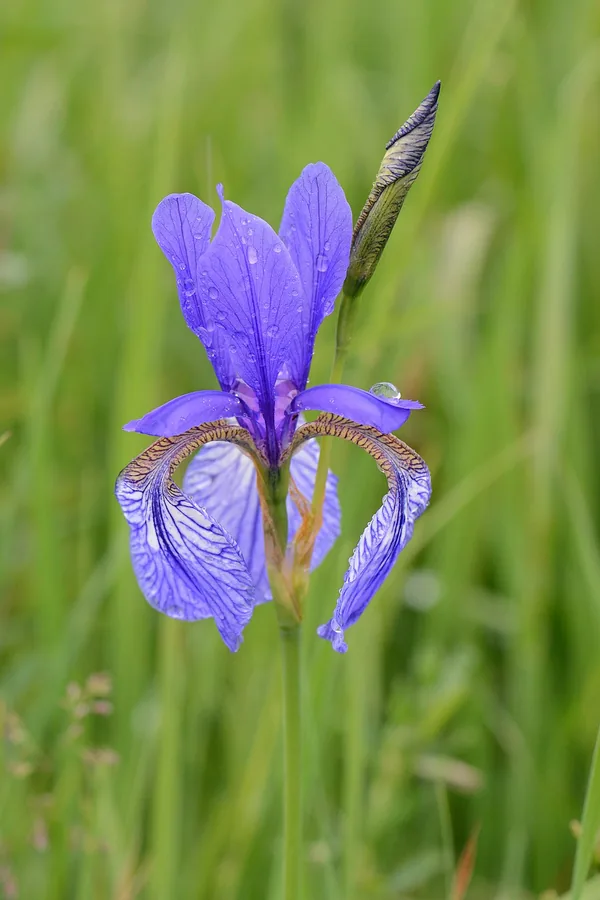
If the fussy bearded iris has ever put you off, take heart, because this cousin is far kinder. Siberian iris keeps to a tidy, grassy clump and opens airy flowers in late spring, and it has no fleshy surface rhizome for borers to bother. Give it a season to settle and it will get on quietly by itself.
This is a plant that laughs at winter. It comes through cold down to -40°F (-40°C) without a blink and adapts to all sorts of spots, from a plain border to the wet lip of a pond. It even shrugs off soggy, boggy footing that leaves most perennials to rot, so those tricky damp corners finally get a plant that enjoys them.
Feed it sunshine and steady water and the clump grows sturdy and upright, keeping its neat outline long after the last bloom fades. Those slim leaves look good all summer, so it pulls its weight in the border even between flowerings.
Care
The short version: full sun to part shade, damp soil right across the active season, and rich earth that drains freely yet still copes with a boggy patch. Split the clump about every 3 years and it largely tends itself, so there is little here to get wrong.
Light
Sun is what brings the flowers, so aim for full sun, though a little partial shade is fine and will not upset it. Try to give the clump at least 6 hours of direct light each day; skimp on that and it tends to flop and hold back most of its flowers.
Water
This iris likes a steady drink. Keep the soil damp from the moment spring growth begins right up until a few weeks beyond bloom, when it is putting in the hardest work of the year. It happily takes wet, boggy footing, and once a clump has a season or two behind it, a short dry spell will not faze it.
Soil
Plant it in rich, moist, humusy soil that still drains, though this forgiving iris will also sit in ground far soggier than other perennials could bear. Keep the pH between 6.0 and 7.0 and it stays content.
Temperature
Not many perennials are this tough. It rides out the whole span from -40°F to 86°F (-40°C to 30°C), which means savage northern winters and hot summers are both well within its comfort.
Humidity
There is no humidity target to fret over here; the plain outdoor air is plenty. What matters more is good airflow, because leaves left crowded and damp are what open the door to the odd bout of rot.
Feeding
A single spring meal is all it wants. As growth wakes in early spring, work in a balanced general-purpose fertilizer or a layer of compost, and that one feed will see the clump comfortably through the whole season.
Pruning
Once the flowers finish, snip the old bloom stems away to keep things looking neat. When you divide, or in late fall after the leaves flop and brown, shear them down to 6 to 8 inches and the plant returns fresh.
Repotting
Every 3 years or so, lift the whole clump and split it, or do it sooner if the middle turns bare and flowers grow scarce. A hollow center and a thinner show of blooms are simply the plant asking for more elbow room.
Size & spacing
Grown well, a clump reaches 2 to 4 feet (60 to 120 cm) tall and fans out to around 2.5 to 3 feet (76 to 91 cm) wide. Hand it that much room and air can drift freely between the leaves, which keeps it healthy.
When to plant
The calendar here stays kind and simple. Where winters bite hard, set out or split plants in spring; in the southeast, fall suits it better. Blooms open in May and June, and the leaves then see the clump quietly through to next year.
Northern hemisphere
Southern hemisphere
Typical months for a temperate climate: start earlier in warm zones, later where spring frosts linger.
- Plant: Spring in cooler-winter regions; fall in the southeast
- Harvest: May to June
Hardiness
USDA hardiness zones: 3–8
Temperature: down to -40°C
Troubleshooting
Siberian iris keeps you out of trouble more than most, and far more than its bearded relative. The odd hiccup that does show up usually comes back to shade, a clump grown too crowded, or a spell of wet weather. Find your symptom below and the cure is almost always an easy one.
Mushy, smelly rot down at the base
That soft, reeking mush at the base is bacterial soft rot, but breathe easy, because Siberian iris catches it far less often than bearded iris does. Cut the slimy parts right out and throw them away, then sort out the drainage and stop planting the crown so deep. Give it healthy, free-draining soil and it will handle the rest.
Fix:
- Remove and destroy affected tissue
- Improve drainage and avoid burying the crown too deeply
Sparse blooms and leaves that flop over
When flowers are few and the leaves splay out and flop, the cause is nearly always too little sun or a clump that has packed itself too tight. Move it or clear away its neighbors so it catches a good 6 hours of direct sun, and if the heart of the clump has gone woody and bare, lift it and gently pull it apart. Split it every 3 years and this trouble rarely reaches you at all.
Fix:
- Relocate or thin surroundings to provide full sun
- Divide the clump and replant healthy fans with at least two fans each
Nibbled, tattered leaf edges
Torn, tattered leaf edges with a shiny slime trail nearby are the calling card of slugs and snails working after dark. The harm is really only skin deep, so step out at night and pick them off by hand, then clear the damp litter they shelter under. Drier soil around the clump soon sends them looking elsewhere.
Fix:
- Hand-pick slugs and snails
- Reduce moist hiding spots near plants
Toxicity
Think of this as a flower for looking at, never for nibbling, and set your household up with that in mind. Every part carries irisin and terpenoids, the rhizome most of all, so a pet that has a chew can end up drooly and queasy. Slip on gloves before you handle cut roots too, since the sap can leave skin sore, but none of this is cause for alarm.
Toxic to
Cats · Dogs · Horses · Rabbits · Livestock · Birds · People
Cats Mild
A cat that has a nibble tends to drool and be sick, then go quiet and lose interest in dinner. Since the rhizome holds the strongest dose, a cat that digs and gnaws roots feels it most.
Dogs Mild
Look out for lots of drool and a churning stomach, often with loose stools and a low, sleepy mood. Dogs that unearth and chew the roots usually come off worst.
Horses Mild
A horse that grazes it can drool, feel queasy, and pass loose droppings. Most horses will ignore it by choice, but it is kindest to keep iris beyond their reach anyway.
Rabbits Toxic
Rabbits are no exception, because the same irisin and terpenoids at work in cats and dogs make iris unsafe for them, so plant it well away from any hutch or run.
Livestock Toxic
Cattle, sheep, and goats may drool and get an upset gut from eating the leaves and roots, so fence the iris off from any grazing they can get to.
Birds Toxic
Birds face the same hazard from these toxins, so keep backyard hens and pet birds from pecking the leaves or rhizomes.
People Caution
None of this plant belongs on a plate, and the rhizome is the most toxic part, so it is wise to steer curious children clear. Working with the cut roots can leave skin sore too, which is why a pair of gloves earns its keep at dividing time.
Wear gloves when dividing or handling, as the sap can cause skin irritation.
Helpline numbers

United States
ASPCA Animal Poison Control: (888) 426-4435 (fee applies)
Poison Control: (800) 222-1222



Canada
Poison Centres: 1-844-764-7669
Varieties
Half the fun is choosing a color, and Siberian iris gives you plenty, from towering purples to knee-high whites. A handful of the best-loved kinds deserve a place on your shortlist, and here they are.
Caesar's Brother
An old reliable that stands stiff and strong to about 3 feet, topped with deep purple blooms, and it has picked up a Plant of Merit award.
Butter and Sugar
A cheerful bicolor whose blooms set gentle yellow falls against clean white standards.
White Swirl
A crisp pure white that brightens the dimmer, shadier end of a bed.
Baby Sister
A little one that reaches only 1 to 1.5 feet, perfect tucked at the front of a border or in a snug garden.
How to propagate
Want more of a plant you love? You have two easy roads: split an existing clump or raise it from seed. Division is quicker and the surest way to keep a named cultivar true to type, so most gardeners reach for it first.
DivisionEasy
Late summer or early spring (after bloom) · 6 to 8 weeks to root; may take more than one season to bloom
Splitting a clump is the easy, dependable road to more plants, and it shrugs off rougher handling than a bearded iris ever would. Tackle it in late summer or early spring once the blooms have passed: shear the leaves to 6 to 8 inches, split the clump into chunks with a sharp blade so each holds at least two fans, then bury each piece under 1 to 2 inches of soil and keep it damp. Fresh roots grip within about 6 to 8 weeks, though a young division may wait out a full season before its first flowers.
SeedModerate
Sow when ripe · Several seasons to reach blooming size
Growing from seed is the patient path, and it suits the wild species better than named cultivars, since hybrids will not breed true. Scatter the seed the moment it ripens and settle in to wait, because a seedling needs several seasons before it is big enough to bloom.
Myths
Siberian iris demands the same constant dividing and borer spraying that bearded iris needs.
Happily, it does not. Siberian iris settles into neat clumps, offers borers no fat fleshy rhizome to bore into, and simply is not troubled by the soft rot that dogs the bearded kinds. Splitting it about every 3 years is all the dividing it asks, and between times it stays nearly pest-free.
Iris poses no danger to pets.
Sadly that is wrong. Iris is toxic to cats, dogs, and horses, and the rhizome carries the biggest dose. A pet that chews on it can be left drooling and throwing up, with diarrhea and a listless, low mood not far behind, so it is worth keeping out of reach.