Bulb · Iridaceae
Japanese Iris
Iris ensata
Offer it acidic soil, full sun, and plenty of summer water, and Japanese iris rewards you with broad, butterfly-flat blooms.
Full sun
Every 1–3 days
USDA 4–9
2–4 ft · 0.6–1.2 m
Overview
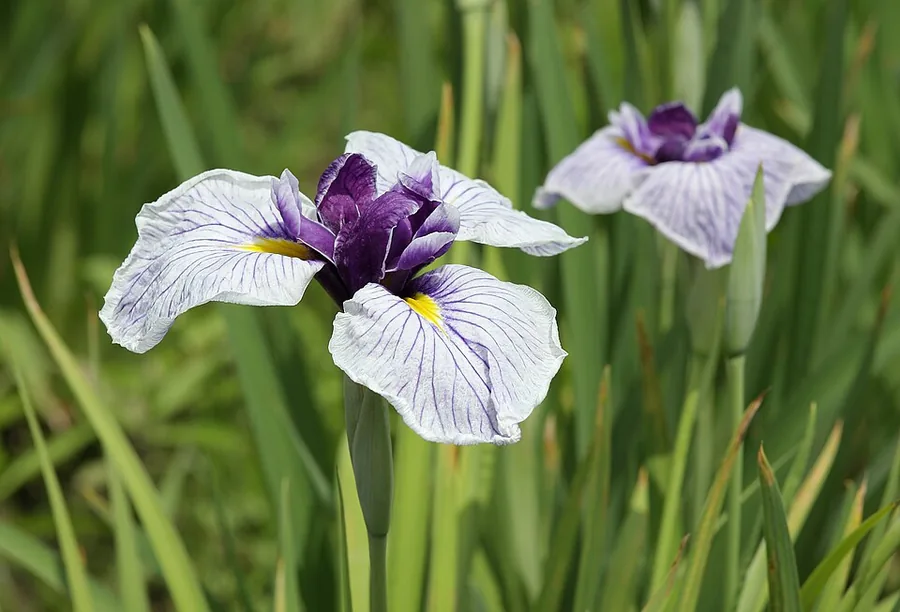
Japanese iris is one of the loveliest members of the iris family, and it is more forgiving than its beauty suggests. It opens flat, wide flowers that seem to float above tall, swordlike leaves in early summer, growing from a spreading rhizome that returns faithfully year after year. Set it at the edge of a pond or in any bed that stays damp, and it settles into a full clump, with blooms running 3 to 6 inches across in blue, purple, pink, lavender, and white.
This iris does ask for a few clear things, and once you meet them the rest is easy. It wants acidic, organic soil that holds water, full sun with maybe a little afternoon shade, and a reliable drink all through the growing season. Lime does not suit it, and neither does a crown left waterlogged in winter, but both are simple to avoid.
Give it the right spot and Japanese iris is wonderfully hardy from zone 4 to zone 9, mostly looking after itself. Even if you get the site wrong at first, with soil too alkaline or a soggy winter corner, the plant is not lost; you can move it, and once the roots and leaves recover you will see those big flowers come back.
Care
The short version: full sun to a little afternoon shade, rich acidic soil kept wet through the growing season yet drained in winter, a generous feed while it is growing, and a friendly division every three years or so.
Light
Give Japanese iris full sun for the fullest flowering, and a little afternoon shade is welcome where summers turn hot. It will happily take partial shade too, though you will see fewer blooms as the light drops.
Water
Think of this as a thirsty friend. Keep the soil consistently moist to wet all through the growing season, watering every one to three days, and it will even sit contentedly in standing water up to 6 inches (15 cm) deep in summer. Ease right off in winter, since a saturated, sleeping crown will rot.
Soil
Plant it in rich, organic, acidic soil that holds moisture, aiming for a pH of 5.5 to 6.5. Lime and alkaline ground lock nutrients away and bring on yellowing, so it is best to never add lime to the bed.
Temperature
Japanese iris is remarkably tough across a wide range, hardy roughly from -29°F to 95°F (-34°C to 35°C). That cold hardiness is exactly what carries it safely through winter in zones 4 to 9.
Humidity
Ordinary outdoor air suits it just fine, so there is no number to fuss over. What counts far more is wet roots in summer and good airflow around the leaves to keep pests and leaf diseases at bay.
Feeding
This iris is a heavy feeder, so feed it through spring and early summer with a balanced fertilizer or plenty of organic matter. Stay away from any lime-based product, which nudges the soil the wrong way for this plant.
Pruning
Snip the spent flower stalks once the bloom is done, then cut the foliage back in late fall after it dies down. Clearing away those old leaves also removes the little hideouts where pests and disease would otherwise overwinter.
Repotting
Lift and divide the clump about every three years once flowering finishes. Smaller flowers, a crowded clump with a dying center, or fading vigor are the friendly cues that it is time.
Size & spacing
A settled clump reaches 2 to 4 feet (61 to 122 cm) tall and spreads 18 to 24 inches (46 to 61 cm) wide. Give each plant that much room so air moves freely and the leaves stay healthy.
When to plant
Japanese iris follows a comforting yearly rhythm you can count on. Set rhizomes out in fall or spring about 2 inches deep, enjoy the broad flowers opening from June into July, then cut the clump back once the foliage dies down in late fall.
Northern hemisphere
Southern hemisphere
Typical months for a temperate climate: start earlier in warm zones, later where spring frosts linger.
- Sow: Sow seed in fall or stratify; germination is slow and erratic.
- Plant: Plant rhizomes in fall or spring, setting them about 2 inches deep.
- Harvest: June to July (mid-summer)
Hardiness
USDA hardiness zones: 4–9
Temperature: down to -34°C
Troubleshooting
Most Japanese iris troubles trace back to water and soil chemistry more than pests, and nearly all of them are fixable. Keep a friendly eye on the leaves and the crown, and read the early signs below so a small setback never becomes a lost clump. Match what you see, then act while it still helps.
Soft rhizomes and foliage that has flopped over
If the crown feels soft and the leaves have gone limp, you are almost certainly looking at crown and rhizome rot, and it usually starts with a crown that sat in water all winter. Remember that this iris drinks deeply in summer yet needs a site that drains once it goes to sleep. Take heart, because the fix is doable: lift the clump, trim off any soft, smelly tissue, and settle the healthy pieces somewhere moist in the warm months but drier through the cold ones.
Fix:
- Remove and discard affected rhizomes
- Move or replant divisions in a site that is moist in summer but well drained in winter
- Avoid standing water and boggy soil during dormancy
Yellow leaves and growth that has stalled
Pale, yellowing leaves on a plant that seems stuck are usually a sign the soil has drifted too alkaline, and that is lime-induced chlorosis. This iris wants acidic ground, and it cannot take up iron once the pH creeps upward. The good news is that you can turn it around: test the soil, work in organic matter to bring the pH down, keep it well watered as it grows, and feed this hungry plant through the season. Just leave the lime out.
Fix:
- Acidify soil and amend with organic matter
- Increase watering during active growth
- Feed during the growing season
Silvery speckled leaves and nibbled flowers
Try not to worry if you spot fine silver speckling and twisted buds, since this points to thrips, tiny insects that scrape at leaves and blooms. Ragged holes with slime trails are a different visitor, and they mean slugs and snails have found the clump. A gentle hose-down handles a light run of thrips, tidying away hiding spots discourages the slugs, and you only need a stronger control if the damage really builds.
Fix:
- Hose off light infestations
- Remove debris that shelters slugs and snails
- Use appropriate controls if damage is heavy
Toxicity
It is kindest to treat the whole plant as off limits to animals. The rhizomes and roots carry irisin and irritant terpenoids that can bring on drooling, vomiting, and diarrhea in cats, dogs, horses, and grazing stock, and the rhizome is the strongest part. Nothing here is food, so keep it away from pets, livestock, and small children, and slip on gloves before you handle cut rhizomes.
Toxic to
Cats · Dogs · Horses · Rabbits · Livestock · Birds · People
Cats Toxic
A cat that has chewed on the plant will often start drooling and being sick, and it may turn quiet and tired, with loose stools soon after. Since the rhizome holds the most, a cat that likes to dig is the one to watch closely.
Dogs Toxic
Keep an eye out for a lot of drooling, an unsettled stomach, and a dog that seems flat and worn out. Diarrhea often follows, and a dog that digs up and chews a rhizome can take in the heaviest dose.
Horses Toxic
A horse that nibbles the leaves or roots may drool, lose interest in feed, and go loose in the gut. Because the roots carry the most irisin, a horse that tugs a whole clump free is the one that suffers most.
Rabbits Toxic
The same irritant terpenoids that bother cats and dogs will upset a rabbit's delicate stomach too, leaving it drooling and loose. It is safest to keep the whole plant well clear of the hutch and the run.
Livestock Toxic
Cattle, goats, and sheep that browse the foliage or dig up rhizomes can drool, scour, and lose their appetite. A simple fence between the clumps and any grazing animal keeps everyone safe.
Birds Caution
There is not much firm data on birds, but the irritant compounds make this a plant to keep away from pet and backyard fowl rather than chance a curious peck.
People Caution
No part of this plant is food, and the rhizome can bring on a stomachache if eaten, so it belongs out of reach of small children. Handling cut rhizomes can also leave the skin irritated, so slip on gloves whenever you divide a clump.
Wear gloves when dividing or handling rhizomes, as sap can cause skin irritation; keep cut rhizomes away from pets.
Helpline numbers

United States
ASPCA Animal Poison Control: (888) 426-4435 (fee applies)
Poison Control: (800) 222-1222



Canada
Poison Centres: 1-844-764-7669
Varieties
Most Japanese iris sold today are named hybrids, but a couple are worth knowing as a gentle starting point.
Variegata
You will love the clean white stripes running down its swordlike leaves, which keep this one looking lovely for weeks before and after the flowers arrive.
Iris ensata (species form)
This is the wild parent behind the garden hybrids, offering flat, butterfly-like blooms 3 to 6 inches across in blue, purple, pink, lavender, or white.
How to propagate
The simplest way to make more Japanese iris is to split an established clump, though if you are patient you can also raise it from seed.
DivisionEasy
Late summer or early fall, after flowering finishes (about every 3 years) · One to two growing seasons to reach full bloom
Dividing is the friendly, dependable way to make more plants and give a tired clump a fresh start, and it is well within reach for a first-timer. Once the flowers fade in late summer or early fall, and roughly every three years, lift the clump, split the rhizomes, and tuck the pieces about 2 inches deep into rich, acidic, steadily moist soil. Skip the lime, and be patient, since the new divisions want a season or two before they bloom in full.
SeedModerate
Sow in fall; germination is slow and erratic · Two or more years to flowering from seed
Growing from seed is the slow road and a little bit of a gamble, since the seedlings rarely look just like the parent. Sow in fall, expect uneven and drawn-out sprouting, and settle in for two or more years before the first flowers open. Keep the mix acidic and steadily moist the whole time and you will get there.
Myths
Japanese iris has to stand in water all year long.
It truly does love wet, acidic soil while it is growing, and it will gladly take standing water up to about 6 inches deep in summer. The trouble comes in winter, when a sleeping crown left in soggy ground rots away. Keep it wet while it grows, then let it drain once it rests, and you will be fine.
Iris is harmless to pets since it is only a garden flower.
The ASPCA does list iris as toxic to cats, dogs, and horses, and the rhizome carries the most of the irritant compound. A pet that chews it can end up drooling, being sick, and loose in the gut. Please treat every part as off limits to animals, the roots most of all.