Ornamental · Poaceae
Northern Sea Oats
Chasmanthium latifolium
A gentle native grass that settles happily into shade other plants refuse, then hangs flat oat-like seed heads from summer into winter.
Partial shade
Every 3–7 days
USDA 3–9
2–5 ft · 0.6–1.5 m
Overview
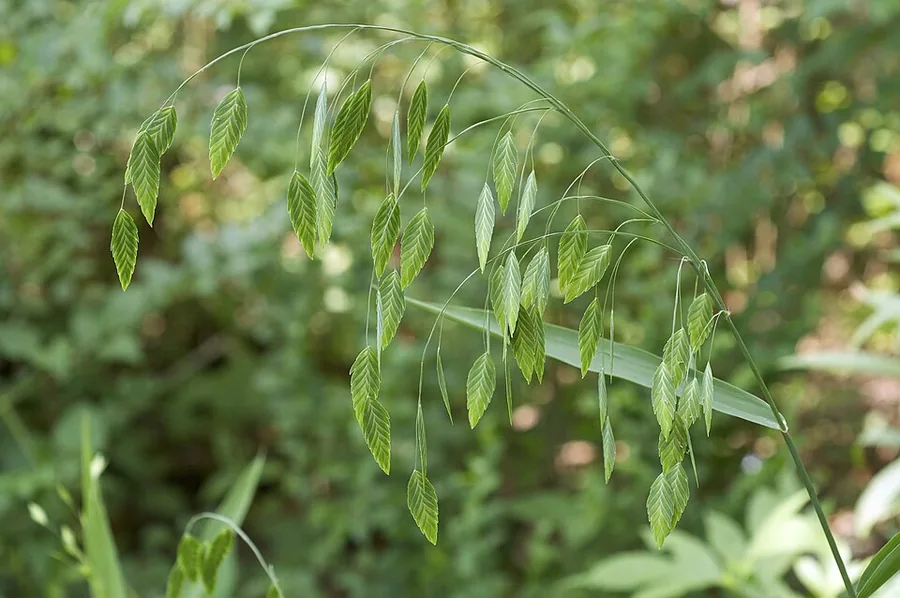
If you have a damp, shady corner where nothing seems content, northern sea oats may be the friend you have been waiting for. It is a clumping native grass that feels right at home along the woodland edge, the sort of dappled, moist spot where many grasses simply give up. Its charm is the seed head: flat, layered spikelets shaped like little flattened oats that dangle from arching stems. They open green in summer, warm to a coppery bronze, then soften to tan and stay lovely well into winter.
You do not need a green thumb to succeed with this one. It is easy and wonderfully adaptable, growing in anything from full sun to full shade and taking clay, sand, wet ground, and even brief flooding in stride, across a wide swath of the country. The single thing it truly wants is moisture, and if a sunny spot dries out the leaf edges may brown. That is a gentle warning sign rather than a disaster, and a good drink usually sets things right.
The very toughness that makes it forgiving also makes it a generous spreader. It self-sows freely and creeps along short rhizomes, so one clump can grow into a small colony over a few seasons. If that fills a bare patch, wonderful. If you would rather it stay put, simply snip the seed heads off before they ripen, and you stay in easy control.
Care
The short version: give it part shade and steady moisture and it will reward you, though it happily bends to almost any light and soil. Cut the clump down in late winter, and if you would like it to stay in one place, remove the seed heads before they drop. Slip-ups here are easy to undo.
Light
This grass is happy in full sun all the way to full shade, which gives you real freedom in where to plant it. Part shade is where it looks its very best, with the greenest leaves and the fullest form. If you choose a sunny spot, just be a little more generous with water so the foliage does not scorch.
Water
The one wish this plant has is steady moisture, so aim for soil that stays evenly damp and lean wetter rather than drier. It happily takes wet ground and even short spells of flooding, which turns that low, soggy corner into a gift rather than a problem. Plants in full sun dry out faster, so give those a drink more often and you will both be content.
Soil
You really cannot go wrong here, since it settles into clay, loam, sand, or boggy ground that would stop other plants. Average to moist, fertile, well-drained soil brings out its best, yet it forgives far humbler conditions. There is no particular pH it needs, so you can plant with confidence.
Temperature
This is a genuinely tough plant, comfortable across a huge range from about -40°F to 100°F (-40°C to 38°C), which covers nearly the whole country. Hard winters will not trouble it in the least, and it returns faithfully every spring to greet you.
Humidity
The everyday humidity outdoors is all it asks, so this is one thing you can happily forget about. What truly matters is keeping the roots pleasantly moist through the heat of summer.
Feeding
This is a light feeder that rarely needs any help from you. A small optional dose of balanced fertilizer or compost in spring is more than enough, and going overboard only encourages it to spread with extra gusto.
Pruning
Once a year, cut the whole clump right down to the ground in late winter to early spring, before fresh growth pushes up. If you would like to curb its reseeding, simply clip off and remove the seed heads before they ripen and scatter, and you are done.
Repotting
This is a garden grass rather than a houseplant, so there is no pot to fuss over. The gentle equivalent is dividing the clump every few years, once the center starts to thin or a crowded mass begins to lose its spark.
Size & spacing
Clumps grow to around 2 to 5 feet (60 to 152 cm) tall and 12 to 30 inches (30 to 76 cm) across. Give each plant a little room to arch and show off, and keep in mind it will always try to reach a bit past whatever space you offer.
When to plant
There is no rush and no mystery to the timing. Sow the seed in late winter to spring after a cold, moist chill, set young plants out in spring once frost has passed or again in fall, and then relax while the seed heads carry the display from late summer all the way through winter.
Northern hemisphere
Southern hemisphere
Typical months for a temperate climate: start earlier in warm zones, later where spring frosts linger.
- Sow: Late winter to early spring; seed benefits from cold-moist stratification before sowing
- Plant: Spring after frost, or fall
- Harvest: Flowers August to September; showy flat oat-like seed heads emerge green in summer, turn coppery-bronze then tan and persist into winter
Hardiness
USDA hardiness zones: 3–9
Temperature: down to -40°C
Troubleshooting
Take heart: northern sea oats has no serious pests or diseases, so the only two things to watch are the ones it does to itself, spreading farther than planned and scorching in dry sun. Find your plant below and step in early, while everything is still easy to put right.
Baby seedlings appearing all over the garden
Do not worry, this simply means your grass is a happy self-seeder, scattering ripe seed from those flat oat-like heads well past the parent clump. Short rhizomes nudge the clump wider too, quickest in moist, fertile soil with a little sun. Snip and remove the seed heads before they ripen, gently pull the young volunteers while they lift out with ease, and divide the clump now and then to keep it comfortably in bounds.
Fix:
- Cut and remove the seed heads before they ripen and drop to stop new seed
- Pull or dig out unwanted volunteer seedlings while young; they pull easily
- Divide and reduce the clump to contain rhizomatous spread
- Keep stalks cut down low to gradually starve out an established colony
Leaves fading or browning in the heat of summer
What you are seeing is leaf scorch, and it comes from a hot, dry, full-sun spot with too little water at the roots. Plants tucked into part shade with steady moisture hardly show it at all, so this is easy to turn around. Water your sun-grown clumps more often and more deeply, add mulch to hold that moisture in, and if a plant keeps struggling, move it to gentle dappled shade where it will be much happier.
Fix:
- Provide more frequent, deeper watering for sun-grown plants
- Apply mulch to conserve soil moisture
- Site or transplant into part shade with moist soil for best appearance
Toxicity
Here is a reassuring note for anyone with curious pets or little ones: this grass is not poisonous. It holds no toxins for cats, dogs, horses, livestock, birds, or people. The only small things to keep in mind are that a pet who gobbles a lot of foliage might have a passing stomach upset, as with any grass, and that grass pollen can bother people who are prone to allergies.
Safe for
People · Cats · Dogs · Horses · Rabbits · Livestock · Birds
Cats None
Perfectly safe for your cat to be near. A cat that nibbles a big helping of the leaves might bring it back up again, the same gentle reaction any grass can prompt, and nothing to fret over.
Dogs None
Your dog is in no danger from this grass. Bolting down a large mouthful might bring on a little vomiting, but it is no worse than a chew on the lawn, so you can relax.
Horses Safe
Horses are quite safe with this grass, since it carries no toxins to worry about if they graze a little in the pasture.
Rabbits Safe
Rabbits can nibble the leaves without any harm. As with any fresh green, offer it a little at a time so their tummy can adjust in comfort.
Livestock Safe
Cattle, goats, and sheep may graze this grass to their hearts' content, since it holds nothing that would trouble them.
Birds Safe
Backyard birds are wonderfully safe around it, and many will happily work the ripe seed heads for the little grain tucked inside.
People Safe
The plant itself is no danger to people at all. The only small thing to note is grass pollen, which can stir up allergies in folks who are sensitive to it.
As with any grass, pets that nibble a lot of foliage may vomit or have mild stomach upset, and grass pollen can be an allergen for sensitive people; the plant itself is not poisonous.
Varieties
Most gardeners are happy with the plain species, and it is a lovely choice, but there is one named selection worth getting to know.
River Mist
This is a white-variegated selection whose blades are brushed with vertical white and green stripes and whose seed heads come whitish, a pretty contrast to the plain species and its solid blue-green leaves and green heads.
How to propagate
Making more of this grass could not be simpler, and the plant kindly handles most of the first method for you.
SeedEasy
Sow in late winter to spring; cold-moist stratification improves germination · One to two growing seasons
Sow seed from late winter into spring, and treat it to a spell of cold, moist chilling first to gently wake it up. Because the grass self-sows so freely, the easiest path of all is to lift the volunteer seedlings that arrive on their own and settle them wherever you like. Give a young plant one to two growing seasons and it will fill out nicely.
DivisionEasy
Spring or early fall · One growing season
Dig up and split an established clump in spring or early fall, a friendly two-for-one that gives you new plants while keeping a spreading clump politely in check. Each division tends to settle in within a single growing season, so you will not wait long to see it thrive.
Myths
Northern sea oats is the protected beach grass that is illegal to pick.
Happily, the two just share a common name. Your shade-garden grass is Chasmanthium latifolium, which grows along inland streambanks and in woodlands. The protected seaside plant is a different and unrelated species, true sea oats (Uniola paniculata), a dune stabilizer that many coastal states make it illegal to gather. Growing the inland kind in your own garden breaks no rules at all, so you can plant it with a clear conscience.