Tree · Sapindaceae
Red Maple
Acer rubrum
Quick to grow and easy to please, red maple gives a first-time planter a fall canopy of red and orange.
Full sun
Every 7–14 days
USDA 3–9
39–89 ft · 12–27 m
Overview
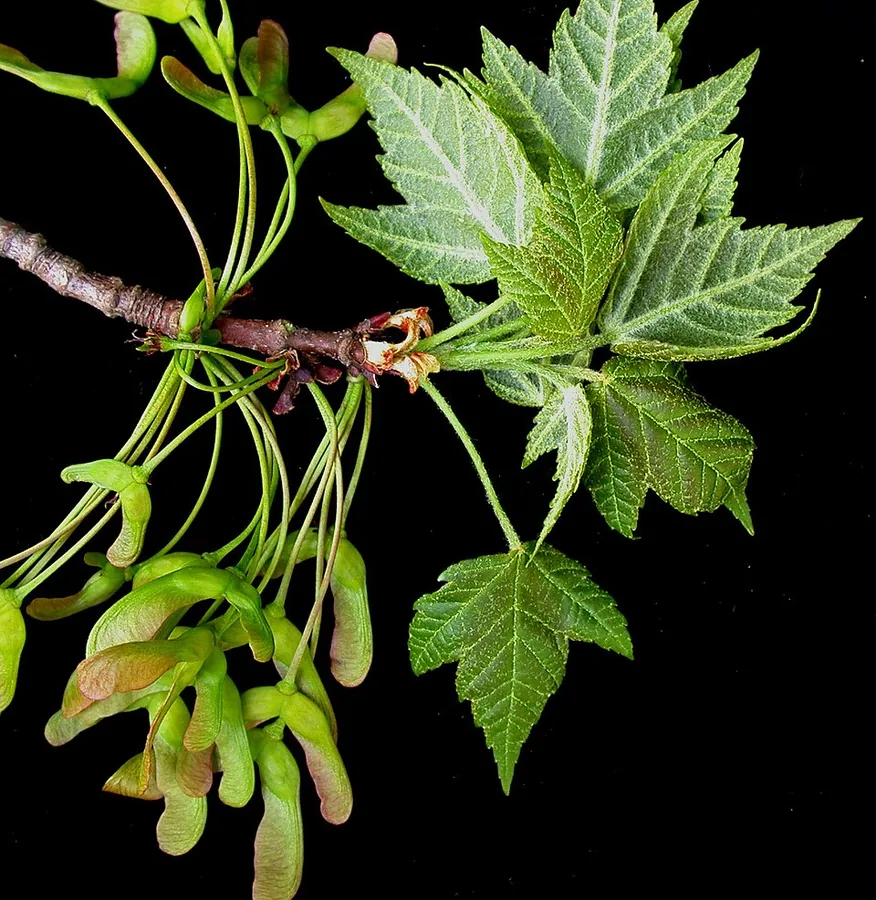
If planting a tree feels like a big step, red maple is a gentle one to take first. It grows fast, makes itself at home in almost any soil from heavy clay to sandy ground, and endures winters that would flatten fussier trees, holding steady even at -40°F (-40°C). It lives up to its name right through the calendar, with flowers that open red in late winter, red samaras in spring, red-tinted leaf stalks in summer, and a soft blaze of red and orange come fall.
Do not fret over finding the perfect drainage. This is an adaptable tree that shrugs off wet ground and the odd flood better than most, which is why it thrives in swamps and along streams as happily as in a tidy yard. The one thing to keep in mind is the wood, because red maple counts as a soft maple, and the same eager growth that hands you shade quickly also leaves limbs that can crack in a hard storm. That part is manageable.
Give it room and it will reward you for decades. A grown red maple stretches well past 40 feet (12 m) with a wide crown and shallow roots that spread out and can nudge up a sidewalk or nick a mower blade. Set it back from paths and driveways from the start and you spare yourself that trouble, and after that the tree asks for very little. Small missteps early on are easy to put right.
Care
The short version: red maple is happy in full sun to part shade, in moist, slightly acidic soil, with steady water while it is young. It hardly ever needs feeding, and the main kindness you can offer is a little early structural pruning so its brittle limbs stay strong through storms.
Light
Red maple is happiest in full sun, yet it takes partial shade without complaint. More sunshine tends to bring richer fall color and a fuller crown, so an open, bright spot is a lovely gift if you have one.
Water
This tree loves moist ground and copes with wet sites and the odd flood far better than most shade trees, so a soggy corner is no problem. Keep young and street trees watered through dry spells, and once a tree is established it grows self-reliant, handling medium-to-wet soil on its own.
Soil
Ordinary, well-drained soil suits it well. It adjusts to clay, loam, and sand, though its heart belongs to moist, slightly acidic ground at pH 4.5 to 6.5. Once the soil rises past about pH 6.5, the leaves can pale as manganese and iron become harder to reach, so a slightly acidic spot keeps it glowing.
Temperature
Few trees are this tough. Red maple stays comfortable across an enormous span from -40°F to 100°F (-40°C to 38°C), which covers USDA zones 3 through 9. Winter cold is almost never the thing that troubles it.
Humidity
There is no humidity figure to fret over here. Everyday outdoor air is plenty, since what this tree really wants is moisture around its roots rather than in the air.
Feeding
An established red maple in decent soil rarely needs feeding at all, which is one less chore. If you choose to feed, reach for a balanced or low-nitrogen, higher-potassium blend in spring. Where the soil runs alkaline, manganese chlorosis may ask for soil acidification or a micronutrient treatment instead.
Pruning
Prune in late summer or fall so the tree skips the heavy spring sap bleeding that maples are prone to, taking out any dead, weak, or crossing limbs as you go. Since the wood is brittle, aim your early cuts at narrow, weak branch angles that a storm could snap, and you set the tree up to hold together for years.
Repotting
none
Size & spacing
Red maple grows into a large, generous tree, often 40 to 70 feet (12 to 21 m) tall with a crown spreading 30 to 50 feet (9 to 15 m). Give it plenty of open space and keep it a good distance from sidewalks and driveways, since its shallow roots can lift pavement over time.
When to plant
Because red maple is a long-lived tree, its planting window is refreshingly simple. Set young trees out in the mild weather of spring or fall, and the tree takes it from there. Then you get to watch for red flowers as early as late winter, samaras in spring, and that beloved color in fall.
Northern hemisphere
Southern hemisphere
Typical months for a temperate climate: start earlier in warm zones, later where spring frosts linger.
- Plant: Spring or fall
- Harvest: Red flowers late winter to early spring (roughly January-April); red to yellow samaras mature in spring; brilliant red-orange-yellow foliage in fall.
Hardiness
USDA hardiness zones: 3–9
Temperature: down to -40°C
Troubleshooting
A settled red maple rarely gives you grief, though a handful of issues are worth recognizing early. Most come down to soil that has turned too alkaline, a fungus in the ground, or the tree's own soft wood. Compare what you are seeing to the notes below, and step in gently before a small worry grows into a real one.
Whole branches wilting and dying on one side
This points to verticillium wilt, a soil fungus that works its way into the tree's water channels and starves off entire branches. Slip the bark on a wilting limb and you will often find green to black streaks in the sapwood, along with undersized leaves and a surprisingly heavy set of seed. There is no cure, so prune out and destroy the dead wood, wipe your tools clean between cuts, and keep the tree well watered so it can carry on.
Fix:
- Prune out and destroy (burn or landfill) dead branches; do not compost
- Disinfect tools with 10 percent bleach or 70 percent alcohol between cuts
- Water and fertilize with low-nitrogen, higher-potassium fertilizer to support recovery
New leaves turning pale yellow between green veins
What you are seeing is manganese chlorosis, which shows up when the soil pH creeps above pH 6.5 to 7.0 and ties up the iron and manganese the tree relies on. Limestone, concrete, and too much lime near foundations or pavement are the usual causes. Test the soil, ease it back toward slightly acidic with elemental sulfur, and add chelated manganese or iron if the yellowing looks bad. It is a setback you can recover from.
Fix:
- Test and lower soil pH toward slightly acidic with elemental sulfur
- Apply chelated manganese or iron as a soil or foliar treatment
- Mulch and improve drainage to reduce nutrient stress
Limbs cracking after ice, snow, or wind
Red maple is a soft maple with brittle wood, and its quick growth leaves it full of narrow, weak crotches that pull apart in storms. Tidy up broken and hanging limbs promptly with clean cuts, and call an arborist for anything big or overhead. Your best long-term defense is early structural pruning, training one strong leader and wide branch angles so future storms find less to grab.
Fix:
- Remove broken and hanging limbs promptly with clean cuts
- Structurally prune young trees to favor strong, wide branch angles
- Consult an arborist for large or hazardous limbs
Toxicity
For a household with cats and dogs, red maple is a safe choice, so you can relax on that front. The real caution is for horses, and it is a serious one: wilted or dried red maple leaves break down a horse's red blood cells and can prove fatal within days. Keep horses well away from fallen branches, raked leaves, and prunings.
Toxic to
Horses · Rabbits · Livestock · Birds
Safe for
People · Cats · Dogs
Horses Severe
This is the dangerous one. Wilted or dried red maple leaves break apart a horse's red blood cells, and the earliest signs are weakness, a poor appetite, and a dull, low mood. Watch as well for brown or bluish gums, red-brown urine, colic, and laminitis, and get a vet involved right away, because death can come within 18 hours to 10 days and pregnant mares may lose their foals.
Rabbits Caution
There is no safe-feeding information for rabbits, and the same blood-cell toxin could well harm them, so keep red maple leaves and prunings out of the hutch to be safe.
Livestock Caution
Cattle, sheep, goats, and other grazers are best kept away from wilted maple leaves and fallen branches, since the toxin that harms horses can reach related animals too.
Birds Caution
Not much is known about how birds respond, so it is wise to treat the wilted leaves as a hazard and keep poultry or pet birds from picking through raked clippings.
Cats None
Cats are in the clear here. The ASPCA places red maple on its non-toxic list, so a curious nibble should not cause any harm.
Dogs None
Dogs are fine around this tree. It holds no toxicity for them, and mouthing a fallen leaf or samara will not upset a dog's stomach.
People None
Red maple poses no real threat to people. It is not something you would eat, but handling the tree, its leaves, and its seeds is perfectly harmless.
Horse owners must keep horses away from red maples and, critically, from fallen branches and raked or wilted leaves, which are the deadly form. Do not dump maple prunings or leaves where horses can reach them. The tree poses essentially no toxicity risk to cats or dogs.
Helpline numbers

United States
ASPCA Animal Poison Control: (888) 426-4435 (fee applies)

United Kingdom
Animal PoisonLine: 01202 509000 (fee applies)

Australia
Animal Poisons Helpline: 1300 869 738
Varieties
Most red maples offered for the garden are named cultivars, picked for dependable fall color and a tidy shape. These are the ones you are most likely to come across.
October Glory
Loved for its reliable red-to-orange fall color that lingers for weeks and shows up late in the season.
Red Sunset (Franksred)
Among the most widely planted of all maples, valued for strong orange-red fall color on a vigorous, neatly upright tree.
Brandywine
A seedless male tree that flares brilliant scarlet in fall before settling into a deep reddish purple.
Red Rocket
A slender column of a tree, about 40 feet (12 m) tall and only some 15 feet (5 m) wide, tailor-made for tight spaces.
How to propagate
Red maple sprouts easily from seed, though seedlings are a bit of a gamble when it comes to fall color. To hold onto a cultivar's exact look, growers turn to cuttings or grafting.
SeedEasy
Sow fresh samaras in late spring to early summer as they ripen; some seed lots benefit from cold stratification. · 1 to 2 growing seasons
Seed is the easygoing route. Sow the winged samaras fresh in late spring to early summer as they fall, give any stubborn batches a cold-stratification chill, and allow them one to two growing seasons to find their feet. Just remember that seedlings vary, especially in fall color, so a named cultivar will not come true this way.
Stem cuttingsModerate
Take softwood cuttings in early summer. · Several weeks to root, then a season or more to establish.
Softwood cuttings can work, though the results are a little unpredictable. Take them in early summer, then be patient: roots need several weeks to form, and the young tree wants a season or more before it is truly settled.
GraftingDemanding
Bench graft or bud in the dormant or growing season onto seedling rootstock. · 1 or more seasons
Grafting is the trick nurseries use to keep a cultivar true, since it never comes true from seed. Bench graft or bud onto seedling rootstock during the dormant or growing season, then expect a season or more for the union to knit and grow on. It is exacting work that suits experienced hands best.
Myths
Red maple is risky to grow around cats and dogs.
The ASPCA lists red maple as non-toxic to both animals. The grave, sometimes fatal risk falls on horses that eat wilted or dried leaves, so a home with cats or dogs truly has nothing to fear from this tree.
It is only the seeds or bark of red maple that hurt horses.
The harmful compound gathers in the leaves, not in the seeds or bark. Wilted or dried fallen leaves are the single most dangerous form, while the fresh green leaves still on the tree pose far less of a threat.