Tree · Sapindaceae
Dwarf Japanese Maple
Acer palmatum
Give it dappled shade, steady moisture, and a break from wind, and your dwarf Japanese maple will keep its lovely shape and color for many years.
Partial shade
Every 3–7 days
USDA 5–8
2–6 ft · 0.6–1.8 m
Overview
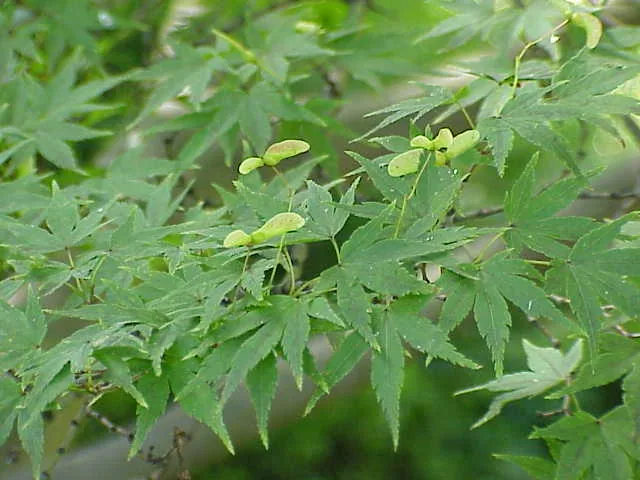
If a tree this graceful feels intimidating, take heart, because a dwarf Japanese maple is far more forgiving than its reputation suggests. It carries all the beauty of a full Acer palmatum in a friendly little frame that settles happily into a small bed, a quiet courtyard, or a roomy pot. These are gentle, slow growers that stay small for years, and what you are really tending is the foliage, which changes through the seasons and ends in a glow of warm fall color.
Each named kind is a clone, a steady form rather than a surprise from seed, which is exactly why a grower joins them by grafting. The happy upshot for you is that a 'Shaina' or a 'Kiyohime' will look much as you pictured it. The only thing it asks in return is a little patience, since these trees like to take their time getting comfortable, and that is perfectly normal.
Comfortable across USDA zones 5 to 8, the dwarf forms feel right at home in a temperate garden with some shade and a sheltered corner. Choose a kind spot and the tree nearly cares for itself. Place it in harsh sun and dry wind, and do not worry, because the leaves will simply tell you, and a move sets things right.
Care
The short version: find it a dappled or part shade home with afternoon shade where summers get hot, keep the slightly acidic soil evenly moist beneath a comforting layer of mulch, tuck it away from drying wind, and prune only a little in late fall to mid winter.
Light
A spot with dappled light or part shade keeps a dwarf Japanese maple content, and afternoon shade really matters where summers turn hot. In cooler northern gardens it gladly takes more sun and often colors up better for it, as long as you keep the soil from drying out.
Water
Aim to keep the soil evenly moist without letting it sit soggy, since this tree is not built to handle drought. Water it through dry stretches and lay down mulch to hold that moisture and keep the roots cool. Soil that lurches between wet and dry, especially in sun or wind, is what crisps the leaf edges, so steady is the goal.
Soil
Give it moist, organically rich, well-drained loam with lots of organic matter, and know that sandy loams suit it nicely too. A slightly acidic pH of 5.5 to 6.5 is the sweet spot where these maples feel their best.
Temperature
These little maples are hardier than they look, comfortable from about -20°F to 95°F (-29°C to 35°C), which covers USDA zones 5 through 8. Heat troubles them more than cold, so the kindest thing you can do is steer clear of the hottest, most exposed corners.
Humidity
Everyday outdoor humidity is plenty, and there is no target number to chase, which is one less thing to think about. What truly helps is shelter from drying wind, because wind pulls moisture from the leaves faster than the roots can keep up.
Feeding
A light feeding in spring before the leaves emerge is all it wants, using a balanced slow-release tree and shrub fertilizer once a season. These are slow, modest growers, so a gentle hand serves them far better than a generous one.
Pruning
Keep pruning to a minimum and do it in late fall to mid winter. Cut in spring or summer and the tree will bleed sap, which can be alarming but is avoidable. Simply remove any dead, crossing, or crowded branches to keep that pretty compact shape tidy.
Repotting
For a tree in a container or trained as bonsai, repot every 2 to 3 years. The plant will let you know when roots circle the pot or peek out the drainage holes, when water rushes straight through, or when growth slows and the new leaves come in small.
Size & spacing
These dwarves stay charmingly small, reaching 2 to 6 feet (60 to 180 cm) tall and spreading 2 to 5 feet (60 to 150 cm). Leave a little open room so air can drift around the canopy and the lovely shape has space to show itself.
When to plant
Your dwarf Japanese maple settles in best when planted in spring or fall, once the soil works easily and the worst frost has passed. There is no harvest to fret over here. The gift is the foliage, which wakes up in spring, deepens over summer, and lights up before the leaves let go.
Northern hemisphere
Southern hemisphere
Typical months for a temperate climate: start earlier in warm zones, later where spring frosts linger.
- Plant: spring or fall when soil is workable and frost risk has passed
- Harvest: Small reddish-purple flowers in spring (April); grown for foliage, not bloom
Hardiness
USDA hardiness zones: 5–8
Temperature: down to -29°C
Troubleshooting
Almost every worry with a dwarf Japanese maple shows up first in the leaves, where scorch, disease, or insects each leave a clue. The kind news is that noticing those clues early gives you plenty of time to help. Find what matches below, then step in gently while it still does some good.
A few limbs drooping and slowly dying off
When wilt and dieback hit just a few branches at a time instead of the whole canopy, the likely culprit is verticillium wilt, a soil fungus that quietly clogs the tree's plumbing from within. There is no cure once it takes hold, so this one calls for care rather than panic. Prune out and destroy the affected wood, keep the tree strong with steady water and mulch, and never reuse chips from an infected tree.
Fix:
- Prune out and destroy affected branches and improve plant vigor with proper watering and mulching
- Do not use chips from a Verticillium-infected tree as mulch or potting medium
- Where the disease is established, replant only resistant species; there is no cure for an infected tree
Leaf edges turning dry and brown on the exposed side
Those dry, browned margins are leaf scorch, and they follow too much sun, drying wind, or soil that keeps swinging between wet and bone dry. The good part is that the damage stays out on the exposed edges while the roots carry on just fine. Ease the tree into dappled shade, give it some wind protection, and keep the soil evenly moist beneath a layer of mulch, and the next flush comes in healthier.
Fix:
- Provide afternoon shade and shelter from drying winds
- Keep soil evenly moist and apply mulch to retain moisture and cool roots
- Water deeply during dry spells
Tacky residue, twisted young leaves, and tiny bugs
Sticky honeydew and curled young leaves usually mean aphids on the tender new shoots, or scale, including Japanese maple scale, hugging the bark. Take heart, because a hard jet of water knocks aphids loose, and stubborn cases settle down with horticultural oil or insecticidal soap. Lady beetles and other helpful predators will quietly handle light infestations for you.
Fix:
- Dislodge aphids with a strong spray of water
- Treat heavy infestations with horticultural oil or insecticidal soap, following label directions
- Encourage natural predators such as lady beetles
Toxicity
Here is something to relax about if you share your home with animals: the dwarf Japanese maple is not toxic. The ASPCA does not list Acer palmatum as poisonous, and it is counted safe around cats, dogs, and the whole household crew. A pet that nibbles a leaf might feel a little off for a moment from the plant matter, but nothing here can truly hurt them.
Safe for
People · Cats · Dogs · Horses · Rabbits · Livestock · Birds
Cats None
Safe to keep around cats. A curious cat that samples a leaf might feel a touch of stomach upset, just as it would with any houseplant, but nothing in the maple can poison it.
Dogs None
Nothing to worry about with dogs. They can happily share a garden with this maple, and the most a leaf-chewer faces is a brief tummy ache from the roughage, never a toxic reaction.
Horses None
Acer palmatum is safe for horses, which is reassuring near a paddock. The species behind equine cases is the unrelated red maple, so a Japanese maple close by poses no toxic threat.
Rabbits None
Rabbits can graze nearby without any harm, since the leaves hold no toxin that affects them.
Livestock None
Cattle, goats, and sheep are in no danger from this maple. Its foliage carries nothing that would poison a grazing animal.
Birds None
Backyard and pet birds are safe around the tree, which offers them welcome perching and shelter rather than any hazard at all.
People None
Handling the tree is perfectly safe, and even small children come to no harm from brushing past it. It is grown for foliage rather than food, so there is no edible part to single out.
Generally safe to handle and to keep around cats and dogs; as with any plant, discourage pets from chewing foliage to avoid mild stomach upset.
Varieties
Dwarf Japanese maples arrive in dozens of named forms, and each one is a steady clone with its own size, leaf, and color to enjoy. Here are a few that are well worth knowing by name.
Sharp's Pygmy
Among the very shortest Japanese maples you can bring home, this slow dwarf settles around 2 to 4 feet with small green leaves that warm to orange-red come fall.
Shaina
A compact 4 to 5 foot witches'-broom sport of 'Bloodgood', it gathers its dark maroon summer leaves into soft tufted masses that turn a fiery red in autumn.
Mikawa yatsubusa
A wonderfully dense dwarf that reaches about 4 to 6 feet tall and 4 feet wide, loved for its shingled, layered foliage and its strong fall color.
Kiyohime
A low, wide-spreading dwarf grown for its gentle mounding, spreading habit rather than for any reach in height.
How to propagate
There are two friendly paths to more of these trees, and they give you quite different results. Grafting hands you an exact copy of a named dwarf, while seed gives you the wild species and a cheerful gamble of seedlings.
GraftingDemanding
Late winter to early spring (bench grafting) onto dormant rootstock · Several months to one growing season for the graft union to establish
Named dwarf cultivars will not come true from seed, so growers bench-graft scion wood onto Acer palmatum seedling rootstock in late winter to early spring while the stock is still dormant. It is demanding work, and the union takes anywhere from a few months to a full growing season to knit together, so patience pays off.
SeedModerate
Sow in fall or stratify and sow in spring · One to two growing seasons for seedlings
Seed will grow the species, though the seedlings vary and none will copy the parent dwarf. Sow in fall, or stratify the seed and sow in spring, then give the young plants one to two growing seasons to find their feet.
Myths
A Japanese maple will only be happy in deep shade.
They are happiest in dappled or part shade, with afternoon shade where summers run hot, so deep gloom is not the goal. In cooler northern zones they actually welcome more sun and color up better for it, as long as the soil stays evenly moist. The thing to watch is moisture and heat, not sunlight on its own.
The foliage of a Japanese maple can poison cats and dogs.
Acer palmatum is not on the ASPCA toxic list and is treated as non-toxic to cats and dogs, so you can breathe easy. A pet that chews a few leaves might get a mild stomach ache from the plant matter, much like with most greenery, but there is no poison in play.