Shrub · Passifloraceae
Passionflower
Passiflora incarnata
Give it full sun and a little room, and this forgiving maypop climbs fast, feeds butterflies, and blooms all summer long.
Full sun
Every 7–14 days
USDA 5–9
6–8 ft · 1.8–2.4 m
Overview
Passionflower, or maypop, is a fast-growing native vine that rewards you with wild, fringed blooms and egg-shaped fruit to follow, and it is far more forgiving than its exotic looks suggest. It climbs on its own tendrils and can cover 6 to 8 feet (183 to 244 cm) in a single season, happily scrambling over a fence, a trellis, or whatever it finds. The flowers open from July into September, and where summers run long the maypop softens to a warm yellow by fall.
You are in easy company with this plant once it settles in. It welcomes full sun or a touch of shade, takes drought in stride, and grows contentedly in clay, loam, or sand. Its one real request is good drainage, since wet roots over winter are the usual thing that undoes it, and that is a simple mistake to avoid.
There is real joy in this vine beyond the flowers. It is a larval host for fritillary and zebra longwing butterflies, so chewed summer leaves are a sign of success, not trouble. The one thing to plan for is its eagerness to roam, sending up fresh shoots from the roots well away from where you first set it, which is easy to manage once you expect it.
Care
The short version: full sun to part shade, average soil that drains well, and a deep but occasional drink once it has settled. Give it a sturdy support to climb and either the room to spread or a bit of gentle containment, and you will get along just fine.
Light
Passionflower blooms best in full sun, though it takes a bit of part shade in stride, so do not fret if your spot is not perfect. The more sun it soaks up, the more flowers and fruit you will enjoy, so hand it the brightest place you can find.
Water
While it is finding its feet, keep the soil at average, medium moisture, watering about every 7 to 14 days and letting the top half dry out between drinks. Once it has settled it turns nicely drought tolerant and asks for very little. Just steer clear of wet, poorly drained ground, which can rot the roots, above all through winter.
Soil
This is not a fussy vine, and it will grow happily in clay, loam, or sand alike. The one thing it truly needs is good drainage, since standing water is its main weak spot and easy to design around.
Temperature
It is a wonderfully tough plant, weathering cold down to about -20°F (-29°C) and heat up to 100°F (38°C). At the colder edge of its range the top dies back in winter, and there is no need to worry, because the roots send up fresh growth come spring.
Humidity
Everyday outdoor humidity suits it just fine, with no figure for you to fuss over. Airflow and drainage matter far more than any moisture in the air.
Feeding
Offer a balanced general-purpose fertilizer two or three times across spring and summer, and that is truly all it needs. Pushing an already eager vine with more only makes it grow ranker, so gentle feeding is the kinder choice.
Pruning
Plan to prune hard to keep this fast vine tidy on its support, and do not be shy about it, since the plant takes it well. In cold zones the top dies back to the ground each winter, so simply clear away the dead growth and let the spring resprouts carry on.
Repotting
In a container the plant rarely needs repotting, which is one less thing to worry about. Move it up only when roots fill the pot, slip out the drainage holes, or growth stalls in tight quarters.
Size & spacing
In one good season the vine can reach 6 to 8 feet (183 to 244 cm) tall with a spread of 3 to 6 feet (91 to 183 cm). Give it a sturdy trellis or fence and a little room to stretch, or contain the roots if your space is snug, and it will settle right in.
When to plant
Passionflower keeps to warm-season timing and simply wants frost behind it before it wakes up and grows. Start seed indoors in late winter to early spring, move plants outside in spring once the cold has truly passed, and look forward to flowers from July into September with maypop fruit ripening through late summer and fall.
Northern hemisphere
Southern hemisphere
Typical months for a temperate climate: start earlier in warm zones, later where spring frosts linger.
- Sow: Late winter to early spring (6 to 8 weeks before last frost)
- Plant: Spring, after danger of frost has passed
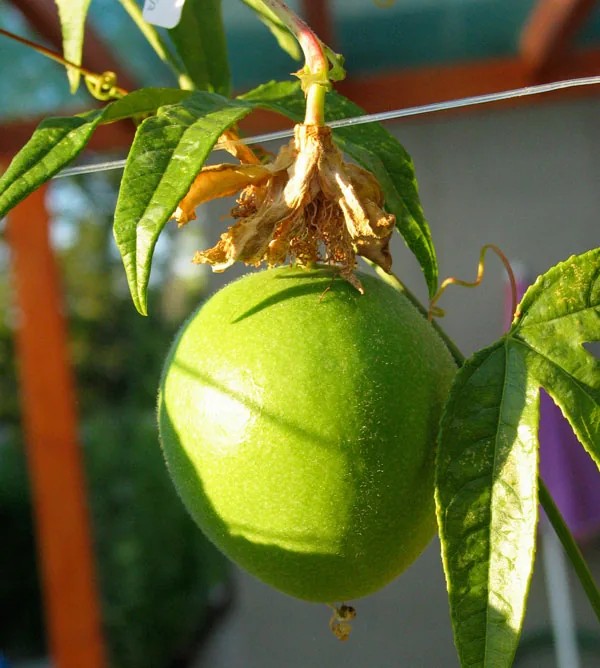
- Harvest: Flowers July to September; egg-shaped maypop fruit ripens to yellowish in late summer to fall
Hardiness
USDA hardiness zones: 5–9
Temperature: down to -29°C
Troubleshooting
Nearly all passionflower worries trace back to just two things: a vine that roams more than you expected, or roots left sitting in water. Read the early signs below and match them to what you are seeing, and you will usually catch trouble in good time. Some of it, like caterpillar-chewed leaves, is simply the plant doing exactly what it was made to do.
Drooping, yellowing growth when the ground stays wet and cool
This one is worth catching early, since standing water invites root rot whenever the soil stays soaked, most often across a cool, damp winter. Gently check the roots, which go dark, soft, and mushy when they have given out. The good news is that easing off the water until the ground dries, improving drainage or shifting the plant, and mixing organic matter into heavy soil usually turns things around.
Fix:
- Improve drainage or move the plant to a better-drained site
- Stop supplemental watering until soil dries
- Amend heavy soils with organic matter to improve drainage
Nothing coming back up once a cold winter ends
In a chancy zone this usually comes down to cold injury, because passionflower is not dependably hardy through USDA Zone 5. After a rough winter the roots may not resprout in late spring, and it tends to happen where the crown had no mulch or shelter to lean on. You can help it along by mounding mulch over the crown before the cold sets in, tucking it against a south-facing wall, or growing it in a pot you move somewhere sheltered in the harshest spots.
Fix:
- Mulch the root zone heavily before winter in cold zones
- Plant in a protected spot sheltered by a wall or structure
- In the coldest zones, grow as a container plant moved to shelter
Surprise vines appearing well beyond the original plant
Do not worry if fresh vines appear away from the parent, because passionflower travels underground through root suckers and runners and this is simply what it does. Follow a stray shoot back to the lateral roots and you will see the connection. You can lift the wanderers whenever they turn up, and setting the plant in a contained bed, a large pot, or behind a root barrier from the start keeps things easy.
Fix:
- Dig out unwanted suckers as they appear
- Install a root barrier or grow in a contained bed or large pot
- Site it where it has room to roam or where mowing controls strays
Nibbled, ragged leaves with colorful caterpillars about
Take heart, because those nibbled leaves are the handiwork of fritillary and zebra longwing caterpillars, and your passionflower is meant to feed them. Watch for the spiny orange larvae and the butterflies drifting close by. There is nothing to fix here, since a settled, healthy vine grows straight past the damage, and reaching for a spray would only harm the very butterflies you are helping along.
Fix:
- Tolerate the feeding, since this plant is intended to feed butterfly larvae
- Healthy established vines outgrow the damage
- Avoid insecticides, which kill the butterflies you are hosting
Toxicity
You can rest easy, because passionflower is not on the ASPCA toxic-plant lists and the ripe maypop is a real treat to eat. The caution here is small and clear: the leaves and unripe green fruit hold small amounts of cyanogenic glycosides, so just keep pets, livestock, and children from eating green growth in any quantity.
Toxic to
Cats · Dogs · Horses · Rabbits · Livestock · Birds
Safe for
People
Cats Caution
You can relax knowing the plant is rated non-toxic, though the leaves and unripe green fruit do hold small amounts of cyanogenic glycosides. A cat that samples a little should be perfectly fine, but a big mouthful of foliage might bring on some drooling or a mildly upset tummy.
Dogs Caution
A curious dog can chew a leaf or two without any real worry, since this plant is not on the toxic lists. Just keep a gentle eye on one that strips the green growth or unripe fruit, where the cyanogenic glycosides can leave the stomach a bit unsettled.
Horses Caution
The odd grazed leaf is nothing to fret over. The care is really about foliage and unripe fruit eaten in quantity, which carry trace cyanogenic compounds that can leave a horse off its feed or a little queasy.
Rabbits Caution
It is kindest to keep rabbits away from the leaves altogether. Those same cyanogenic glycosides in the green growth and unripe fruit make the foliage a poor snack, so it is best kept clear of the hutch.
Livestock Caution
Cattle, goats, and sheep can browse a stray vine with no cause for concern, but it is wise to steer them off a big feed of leaves or green fruit because of the trace cyanogenic glycosides.
Birds Caution
Wild birds and poultry love the ripe maypop, and that is all to the good. Just help them steer clear of heavy feeding on the foliage and unripe fruit, where the cyanogenic compounds sit.
People Ripe fruit safe
The fully ripe maypop is a treat you can enjoy, and the aerial parts have long been welcome in herbal teas. Just pass on the unripe green fruit and leave the foliage off the plate, since both hold small amounts of cyanogenic glycosides.
Only fully ripe fruit is safe to eat. The leaves and unripe (green) fruit contain small amounts of cyanogenic glycosides, so unripe fruit and large quantities of foliage should not be eaten.
Helpline numbers

United States
ASPCA Animal Poison Control: (888) 426-4435 (fee applies)
Poison Control: (800) 222-1222



Canada
Poison Centres: 1-844-764-7669
Varieties
Beyond the friendly native maypop, a handful of related passionflowers earn a place in gardens for their blooms, their scent, or their fruit. These are the ones worth getting to know.
Passiflora caerulea (blue passionflower)
Its cheerful blue-and-white blooms and mostly evergreen habit help it stand up to milder winters better than the maypop.
Passiflora 'Incense'
You will love this hybrid for its big, deep violet flowers and their rich, welcoming fragrance.
Passiflora edulis (passion fruit)
Raised commercially for its tasty passion fruit, this tropical cousin does not share the maypop's easy tolerance of cold.
How to propagate
Passionflower gives you three welcoming ways to make more, from a patient sowing of seed to the almost effortless splitting of the suckers it sends up all on its own.
SeedModerate
Sow indoors late winter to early spring, or outdoors after frost · Several weeks to germinate; one to two seasons to flower
Growing from seed asks for a little patience, and that is all right. Sow indoors in late winter to early spring, or outdoors once frost has passed, and do not be discouraged by slow, uneven germination that can stretch across several weeks. A pre-soak of the seed gives things a nudge, and a young plant simply needs one to two seasons before it blooms.
DivisionEasy
Spring · One growing season
Here is the easy one, because the vine's knack for sending up root suckers hands you free new plants. In spring, lift the suckers and gently pull them apart, and each little division settles in comfortably over a single growing season.
Stem cuttingsModerate
Late spring to summer · Several weeks to root
You can also take softwood or semi-ripe cuttings from stems that are growing well in late spring or summer. Keep them warm and moist and they will root over several weeks into fresh little plants of their own.
Myths
Every part of a passionflower is toxic, so it has no place in a home with pets or little ones.
You can breathe easy, because Passiflora incarnata is not on the ASPCA toxic-plant lists and the ripe maypop is good to eat. Only the leaves and unripe green fruit carry small amounts of cyanogenic glycosides, so the gentle caution is simply about not eating green growth in quantity, never about having the plant close by.
Any caterpillar munching on the vine is a pest and should be sprayed right away.
There is no pest to fight here, since the plant is a larval host for Gulf fritillary and its cousins, so a bit of leaf feeding is exactly the plan. Spraying harms the butterflies the plant is there to raise, and a healthy vine simply grows back through the nibbles on its own.