Ornamental · Asparagaceae
Mondo Grass
Ophiopogon japonicus
Offer it shade and steady moisture, and mondo grass will reward you with a soft, dark green carpet that asks for next to nothing.
Partial shade
Every 5–10 days
USDA 7–10
6–12 in · 15–30 cm
Overview
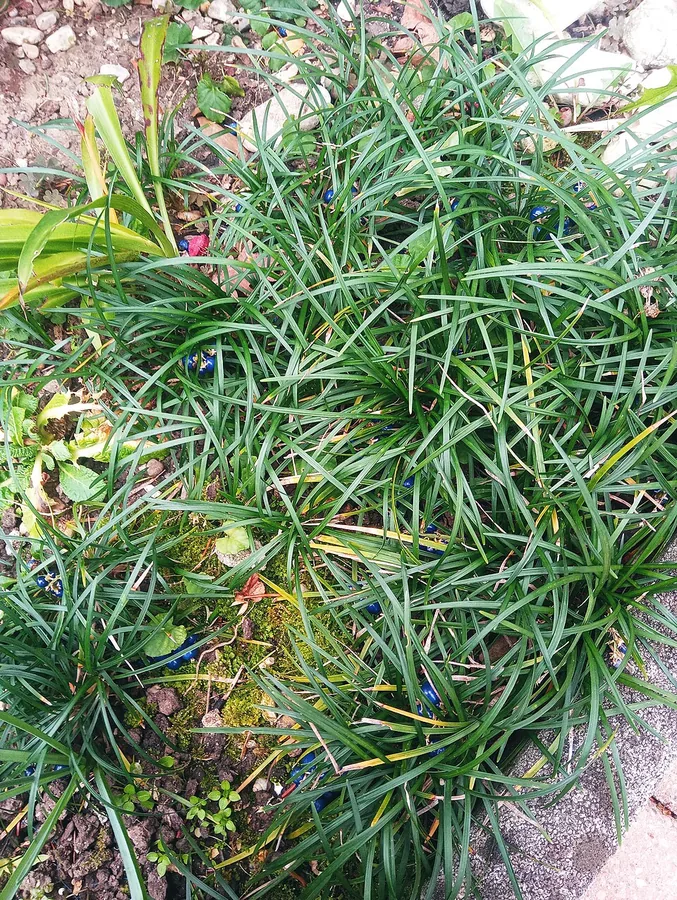
Mondo grass has the look of a fine, dark green lawn, and yet it isn't a grass at all. It is Ophiopogon japonicus, a member of the asparagus family that hails from East Asia and earns its keep as an evergreen groundcover. Those narrow, arching blades gather into low tufts and travel on short underground stems until they form a dense, even mat.
Gardeners come to love it because it flourishes right where a lawn would give up. It welcomes shade that leaves most plants sulking, holds its color the year round in mild climates, and takes drought in stride once it feels at home. Down among the leaves in summer, small white to lilac flowers hide away, and little blue berries follow.
The one thing it asks of you is a bit of patience. Mondo grass is a slow spreader, so a fresh planting takes its own sweet time to close the gaps, but once it fills in you'll have one of the most forgiving, carefree carpets a garden can offer.
Care
The short version: give it part to full shade and moist but well-drained soil, keep the water steady while it settles in, and feed it hardly at all once it's established.
Light
Mondo grass is happiest in part to full shade, where the blades hold their richest dark green. It will put up with full sun as long as you give it extra water, though hot direct sun tends to bleach or scorch the leaves. Dappled light beneath trees suits it wonderfully.
Water
Keep the soil consistently moist while your plants are settling in, watering every 5 to 10 days as the weather calls for it. Once it has taken hold, mondo grass can ride out a short dry spell, though anything growing in sun will be thirstier. Aim for moist soil that never turns waterlogged.
Soil
Ordinary well-drained soil is all it wants, be it clay, loam, or sandy. What you'll want to steer clear of is soggy, poorly drained ground or a strongly alkaline spot, since either one opens the door to root rot. Mixing in a little organic matter gives your planting a kind head start.
Temperature
Mondo grass is a tough customer across a wide range, from about 0°F to 95°F (-18°C to 35°C). That hardiness is exactly what lets it keep its color through the year in zones 7 to 10.
Humidity
Everyday outdoor humidity suits it just fine, so there's no number to fuss over. It settles in happily whether the air is humid or dry, as long as you meet its moisture and shade needs.
Feeding
This is a modest eater that wants very little feeding. One light application of balanced fertilizer in spring is plenty, and even that only if the planting looks like it could use a lift.
Pruning
Mondo grass is low maintenance and asks for just one tidy-up each year. Shear or mow the tired old foliage back in late winter or early spring before the new growth pushes up, which has the happy bonus of setting back scale.
Repotting
Clumps seldom need lifting and do best when you leave them to fill in. Divide and replant only once the center thins or the clump grows crowded and starts to lose its spark.
Size & spacing
Plants rise to 6 to 12 inches (15 to 30 cm) tall and spread about as wide, so set your divisions roughly 6 to 12 inches (15 to 30 cm) apart. Nudging them a touch closer helps the gaps close sooner, given how gently it creeps.
When to plant
Mondo grass is happy outdoors in zones 7 through 10 and goes in whenever the soil is workable. Tuck new plants into the ground in spring once frost has passed, or in fall, and watch for its shy summer flowers around June and July.
Northern hemisphere
Southern hemisphere
Typical months for a temperate climate: start earlier in warm zones, later where spring frosts linger.
- Plant: Spring after frost, or fall
- Harvest: Summer (about June to July)
Hardiness
USDA hardiness zones: 7–10
Temperature: down to -18°C
Troubleshooting
Mondo grass hardly ever causes headaches, but a handful of problems can crop up when the spot doesn't quite suit it. Most come down to too much sun, too much water, or a little impatience while it fills in, and all of them are recoverable. Find what matches your plant below and gently adjust its conditions.
Yellowing clumps that thin out in wet soil
When clumps go yellow and start to thin, soggy soil and the root rot it brings are almost always behind it, and strongly alkaline ground only adds to the trouble. Take heart, because the check is simple: scoop down and feel the roots, since healthy ones stay firm while rotted ones turn dark and soft. Improve the drainage, ease back on watering, and give the survivors a fresh start in well-drained soil enriched with organic matter.
Fix:
- Improve drainage and stop overwatering
- Replant in well-drained soil amended with organic matter
- Remove and discard severely rotted clumps
Patient waiting while young clumps close the gaps
Try not to worry if the ground still shows between your new plants for a while. Mondo grass creeps along on short rhizomes and is simply a slow grower, so it can take a few seasons to weave into a solid mat. You can gently speed things along by setting divisions a little closer, laying mulch over the open soil, and keeping the ground evenly moist so the clumps knit together sooner.
Fix:
- Be patient; allow several seasons for clumps to knit together
- Space divisions more closely for faster coverage
- Mulch between plants and weed regularly until the mat closes in
- Keep soil evenly moist to encourage establishment
Pale or scorched blades in strong sun
If the color washes out of the leaves or the tips look scorched, the plant is simply getting more hot, direct sun than it likes, and the fierce heat of the Deep South makes this worse. The happy fix is easy: give it filtered sun to full shade and the blades come back to their deepest green. Should you need to keep it in an open spot, a little extra water helps it cope beautifully.
Fix:
- Provide afternoon shade or relocate to part to full shade
- Increase watering for plants grown in full sun
- Site in filtered sun to shade where foliage stays darkest
Ragged, chewed blades from garden pests
Ragged holes with shiny slime trails are the calling card of slugs and snails, while tiny fixed bumps clinging to the blades are scale insects like false oleander or fern scale. Neither one needs to alarm you: hand-pick or bait the slugs, and shear the badly infested foliage in late winter to set the scale back. For a stubborn scale problem, a gentle 2 percent horticultural oil spray finishes the job.
Fix:
- Hand-pick or bait for slugs and snails
- Shear and dispose of infested foliage in late winter to reduce scale
- Apply a 2 percent horticultural oil spray for scale if needed
Toxicity
Here is some lovely news for pet owners and parents: mondo grass is safe. You won't find it on the ASPCA toxic-plant lists, and for all its lily-family kinship it is nothing like the truly dangerous lilies. A big helping of any leaf can unsettle a stomach, but there is no real poison to fear here.
Safe for
People · Cats · Dogs · Horses · Rabbits · Livestock · Birds
Cats None
You can relax with cats around mondo grass, since it stays off the ASPCA toxic list. A curious cat that nibbles a blade or two will be perfectly fine, and only a big greedy mouthful might bring a bit of drool or a passing upset stomach.
Dogs None
Dogs are welcome to share a garden full of mondo grass, so there's no need for worry. It holds no dangerous toxins, and the most a determined chewer risks is some mild, short-lived tummy trouble after a large helping.
Horses Safe
Rest easy about horses grazing near mondo grass, because the plant carries no poison. Much like any lush mouthful of greens, an unusually big serving might just loosen things up for a day.
Rabbits Safe
Rabbits are safe to browse mondo grass, since not one of its parts holds a harmful compound. Keep the portions gentle, though, as too much of any fresh green can leave a bunny with a soft stomach.
Livestock Safe
You needn't fret over cattle, goats, or sheep near mondo grass, which simply isn't a toxic plant. Only after an unusually large feed might a grazing animal end up with mild digestive upset.
Birds Safe
Birds, backyard hens included, can happily peck at mondo grass and its blue berries with no harm at all. The plant holds no poisoning risk for them.
People Safe
Mondo grass is grown to please the eye rather than the plate, yet it won't poison anyone who tastes it. Little ones are in no real danger, beyond the mild upset that eating a lot of any leaf can bring.
No special handling required. It is an outdoor groundcover and is not among the truly toxic lilies; mild GI upset is possible only if large amounts are eaten.
Varieties
A few selections show up far more than the rest, from ankle-high dwarfs to a near-black cousin. These are the ones worth learning to tell apart.
'Nana' / 'Kyoto Dwarf' (Dwarf Mondo Grass)
This tiny dwarf reaches only about 2 to 4 inches tall and inches along at a gentle pace, which makes it a lovely little lawn substitute and a favorite for tucking between stepping stones.
'Gyoku Ryu'
A neat dwarf selection that gathers into dense, low tufts of dark green, grass-like foliage.
Black Mondo Grass (Ophiopogon planiscapus 'Nigrescens')
This one is a related species rather than true O. japonicus, loved for near-black purple foliage that brings a striking splash of contrast to a planting.
Lilyturf (Liriope) - look-alike, not the same plant
It belongs to a different genus and catches out plenty of gardeners, since Liriope shows wider leaves, flower spikes held above the foliage, and black berries, while mondo grass keeps its leaves narrower, its flowers hidden, and its berries blue.
How to propagate
Mondo grass is increased by splitting up clumps you already have rather than from seed, and it is a gentle, satisfying job that any gardener can manage.
DivisionEasy
Spring or early in the growing season · Slow; may take years to fill large areas
Making more mondo grass is a friendly job of dividing what you already have. Lift a good-sized clump in spring or early in the growing season and ease it apart into sections, saving as many roots as you can along with a few leaves on each piece. The fresh divisions settle in without fuss but travel slowly, so a broad patch may want years to fill in.
Myths
Mondo grass is a true grass.
It only plays the part. Mondo grass is really Ophiopogon japonicus in the asparagus family, so it is grass-like to look at yet not a grass at all. It's also its own plant, quite separate from the similar lilyturf (Liriope) that gardeners so often confuse it with.