Ornamental · Apiaceae
Masterwort
Astrantia major
Give it moist soil and a little dappled shade, and forgiving masterwort will lift its starry bracts all through the cool of summer.
Partial shade
Every 2–5 days
USDA 4–7
2–3 ft · 0.8–0.9 m
Overview
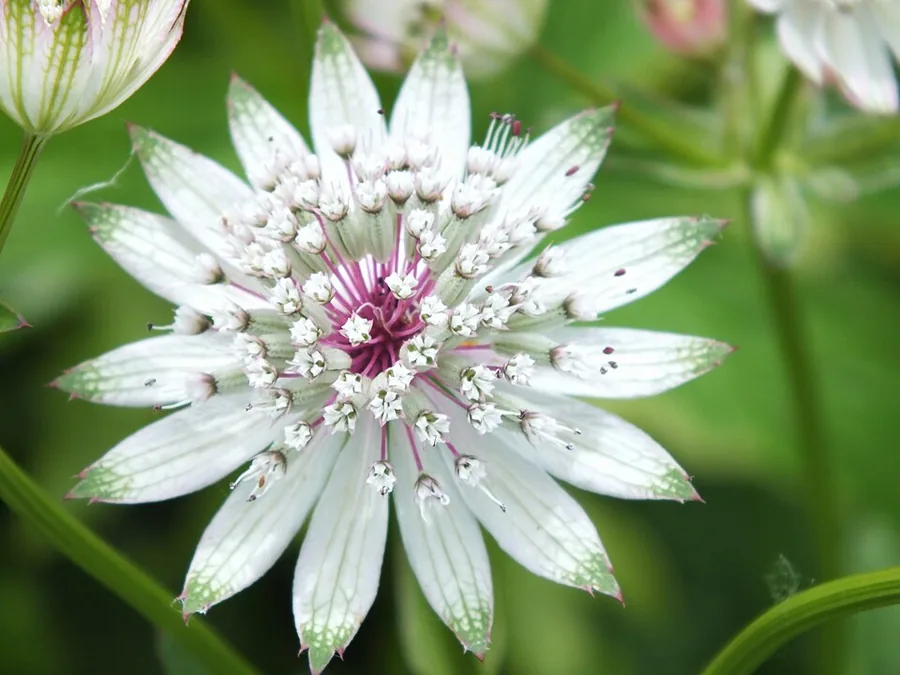
Masterwort is a gentle, clump-forming woodland perennial in the carrot family, and it's a kind plant to start with. Each flowerhead looks like a tiny pincushion ringed by a collar of papery, petal-like bracts. It hails from the cool meadows and mountain woods of Europe, and that background quietly explains everything about the way it likes to live.
Here is the happy part: this is the plant for that shady, moist corner where so many others sulk. Give it soil that stays damp and rich, partial shade with perhaps a touch of morning sun, and the cool feel of a temperate climate, and it will thank you. Hot, dry summers are the one thing it struggles with, so it truly shines in northern gardens.
The bracts are what will win you over. They hold their color and shape long after the true flowers fade, so a clump stays handsome for weeks and even dries beautifully for a vase. Set it among hostas, ferns, and astilbe and it will knit a shaded border together rather than compete with it, which makes it forgiving company for a first-time grower.
Care
The short version: give it part shade with a little morning sun, soil kept evenly moist and never left to dry, rich ground improved with organic matter, and the cool conditions that suit its woodland roots, and you'll do just fine.
Light
Masterwort is happiest in partial shade, ideally with a few hours of soft morning sun and dappled light for the rest of the day. It will put up with fuller shade, though blooming does thin out in deep gloom. Just spare it harsh afternoon sun, which scorches the leaves and dries the soil far too quickly.
Water
Aim to keep the soil uniformly moist all the time, because this plant simply can't cope with drought and will want watering whenever the rain falls short. Happily, it handles wet ground better than most and is content right at the edge of a bog garden, so when in doubt, lean toward damp rather than dry.
Soil
Plant it in organically rich ground that holds moisture yet still drains, much like the medium-to-wet woodland soil it grows in wild. Work in plenty of compost or leaf mold before planting to feed the roots and help the ground stay moist, and you'll be giving it the best possible start.
Temperature
Masterwort is a true cool-climate plant, hardy right down to about -29°F (-34°C) and content up to around 75°F (24°C). It's at home in zones 4 through 7 and only struggles where summers turn long and hot.
Humidity
Ordinary outdoor humidity suits it perfectly, so there's no target number to chase. What really counts is steady moisture at the roots, because it's dry air paired with dry soil together that gradually wears the plant down.
Feeding
Feed it lightly in spring, either by working organic matter into the soil or giving a balanced fertilizer as growth wakes up. The rich soil already does most of the work, so there's no need to overdo it, and heavy feeding only pushes soft growth that tempts aphids.
Pruning
Deadhead the spent flowerheads once they're past to curb self-seeding, and that same little trim often coaxes a fresh flush of bloom. You can cut the old foliage back in fall, or leave it standing for winter interest and simply tidy up in spring, whichever suits you.
Repotting
Masterwort grows from a slowly spreading clump, so lift and divide it every few years when it gets crowded. A clump that flowers less, looks packed, or thins out in the middle is just gently letting you know it's ready to be split.
Size & spacing
Plants reach around 2.5 to 3 feet (76 to 91 cm) tall and form a clump roughly 12 to 18 inches (30 to 46 cm) wide, so give each one that much room to settle in and fill out without crowding its neighbors.
When to plant
Masterwort keeps the easy rhythm of a cool-season perennial, so there's no rush. Start seed in late winter after a long chill, move young plants outdoors in spring once frost has passed or again in fall, and you'll be rewarded with bracted flowers opening from late spring through midsummer.
Northern hemisphere
Southern hemisphere
Typical months for a temperate climate: start earlier in warm zones, later where spring frosts linger.
- Sow: Late winter to early spring; fresh seed needs cold stratification for 2-3 months
- Plant: Spring after frost, or fall
- Harvest: May to July
Hardiness
USDA hardiness zones: 4–7
Temperature: down to -34°C
Troubleshooting
Take heart, masterwort is an easygoing plant with very few real troubles. The few you might run into are slugs in the damp shade, aphids on soft new growth, and shy flowering when a spot is too dark or too dry. Match what you're seeing to the notes below and act early, and everything here is easily put right.
Only a few flowers on a tired-looking plant
If your masterwort seems reluctant to bloom, take heart, the fix is usually simple. The trouble is nearly always too much shade or soil that dries out when the weather warms up. Shift it somewhere it catches a little soft morning sun under dappled shade, keep the ground reliably moist with steady watering, and lay down mulch to hold that moisture and keep the roots pleasantly cool.
Fix:
- Move or site the plant where it gets a few hours of morning sun and dappled shade
- Keep soil continuously moist with regular irrigation
- Mulch to keep roots cool and conserve moisture
Ragged holes appearing in the leaves
Don't worry, this is almost always slugs, and it turns up most in the cool, shady dampness masterwort enjoys. Step out at dusk or first light and lift the slugs off by hand, tidy away the leaf litter and mulch they shelter under near the crown, and if the nibbling keeps up you can lay out traps or a little iron-phosphate bait to help.
Fix:
- Hand-pick slugs in the evening or early morning
- Remove debris and mulch hiding places near the crown
- Use traps or iron-phosphate slug bait if damage is heavy
New shoots looking twisted and dotted with little bugs
Those soft little clustered insects are aphids, and the sticky honeydew film they leave gives them away. A firm spray of water knocks most of them off, insecticidal soap sorts out the stubborn ones, and helpers like lady beetles will happily pitch in. Going a bit lighter on the nitrogen makes a difference too, since it's the soft, lush new growth that tempts them in the first place.
Fix:
- Spray plants with a strong jet of water to dislodge aphids
- Apply insecticidal soap if populations are high
- Encourage beneficial predators such as lady beetles
Toxicity
Here's mostly reassuring news for a pet-friendly garden: masterwort isn't known to be poisonous. It isn't listed as toxic to cats, dogs, horses, or other animals, though no source has formally confirmed it as non-toxic either, so it's best treated as low-risk rather than certified safe. As with any plant, a large mouthful of foliage might bring on a passing stomach upset, but there's little here to worry about.
Safe for
People · Cats · Dogs · Horses · Rabbits · Livestock · Birds
Cats None
You can relax if a curious cat samples a leaf, because masterwort has no reported toxicity at all. A really big mouthful of any greenery might bring on a bit of drooling or a short-lived tummy upset, and that settles on its own before long.
Dogs None
Dogs are perfectly fine around masterwort, since no poisoning is reported from its leaves, stems, or flowers. Even a committed chewer is likely to get no worse than a little passing stomach upset.
Horses None
Rest easy with horses nearby, as they can graze around masterwort with no reported harm and the plant holds nothing that would trouble them.
Rabbits None
Rabbits are welcome to browse the leaves safely, since no toxicity is reported here. It's still kind to keep any sudden feast of fresh greens to a moderate amount.
Livestock None
Cattle, goats, and sheep have no reported hazard from masterwort.
Birds None
Garden birds and poultry can peck happily at masterwort with no worry, because it poses no poisoning risk to them.
People None
Masterwort isn't listed as toxic to people, so a child who brushes past or touches it is very unlikely to come to any harm. It's grown to be admired rather than eaten, so there's simply no reason to taste it.
Keep pets from grazing ornamental plants as a general precaution; ingestion of any plant material can cause mild gastrointestinal upset.
Varieties
A handful of standout cultivars are worth getting to know by name, and each brings its own gentle spin on the masterwort flower.
Rubra
This is a compact choice whose silver-tinged claret-red florets sit above rose, papery bracts that stay lovely long after the flowers themselves have faded.
Roma
A patented, seed-sterile cultivar with rose-red florets and silver-pink bracts, it blooms from late spring into midsummer and, reassuringly, never self-seeds.
Shaggy
Part of subspecies involucrata, this one carries large white flowerheads fringed with long, deeply cut green-tipped bracts for a wonderfully loose, shaggy look.
Companions
Masterwort shines beside the other plants of the moist, shaded border, the ones that share its taste for cool, rich, evenly damp ground.
Plant near
Hosta: The fine-textured astrantia foliage contrasts well with large-leaved hostas in shade.
Astilbe: Shares the same moist, part-shade conditions and pairs well in shade and woodland gardens.
Ferns: Thrives in the same moist, shaded woodland setting and provides textural contrast.
Ligularia: Enjoys the same rich, continuously moist soil in part shade.
How to propagate
You can grow your masterwort family by splitting an established clump or by raising it from seed, and it helps to know upfront that the two routes ask for very different amounts of patience.
DivisionEasy
Early spring or fall · One growing season
The friendliest way to make more masterwort, and the one that keeps a named cultivar true, is to divide a clump in early spring or fall. Gently lift a mature plant, split the crown into pieces, and replant them, and they'll settle in comfortably over a single growing season.
SeedModerate
Sow fresh seed in late winter to early spring · One to two seasons to flowering
Raising it from seed is a slower, gentler project that rewards patience. Sow fresh seed in late winter or early spring after a cold spell of 2 to 3 months, since the seed needs that chill to rouse, and a light nick to the coat helps it along. Give it one to two seasons before the first flowers appear, and remember cultivars rarely come true from seed.
Myths
Masterwort is the same plant as the medicinal herb of the same name.
It's an easy mix-up, but the masterwort of old herbal medicine is usually an Angelica or Peucedanum, a quite different plant. Astrantia major is an ornamental grown for its bracted flowers, not the folk-medicine herb that happens to share the name.
Astrantia spreads aggressively and takes over the garden.
Given the conditions it loves, masterwort does spread a little by underground stolons and self-sown seed, so colonies form over time. It moves slowly though and stays well-mannered rather than invasive, and a quick deadhead after flowering keeps any seeding gently in check.