Ornamental · Poaceae
Kentucky Bluegrass
Poa pratensis
Give it full sun and steady water, and Kentucky bluegrass rewards you with a dense, self-healing lawn.
Full sun
Every 3–7 days
14–30 days
USDA 3–7
Overview
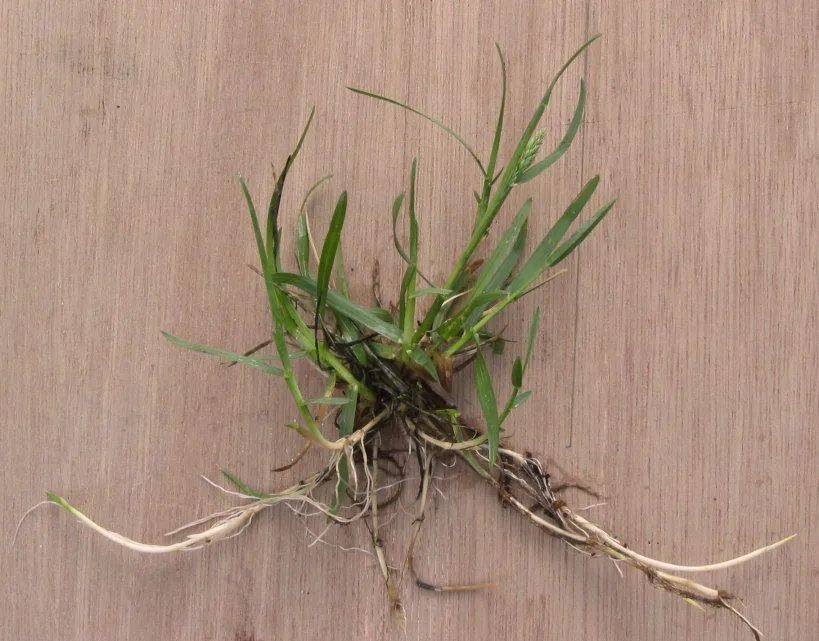
If you are picturing a classic cool-season lawn, Kentucky bluegrass is very likely the grass in your mind, and it is a forgiving one to start with. It grows into a fine, dense turf in a deep green that leans toward blue, and it quietly spreads by underground rhizomes that let it fill its own scuffs and bare spots. Even the name has a soft surprise: it traveled here from Europe and northern Asia with early colonists, and it has anchored northern lawns ever since.
The thing that makes it so kind to a new grower is that self-repairing habit. Where clumping grasses just sit where you put them, bluegrass creeps sideways and re-knits worn ground, so the mistakes you make on a busy yard or play area tend to heal themselves. The only real ask is patience, since it is slow from seed and usually wants a season or two to thicken, and that is perfectly normal.
It does like sun and a little cool-weather watering, and it is happy to tell you when it needs a rest. In a hot, dry summer the lawn browns and slips into dormancy, looking gone while the crowns wait alive under the surface, then it greens right back up when the rain and cooler nights return. Give it the light and moisture it asks for and you end up with one of the toughest, best-looking turfs you can grow up north.
Care
The short version: give it full sun and a steady 1 to 1.5 inches of water a week, mow to about 2.5 to 3.5 inches, plant it on fertile well-drained soil, and feed in spring and fall, and it will settle in happily.
Light
Kentucky bluegrass really wants full sun and reaches only as far as part shade before it starts to sulk. Pushed into deep shade it thins, weakens, and invites powdery mildew, so it is kindest to save that shadier ground for a fine fescue instead.
Water
Aim for about 1 to 1.5 inches (2.5 to 4 cm) of water a week while it is growing, and water deeply rather than in little daily sips. During a hot, dry stretch it will brown and go dormant, but do not panic, because the crowns hold on and the lawn wakes back up once cool, moist weather returns.
Soil
It is happiest in fertile, well-drained loam sitting around a pH of 6.0 to 7.0. Heavy, soggy ground keeps disease around, so good drainage does you more good than piling on rich feeding.
Temperature
This is a cool-season grass, comfortable from about -29°F to 75°F (-34°C to 24°C). It brushes off hard northern winters and greens up early for you, though it does lose a little steam once high summer turns hot.
Humidity
Ordinary outdoor air suits it fine, so there is no target to fuss over. What truly helps is air movement, since still, muggy corners let dollar spot and mildew settle in.
Feeding
Feed with a nitrogen-rich lawn fertilizer in spring and again in fall, when the grass is growing hardest and can use it. Go easy on nitrogen in summer, though, because it only stresses dormant turf and gives disease a foothold.
Pruning
Mow to about 2.5 to 3.5 inches (6 to 9 cm), and raise the blade to 3.5 inches or higher in summer heat to take the pressure off. Its strong rhizomes lay down thatch over time, so plan on a gentle dethatch now and then and it will thank you.
Repotting
none
Size & spacing
Mowed turf stands only about 2 to 4 inches (6 to 9 cm) tall, while each plant creeps 6 to 18 inches (15 to 46 cm) wide by rhizome. That quiet sideways spread is exactly what lets a stand close ranks into solid sod and mend its own bare spots.
When to plant
Kentucky bluegrass settles in most easily once the heat lets up, so there is no rush. Sow seed or lay sod in late summer to early fall, when temperatures ease and the rain comes back, and the young lawn has time to root before winter. Spring is a fine backup window, and if you ever leave a stand unmown it lifts up cheerful blue-green flower heads in late spring to early summer.
Northern hemisphere
Southern hemisphere
Typical months for a temperate climate: start earlier in warm zones, later where spring frosts linger.
- Plant: Seed (10 to 14 lb per acre, no deeper than 1/4 in) or lay sod in late summer to early fall when temperatures moderate and rains return; spring seeding is the second-best option.
- Harvest: Grown as mowed turf and normally kept from flowering; if left unmowed it produces blue-green flower heads in late spring to early summer. Establishes as a dense sod over one to two seasons via rhizomes.
Hardiness
USDA hardiness zones: 3–7
Temperature: down to -40°C
Troubleshooting
Most bluegrass worries show up as browning, thinning, or a bare patch, and more often than not the weather or the way it was mowed and fed is behind it, all of which you can steer. The trick is telling a harmless summer nap apart from disease or grub damage, then stepping in before a thin spot settles in for good. Find what you are seeing below and act while a little help still goes a long way.
Purple-brown blade spots that reach down and thin the turf
This one is leaf spot and melting-out, a duo of fungi that move in during cool, wet spring weather, most of all where the grass is cut short and rushed along with early nitrogen. It opens as dark purplish-brown spots with pale tan centers on the blades, then works down to rot the crowns and roots until thin, bare patches appear. You can slow it kindly: lift the mower higher, go easy on the spring feeding, and help water and air move through so the lawn can steady itself.
Fix:
- Raise the mowing height to reduce stress on the crowns.
- Avoid heavy quick-release nitrogen in spring.
- Improve drainage and air movement and apply a labeled fungicide if needed.
Dead patches where the sod peels up like a rug
When the turf rolls back to bare soil, something has been eating the roots below. Most often it is white grubs, the C-shaped larvae of Japanese beetles, chafers, and June beetles, with billbug larvae chewing through stems and crowns as a runner-up. Skunks, birds, and raccoons digging up the lawn are a helpful clue, since they are hunting those grubs. Peek at the root zone to be sure, then water in a labeled grub product at the right time and keep the lawn nicely watered so it can shrug off any light damage.
Fix:
- Confirm grub numbers by inspecting the root zone and treat when populations are high.
- Apply a labeled grub-control insecticide at the proper timing and water it in.
- Keep turf well watered to help it outgrow minor damage.
A summer lawn that goes straw-brown and quits growing
Take a breath, because this is almost always summer dormancy rather than a dead lawn. Kentucky bluegrass simply powers down when heat and drought pile up, and the crowns stay quietly alive under the surface. You get to choose: keep it green with about 1 to 1.5 inches (2.5 to 4 cm) of water each week, or let it rest and sprinkle a little every 2 to 3 weeks until cooler, wetter days coax it back.
Fix:
- Apply about 1 to 1.5 in of water per week to keep the lawn from going dormant, or let it go dormant and water lightly every 2 to 3 weeks to keep crowns alive.
- Avoid heavy traffic on dormant turf.
- Resume normal care when temperatures cool in fall.
Thin, tired patches under trees and along shady walls
If some corners never fill in, low light is usually the reason, since this grass truly wants full sun. The struggle tends to show under trees and along the north side of a house while the open, sunny stretches stay lush and thick. A white dusting called powdery mildew can settle on the blades in those dim, stuffy pockets, but you have easy fixes. Open up the branches overhead to let light through, or scatter a tougher grass like fine fescue right where the shade sits.
Fix:
- Prune or thin overhead trees to let in more light.
- Overseed shaded spots with more shade-tolerant grasses such as fine fescues.
- Raise mowing height and reduce nitrogen and irrigation in shade.
Little tan coin-sized spots that grow together
Those small silver-dollar spots are dollar spot, a fungus that turns up in warm, muggy weather when the lawn is running low on nitrogen. Kneel down for a closer look and you will spot light-tan lesions rimmed in reddish brown, sometimes laced with a soft cobwebby film on dewy mornings. The good news is that steady, moderate feeding, an early-morning watering so blades dry by midday, and a labeled fungicide only if it spreads will settle it down without much fuss.
Fix:
- Maintain moderate to adequate nitrogen fertility to promote recovery.
- Water deeply in the early morning so foliage dries quickly; remove dew by mowing early.
- Apply a labeled fungicide (alternating modes of action) if damage is severe.
A spongy lawn with a dead mat sitting on top
Because Kentucky bluegrass spreads by such busy rhizomes, that very vigor slowly lays down thatch, a brown layer of old stems packed between the green blades and the soil. Once it climbs past about 1/2 inch (1.3 cm), the lawn feels spongy underfoot and starts holding onto disease and drought stress. This is an easy one to stay ahead of: core aerate or power rake in early fall, and ease back on water and nitrogen so the mat stops piling up.
Fix:
- Core aerate and/or dethatch (power rake) in early fall.
- Avoid excessive nitrogen and overwatering that speed thatch buildup.
Toxicity
Here is some genuine peace of mind for homes with animals: Kentucky bluegrass is not poisonous. It is a non-toxic lawn and forage grass, safe for cats, dogs, and grazing livestock alike, and it does not turn up on the ASPCA's toxic-plant lists at all. The only small catch is the pollen from an unmown, flowering lawn, which can nudge hay fever in people and pets who lean that way.
Safe for
People · Cats · Dogs · Horses · Rabbits · Livestock · Birds
Cats Safe
You can relax about the cat, because this grass holds nothing poisonous for them. If one gulps down a big mouthful and brings it back up, that is a full tummy talking, not a toxin.
Dogs Safe
Let the dog chew and roll to its heart's content, since there is nothing here to harm it. The one small thing to keep an eye on is the grass pollen, which can leave a sensitive dog itchy and watery-eyed with hay fever.
Horses Safe
Horses are welcome to graze this one freely, as it is a treasured pasture grass that does them no harm at all.
Rabbits Safe
A rabbit can happily nibble the fresh blades. Just ease any new forage in slowly, since a sudden change unsettles a rabbit's gut even with a plant this gentle.
Livestock Safe
Cattle, goats, and sheep thrive on it, and they clearly enjoy it, since it counts among the tastiest forage grasses around.
Birds Safe
Songbirds and backyard poultry can peck at the seed and tender shoots with no worry whatsoever.
People Safe
It is perfectly friendly to handle and walk on. If you are prone to hay fever you might sneeze near the airborne pollen once an unmown lawn flowers, but that is just an allergy and nothing poisonous.
The grass itself is not poisonous. Grass pollen can trigger hay-fever allergies in sensitive people, and dogs or cats that nibble large amounts of grass may occasionally vomit, but this is not a sign of poisoning.
Varieties
Most lawns lean on improved turf-type cultivars rather than wild bluegrass, and picking a good one is half the battle won. These are the names worth carrying with you when you shop for seed or sod.
'Midnight'
A well-loved improved turf type prized for its deep, nearly navy blue-green color and a low, tight, compact habit that welcomes close mowing beautifully.
Kentucky bluegrass blends
Friendly mixes of several improved cultivars, often teamed with quick perennial ryegrass, that spread the disease-resistance bets around and hurry along a lawn that would otherwise be slow to settle.
Hybrid (Texas × Kentucky) bluegrasses
Gentle crosses with Texas bluegrass that keep their color and keep growing right through summer heat and drought far more comfortably than pure Kentucky bluegrass.
How to propagate
You can begin a bluegrass lawn one of two comfortable ways: from seed, which is easy on the wallet but slow, or from sod and plugs that fill in fast and then spread on their own.
SeedModerate
Late summer to early fall (or spring) · Germinates in about 14 to 30 days and forms a full sod over one to two seasons
Sow in late summer or early fall, or as a second choice in spring, spreading about 10 to 14 pounds per acre and tucking the seed no deeper than 1/4 inch. Bluegrass likes to take its own sweet time, sprouting across 14 to 30 days and needing one or two full seasons to weave into a dense sod, so many gardeners mix in faster perennial ryegrass to hold the ground while the bluegrass catches up. You are not doing anything wrong if it feels slow.
DivisionEasy
Spring or early fall · A few weeks once roots and rhizomes re-knit
Lay sod pieces or plugs in spring or early fall and they settle in within a few weeks, which is a reassuringly quick start. After that the grass takes over the effort itself, pushing out underground rhizomes that creep into bare ground and give the lawn its lovely self-repairing habit.
Myths
Kentucky bluegrass really is blue and hails from Kentucky.
The blades run green to blue-green and are never truly blue, and the name simply traces back to the blue-green flower heads an unmown lawn lifts up in early summer. It is not even an American native. It arrived from Europe, northern Asia, and the mountains of North Africa in the hands of European colonists, so it is neither blue nor a child of Kentucky.