Houseplant · Arecaceae
Kentia Palm
Howea forsteriana
Give it bright, indirect light and a steady drink, and the kentia palm rewards you with slow, easy elegance in any room.
Bright indirect
Every 7–14 days
61–81°F · 16–27°C
USDA 9–11
Overview
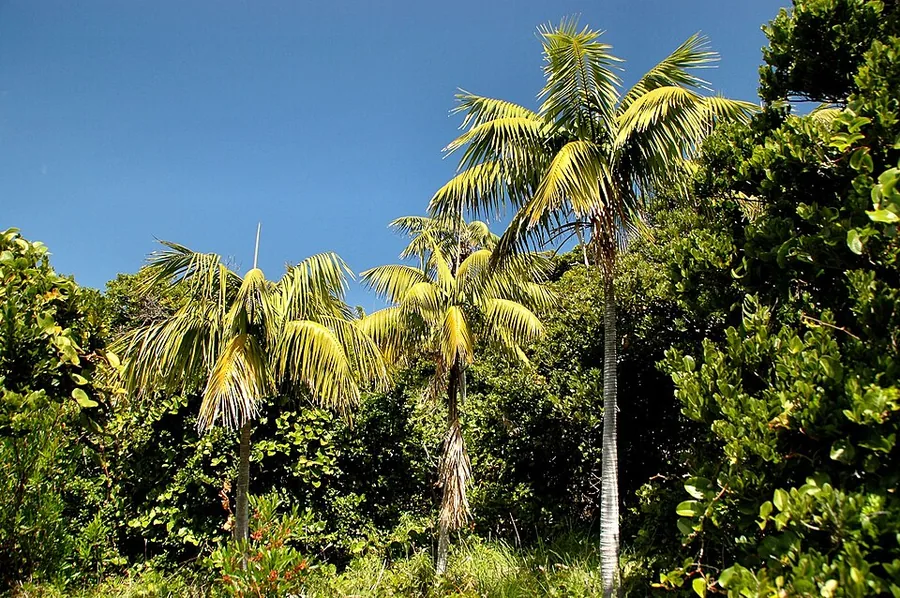
The kentia palm hails from Lord Howe Island off the Australian coast, where it rises into a tall, single-trunked tree. Indoors it has charmed growers for well over a hundred years, loved for the way its arching, dark green fronds gently soften a bare corner. If you're just starting out, take comfort: this is one of the most forgiving palms you can bring home.
What makes it such a kind first plant is its patience and tolerance. It grows slowly and keeps its handsome shape for years, and it happily shrugs off the low light and dry air that trip up fussier palms. That relaxed nature is exactly why you find it thriving in busy lobbies and cozy living rooms alike.
One small thing is worth remembering, and it's easy to get right. A kentia palm has a single growing point and never branches, so unlike many houseplants it can't recover from a cut crown. Handle the very top of the plant with a soft touch and it will keep you company for a long, long time.
Care
The short version: give it bright, indirect light, water once the top of the mix feels dry, and keep it warm between 61°F and 81°F (16°C to 27°C). Feed it lightly through the growing season, let it rest in winter, and simply never cut the growing tip.
Light
Your kentia palm will be happiest in bright, indirect light, though its lovely tolerance is the real reassurance. It carries on in medium light, low light, and even full shade, which is why it thrives in the dim corners that finish off most palms. Just keep it clear of harsh direct sun, which can scorch the fronds.
Water
Let the top inch or so of the mix dry out before you water again, then give it a thorough soak. Through the warm growing months it drinks freely, but come winter you can ease right off and water only once the mix has dried. Soggy, waterlogged soil is the one thing that reliably rots the roots, so it's the mistake to sidestep.
Soil
Settle it into a porous, well-drained potting mix with plenty of organic matter mixed through. Happily it isn't fussy about soil and takes sand, loam, or clay in stride, along with a pH anywhere from 6.1 to 7.5 spanning the slightly acidic to slightly alkaline range.
Temperature
Everyday room warmth suits it beautifully, ideally 61°F to 81°F (16°C to 27°C). Keep it away from cold drafts and chilly winter windows, since it has no frost tolerance to fall back on indoors.
Humidity
Average household humidity is plenty, so there's no number here to lose sleep over. Even so, dry winter air can invite spider mites, so an occasional misting or a spot away from a hot radiator helps keep the fronds fresh and clean.
Feeding
Feed only through the spring and summer growing season, reaching for a slow-release palm fertilizer such as a 12-4-12 or 8-2-12 blend two or three times a year. You can skip feeding altogether in autumn and winter, when growth slows right down.
Pruning
Pruning is refreshingly hands-off, so there's little to fret over. Snip away only the fully dead, brown fronds at the base and let everything else be. Never cut the single crown or growing tip, because a solitary palm simply cannot grow back from a damaged point.
Repotting
This palm likes its roots snug and would rather not be disturbed, so repot only every two or three years and only once the roots have truly filled the pot. It's ready when you see roots circling inside, peeking out the drainage holes, or water rushing straight through with little soaked up.
Size & spacing
Indoors a kentia palm climbs to 4 to 10 feet (1.2 to 3 m) tall over many gentle years and fans its fronds 3 to 6 feet (90 to 180 cm) wide. Give it a little floor space to arch out freely without pressing against a wall or window.
Troubleshooting
A kentia palm asks for very little, and when something does slip, it almost always shows up in the fronds. Brown tips and a light touch of spider mites are the two you're most likely to meet. Catch the signs early and you'll find the fix is gentle and simple.
Faint yellow speckles and a little webbing on the leaves
Those pale yellow flecks and a whisper of webbing under the fronds are the calling card of spider mites, which love the hot, dry air that builds up indoors. Don't panic, because a good rinse of the foliage knocks most of them loose, and lifting the humidity around the plant makes it far less welcoming. Should a few cling on, a gentle round of insecticidal soap or horticultural oil, repeated until the fronds look clean again, will see you through.
Fix:
- Rinse or wash the foliage to physically remove mites
- Raise local humidity and avoid hot, dry placement
- Treat with insecticidal soap or horticultural oil per label directions, repeating as needed
Crispy brown tips creeping in along the frond edges
Take heart, because brown tips are common and easy to read: usually the air has gone dry or the plant got a little thirsty between drinks, and sometimes a slow buildup of fertilizer salts in the mix does the scorching instead. Water on a steady rhythm through the growing months, and every so often pour clear water through the pot to rinse those salts away. When you tidy the tips, snip only the dead brown bits and leave a whisper of brown so your scissors never reach the living green.
Fix:
- Maintain even moisture during active growth and water before the mix fully dries out
- Leach the pot periodically by flushing with clear water to remove accumulated salts
- Reduce or correct fertilizer rate
- Trim only the dead brown tissue, leaving a thin margin of brown rather than cutting into green tissue
Toxicity
Here's some welcome news if you share your home with pets or little ones: the kentia palm is non-toxic all around. The ASPCA lists it as safe for cats and dogs, and no part of the plant holds a poison that could harm other animals or people. A chewed frond might bring a little tummy upset, but nothing more worrying than that.
Safe for
People · Cats · Dogs · Horses · Rabbits · Livestock · Birds
Cats None
You can relax around a curious cat, since the ASPCA lists the kentia palm as non-toxic and a nibbled frond holds nothing that will poison it. A cat that gulps down a lot of any leaf might cough it back up, but that comes from the greenery, not from any poison in this palm.
Dogs None
Dogs are just as safe here, and the ASPCA backs that up by listing the plant as non-toxic. The most you might see is the mild tummy grumble any dog can get from munching on leaves, so there's nothing to fear.
Horses Safe
No poisonous compounds have been found in this palm, so you needn't worry about horses coming to harm near it.
Rabbits Safe
Nothing in the fronds will hurt a rabbit, though it's kinder to keep a houseplant as decoration rather than something to nibble.
Livestock Safe
Cattle, goats, and sheep can spend time near the leaves with no toxic effect at all, so grazing close by is fine.
Birds Safe
Pet birds are safe alongside it too, since the plant carries no toxin and a curious beak comes to no harm.
People Safe
The kentia palm is harmless to people, so you can care for it without concern. It's grown as decoration rather than food, yet handling it or an accidental taste carries no risk.
Varieties
The kentia palm you'll find for sale is nearly always the plain species, so there's really just one you need to know.
Howea forsteriana (species)
You'll know the true kentia palm by its slim trunk and its arching crown of dark green, feather-shaped fronds, which sit flatter than the more strongly curved leaves of its relative, Howea belmoreana.
How to propagate
Making more kentia palms is the one part of its care that truly tests your patience. Seed is the only way to do it, and it asks for warmth and a generous helping of waiting.
SeedDemanding
Sow fresh seed in warm conditions · Germination is slow and erratic, ranging from about three months to several years
Growing a kentia palm from scratch asks for real patience, and seed is the only path that works. Sow fresh seed somewhere warm and settle in to wait, because sprouting comes slowly and unevenly, anywhere from three months to several years. Since this is a solitary palm that can't be divided, the clustered trunks you spot in stores are just several seedlings raised side by side, not one clump you could ever pull apart.
Myths
You can split a multi-stemmed kentia palm in a pot into separate single-trunk plants by division.
Rest easy about not needing to divide anything, because Howea forsteriana grows as a solitary palm raised only from seed, never from splitting. Those several trunks sharing one pot are simply individual seedlings planted together for a lush, full look, so teasing them apart only wounds each one and leaves you with no extra plants.