Houseplant · Arecaceae
Fishtail Palm
Caryota mitis
A bold yet forgiving indoor palm with leaflets shaped like a fish's tail, happy to grow for you as long as you respect its prickly fruit.
Bright indirect
Every 7–14 days
55–84°F · 13–29°C
USDA 9–11
Overview
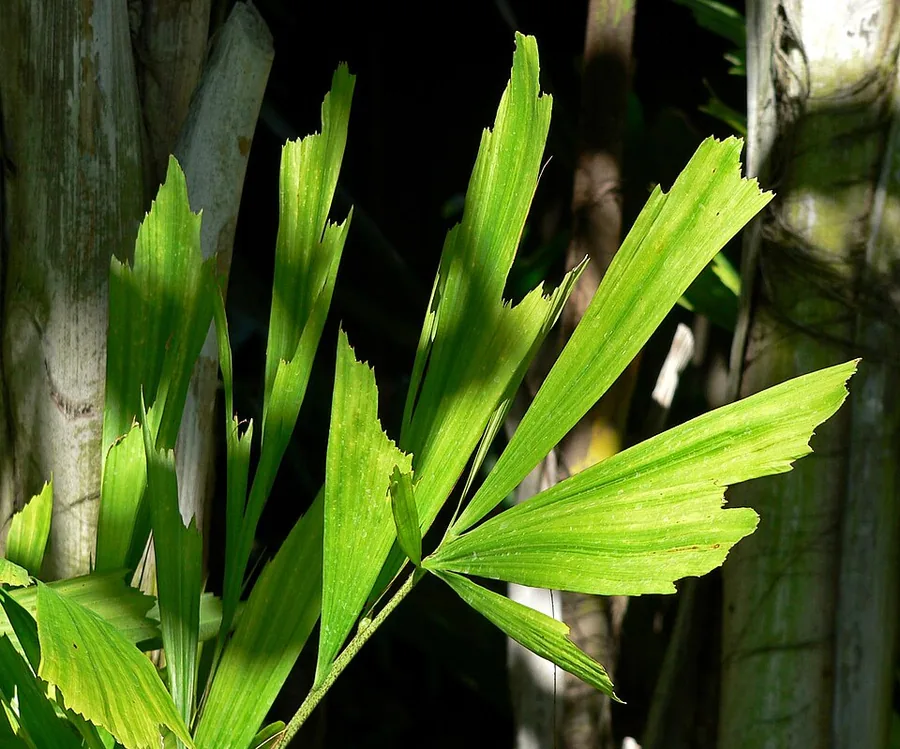
The fishtail palm wins its name from the leaflets themselves, each one frayed at the tip just like a fish's tail and held on twice-divided fronds that lend the whole plant a soft, full look. It grows as a clumping, multi-stemmed palm, pushing up fresh shoots from the base so it fills in as a leafy column instead of one bare trunk. Indoors it tends to settle between 6 and 10 feet (1.8 to 3 m) tall, and that makes it a lovely, easygoing centerpiece for a bright corner.
The part that unsettles most new growers is watching a whole stem yellow and slump for no clear reason. There is nothing to worry about, because this is just how the palm lives. Each stem flowers once, fruits, and then dies, while the suckers around it keep the clump going strong. Once you know that, an alarming sight becomes a simple, recoverable bit of pruning.
The single real catch is the fruit. Those small reddish-black berries are packed with needle-like calcium oxalate crystals that burn and itch on bare skin, so it is worth being gentle with yourself and reaching for gloves whenever the palm fruits.
Care
The short version: offer bright indirect light, water once the top half of the soil dries, keep it cozy and warm, and feed monthly through the growing season. Pop on gloves any time you handle the fruit, and you will both do just fine.
Light
Set it where it can soak up bright, indirect light near a window with the sun filtered rather than landing straight on the leaves. It will get by in medium light and even a touch of shade, yet it grows fuller and a little faster wherever the light is generous.
Water
Water it well while it is actively growing, then simply wait until the top half of the soil has dried before you water again, which tends to land every 7 to 14 days. Ease right back in winter and water sparingly. The palm loves soil that stays evenly moist but never soggy, so good drainage really helps.
Soil
Reach for a rich, loam-based potting mix that drains freely. The palm is wonderfully easygoing about texture, taking clay, loam, or sand in stride, and it is comfortable across a wide pH range from 6.0 to 8.0.
Temperature
Keep it in the snug warm band of 55°F to 84°F (13°C to 29°C). It has no patience for cold drafts or frost, so settle it well away from chilly winter windows and it will stay content.
Humidity
Ordinary room humidity is plenty to keep it going, though it is happier with a little extra moisture in the air. Dry indoor air is what tempts spider mites in, so a quick misting or a humidity tray pays off nicely through winter.
Feeding
Feed it monthly through spring and summer with a balanced palm fertilizer while it is putting on new growth. Let it rest and stop feeding in the cooler months once growth slows down.
Pruning
Pruning here is light, gentle work. Trim away any dead or damaged fronds, and when a stem finishes flowering and dies, cut it out at the base to make welcome room for the suckers rising up behind it.
Repotting
Move it into a roomier pot every 2 to 3 years, or a touch sooner if it starts to crowd its container. Roots circling the pot or peeking from the drainage holes, soil that dries fast, and growth that stalls are all kind little signals that it is time.
Size & spacing
Indoors the palm reaches 6 to 10 feet (1.8 to 3 m) tall with a spread of 3 to 5 feet (90 to 150 cm), so give the clump real floor space and plenty of room for the fronds to arch out comfortably.
Troubleshooting
Almost every fishtail palm worry comes down to two things: a stem fading away after it flowers, and pests drifting in when the air dries out. The first is perfectly normal and the second is easy to put right. Match what you are seeing below before you reach for any treatment, and you will know exactly what to do.
Faint webbing and pale flecks showing up on the leaflets
When indoor air turns warm and dry, spider mites can settle in, and they are one of the toughest pests on a fishtail palm kept inside. Turn a few leaflets over and look for tiny crawling dots and threads of webbing, then give the foliage a gentle rinse or wipe to clear them away. Lift the humidity around the plant, and reach for insecticidal soap or horticultural oil if the mites prove stubborn.
Fix:
- Rinse or wipe foliage to dislodge mites
- Raise humidity around the plant
- Treat with insecticidal soap or horticultural oil as needed
One trunk slowly yellows and fades once it has bloomed
Take heart, because a whole stem yellowing after it flowers is monocarpic flowering at work, not an illness creeping in. Every stem blooms a single time from the crown downward, ripens its reddish-black berries, and then bows out right on cue. Snip the finished trunk away at the base, and the healthy suckers below will gladly carry the clump on.
Fix:
- Cut the spent stem out at the base once it has fully died
- Allow the surviving suckers to take over the clump
Toxicity
The leaves are generally safe to handle, so there is no need to feel nervous around the foliage. The real care goes to the fruit and sap, which are the hazard here. They hold sharp calcium oxalate crystals that sting the skin, mouth, and throat of people and pets alike. No part of this palm is safe to eat, so keep the ripe berries away from children and animals and slip on gloves whenever you clean them off.
Toxic to
Cats · Dogs · Horses · Rabbits · Livestock · Birds · People
Cats Toxic
A cat that bites into the fruit or sap feels a quick burning in the mouth, starts to drool heavily, and paws at its face. The lips and tongue may swell soon after, and most cats will turn away from their food until it settles.
Dogs Toxic
Those needle-like crystals sting the moment they touch, so a dog that chews the berries will suddenly drool, hurt around the mouth, and gag. Some dogs vomit too, or quietly skip their meals for a little while afterward.
Horses Caution
A horse seldom crosses paths with this palm, yet the oxalate-rich fruit would burn the mouth and lips just the same, leaving it drooling and unwilling to graze. Tidy any fallen fruit away so it stays out of reach.
Rabbits Toxic
The raphides are every bit as harsh on a rabbit's tender mouth. One nibble brings stinging pain, drooling, and a flat refusal to eat, so it is kindest never to offer any part of this plant.
Livestock Caution
Grazing animals that mouth the fruit meet the same painful sting and swelling, which tends to put them off after a single taste. Fencing the plant away from where stock browse keeps everyone comfortable.
Birds Caution
Those irritant crystals make the fruit a poor and risky snack, and a bird pecking at broken berries can leave its beak and mouth sore. It is gentler to keep the fruit off-limits rather than within reach.
People Caution
No part of the fishtail palm belongs on a plate, and even handling crushed fruit can leave skin burning and itchy for hours. Slip on gloves before you clean the berries off the seeds, and keep the fruit tucked away from children.
Wear gloves when handling the ripe fruit / cleaning seeds, as the calcium oxalate causes painful skin irritation and itching.
Helpline numbers

United States
ASPCA Animal Poison Control: (888) 426-4435 (fee applies)
Poison Control: (800) 222-1222



Canada
Poison Centres: 1-844-764-7669
Varieties
Fishtail palm is grown as the straight species, so there is really just the one plant to get to know, which keeps things wonderfully simple.
Caryota mitis (species)
This is the clumping, many-stemmed fishtail palm whose ragged, twice-divided leaflets really do look like a fish's tail, and it happily renews itself from suckers rising at the base.
How to propagate
There are two gentle ways to make more fishtail palms, and one is far quicker than the other. Dividing the clump rewards you with a plant fast, while seed asks for a good deal more patience.
DivisionModerate
Spring to summer during active growth · Several weeks to a few months for divided suckers to root and resume growth
Since the palm grows as a friendly clump, the easiest path to new plants is to lift it in spring or summer and ease the suckers away from around the base. Be patient and give each division a few weeks to a few months to root and find its feet again before you count it as settled in.
SeedModerate
When ripe fruit is available; sow fresh seed · Germination can take several weeks to months, then years to reach size
Once ripe fruit is on hand you can sow fresh seed, though it pays to wear gloves while you clean the pulp away, since the calcium oxalate crystals in the fruit burn and itch on contact. Seed asks for patience: germination runs several weeks to months, and the seedlings then take years to reach any real size.
Myths
A yellowing, collapsing trunk means the whole fishtail palm is dying or diseased.
Every stem is simply made to flower once, fruit, and then fade away, while the clump keeps on living through fresh suckers at its base. This is normal monocarpic behavior, not a problem to fix. Cut the finished trunk out, and let the new growth step into its place.
Like the parlor and areca palms, the fishtail palm is harmless to touch.
Its fruit is full of needle-like calcium oxalate crystals that sting the skin and set off itching the instant you handle a broken berry. Wear gloves around the ripe fruit, since this palm does not share the easygoing safety of those other houseplant palms.