Ornamental · Aizoaceae
Ice Plant
Delosperma cooperi
Give it full sun and sharp drainage, and this easygoing succulent will lay down a low carpet of jewel-toned flowers all summer long.
Full sun
USDA 6–10
3–6 in · 8–15 cm
Overview
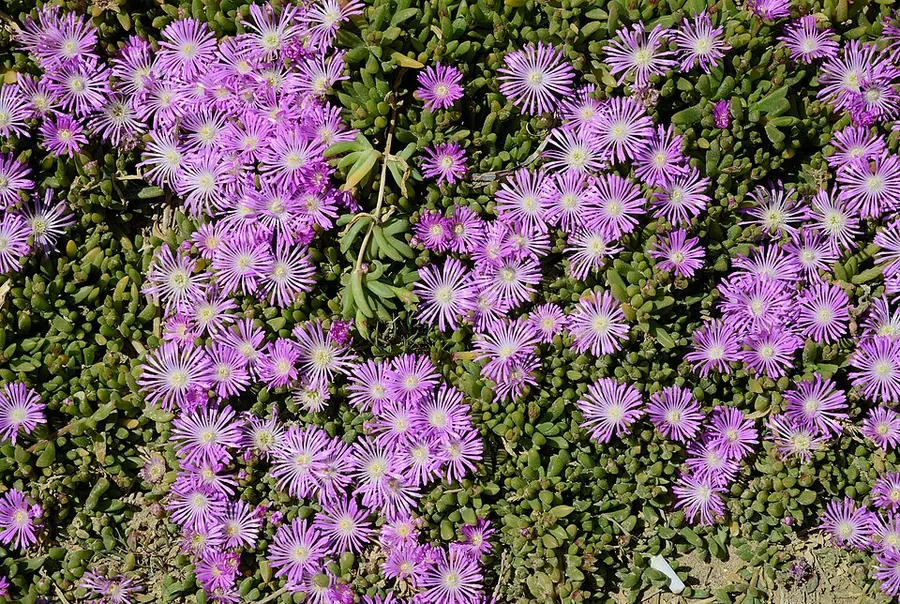
If you're just starting out, ice plant is a kind one to begin with. This low, mat-forming succulent from South Africa spreads into a soft carpet of fleshy, finger-like leaves, and through summer it covers itself in daisy-like flowers in purple, pink, orange, and yellow that catch the light like crushed glass. It stays modest at 3 to 6 inches tall, so you can lean on it as a groundcover, a tidy edging, or a spiller tumbling over a wall or rockery.
What really sets this plant apart from the many that share its name is its wonderful cold hardiness. Delosperma cooperi takes winters down to USDA zone 6 in its stride, far past what the tender ice plants most people imagine could manage. Add its genuine drought and heat tolerance and you have an easy, willing plant for those hot, dry banks where little else wants to hold the soil.
The one thing to keep in mind is that it truly dislikes wet feet, so growing it well really does come down to drainage. Give it gritty soil and a sunny home and it will nearly look after itself, but if you leave it sitting in cold, soggy ground over winter it can simply melt away. The good news is that this is easy to get right, and once you do, the plant forgives almost everything else.
Care
The short version: give it full sun, gritty fast-draining soil, and a light touch with the watering can. Let it dry out between drinks, keep it nearly dry through winter, and you'll find it asks for almost nothing more.
Light
Ice plant loves full sun, so aim for 6 or more hours of direct light each day. It will put up with a little partial sun, but any deeper shade leaves you with weak, stretched growth and only a scattering of flowers, so a bright spot really pays off.
Water
Water sparingly, and wait until the soil has dried out completely before you do. An occasional deep drink is plenty through the growing season, and over winter it should stay nearly dry. It's a true succulent, so remember that overwatering is the quickest way to lose it.
Soil
Drainage really is everything here. Plant it in a gritty, sharply drained sandy or gravelly mix, and if your ground leans toward clay, just dig in plenty of grit or build up a raised spot. Soggy soil is what rots the crown, so this small effort is worth it.
Temperature
You'll be pleased how tough it is at both extremes, comfortable from about -9°F to 100°F (-23°C to 38°C). That remarkable cold tolerance is exactly what lets it overwinter outdoors in places where most succulents would give up.
Humidity
It's happiest in low humidity and dry air, which makes sense for a plant built for hot, dry banks. Damp, still conditions don't suit it, so a spot with good airflow will help keep it in fine health.
Feeding
You barely need to feed this one at all. In lean, well-drained soil you can skip feeding completely, and at most offer a light, balanced feed in spring. Rich soil and heavy feeding only give you soft, floppy growth, so less really is more.
Pruning
Give the mat a light shear after the main flush of bloom to neaten it up and gently coax a second round of flowers. Come spring, clear away any dead or frost-damaged growth so the fresh shoots have room to come through.
Repotting
A container-grown plant only asks for repotting every 2 to 3 years, so there's no rush. Just keep an eye out for roots poking through the drainage holes or the middle of the mat thinning, both of which tell you the pot has filled and it's time to move up.
Size & spacing
These plants stay low at 3 to 6 inches (8 to 15 cm) tall while spreading into a broad mat of 12 to 24 inches (30 to 60 cm). Give them enough room that the carpets can knit together nicely without crowding and piling up on one another.
When to plant
Because ice plant is a hardy perennial, once it settles in it comes back on its own year after year, so you won't need to replant. Set new plants out in spring after the worst of the frost has passed, and look forward to flowers rolling in from June through September. In winter it's not the cold that troubles it but wet soil, so keep that in mind and it will do beautifully.
Northern hemisphere
Southern hemisphere
Typical months for a temperate climate: start earlier in warm zones, later where spring frosts linger.
- Harvest: Summer; flowers roughly June to September
Hardiness
USDA hardiness zones: 6–10
Temperature: down to -23°C
Troubleshooting
Ice plant gives you very little grief, and almost every hiccup traces back to the same thing: too much water lingering around the roots. Once you learn to spot the early warning signs, most trouble is easy to head off before it starts. Find the description that matches what you're seeing below, then step in early before a soft patch has a chance to spread.
When your plant blackens or stays asleep after winter
Take heart, because this almost always points to crown and root rot, and once you know the cause it's easy to prevent next time. Cold, soggy soil resting against the crown all winter is what turns the stems and roots soft and mushy, and heavy clay only makes matters worse. Work in plenty of grit, settle the plant on a raised, well-drained spot, and lay gravel rather than bark against the base.
Fix:
- Improve drainage with grit or gravel and replant in a raised, sharply drained spot
- Avoid bark mulch over the crown; use gravel instead
- Provide a sheltered, drier site in marginal zones
Sticky patches or little cottony spots on the leaves
Don't worry, two common sap-feeders are behind this and both are easy to clear. Aphids gather on the softest new growth and leave it twisted, while mealybugs show up as fluffy white smudges tucked along the stems. A firm spray of water usually sends them packing, and you can follow up with insecticidal soap only if a few keep returning.
Fix:
- Rinse off with a strong jet of water
- Treat with insecticidal soap if populations persist
Thin flowering and lanky, reaching stems
Here the fix is wonderfully simple, because it's just too little sun. A plant sitting in shade stretches toward the light and gives you only a handful of blooms, while that very same plant in an open, sunny spot will cover itself in color. Move it where it can soak up 6 or more hours of direct sun each day, and it will reward you.
Fix:
- Relocate to a position receiving 6 or more hours of direct sun
Toxicity
Here's broadly reassuring news for pet owners and parents: hardy ice plant is not known to be toxic, and no poisoning reports are tied to it. One honest footnote: Delosperma cooperi itself hasn't been formally evaluated (the ASPCA's non-toxic 'ice plant' listing covers a close relative), so treat it as low-risk rather than officially certified, and gently discourage pets and children from snacking on any garden plant.
Safe for
People · Cats · Dogs · Horses · Rabbits · Livestock · Birds
Cats Non-toxic
You can relax about the cat here. Should a curious feline chew on a fleshy stem, this gentle succulent won't do it any harm.
Dogs Non-toxic
Dogs are on safe ground with this one. Even if yours digs up a clump or gnaws a few leaves, it should feel just fine.
Horses Non-toxic
There's no reason to fret if a horse grazes the foliage running along a border or path.
Rabbits Non-toxic
A rabbit can nibble the soft leaves with no trouble at all, though most give a succulent this fleshy a wide berth anyway.
Livestock Non-toxic
Rest easy about the cattle, goats, and sheep, since neither the mat nor its flowers will do them any harm.
Birds Non-toxic
Garden birds and backyard poultry are welcome to peck away at it in complete safety.
People Non-toxic
You can handle it freely, and if a child sneaks a stray taste, there's no need to panic.
Varieties
Plant breeders have given hardy ice plant a lovely span of colors, and a handful of series and selections rise above the rest. These are the names worth tucking away for when you go looking.
Jewel of Desert series
You'll find these compact, generous bloomers in a rainbow that runs from peridot-yellow through to garnet-red, and the RHS lists them widely.
Wheels of Wonder series (e.g., Hot Pink Wonder, Orange Wonder)
These strong, spreading selections are prized for the size of their flowers, which are unusually large.
'Mesa Verde' (Delosperma 'Kelaidis')
This salmon-pink Plant Select introduction began life as a sport of a dwarf alpine form of D. cooperi at Denver Botanic Gardens.
How to propagate
Ice plant is about as easy to multiply as any plant you'll grow, so don't be shy about trying. You have three simple, forgiving methods to choose from, whether you're after a single new plant or a whole tray of them.
Stem cuttingsEasy
Spring to summer · 2-4 weeks to root
If you'd like the quickest results, cuttings are your friend and they're very forgiving. Snip short, fleshy stem pieces any time from spring through summer, leave the cut ends to callus for a day or two, then settle them into a gritty mix where they'll root in 2 to 4 weeks.
DivisionEasy
Spring · One growing season
Dividing an established mat could hardly be easier, so don't be nervous. Lift it in spring and gently pull it apart, and the rooted runners drop straight into new ground and fill in over a single growing season.
SeedEasy
Spring · One growing season
When you want plenty of plants, seed is a dependable choice. Scatter the fine seed on the surface in spring and give it warmth and light, and the little seedlings will grow to planting-out size over one growing season.
Myths
Every plant called 'ice plant' is the same species and equally weedy or toxic.
Rest easy, because that name is shared by several unrelated Aizoaceae genera. The invasive coastal weed is Carpobrotus, and the ASPCA's non-toxic 'ice plant' is Lampranthus piquetbergensis. Hardy Delosperma cooperi is its own distinct ornamental and doesn't deserve to be tarred with either brush.
Ice plant needs frequent watering to thrive.
The opposite is true, and that's good news for anyone who forgets the watering can. This drought-tolerant succulent is happiest in dry, sharply drained ground, and too much water is what actually kills it, because a soggy crown and roots simply rot.