Ornamental · Plantaginaceae
Foxglove
Digitalis purpurea
Tall spires of speckled bells brighten a shaded border, yet every part of this plant is poisonous.
Partial shade
Every 3–7 days
USDA 4–9
2–5 ft · 0.6–1.5 m
Overview
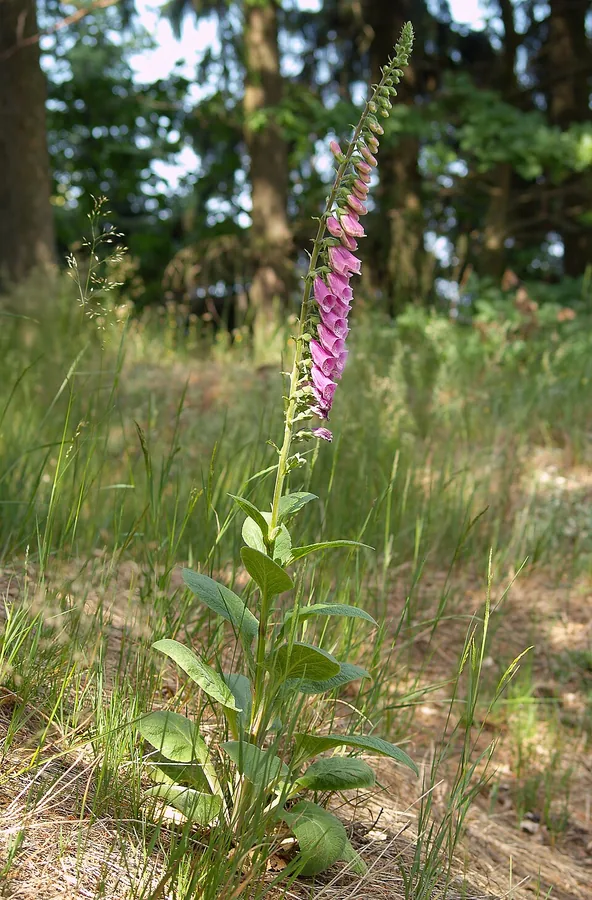
Picture tall, one-sided spikes of speckled tubular bells, each one wide enough for a bee to clamber right inside. Foxglove feels at home in a part-shade border or along a woodland edge, where its acid-loving roots get the steady moisture they crave. The wild plant glows purple, while garden strains stretch that palette into white, cream, and rose.
Most foxgloves keep a biennial schedule, and once you know it the plant stops surprising you. The first year brings a low rosette of leaves close to the ground. The second year sends up the flower spike, sets seed, and then fades. Leave a spike or two to ripen and the plant sows itself, so a single planting carries on generation after generation.
All that beauty comes with one serious catch, and it deserves your full attention. Foxglove is the original source of the heart drug digitalis, and every part of it is poisonous to people and animals alike. Plant it freely, but only where children, pets, and grazing animals cannot possibly reach it.
Care
The short version: foxglove is genuinely forgiving, so take a breath. Give it partial shade and soil that stays damp without turning into a swamp, water every 3 to 7 days as the weather asks, and you are most of the way there. The one thing to never relax about is its toxicity. Every part carries cardiac glycosides, so site it where children, pets, and grazing animals simply cannot get to it.
Light
Aim for partial shade, the kind of dappled light you find at a woodland edge, and your foxglove will be content. It can handle full sun where summers stay cool and moist, and in hotter spots a few hours of afternoon shade will keep the spikes from wilting. Either way, there is room to get it right.
Water
Keep the soil evenly moist and you will rarely go wrong. That usually means watering every 3 to 7 days, more in heat, less when rain does the job for you. Try not to let the soil dry out, since drought stress holds back flowering, and a layer of mulch quietly helps the ground stay damp between waterings.
Soil
Foxglove likes ground that is moist, well-drained, and rich in organic matter. It leans toward acidic conditions, happiest at a pH of 5.0 to 6.0. Work some compost into the bed and skip the lime, and the roots will settle in nicely.
Humidity
There is no humidity target to fuss over here. Ordinary outdoor air suits it fine. What truly counts is airflow between plants, because still, damp air around crowded leaves is what invites powdery mildew. Give each plant a little breathing room and you have nothing to chase.
Feeding
Foxglove is not a heavy feeder, so you can keep this simple. A balanced fertilizer, or compost worked into already rich soil, is plenty through the growing season. Feed lightly and seasonally and the plant will take it from there.
Pruning
Once the flowers fade, deadhead the spent spikes to coax a secondary bloom and to keep self-seeding in check. If you would like the planting to persist, leave a few spikes to set seed. Cutting the flowering stalks back to the basal foliage before seed forms can even nudge the plant into behaving as a short-lived perennial, which is a lovely bonus.
Size & spacing
Expect a plant that reaches 2 to 5 feet (61 to 152 cm) tall with a spread of 12 to 30 inches (30 to 76 cm). Set plants about 18 inches apart so air can move through and the leaves stay dry. Growth is moderate and the lifespan is biennial, and this is an outdoor plant rather than an indoor one.
When to plant
There is no rushing foxglove, and that is part of its charm. It moves on a gentle two-year rhythm. Press seed onto the surface in late spring, or direct sow in late summer, settle young plants outside once the last frost has passed, and the tall spikes will reward your patience the following May and June.
Northern hemisphere
Southern hemisphere
Typical months for a temperate climate: start earlier in warm zones, later where spring frosts linger.
- Sow: Late spring; surface-sow because seed needs light to germinate, do not cover
- Plant: Transplant or thin seedlings to about 18 inches apart after the last spring frost; can also be direct sown in late summer for bloom the following year
- Harvest: Spring to summer (May to June), with a tall one-sided flower spike in the second year
Hardiness
USDA hardiness zones: 4–9
Temperature: down to -34°C
Troubleshooting
Foxglove is easy to please, and almost everything that goes wrong is fixable. Damp, crowded plantings can attract a couple of fungal troubles and the everyday garden insects, but if you keep an eye on the leaves and crown you will usually catch trouble early and head it off before it spreads.
Plant wilts, base of stem rots, and plant collapses
This one is serious, so it helps to know it early. When the base of the stem turns mushy and the plant flops over in soggy ground, the cause is crown rot, which takes hold in waterlogged or poorly drained soil. A soft, discolored crown and roots confirm it. Sadly, once the crown has gone soft there is no saving that plant, so remove and destroy it, improve the drainage, and avoid replanting in low, wet spots.
Fix:
- Remove and destroy affected plants
- Improve soil drainage before replanting
- Avoid planting in low, waterlogged spots
White powdery coating or dark spots on leaves
Do not panic if leaves take on a chalky film or develop dark blotches. This is usually powdery mildew or a leaf spot fungal disease, both encouraged by crowding and stale air. A white powdery layer points to mildew, while distinct brown or tan lesions point to leaf spot. Pick off and discard the affected leaves, open up the spacing to about 18 inches apart, and water at the base rather than over the top. It is only a setback, and the plant recovers.
Fix:
- Remove and discard affected leaves
- Improve air circulation by proper spacing (about 18 inches apart)
- Avoid overhead watering and wetting foliage
Clusters of small insects on new growth, or chewed and skeletonized leaves
Garden visitors turn up on foxglove now and then, and they are manageable. Soft tender shoots can collect aphids or mealybugs that drink the sap, while ragged holes and stripped leaves usually mean Japanese beetles or slugs have been grazing. Check the stems and leaf undersides for the tiny clusters, and watch for beetles or telltale slime trails. Blast aphids off with a sharp jet of water, pick beetles and slugs by hand, and reach for insecticidal soap if anything lingers. A clean bed and regular looks keep it a mere setback.
Fix:
- Knock off aphids with a strong spray of water
- Hand-pick Japanese beetles and slugs
- Treat persistent infestations with insecticidal soap
Reduced flowering and stressed appearance
If blooms thin out and the plant looks tired through a hot, dry stretch, the likely culprit is drought stress from soil that has been allowed to dry. Check whether the ground is parched and the plant limp. Water steadily to bring the soil back to evenly moist, lay down mulch to hold that moisture, and the plant perks up. This is purely cosmetic and easy to put right.
Fix:
- Water consistently to keep soil evenly moist
- Mulch to conserve soil moisture
Toxicity
Here is the honest part, and it matters. Treat foxglove as dangerous, because every part of it holds cardiac glycosides, the very compounds behind the heart drug digitalis. Even a small amount can bring on vomiting and a life-threatening heartbeat. It is severely toxic to cats, dogs, horses, rabbits, livestock, and birds, and people have been poisoned after mistaking the leaves for an edible herb. Keep it away from children, pets, and grazing animals, and never leave cut spikes standing in vase water where someone could reach them.
Toxic to
Cats · Dogs · Horses · Rabbits · Livestock · Birds · People
Cats Severe
Even a single nibble is dangerous. The cardiac glycosides bring on drooling and vomiting, then a slow or wildly irregular heartbeat that can stop the heart, so treat any chewing as an emergency.
Dogs Severe
A dog that eats any part may vomit, scour with diarrhea, and grow weak before the heart rhythm turns dangerous. Collapse and death can follow, so get to a vet right away.
Horses Severe
Foxglove poisons horses gravely whether it is in pasture or dried into hay, causing colic, a staggering gait, and a heartbeat that races or stutters toward heart failure.
Rabbits Severe
The same heart toxins hit rabbits hard, leaving them limp and off their food and at real risk of sudden heart failure, so never let a rabbit reach the leaves.
Livestock Severe
Cattle, sheep, and goats are poisoned by the plant fresh or dried in hay, with drooling, gut upset, weakness, and fatal rhythm changes. Dried plants stay just as deadly.
Birds Severe
Cardiac glycosides are toxic to birds as well, so keep poultry and pet birds well clear of every part.
People Caution
No part of foxglove is food, and people have been poisoned after mistaking the leaves for comfrey. Eating any of it, or even drinking water from a vase of cut spikes, can trigger vomiting and a dangerous heartbeat, so keep it well away from children.
Keep all parts of the plant away from pets, children, and livestock; wash hands after handling and do not allow any part to be eaten.
Helpline numbers

United States
ASPCA Animal Poison Control: (888) 426-4435 (fee applies)
Poison Control: (800) 222-1222



Canada
Poison Centres: 1-844-764-7669
Varieties
The wild foxglove leans toward purple, but garden strains open up the color range, and several have been bred to bloom in their first year. These are the ones worth getting to know.
Foxy
Foxy is a compact strain that tops out around 2 to 3 feet in white, cream, and rose, and it often flowers in its very first year from seed.
Camelot
Camelot is a first-year-flowering cultivar that blooms the same year when it is sown in fall for the following spring.
Dalmatian
Dalmatian is a first-year-flowering series bred to bloom the first year from seed rather than waiting out a second season.
Temple Bells
Temple Bells is a dwarf type that carries yellow tubular flowers brushed with soft brown markings.
How to propagate
You raise foxglove from seed, and the only thing to remember is a happy one: the seed needs light to sprout.
SeedEasy
Surface-sow indoors in late spring or direct sow in the garden in late summer/spring after frost danger passes · Forms a basal rosette the first year and flowers the second year; first-year-flowering cultivars can bloom about 5 months from an early indoor sowing
Foxglove grows easily from seed, and the trick is to remember the seed needs light to sprout, so press it onto the surface and leave it uncovered. Sow indoors in late spring, or direct sow in the garden in late summer or in spring once frost has passed, then thin the seedlings to about 18 inches apart. Most plants form a leaf rosette the first year and flower the second, though first-year-flowering cultivars can bloom about 5 months from an early indoor sowing. Leave a few spikes standing and it reseeds itself freely.
Myths
Foxglove is behind modern heart medicine, so a little must be harmless or even healthy.
It is true that the heart drug digitalis traces back to foxglove, but the raw plant is deadly. There is no safe home dose, because the strength swings wildly from one leaf to the next, and a small mouthful can throw the heart into a fatal rhythm. The medicine on a pharmacy shelf is purified and measured to the microgram. The plant in your border never is.
Foxglove always lives exactly two years then dies.
Foxglove usually runs on a two-year clock, a leaf rosette the first year and a flower spike the second, but that timing is not fixed. Some cultivars flower in year one, and cutting the stalks back before seed sets can coax a plant into lasting as a short-lived perennial.