Ornamental · Poaceae
Feather Reed Grass
Calamagrostis × acutiflora
Give it full sun and feather reed grass will stand tall and feathered for you, from June right through winter.
Full sun
Every 5–10 days
USDA 4–9
3–5 ft · 0.9–1.5 m
Overview
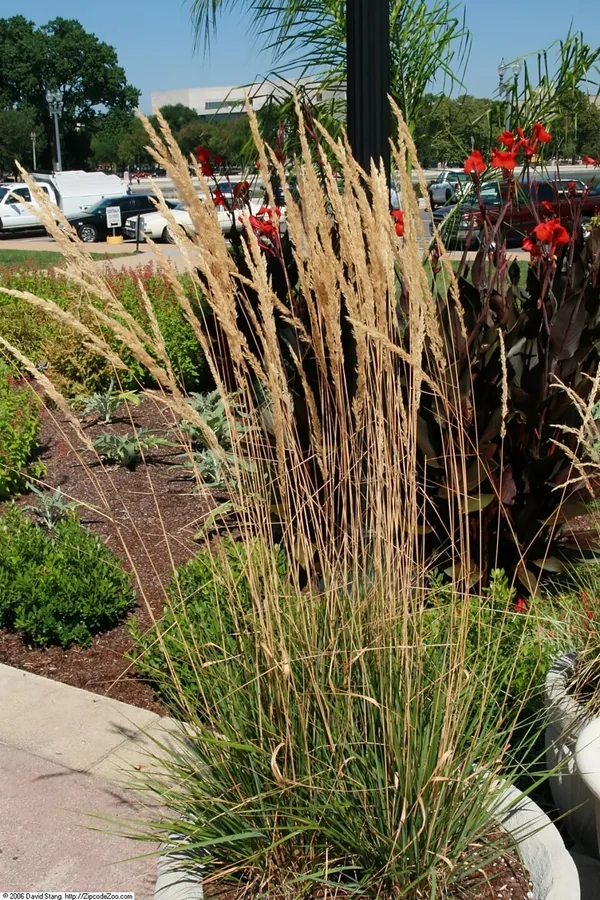
If you have admired the upright grass lining a driveway or standing at the back of a border, this is the one. Feather reed grass is a sterile hybrid of two European grasses, and its best-known form, Karl Foerster, was named Perennial Plant of the Year in 2001. You will see the clump send up slim green blades in spring, and then tall flower stalks that feather out by early summer, and it really does most of the work itself.
The thing you will come to love is its strict vertical habit. Those stems rise straight up and hold their line even after the plumes fade to a soft wheat color, so the plant keeps its handsome shape long after gentler grasses have toppled. It is a cool-season grass, which simply means it grows in the kinder weather of spring and fall and is happy to rest through the harshest summer heat, so do not fret if it pauses.
Best of all, it asks for very little once it has settled in, which makes it forgiving for a first-time grower. Hardy from zone 4 to zone 9, it shrugs off heavy clay, cold winters, and damp ground that would rot fussier grasses. Leave the plumes standing through the cold months for some welcome winter structure, then cut the whole clump down before the new shoots push up in spring.
Care
The short version: full sun, average to moist soil, and almost no fuss, so you can grow this with confidence. Water it through a long dry spell, go easy on the feeding so the stems stay upright, and cut the clump down to the ground just once a year in late winter.
Light
Give feather reed grass full sun and you will get the straightest, sturdiest stems it can manage. It will get by in partial sun or light shade, but the more shade it sits in, the more those stalks lean and flop and the fewer plumes you will see, so sunnier is always kinder.
Water
Once it has established, this grass takes a lot in stride, from dry banks to wet, heavy ground that would drown most others. It is happiest in fertile soil that never bakes bone dry, so be sure to water the clump through a long drought. Give it a drink every 5 to 10 days in a dry stretch, and the rest of the time you can let the weather take care of it.
Soil
You will find almost any soil works for it. Well-drained fertile loam is the ideal, but it copes with heavy clay, poor ground, and damp spots far better than other ornamental grasses, which is exactly why so many gardeners reach for it with confidence.
Temperature
This is a tough, cold-hardy grass that stays comfortable from about -29°F to 100°F (-34°C to 38°C). The deep cold of zone 4 winters will not faze it one bit, though it may sulk and brown a little during the worst of a hot, muggy summer, which is nothing to worry about.
Humidity
You do not need to fuss over outdoor humidity, so there is no number to chase. What matters far more is air movement, because stagnant, muggy air in a crowded planting is what lets rust settle onto the leaves.
Feeding
Feed it lightly in spring with a balanced fertilizer or a thin layer of compost, and then leave it be. Soil that is too rich pushes soft growth that flops and spoils the upright shape you planted it for, so a gentle hand is best.
Pruning
There is only the one cut to remember each year. Shear the whole clump down to a few inches above the ground in late winter or very early spring, before the fresh green shoots break, and the plant fills right back in within weeks.
Repotting
Out in the garden the job is dividing rather than repotting, and it is nothing to dread. Every few years, when the center thins or the clump loses some of its vigor, dig and split it in spring or fall, keep the strong outer pieces, and let the tired middle go.
Size & spacing
A flowering clump reaches 3 to 5 feet (91 to 152 cm) tall while staying pleasingly narrow, with a spread of about 18 to 30 inches (46 to 76 cm). That tidy footprint is just what makes it such a friendly choice for a vertical accent or a neat row.
When to plant
Feather reed grass settles in best when it goes into the ground in spring or fall, while the soil is still cool and the roots can take hold without the stress of summer heat. The flower plumes rise in early summer, around June, and then they happily hold on as tan spikes right through fall and into winter.
Northern hemisphere
Southern hemisphere
Typical months for a temperate climate: start earlier in warm zones, later where spring frosts linger.
- Plant: Spring or fall
- Harvest: Early summer (June); plumes persist through fall and winter
Hardiness
USDA hardiness zones: 4–9
Temperature: down to -34°C
Troubleshooting
Almost every hiccup with feather reed grass traces back to one of three things: too much shade, too much summer heat, or a clump that has simply grown old. Once you know the signs they are easy to read, and the good news is each one is recoverable. Match what you see below, make the single change it calls for, and the plant bounces back.
Rusty orange specks that rub off on your fingers
Those powdery orange spots are rust disease, and they tend to arrive after a long wet spell or a hot, soggy stretch of weather. It looks worse than it is, so simply pull off the worst of the marked leaves and thin the clump a little so fresh air can move through. Try to keep water off the foliage, and gather up any infected bits when you do the late-winter cutback so nothing carries over to next year.
Fix:
- Improve air circulation and avoid overhead watering
- Remove and discard badly affected foliage
- Cut back and dispose of infected growth at the late-winter cleanup
A bare patch opening up in the middle of the clump
When an aging clump starts to hollow out in the center while the outer ring keeps growing strong, that is simply the plant letting you know it is ready to be split. It is an easy job, so dig it up in spring or fall, replant the healthy outer divisions, and let the tired middle go. Repeat it every few years and your grass stays lush and full.
Fix:
- Dig and divide the clump in spring or fall
- Replant healthy outer divisions and discard the dead center
Tired or browning leaves when mid-summer turns hot
Take heart, because this is just how a cool-season grass behaves. It puts on most of its growth in spring and fall, so a hot, sticky summer can leave it looking weary, and that is felt most in the South. You have not done anything wrong, and there is no need to reach for the shears. Keep it watered through the heat and it greens up again all by itself once the air cools.
Fix:
- Water during prolonged heat and drought
- Tolerate the temporary summer decline; do not cut the whole plant back
- Site in full sun in cooler regions for best vigor
Stems leaning over instead of standing straight
If the lovely vertical shape starts to slump, do not worry, because the reason is nearly always too much shade or soil that is too rich. Move the clump somewhere it can soak up full sun and go easy on the feeding. Lean, sunny conditions are exactly what keep those stalks standing tall, and the plant rewards you for it.
Fix:
- Transplant to a full-sun location
- Reduce fertilization and avoid overly rich soil
Toxicity
You can breathe easy with this one. Feather reed grass is non-toxic and does not appear on the ASPCA poison lists, so it is safe to have around cats, dogs, and the whole household. The only real thing to watch is physical: the blades and seed heads carry sharp edges that can scratch, and a pet that nibbles a mouthful of grass might bring it back up.
Safe for
People · Cats · Dogs · Horses · Rabbits · Livestock · Birds
Cats Safe
You can relax with a cat in the house. If one chews on a blade, it may cough the bit back up like it would any grass, and there is nothing poisonous in it to worry about.
Dogs Safe
A dog is welcome to sniff and nibble without any harm, so there is nothing to fear here. The most you might notice is a little vomiting after a big mouthful of grass, which passes quickly.
Horses Safe
Horses have nothing to fear from it either. The only thing to keep an eye on is the stiff, sharp blades, which can give a passing scratch.
Rabbits Safe
Rabbits are perfectly safe near it. The coarse, sharp-edged leaves are not a tempting snack, so they usually wander off and leave it be anyway.
Livestock Safe
Cattle, goats, and sheep can graze nearby with no risk of poisoning. It is grown for its looks rather than feeding, so they tend to pay it little mind.
Birds Safe
Birds come to no harm and often pick at the seed heads. Since the popular forms are sterile, there is not much seed for them to find.
People Safe
There is no danger to people at all. Just slip on a pair of gloves at cutback time, since the leaf edges and seed spikes can nick bare skin.
Foliage and seed heads have sharp edges and points that can scratch; grass pollen may bother allergy sufferers, and pets that nibble grass may vomit, but it is not poisonous.
Varieties
A handful of named forms cover nearly every feather reed grass you are likely to meet at the garden center. These are the ones worth getting to know by name.
Karl Foerster
This is the much-loved upright sterile hybrid that took home Perennial Plant of the Year in 2001, with green blades and tan vertical plumes that will never self-seed on you.
Overdam
A neat, compact variegated form standing around 3 feet tall, its green leaves trimmed with tidy white stripes.
Avalanche
A variegated pick reaching close to 4 feet tall, easy to spot by the wide white stripe running right down the middle of each leaf.
Calamagrostis brachytricha (Korean feather reed grass)
A warm-season relative with a softer, arching mound and gentle pinkish plumes that open up in late summer and fall.
How to propagate
Since the popular forms are sterile, you make more feather reed grass by splitting a clump rather than sowing seed. It is the very same easy job that keeps an older plant looking young, so there is nothing to be nervous about.
DivisionEasy
Spring or fall · One growing season
Splitting a clump is how you make more feather reed grass, and the happy bonus is that it also revives an old plant that has hollowed out in the middle. Dig up and divide an established clump in spring or fall, replant the healthy outer pieces, and give them time to settle, which they do over a single growing season.
SeedDemanding
Not applicable for sterile cultivars · Not applicable; sterile cultivars set little or no viable seed
Do not bother trying seed with the cultivars most people grow. Sterile hybrids such as Karl Foerster set little or no viable seed, so there is simply nothing to sow, and raising the named forms from seed is not a practical route to take.
Myths
All ornamental grasses self-seed and take over the garden.
You can set that worry aside, because the popular forms of feather reed grass, Karl Foerster included, are sterile and set little or no viable seed. With no seed to scatter, they stay right where you plant them, so the standard cultivars are well-behaved and never invasive. The wild species and the rare stray seedling can wander, but the hybrids you bring home from the garden center will not.