Shrub · Thymelaeaceae
Winter Daphne
Daphne odora
Hardly any shrub perfumes a winter garden the way daphne does, yet every part of it is poisonous.
Partial shade
Every 5–10 days
USDA 7–9
3–6 ft · 0.9–2 m
Overview
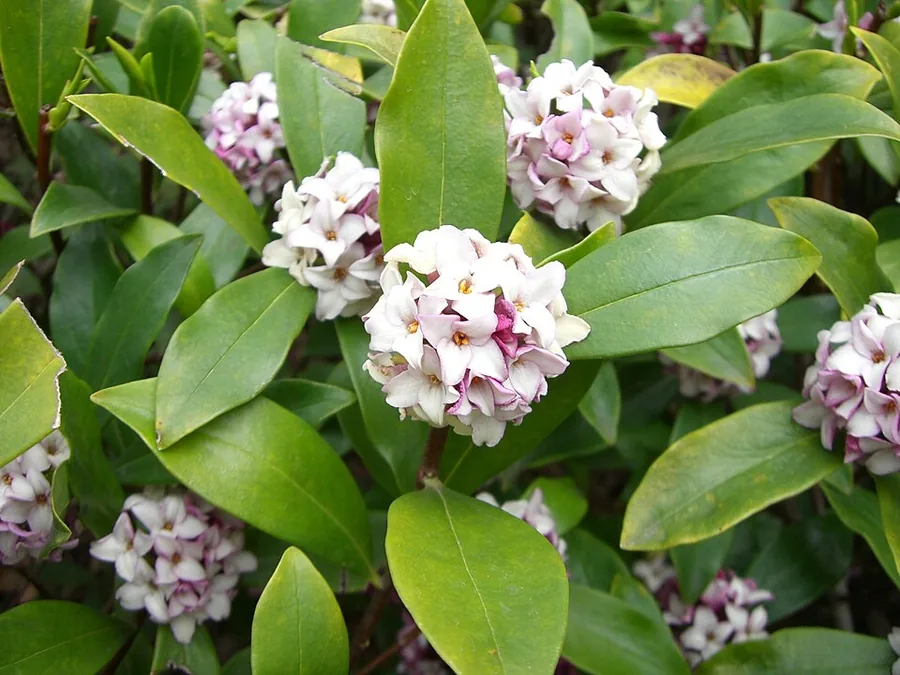
Winter daphne wins its place on scent alone. During the dreariest weeks of the year it unfurls clusters of pink-and-white blooms whose perfume reaches across a whole corner of the garden, and the glossy evergreen foliage keeps things handsome through every other season. Native to China and Japan, it feels most at home in zones 7 to 9, where the winters stay gentle enough to coax those flowers out.
Think of it as a slow, particular shrub that thanks you generously for the right spot and pouts in the wrong one. Daphne asks for part shade, soil that drains sharply, and the freedom to stay put once planted, because it truly hates having its roots disturbed. Choose the site well the first time and a healthy plant will hand you years of midwinter fragrance.
A single fact overrides all the rest when it comes to this plant: it is seriously poisonous. Anyone who chews the leaves, bark, sap, or those vivid berries can end up with a scalded mouth and digestive tract, and merely touching the sap can raise blisters on skin. For the right garden it is a lovely shrub, yet it deserves real thought before going anywhere children or pets like to roam.
Care
The short version: plant winter daphne in part shade on a low mound where the soil drains sharply, keep your watering light so the roots never sit wet, and commit to its forever home from day one, since being moved is something it cannot stand.
Light
Winter daphne is happiest in part shade, although it will accept part sun or even full sun where summers stay cool. Too much fierce afternoon sun wears it down, and deep shade leaves the flowering thin, so look for dappled light or a place that catches the gentle morning sun.
Water
Aim to keep the soil moist but never soggy, watering only once the top inch or so has gone dry, which usually lands somewhere around every 5 to 10 days. Daphne is sensitive both ways, set back by drought yet far more often lost to overwatering, so lean toward the drier side and make certain water clears away quickly.
Soil
Settle it into rich, sandy, humus-filled loam with sharp drainage, because nothing finishes off this shrub faster than wet feet. A pH near 6.0 to 7.0 is ideal, and raising the plant up onto a low mound keeps the crown comfortably above any water that pools.
Temperature
Daphne copes with a span of roughly 10°F to 90°F (-12°C to 32°C), which places it comfortably in zones 7 to 9. Once it has settled in, it brushes off ordinary winter chill, though it does object to hard freezes and to long bouts of extreme heat.
Humidity
Everyday outdoor humidity suits it perfectly, so there's no target number to chase. Moving air counts for far more than moisture in the air, since still, damp conditions are exactly what invite the leaf spot and blight daphne can be prone to.
Feeding
Daphne eats sparingly, a true light feeder. Offer a single dose of balanced fertilizer in spring once the flowers have faded, and stop there. Piling on heavy or frequent feeding only sets back a shrub this slow and choosy.
Pruning
Daphne hardly ever needs cutting. Tip prune lightly just after it flowers to keep it from growing leggy, and leave it at that. The plant will put up with harder pruning but rarely asks for it, and every cut risks contact with its irritant sap, so keep your gloves on.
Repotting
Plan on almost never relocating it. Daphne hates root disturbance and most plants won't pull through a transplant, so settle on the permanent spot before planting day. In a pot, watch for fading vigor, roots winding out the drainage holes, and soil that dries out fast, all signs it has outgrown its container.
Size & spacing
Winter daphne climbs slowly to around 3 to 6.5 feet (91 to 198 cm) tall, spreading 2 to 4 feet (61 to 122 cm) wide. Leave each plant enough room for that full grown spread and for air to circulate around it, which goes a long way toward keeping disease in check.
When to plant
Daphne keeps its own calendar, flowering through the cold months when almost nothing else dares, from deep winter into early spring depending on your zone. Set it out in spring or fall in a sheltered, partly shaded corner, and once it's planted, let it stay right where it is for good.
Northern hemisphere
Southern hemisphere
Typical months for a temperate climate: start earlier in warm zones, later where spring frosts linger.
- Plant: spring or fall in a sheltered, partly shaded site
- Harvest: intensely fragrant pink-and-white flowers in mid to late winter and early spring (January-April depending on zone)
Hardiness
USDA hardiness zones: 7–9
Temperature: down to -18°C
Troubleshooting
Most of daphne's troubles begin out of sight at the roots or in damp, crowded growth, and the most serious ones come with little warning. Keep a friendly eye on the base of the plant and the state of its leaves, and step in at the very first hint instead of holding off. The sooner you catch what these signs are telling you, the better your chances of pulling the shrub through.
A healthy plant suddenly wilts and dies
When a thriving daphne folds without warning, the cause is almost always Phytophthora root and crown rot, which takes hold in wet soil and suffocates the roots from underneath. Sadly, once the crown goes soft a daphne almost never comes back, so lift it, throw it away, and choose a different home for the next one rather than that wet patch. Sort the drainage before anything else, since a virus or disturbed roots can bring on the very same swift collapse.
Fix:
- Improve drainage immediately; daphne cannot be reliably saved once crown rot is advanced
- Remove and discard severely affected plants to limit spread
- Do not replant daphne in the same poorly drained spot
Yellow leaves marked with spots, blight, or canker
Muggy air and tightly packed branches make an opening for fungal leaf spot, botrytis, twig blight, and canker, which turn up as speckled leaves or sunken sores along the stems. Take heart, this one is fixable: clip away the affected leaves and stems, then throw them out. Let more air reach the middle of the shrub and keep the foliage dry, and the problem tends to settle down on its own.
Fix:
- Remove and dispose of affected leaves and stems
- Improve air circulation and avoid wetting foliage
- Reduce overhead watering
Sticky residue and small bumps on stems and leaves
A tacky film on the leaves and warped fresh shoots usually mean aphids, mealybugs, or scale have settled in to drink the sap. Don't worry, a small outbreak is easy to handle: knock them loose with a firm blast from the hose. Should a few cling on, follow up with insecticidal soap or horticultural oil, then look the plant over again every week or so until they are gone for good.
Fix:
- Wash off light infestations with a strong spray of water
- Treat with insecticidal soap or horticultural oil as labeled
- Repeat treatment as needed and monitor
Toxicity
Treat this shrub with real care. Poison runs through all of it, the foliage, the bark, the sap, and most dangerously those bright, candy-colored berries, each part holding the irritant compounds mezerein and daphnin. Make sure children and every animal, cats and dogs, horses, livestock alike, stay clear of it, and never reach for the pruners without gloves on.
Toxic to
Cats · Dogs · Horses · Rabbits · Livestock · Birds · People
Cats Severe
Should a cat bite into any part of this shrub, its mouth and throat burn almost instantly, and drooling, blistering, and violent vomiting come close behind. The colorful berries are the gravest danger of all: even a handful can trigger bloody diarrhea, internal bleeding, convulsions, and death.
Dogs Severe
Chewing the bark, leaves, or berries blisters a dog's mouth and digestive tract and brings on heavy drooling, retching, and bloody diarrhea. A bigger mouthful turns serious in a hurry, with internal bleeding, weakness, and seizures, so phone a vet right away rather than waiting to see.
Horses Severe
Nibbling the leaves or stems scalds a horse's mouth and gut and leads to drooling, colic, and bloody diarrhea. Most horses won't touch something this bitter, yet even a single taste can leave one sick and weak.
Rabbits Severe
The mezerein and daphnin that poison larger animals scald a rabbit's mouth and gut just as harshly, and such a small body has very little room to spare. Set the plant somewhere no roaming rabbit can ever reach it.
Livestock Severe
Cattle, goats, and sheep that browse the leaves or bark end up with serious mouth and gut irritation, drooling, and bloody scouring. Keep daphne fenced away from any grazing animal, because a hungry one may swallow a fatal amount.
Birds Severe
Birds find the toxic berries inviting, yet the fruit carries the same irritant diterpenoids that injure every other creature. Treat the shrub as off limits near pet birds, and don't trust wild ones to steer clear of the fruit either.
People Caution
Nothing on winter daphne is edible, and even the sap by itself can blister exposed skin, which is why gloves and a good wash belong in any pruning session. The candy-sweet berries pose the genuine threat: a small mouthful has left children with scorched mouths, vomiting, and serious illness.
Wear gloves when pruning or handling; the sap can cause skin irritation and blistering (contact dermatitis). Keep the attractive berries away from children and pets.
Helpline numbers

United States
ASPCA Animal Poison Control: (888) 426-4435 (fee applies)
Poison Control: (800) 222-1222



Canada
Poison Centres: 1-844-764-7669
Varieties
Winter daphne shows up in a couple of variegated forms well worth getting to know, each loved for its leaf coloring as much as the species' celebrated scent.
'Aureomarginata'
A slim yellow line rims each leaf, and this one stands up to winter cold a touch more readily than the plain species.
'Marginata'
Soft creamy edges outline its leaves, while the powerful winter fragrance the species is loved for stays fully intact.
How to propagate
Daphne multiplies slowly and bristles at having its roots handled, so both methods reward a soft touch and a good measure of patience.
Stem cuttingsModerate
Summer, from semi-hardwood cuttings of the current season's growth · Several weeks to a few months to root
In summer, gather semi-hardwood cuttings from the growth this season has put on. Rooting is unhurried and can run anywhere from several weeks to a few months, so give it time and don't lose heart. Since daphne so dislikes having its roots handled, pot each rooted cutting up softly and just the once.
LayeringModerate
Spring to summer · A season or more to root before separating
Layering is the kinder, lower-stress option. In spring or summer, bend a low branch down to the ground and pin it, then let it root where it lies, which takes a season or more, and once it holds on its own roots you can cut the young plant away.
Myths
With its sweet blossoms and pretty berries, winter daphne is just an innocent, charming cottage-garden shrub.
Truthfully, few shrubs you could put in the ground are more dangerous. Irritant diterpenoids fill the whole plant, mere contact with the sap blisters skin, and the bright berries may be fatal if eaten, so its home should sit well clear of children and pets.