Ornamental · Poaceae
Creeping Bentgrass
Agrostis stolonifera
A soft, carpet-like turf with the look of a putting green and an appetite for the same devoted care.
Full sun
Every 1–3 days
USDA 3–7
0–1 in · 0–2 cm
Overview
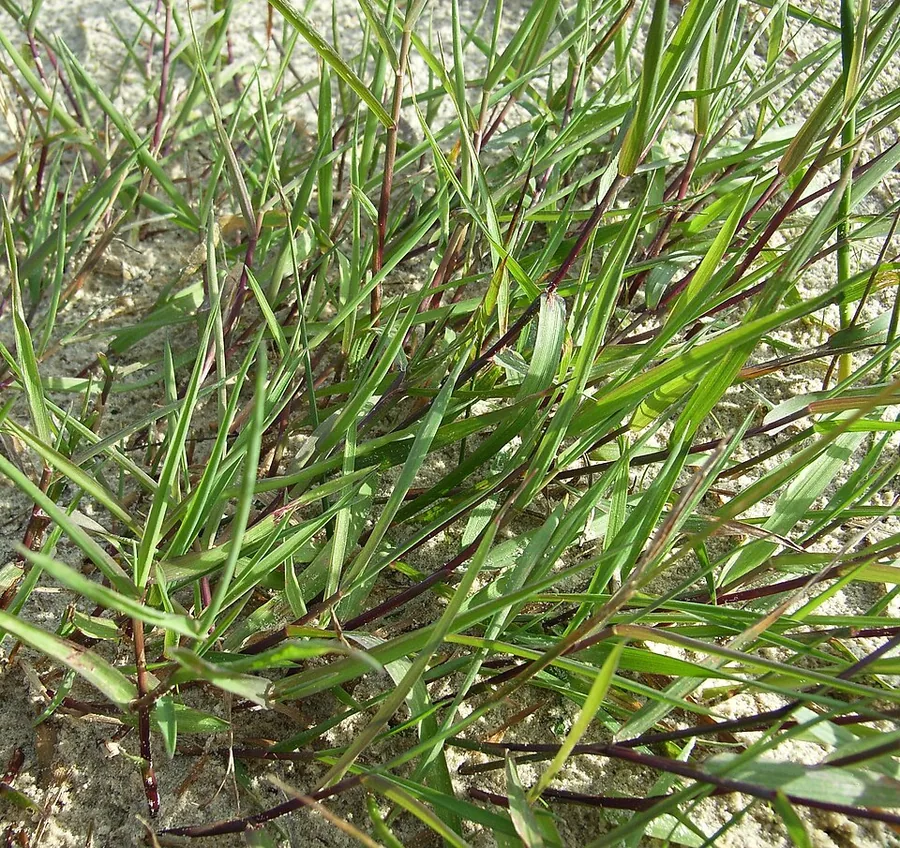
Creeping bentgrass is the soft, low grass behind the glassy smoothness of golf greens. It sits among the cool-season grasses and travels sideways on surface stolons, weaving itself into a dense, plush carpet that welcomes a very close cut. Leave it alone and it will lift airy purple to lavender seed heads in midsummer, which is a quiet little reward in itself.
Where it asks the most of you is the upkeep, so it helps to know that going in. This is a demanding grass that longs for close, frequent mowing, cool moist soil, and your regular attention, and it slips quickly without them. Mow it tall or miss a cut and it goes puffy, lays down thatch, and thins, which is why a tended green suits it better than a backyard. With that understanding, you can absolutely manage it.
The very vigor that makes such a tight green can become a handful elsewhere, so it pays to watch for it kindly. Its creeping stolons let it drift into nearby lawns, where it appears as flat, light-green patches that take some patience to dig out or clear without disturbing the grass around them.
Care
The short version: give it full sun, cool soil kept steadily moist, very close and frequent mowing, a light and consistent feed, and a gentle watchful eye for fungal disease when the weather turns warm and humid. You can handle all of it.
Light
Bentgrass leans toward full sun, plain and simple. It does not really cope with shade, and a green left in the shade will thin, weaken, and pick up disease more readily, so a bright open spot sets you up well.
Water
Keep the soil cool and steadily moist, offering water roughly every 1 to 3 days and a bit more during heat. It is a thirsty grass with little patience for drought, so a dry summer stretch can stress it fast, and your watering can really makes the difference here.
Soil
Offer it fertile, moist, well-drained loam or silt that leans slightly acidic, around a pH of 5.5 to 6.5. It handles a high water table and even short spells of flooding more gracefully than most turf, which gives you a little room to breathe.
Temperature
Being a cool-season grass, it is wonderfully tough in the cold, holding on down to about -40°F (-40°C) while topping out near 86°F (30°C). Summer heat is the real challenge, since high temperatures wear on the plant and invite disease, so plan to keep it cool when the sun climbs.
Humidity
It is happy in high humidity, yet that comes at a cost, because damp, still air is just what fungal turf diseases enjoy. Keeping good airflow moving across the turf matters every bit as much as the moisture, and it is an easy habit to build.
Feeding
Feed it lightly and steadily through the growing season with a balanced turf nitrogen, around 2 to 3 lbs of nitrogen per 1000 sq ft a year, paired with regular topdressing. Resist the urge to overfeed, since too much nitrogen only fuels disease.
Pruning
Mow it very close and often, down to about 1/8 to 1/4 inch on a green, ideally with a reel mower. Let it grow tall or skip a mowing and it puffs, mats, and scalps the next time you lower the blade, so a steady rhythm is your friend.
Repotting
none
Size & spacing
Under a close cut the grass itself stands just 0 to 1 inch (0 to 2 cm) tall, yet a single plant reaches outward on stolons to spread 1 to 3 feet (30 to 91 cm). That sideways travel is how it fills a stand beautifully, and also how it slips into ground you never meant to plant, so a little awareness goes a long way.
When to plant
Because creeping bentgrass is a cool-season grass, it settles in best when the weather leans toward cool, moist conditions. Sow your seed or lay sod and stolons in late summer to early fall, or in spring, and if you let a little go unmown you will be treated to those airy seed heads in midsummer.
Northern hemisphere
Southern hemisphere
Typical months for a temperate climate: start earlier in warm zones, later where spring frosts linger.
- Plant: Seed or sod/stolons in late summer to early fall, or spring, when cool-season conditions favor establishment
- Harvest: Midsummer (purple to lavender panicles when left unmowed)
Hardiness
USDA hardiness zones: 3–7
Temperature: down to -40°C
Troubleshooting
Bentgrass is honest with you and shows trouble early, usually as thinning turf, patches of disease, or a wander into other grass. Look over the gentle signs below, step in while things are small, and most of these are well within your reach to fix.
Round dead or off-color spots showing up in muggy heat
Bentgrass tends to draw in fungal turf diseases, and the usual suspects are dollar spot, brown patch, Pythium blight, anthracnose, take-all patch, and snow mold. Warm muggy air and leaf blades that stay wet on a close cut can trigger them in a hurry, so try not to panic when spots appear. Figure out which disease you are facing first, then open up the airflow, water early so the grass dries, go easy on the nitrogen, and reach for a labeled fungicide when the pressure is high. You can turn this around.
Fix:
- Identify the specific disease before treating
- Improve air movement and avoid prolonged leaf wetness
- Avoid excess nitrogen and irrigate early in the day
- Apply appropriate labeled fungicides during high-risk periods
Your turf keeps thinning even when you give it everything
Take heart, because this is not a failure on your part. Creeping bentgrass quietly expects greens-level attention to stay thick, and an everyday lawn routine simply lets it fade. When you mow it tall or miss a cutting, it puffs up, lays down thatch, and scalps the moment the blade returns. You can hold it together with frequent close mowing, even watering, and routine aeration, and if that feels like more than you want, gently switching to an easier cool-season grass is a perfectly fine choice.
Fix:
- Commit to frequent close mowing with a reel mower
- Irrigate to keep the soil cool and moist
- Topdress and core-aerate regularly to manage thatch and mat
- Maintain a steady light fertility program
Soft light-green patches sneaking into your everyday lawn
Those low, fine-bladed patches are creeping bentgrass turning up as a weed, crawling outward on surface stolons through Kentucky bluegrass, ryegrass, and fescue. No herbicide will lift it out and leave your good grass standing, so the kind way forward is to dig small patches with every root and stolon, or solarize the spot and reseed. For bigger areas, a non-selective herbicide and a full renovation will do it, and you will get there step by step.
Fix:
- Dig out small patches, removing all shallow roots and stolons, then reseed
- Solarize affected areas with clear plastic before reseeding
- For larger areas, use a non-selective herbicide on the patch and renovate, since no herbicide selectively removes bentgrass from cool-season lawns
Toxicity
Wonderful news if you share your home with pets or little ones: creeping bentgrass is not poisonous. It is a plain cool-season turfgrass with no toxic compounds in it, and the only mild bother is the grass pollen it lets go in spring and summer.
Safe for
People · Cats · Dogs · Horses · Rabbits · Livestock · Birds
Cats None
You can relax around your cat here. A nibble might bring up a little grass, but nothing in the plant will poison it.
Dogs None
Your dog can play and chew on the turf freely. An occasional bit of vomiting after grazing is just normal, not poisoning.
Horses Safe
Safe to graze. It is a gentle cool-season grass with no harmful compounds.
Rabbits Safe
Rabbits can nibble it happily as part of their usual grazing.
Livestock Safe
Cattle, goats, and sheep are fine on it, though its short clipped growth gives them little to eat.
Birds Safe
Birds are safe whether they take the seed or rest in the turf.
People Safe
Safe to handle and be near. The only catch is grass pollen, which may bring on hay fever in the warmer months.
Grass pollen can trigger seasonal allergies, and pets that nibble grass may vomit, but the plant itself is not poisonous.
Varieties
Most bentgrass comes down to a handful of named selections and a couple of close relatives. These are the ones you are most likely to come across on a green or read about in a trial, and they are friendly names to know.
Penncross
An older go-to selection that grows looser than the newer types, which leaves it more open to dollar spot and annual bluegrass moving in.
Penn A-1
A newer, improved choice that weaves itself into a tighter, fuller turf than Penncross can.
L-93
A popular improved selection loved for how dense it grows and how well it performs on a putting green.
Colonial bentgrass (Agrostis capillaris)
A close cousin with finer blades that creeps far more politely than creeping bentgrass does.
Velvet bentgrass (Agrostis canina)
A very fine relative with lovely dollar spot tolerance, though it has trouble holding on through the long run in trials.
How to propagate
There are two welcoming ways to start creeping bentgrass, either from seed or vegetatively from the stolons that let it creep along. Both take root easily in cool, moist conditions, so either path is a kind place to begin.
SeedModerate
Late summer to early fall, or spring · Several weeks to a few months for a dense stand
Most plantings begin with extremely fine seed, scattered in late summer to early fall or in spring while the weather stays cool. Keep it steadily moist so it can sprout and knit together, and be patient, since a full carpet can take anywhere from several weeks to a few months to fill in.
DivisionEasy
Cool, moist parts of the growing season · Several weeks to root and spread
You can also grow it vegetatively from sod or stolons during the cool, damp stretches of the season. Those pieces take hold easily and travel quickly, settling in and creeping outward within a few weeks, so this is a forgiving way to start.
Myths
Bentgrass would be a wonderful home lawn since it gives you that putting-green look.
That smooth green look only comes with daily greens-level care: close mowing, generous watering, topdressing, aeration, and dedicated disease control. That is more upkeep than a home lawn can realistically carry. Across most cool-season yards it turns up as an uninvited spreader rather than a lawn you would set out to plant.