Houseplant · Bromeliaceae
Urn Plant
Aechmea fasciata
Keep the cup topped up and the spot bright, and this easygoing bromeliad gives back months of color.
Bright indirect
Every 7–14 days
59–86°F · 15–30°C
USDA 10–11
Overview
That little pool at the heart of the plant is where the urn plant gets its name, a watertight vase made by leaves that overlap snugly. Out in the wild this silvery banded rosette perches on tree limbs and gathers rain in its center, sipping from there instead of the ground. Indoors it simply asks you to copy that habit, and once you do it once or twice the routine feels like second nature.
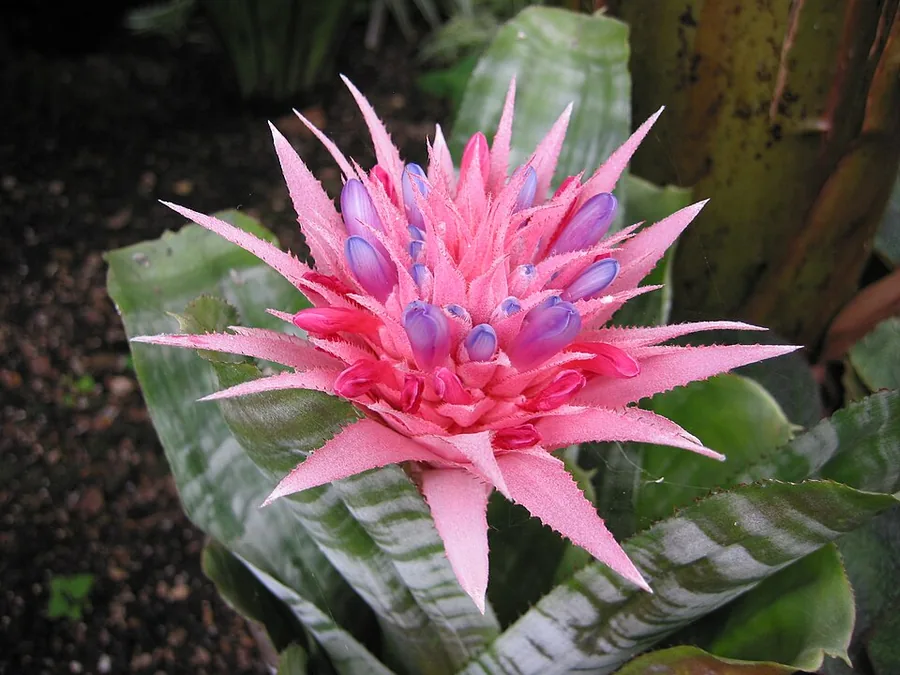
The bloom is the part everyone waits for, and it is worth the wait. A grown rosette sends up a pink bract that lasts scattered with violet flowers that ripen toward red, and the color holds for several months. Think of that bract as a thank-you for your patience, since a rosette will only flower once across its whole life before it quietly makes way.
Where it might seem like the end is really the plant passing the baton. As the mother slows down she sets out little pups around her base, and every one of them grows up into its own plant. Offer bright, filtered light and a full cup, and one starter plant happily keeps this gentle cycle turning for years.
Care
The short version: bright but indirect light, a central cup you keep topped with fresh water while the mix dries out between drinks. Park it somewhere warm and a little humid, feed at half strength while it is growing, and leave a gap from anything that could brush its prickly edges.
Light
Set the urn plant where bright, indirect light reaches it for the richest color and its best chance to bloom. It will happily cope in partial shade or medium indirect light, but if a healthy rosette never flowers, too little light is usually why.
Water
Here is the habit that makes bromeliads special, and it is easier than it sounds: keep that central cup full of fresh water all the time while you let the potting mix dry out in between. Tip it out and refill the cup every so often so nothing goes stale or builds up salts. Where your tap runs hard, rain or distilled water is kinder, and you will water the mix itself roughly every 7 to 14 days.
Soil
Pot it up in a loose, fast-draining bromeliad mix, the same acidic bark-based blend sold for orchids. Its roots mostly hold the plant steady rather than do the feeding, so they really dislike sitting wet, and an airy mix lets water slip straight through.
Temperature
Everyday indoor warmth is plenty, anywhere from 59°F to 86°F (15°C to 30°C). Just keep it above 59°F (15°C) and clear of cold drafts, since being chilly and wet at once is what tempts rot into the heart of the plant.
Humidity
It is happiest with a bit of moisture in the air, somewhere around 50% to 70% humidity. If your room runs dry, a quick mist of the leaves or a pebble tray under the pot will lift the humidity right where it counts.
Feeding
Offer food once a month across spring and summer using a balanced liquid fertilizer watered down to half strength or less. You can pour it into the soil or mist it onto the foliage, but keep it light, since this bromeliad gets by on far less feeding than most houseplants.
Pruning
When the flower stalk and pink bract have browned, simply trim them off, along with any tired or damaged outer leaves. The mother rosette fades slowly after blooming, so lift it away once the pups can stand on their own. Slip on gloves first, because those leaf edges carry small spines.
Repotting
You only need to repot every so often, about every 2 to 3 years, mostly when you are moving it up a size or splitting off pups. Keep an eye out for roots poking through the drainage holes, a plant that feels top-heavy, or pups crowding the pot, and then ease it into fresh bromeliad mix.
Size & spacing
Grown indoors the urn plant tops out around 12 to 35 inches (30 to 90 cm) tall with a spread of 12 to 24 inches (30 to 60 cm). Because it takes its time growing, the plant you bring home stays close to that size for a good long while, so there are no surprises.
Troubleshooting
Almost every wobble with an urn plant begins at the cup or in the roots, and the leaves or center will quietly tell you. Once you can read those gentle early hints, you can step in long before anything turns into a real worry. Find what matches your plant below, then act while a small fix is all it takes.
A mushy, darkened core that comes apart
What you are seeing is crown rot, which takes hold when old water lingers in the cup or the plant sits cold and damp. Pour out and rinse the urn, shift it to a warmer and lighter spot, and if the mother is already going, you can still save the healthy pups.
Fix:
- Drain and flush the cup, move to a warmer, brighter spot
- Reduce moisture and improve air circulation
- If the mother is collapsing, salvage healthy pups and discard the rotted rosette
Drooping leaves over soft, darkened roots
Here the issue is root rot in waterlogged mix, which creeps in whenever the medium stays damp or drains too slowly. Give it a fresh start in open, fast-draining bromeliad mix, snip off the spoiled roots, and from now on feed the cup rather than drenching the soil.
Fix:
- Repot into fresh, fast-draining bromeliad mix
- Let the mix dry between waterings
- Trim away rotted roots
Tacky leaves dotted with white fluff or firm bumps
Don't panic if you spot these; they simply mean scale insects or mealybugs are feeding where the leaves meet and on their undersides. Dab them away with a cotton swab in diluted alcohol, treat with insecticidal soap afterward, and set the plant apart from your others until every last one is gone.
Fix:
- Wipe pests off with a cloth or cotton swab dipped in diluted alcohol
- Treat with insecticidal soap or horticultural oil
- Isolate the plant until clear
A thriving rosette that holds back its bloom
This is rarely anything you did wrong: usually it is just not enough light or a rosette still growing toward maturity. Shift it where filtered sun reaches it, and if the plant is young, let it be, because a rosette flowers a single time and only once it has fully grown up.
Fix:
- Move to a brighter spot with filtered light
- Allow the rosette to reach full size before expecting bloom
Dry, crisping edges at the tips of the leaves
Try not to worry: this almost always means the potting mix went bone dry while the cup ran empty, with dry indoor air or hard tap water making it worse. Top the urn back up, give the mix a drink, and lean on rain or distilled water from here so salts stop gathering.
Fix:
- Refill the central urn and water the mix
- Raise humidity by misting or using a pebble tray
- Flush the cup and mix with rain or distilled water
Toxicity
Here is a lovely bit of reassurance for anyone with pets: the urn plant is safe. The ASPCA calls it non-toxic to both cats and dogs, and no chemical poison has been found in this bromeliad. The only thing worth a thought is the leaf edges, which hold tiny spines that can scratch, so just pop the plant where pets and small children will not lean into them.
Safe for
People · Cats · Dogs · Horses · Rabbits · Livestock · Birds
Cats Safe
You can relax about the cat: the ASPCA marks this bromeliad non-toxic, so an inquisitive taste leads to no poisoning.
Dogs Safe
A dog is welcome to live alongside it, and even a chewed leaf gives you nothing to fret over.
Horses Safe
There is no poisoning risk to horses anywhere on this plant.
Rabbits Safe
A rabbit is perfectly safe around it, though greens of any kind should make up only a little of what it eats.
Livestock Safe
Goats, sheep, and cattle can browse beside it with nothing to worry about.
Birds Safe
Companion birds and yard poultry come to no harm sharing space with it.
People Safe
It carries no toxins, so it sits comfortably around little ones and inquisitive toddlers.
Leaf margins bear small spines/teeth that can scratch or prick skin, so handle the plant with care (gloves help). Any mild irritation from chewing would be physical/mechanical, not from toxins.
Varieties
Aechmea fasciata shows up in a few named forms, and each one plays a little with leaf color or its flower. These are the ones you stand the best chance of finding.
Aechmea fasciata var. purpurea
You can spot it by a reddish-purple tint on the foliage that deepens most along the leaf backs.
'Primera'
A dependable shop favorite, it draws the eye with broad silvery banding and an oversized pink flower head.
'Morgana'
If space is tight, this small grower wins hearts with its rich rose-pink bracts.
How to propagate
Best of all, the urn plant makes more of itself at no cost through the pups it raises once it has bloomed. No seeds to sprout and no rooting hormone to bother with, just a touch of timing and a little patience.
Offsets & pupsEasy
After the mother rosette flowers and begins to decline, once pups reach about one-third to one-half the parent's size (roughly 6 in / 15 cm tall) · Several weeks to a few months to root and establish
Take heart when the bloom fades, because that is exactly when the mother begins raising offsets, called pups, at her base, and these are how your plant lives on. Let each pup grow to roughly a third or half of the parent, about 6 inches (15 cm) tall, before you gently twist or cut it loose with a little root attached. Settle it into fresh bromeliad mix, keep it warm and bright with the cup topped up, and allow it several weeks to a few months to root and find its feet.
Myths
Urn plants will poison a cat or dog.
Rest easy here, because the ASPCA ranks Aechmea fasciata as non-toxic for cats and for dogs alike. The one thing that can actually nick a pet is a spiny leaf edge, never a substance inside the leaves. No part of this bromeliad can poison your animal.
You are meant to water the soil alone and leave the central cup dry.
In nature this plant takes its drink straight from that cup, so it likes to stay topped up. Keep clean water in the central urn while you let the mix go dry between waterings. Cup full, soil dry, and you have it right.
Once it flowers the whole thing is finished, so just toss it.
Only the rosette that bloomed slips away, and it does so slowly and gently. Along the way it raises little offsets, known as pups, at its base, and each of those becomes a brand new plant. Every flower leaves you the next generation in return.