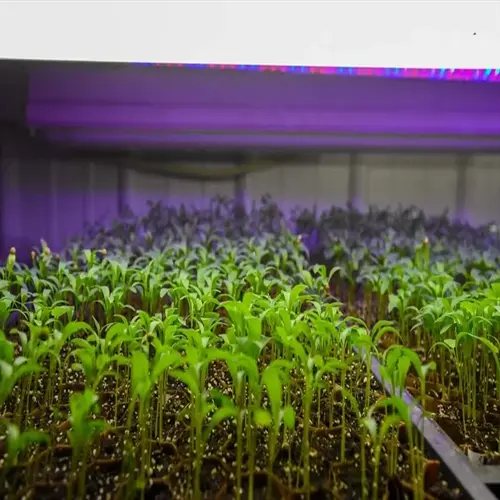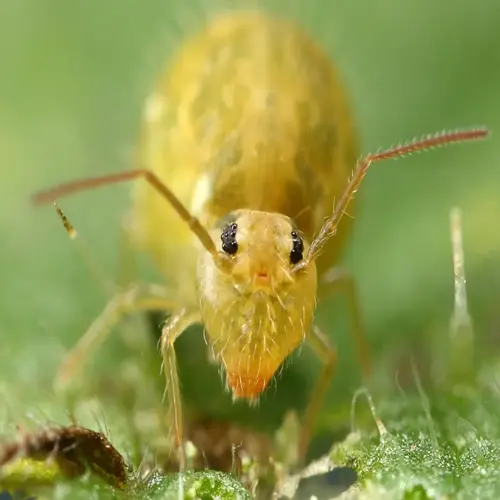

Cabbage, broccoli, kale and their close cousins are the non-host plants mycorrhizae inoculants cannot help. Brassica-family vegetables are the one group with real extension backing behind that label. You will see blueberries named on the same garden lists, and that call is flat wrong. Over 95% of plant families form some kind of mycorrhizal association, so a true non-host is the odd case, not the pattern.
Last spring I watered an arbuscular inoculant into a kale bed, the whole row at the rate on the label. Six weeks later I lifted two plants and washed the roots off in a bucket. Kale sits in the family that is largely non-host, so whatever that product does elsewhere, it had no partner to work with here.
The whole business of brassicas and mycorrhizae comes down to one missing structure. Most garden crops build the arbuscular type, where the fungus pushes inside root cells and trades phosphorus for sugar with the plant. Brassica roots largely do not form that interface, so your arbuscular product lands in the bed with little to colonize. Nothing goes wrong either, and you are just out the price of the bag.
The family runs wider than the cabbage bin at the store. Broccoli, cauliflower, collards and mustard greens sit in it. So do arugula, radishes and turnips. Do not forget the ornamental kales you tuck into fall pots. The root crops catch you out most often, since a radish looks nothing like a cabbage and shares the same family anyway.
Numbers keep the exception list short. Arbuscular fungi work with the roots of almost 90% of plant species. Only 3 to 4% of vascular plant families pair with the ectomycorrhizal kind. That leaves thin ground for a plant to be a genuine non-host. Penn State splits the subject into five categories, and the ericaceous forms get a place of their own on that list. Blueberries sit right there.
The ericoid mycorrhizae blueberries form are a real partnership, just not the one sold in most bags on the shelf. A blueberry that shrugs off an arbuscular product has told you nothing about fungi and blueberries. You offered the wrong species. Spinach and beets ride along on the same popular lists, and I found no extension work behind either one, so treat both as unverified claims rather than settled facts.
Skip the inoculant in a brassica bed and put that money into beds that can use it. Pull your soil test out first, because phosphorus changes the answer on a host crop too. Above roughly 100 ppm, roots need little fungal help in the Alaska Fairbanks figures. Your product can flop in rich soil for a reason that has nothing to do with plant family. A cabbage bed will never tell you whether the bag was any good, so save that trial for a crop that can answer.
Judge a new inoculant on peas, corn or tomatoes in soil testing under 100 ppm phosphorus. Those crops can at least give you an outcome to compare, though confirming colonization takes a microscope.
Check the plant family before you check the label. Your list of non-host plants mycorrhizae will never reach stays short, and the brassica bed is most of it. That 95% figure also holds best in ground nobody has torn up, so old beds and quiet corners hold more of this life than the plot you turned over last week.
Read the full article: Mycorrhizae: What Works and What Is Hype