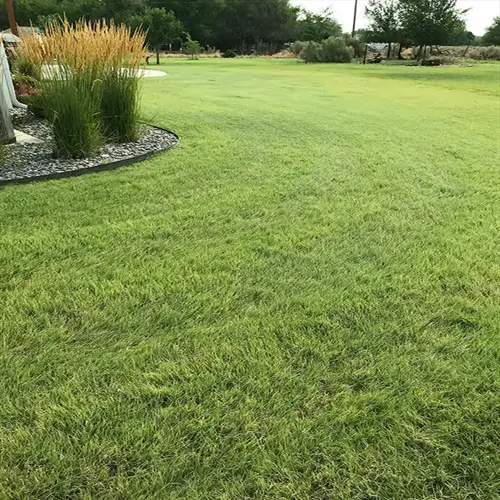

The four most common tall fescue problems are brown patch disease, gray leaf spot, summer heat thinning, and the inability to spread into bare spots. Each of these issues hits hardest during the summer months when heat and humidity push tall fescue past its comfort zone. Knowing what to look for and how to respond keeps small problems from turning into a dead lawn.
Tall fescue disease pressure peaks between June and September. Brown patch is the number one fungal threat you'll face. It creates circular brown areas 6 inches to several feet wide that show up overnight. NC State Extension research puts the trigger at nighttime lows near 68°F (20°C) and daytime highs near 86°F (30°C). Missouri Extension data confirms this same range.
I learned to tell tall fescue brown patch apart from other issues by checking blade color at the edge of damaged circles. Brown patch leaves a dark brown or tan ring at the outer border where the fungus is active. Individual blades show water-soaked lesions that dry to a light tan color. Gray leaf spot looks different. It creates small olive-green spots on individual blades that turn gray with a dark brown border. Both diseases hit during the same season, and I've had both attack the same lawn at once.
Gray leaf spot develops when nighttime temperatures stay above 70°F (21°C) for extended stretches. New seedlings and young fescue are more vulnerable than established plants. If you overseeded in spring instead of fall, your young grass faces peak disease pressure during its weakest growth stage. This is one reason why fall seeding beats spring seeding for tall fescue every single time.
Summer heat thinning creates a third issue that has nothing to do with disease. When daytime temps stay above 90°F for a week or more, tall fescue slows its growth and older plants can die back. Since tall fescue is a bunch type grass, every plant that dies leaves a bare hole that never fills back in on its own. Over the course of a hot summer, these gaps add up and your lawn looks thin by September.
Fight Brown Patch Disease
- Mowing height: Raise your blade to 3.5 inches or higher during summer to shade the soil and reduce the moisture conditions that feed fungal growth.
- Nitrogen control: Stop applying nitrogen fertilizer when temps hit the mid-80s because extra leaf growth during heat stress makes brown patch spread faster.
- Watering time: Water only between 2 AM and 8 AM so grass blades dry before evening humidity arrives and creates the perfect disease environment.
Prevent Gray Leaf Spot
- Avoid spring seeding: Plant fescue in September instead of spring so seedlings don't face peak gray leaf spot pressure during their most vulnerable growth stage.
- Air circulation: Trim low tree branches and shrubs near the lawn to improve airflow and reduce the humid microclimate that gray leaf spot needs to thrive.
- Resistant varieties: Choose turf-type tall fescue cultivars with documented gray leaf spot resistance ratings when buying seed for overseeding projects.
Restore Summer Thin Spots
- Fall overseeding: Spread seed every September at 4-5 pounds per 1,000 square feet to fill gaps left by summer heat stress and disease damage.
- Core aeration: Aerate before overseeding to break up compaction and give seeds direct soil contact for better germination rates in thinned areas.
- Bluegrass blend: Add 10% Kentucky bluegrass to your fescue seed mix so rhizomes fill small gaps between fescue bunches throughout the growing season.
Most tall fescue problems come from the same root cause: summer stress. The grass evolved for moderate temperatures and handles spring and fall growth periods with ease. Your job is to protect it during those tough summer months and then restore any damage with a strong fall overseeding routine. Stick with this pattern and your tall fescue lawn will look thick and healthy year after year.
Read the full article: Fescue Grass Types, Care and Tips