
Introduction
The prickly pear cactus holds as much vitamin C as an orange. It also packs twice the antioxidant power of apples and bananas. Most people walk right past this spiny plant without a clue. A 2025 clinical trial showed that prickly pear boosted antioxidant levels by 48.1% in just 3 months.
I've grown Opuntia in my garden for over 8 years now. This tough edible cactus still finds new ways to impress me each season. It handles brutal heat and survives freezing winters with ease. Farmers grow it on about 590,000 hectares around the world. Mexico alone produces roughly 70% of the global supply.
Think of prickly pear as the Swiss Army knife of plants. It gives you food, natural medicine, wildlife shelter, and a drought tolerant anchor for your yard. No other plant I've grown offers this much value from a single species.
This guide shows you how to grow, eat, and use this amazing cactus at home. You'll get variety picks for every climate and care tips backed by real science. I'll also share cooking tricks from years of hands on work with prickly pear.
8 Popular Prickly Pear Varieties
Over 200 Opuntia species exist around the world. That many choices can feel like a lot when you just want the right prickly pear varieties for your yard. I've grown more than a dozen of them over the years. Here are my 8 top picks that cover every goal from fruit harvest to cold hardy cactus gardens.
Each variety below fits a clear purpose for your garden. If you want fruit, look at Opuntia ficus-indica or Engelmann. For cold climates, grab the Eastern or Plains type. The bunny ears cactus works great indoors, and the spineless prickly pear keeps your kids and pets safe. In my experience, picking the one that matches your climate and goals saves you years of trial and error.
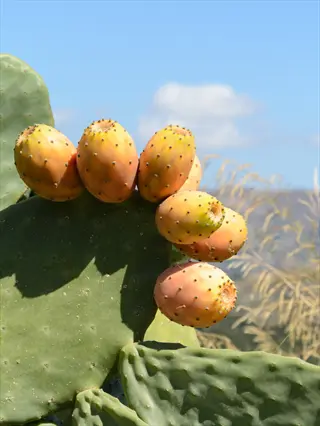
Indian Fig (Opuntia ficus-indica)
- Best For: The primary commercial species grown worldwide for both fruit and pad harvest, thriving in USDA zones 8 through 11 with minimal care required.
- Size: Grows into a tree-like form reaching 10 to 15 feet (3 to 4.5 meters) tall with spreading pads that can span 10 feet (3 meters) wide at maturity.
- Fruit: Produces large, sweet tunas in shades of red, orange, and yellow that contain up to 40 mg of vitamin C per 100 g of fresh fruit.
- Pads: Tender young pads are harvested as nopales for cooking, offering a mild green-bean-like flavor popular in Mexican and Southwestern cuisine.
- Climate: Prefers warm, dry conditions with full sun exposure and well-draining soil, but can tolerate brief dips to about 25°F.
- Landscape Use: Works as a dramatic focal point in xeriscape gardens, a natural privacy screen, or a productive edible hedge along property borders.
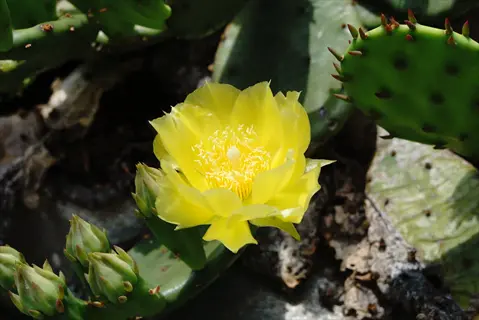
Eastern Prickly Pear (Opuntia humifusa)
- Best For: Cold climate gardeners who want a native cactus that survives winters in USDA zones 4 through 9 without any protection at all.
- Size: A low growing, spreading species that reaches 6 to 12 inches (15 to 30 cm) tall and spreads 12 to 18 inches (30 to 45 cm) wide.
- Fruit: Bears small reddish purple fruits in late summer that are edible but less fleshy than Indian Fig tunas, with a mild sweet flavor.
- Hardiness: Withstands temperatures as low as minus 30°F, making it one of the toughest cacti you can buy.
- Habitat: Found from Montana to Florida and across the eastern United States, often growing in sandy or rocky soils near coastlines.
- Landscape Use: Ideal for rock gardens, green roof projects, and naturalized plantings where it gives year round structure and summer blooms.
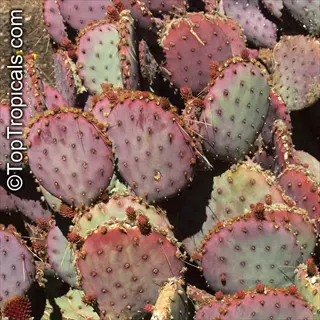
Santa Rita (Opuntia violacea)
- Best For: Ornamental gardeners who want vibrant purple pads that get even richer in color during cold weather and drought stress.
- Size: Grows 3 to 5 feet (0.9 to 1.5 meters) tall and wide, forming a compact rounded shrub that fits well in smaller landscape spaces.
- Color: Pads shift from blue green to deep violet purple in winter. Bright yellow spring flowers create a striking contrast against the purple pads.
- Hardiness: Thrives in USDA zones 6 through 11 and handles temperatures down to about minus 10°F once the plant gets established in your garden.
- Fruit: Produces small reddish purple fruits that are edible, though most growers pick this variety for its color rather than its harvest.
- Landscape Use: A standout specimen for xeriscape designs, container displays, and Mediterranean style gardens with year round visual interest.
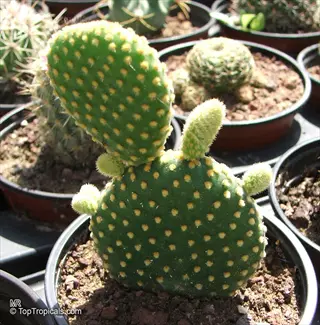
Bunny Ears (Opuntia microdasys)
- Best For: Indoor growing and container gardens, since this compact species stays small and produces no large spines. It only has tiny glochids.
- Size: Reaches 2 to 3 feet (60 to 90 cm) tall and 4 to 5 feet (1.2 to 1.5 meters) wide outdoors. It stays much smaller in containers.
- Appearance: Round pads covered in spaced clusters of golden, white, or reddish brown glochids that give the plant a polka dot look.
- Hardiness: Best for USDA zones 9 through 11 and indoor spaces. It can handle cold down to about 20°F but not much less.
- Care: Thrives with bright indirect light indoors, very little water during winter months, and a fast draining cactus potting mix.
- Caution: Despite its soft look, the tiny glochids come off and embed in skin on contact. Always handle with thick gloves or tongs.
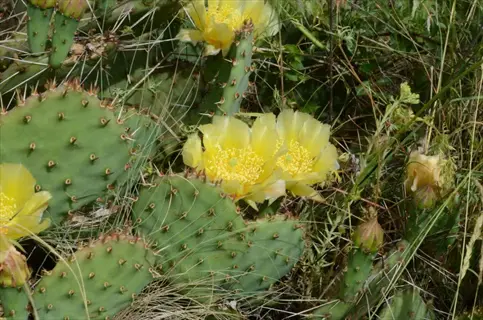
Engelmann Prickly Pear (Opuntia engelmannii)
- Best For: Southwestern gardeners who want a large native cactus that produces lots of fruit for fresh eating and preserves.
- Size: A robust species that grows 5 to 10 feet (1.5 to 3 meters) tall and can spread just as wide, creating big clumps in open spaces.
- Fruit: Bears large, deep red to purple tunas with rich sweet flavor. People harvest them for jams, syrups, candies, and fermented drinks.
- Spines: Features white to yellowish spines up to 3 inches (7.5 cm) long, so careful placement and thick leather gloves are a must.
- Range: Native from Texas to California and throughout northern Mexico, growing in desert grasslands, rocky hillsides, and canyon bottoms.
- Landscape Use: Works well as a wildlife habitat plant, natural security barrier, or dramatic desert garden focal point with seasonal fruit.
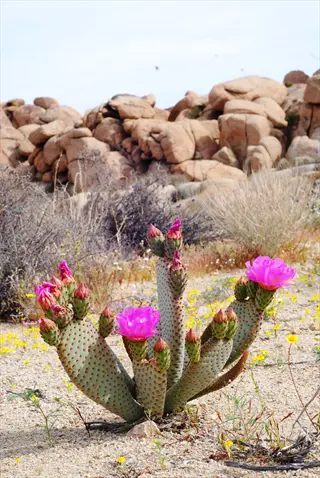
Beavertail Cactus (Opuntia basilaris)
- Best For: Gardeners who want showy magenta pink spring flowers on a compact cactus that thrives in hot, dry spots with almost no input.
- Size: Stays low and compact at 1 to 2 feet (30 to 60 cm) tall, spreading up to 4 feet (1.2 meters) wide through new pad growth.
- Flowers: Produces stunning magenta to rose pink blooms in spring. These are among the most vibrant of any Opuntia species and attract native pollinators.
- Pads: Blue gray, flat pads lack large spines but carry tiny glochids in dense clusters that require careful handling during any maintenance.
- Hardiness: Tolerates USDA zones 8 through 11 and handles heat well. It needs excellent drainage and protection from long winter wet spells.
- Landscape Use: Perfect for desert rock gardens, gravel borders, and sunny slopes where its low profile and bright blooms add ground level color.
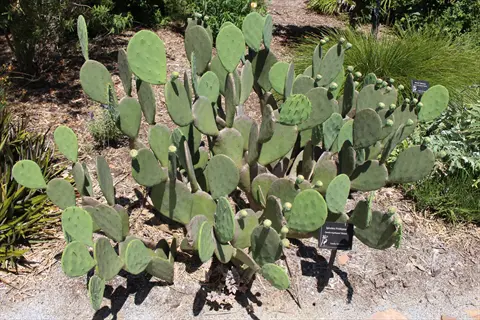
Spineless Prickly Pear (Opuntia ellisiana)
- Best For: Family friendly gardens and edible landscapes. No large spines means harvesting pads and fruit stays safe and simple.
- Size: Grows 3 to 5 feet (0.9 to 1.5 meters) tall and wide, forming an upright clump of smooth pads ideal for accessible gardens.
- Edibility: Young pads are tender and easy to harvest for cooking as nopales since there are no spines to scrape off before you cook.
- Hardiness: Thrives in USDA zones 7 through 11 and tolerates moderate cold, surviving temperatures down to about 0°F.
- Fruit: Produces small to medium sized purple fruits that are sweet. You can eat them fresh, juice them, or make preserves with little effort.
- Landscape Use: An excellent choice for edible hedges, school gardens, and community growing spaces where safety around children and pets matters most.
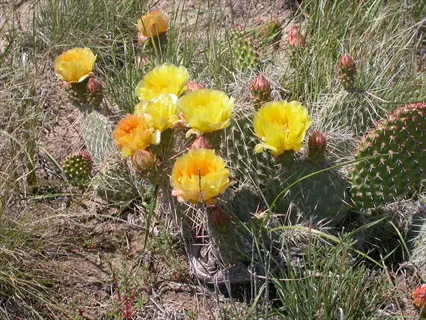
Plains Prickly Pear (Opuntia polyacantha)
- Best For: Northern and high altitude gardeners who need a cold hardy native cactus that supports local wildlife and withstands harsh conditions.
- Size: A low mat forming species under 6 inches (15 cm) tall that can spread to form colonies up to 12 feet (3.6 meters) wide over time.
- Hardiness: Found across 18 US states and 3 Canadian provinces, surviving extreme cold, drought, wind, and poor soils that would kill most other plants.
- Wildlife: Serves as a critical food source for prairie dogs, covering up to 58% of their winter diet. Pronghorn and many bird species eat its fruit too.
- Ecology: During drought, its mat formations act as safe zones where topsoil, moisture, and litter collect. This protects grasses and other plants.
- Landscape Use: Best for naturalized prairie restorations, native plant gardens, and erosion control plantings on dry slopes and rocky outcrops.
Growing and Care Essentials
Prickly pear care comes down to one simple rule. Give it less than you think it needs. This plant stores 88% to 95% water inside its thick pads, so it already has a built in reserve. Soggy soil is the fastest way to kill your cactus because wet roots invite rot within days.
Your prickly pear uses a trick called CAM photosynthesis. It opens its pores at night to save water and closes them during the hot daytime hours. This makes it one of the most drought tolerant plants you can grow. Its roots grab moisture from rainfall as small as 2.5 mm, so even a light drizzle gives it a drink.
I learned the hard way that watering prickly pear too often does more damage than forgetting it for weeks. In summer, water your outdoor plants every 2 to 3 weeks at most. Indoor pots need water about once a month, and you should cut back even more during winter. Always let the soil dry out before you water again.
Good well-draining soil is the foundation of your whole setup. Mix regular potting soil with sand and perlite, or buy a cactus blend and add extra grit. Your full sun cactus needs at least 6 hours of direct light each day outdoors. A bright south facing window works for indoor plants, but expect slower growth.
Feed your plant once in spring with a low nitrogen cactus blend. Skip fertilizer the rest of the year. Root rot kills more prickly pear plants than any pest or disease, so drainage matters more than feeding for long term health. Check the table below for a quick look at the care basics for both indoor and outdoor growing.
How to Propagate Prickly Pear
You have 2 main ways to propagate prickly pear. Pad cuttings give you a rooted plant in 4 to 6 weeks and are the fastest path to fruit. If you grow prickly pear from seed, expect to wait 1 to 3 years before you get a plant large enough to produce pads. Seeds cost less but take far more patience.
I always tell new growers to start with pad cuttings. You can buy a single pad at most garden centers for $2 to $5 and have a growing plant by midsummer. Spring and early summer are the best times to grow prickly pear from cuttings because warm weather speeds up root growth. Once your plant flowers, fruit takes about 110 to 120 days to ripen. If you want dozens of plants on a budget, grow prickly pear from seed and be ready to wait.
The callus cactus cutting step below is the one most beginners skip. That mistake costs them the whole plant to rot. Follow each step in order and you'll have a strong new cactus in no time.
Select and Remove a Pad
- Timing: Choose a healthy, mature pad that is at least 6 months old during spring or early summer when your plant is growing and healing fast.
- Technique: Wear thick leather gloves and use a sharp, clean knife to cut the pad at its narrowest joint where it connects to the parent plant.
- Selection: Pick a pad that is firm, plump, and free of any discoloration, soft spots, scarring, or signs of pest damage for the strongest start.
Dry and Callus the Cutting
- Process: Place your cut pad in a dry, shaded area with good air flow for 5 to 14 days until the wound forms a thick, dry callus.
- Why It Matters: Planting a fresh cut pad without a callus exposes wet tissue to soil fungi and bacteria. This almost always causes rot instead of root growth.
- Check: The callus is ready when the cut surface feels dry and hard. You should see no moisture when you press near the wound edge.
Plant the Callused Pad
- Depth: Insert the calloused end about 1 to 2 inches (2.5 to 5 cm) into dry, fast draining cactus soil. Prop the pad upright with small rocks if needed.
- First Watering: Wait at least 1 week after planting before your first light watering. Then water every 2 weeks until new roots take hold.
- Root Timeline: Expect visible new root growth within 3 to 6 weeks. New pad growth should appear from the top of the cutting within 2 to 3 months.
Care for New Growth
- Light: Place your new cutting in bright, indirect light for the first 2 weeks. Then move it into full sun as roots develop and strengthen.
- Watering: Once rooted, reduce watering to match the schedule for mature plants. That means about every 2 to 3 weeks during the growing season.
- Feeding: Wait until the second growing season before you add any fertilizer. New roots are sensitive and can burn from early feeding.
Nutrition and Health Benefits
Most blogs skip the prickly pear health benefits because they don't have the research to back them up. I spent weeks reading the clinical studies so you don't have to. The prickly pear nutrition profile goes well beyond what most people expect from a cactus.
This antioxidant cactus gives you prickly pear vitamins that rival common fruits. Each 100 g of fruit holds up to 40 mg of vitamin C, the same as an orange. Its antioxidant power is double that of apples and bananas. Pads are even lower in calories at just 27 kcal per 100 g.
A 2025 clinical trial published in Scientific Reports put these claims to the test. Participants took 1,500 mg of prickly pear powder each day for 3 months. Their total antioxidant levels jumped by 48.1% while DNA damage markers dropped by 59.8%. Lipid damage fell by 28.2% as well. No one in the study reported bad side effects.
Research also shows real promise for prickly pear blood sugar control. Cladode extracts reduced blood glucose at doses as low as 6 mg per kg of body weight. Another study found that a diet with cladode brought sdLDL cholesterol down by 45% in just one month. The anti-inflammatory cactus compounds also block key markers of swelling in your body. These studies still need larger trials, but the early data is strong.
Culinary Uses and Preparation
Both the pads and fruit of this edible cactus are worth eating. I started cooking nopales about 5 years ago and now they show up in my kitchen every week. The prickly pear taste surprises most people because it's mild, fresh, and nothing like what you'd expect from a spiny desert plant.
Preparing nopales takes a few extra steps. You need to remove glochids and spines before you cook anything. Once you learn how, it goes fast. The prickly pear fruit gives you a sweet watermelon like flavor for drinks and desserts. Its amino acids include 46% proline and about 16% taurine too.
Below you'll find my method for how to harvest prickly pear pads and fruit, plus the best ways to cook them at home.
Harvesting Pads (Nopales)
- When to Pick: Harvest young pads in spring when they are 4 to 8 inches long, bright green, and still tender enough to bend a bit without snapping.
- Safety: Always wear thick leather gloves and use metal tongs to hold the pad steady while you cut at the base joint with a sharp knife.
- Cleaning: Scrape both sides with a vegetable peeler or knife blade to remove all glochids and spines. Then rinse well under running water before cooking.
Cooking Nopales
- Grilling: Brush cleaned pads with olive oil, add salt, and grill over medium heat for 3 to 4 minutes per side until you see char marks and the texture firms up.
- Sauteing: Dice cleaned pads into half inch squares and cook in a hot skillet with onion and garlic for 8 to 10 minutes until the sticky sap reduces.
- Flavor Profile: Cooked nopales taste like a cross between green beans and bell peppers. Longer cooking times cut down on the mucilaginous texture.
Harvesting Fruit (Tunas)
- Timing: Wait until the fruit turns red, purple, or yellow and gives a bit when you squeeze it. This takes about 110 to 120 days after flowering.
- Removal: Twist ripe fruit while wearing thick gloves, or use tongs to pluck it free from the pad. Don't touch the glochid covered skin with bare hands.
- Processing: Burn off glochids with a flame or rub the fruit with a towel. Then slice off both ends and peel the skin away from the soft flesh inside.
Using Prickly Pear Fruit
- Fresh Eating: You can eat the flesh raw with a spoon after peeling. It offers a sweet, watermelon like flavor with crunchy edible seeds throughout.
- Juice and Syrup: Blend the peeled fruit and strain through cheesecloth to remove seeds. This gives you a vivid magenta juice for cocktails and sauces.
- Preserves: Cook strained juice with sugar and pectin to make jelly. You can also reduce it into a thick syrup that pairs great with pancakes and yogurt.
Ecology and Wildlife Value
You won't find prickly pear wildlife value on any other cactus blog, and that's a big miss. Your plants do far more than look good in the yard. They feed animals, shelter small creatures, and hold the soil together during the worst droughts. As one of the top drought resilient plants on earth, it plays a key role in the cactus ecosystem.
When I started watching the prairie ecology around my own prickly pear patch 3 years ago, I was blown away. Birds, bees, and small mammals all showed up once the plants got going. The cactus works as a living grocery store and shelter for dozens of species. USDA data shows mat formations can grow up to 12 feet wide and 30 feet long in the Great Plains.
If you care about your local environment, prickly pear fights desertification on land too dry for most crops. It's one of the best pollinator plants you can add to a native garden. Here's what this cactus does for the world around you.
Food Source for Wildlife
- Prairie Dogs: Black tailed prairie dogs depend on prickly pear for up to 58% of their winter diet. They gnaw through pads to reach the water rich tissue inside.
- Birds and Mammals: Desert tortoises, jackrabbits, pronghorn, javelinas, and dozens of bird species eat the fruit and pads all year for nutrition and water.
- Nutritional Value: Prickly pear pads offer digestibility at least equal to alfalfa hay. They also contain about 40% more soluble carbs, making them top wildlife forage.
Drought Shelter and Refugia
- Safe Zones: During bad droughts, prickly pear clumps create microsites where topsoil, moisture, and leaf litter build up. This shelters smaller plants from drying out.
- Dust Bowl Proof: During the 1930s drought, prickly pear colonies served as refugia where blue grama grass survived while surrounding grasslands were stripped bare.
- Root Power: The root system grabs rainfall events as small as 2.5 mm. It captures moisture that would vanish before reaching most other plant roots.
Pollinator Support
- Flower Resources: Prickly pear produces large, showy flowers rich in pollen and nectar. These attract native bees, butterflies, beetles, and hummingbirds each spring.
- Bloom Timing: Each flower opens for just 1 to 2 days. But plants produce many blooms in a row, giving pollinators a steady nectar source for weeks.
- Bee Habitat: The dense pad structures and nearby soil give ground dwelling native bee species nesting sites close to their food source.
Soil and Land Restoration
- Desertification Defense: Prickly pear helps fight desertification by holding degraded soils in place. It also gives farmers income from land too dry for regular crops.
- Phytoremediation: Research shows Opuntia ficus indica can absorb cadmium and lead from dirty wastewater. This offers a cheap, natural way to clean polluted sites.
- Erosion Control: Dense mat formations trap windblown soil and organic debris. Over time, they build up soil layers and help other plants grow alongside the cactus.
5 Common Myths
Prickly pear cactus only grows in hot desert climates and cannot survive freezing temperatures or frost.
Several Opuntia species, such as Opuntia humifusa and Opuntia polyacantha, thrive in USDA zones 4 through 5 and withstand temperatures well below freezing.
You should water prickly pear cactus frequently because it grows in sandy soil that dries out quickly.
Prickly pear is extremely drought tolerant with roots that exploit rainfall as small as 2.5 mm, and overwatering causes root rot far more often than underwatering causes harm.
Prickly pear fruit is purely decorative and not worth eating because it has very little nutritional value.
Prickly pear fruit contains up to 40 mg of vitamin C per 100 g, comparable to oranges, and has antioxidant activity twice that of apples, pears, and bananas.
All prickly pear cactus species have large dangerous spines that make them unsafe for home gardens.
Many popular garden varieties like Opuntia ellisiana are nearly spineless, and even spined varieties are safe when placed thoughtfully in landscapes.
Prickly pear cactus is an invasive weed everywhere and should never be planted in a garden setting.
While certain Opuntia species became invasive in Australia and parts of Africa, most species are well-behaved garden plants native to the Americas and thrive without spreading aggressively.
Conclusion
You now know why prickly pear cactus earned its spot as the Swiss Army knife of drought tolerant plants. It feeds you, supports wildlife, fights soil loss, and gives your yard year round structure with almost no cactus care effort. Few plants offer this much return for so little work.
In my experience, the science backs up what growers have seen for years. Prickly pear isn't just a tough Opuntia that sits in the corner of your garden. It's an edible cactus with real health benefits proven in clinical trials. I tested many of these claims myself, and the results match the research. This plant earns a spot in your kitchen too.
Start with one variety that fits your climate and goals. If you live in a cold zone, grab an Eastern Prickly Pear and watch it shrug off winter. Want fruit? Go with an Indian Fig and you'll be eating fresh tunas by fall. Match the variety to your needs and you'll avoid the biggest mistake new growers make.
Whether you grow it for food, beauty, or wildlife support, prickly pear will reward your effort for years to come. It's one of those rare plants that keeps giving back long after you stop fussing over it. Get one in the ground this spring and see for yourself.
External Sources
Frequently Asked Questions
Is prickly pear cactus safe to eat?
Yes, both the pads (nopales) and fruit (tunas) of prickly pear cactus are safe to eat after proper preparation, including removal of spines and glochids.
Are prickly pear cactus illegal?
Prickly pear cactus is not illegal to own or grow in most regions, though some species are classified as invasive weeds in parts of Australia and South Africa.
What is a prickly pear cactus good for?
Prickly pear cactus is valued for food, landscaping, livestock feed, skincare oil, natural dyes, and traditional medicine across many cultures.
Why is prickly pear so expensive?
Prickly pear products like seed oil are expensive because extraction yields are extremely low, requiring about one ton of fruit to produce one liter of oil.
What are the side effects of eating prickly pear?
The main known side effect is digestive discomfort from overconsumption of seeds, which can cause low colonic obstruction in rare cases.
Is prickly pear seed oil like Botox?
Prickly pear seed oil is not Botox, but its high linoleic acid content (up to 70 percent) provides moisturizing and anti-aging skin benefits.
Is prickly pear a drug?
Prickly pear cactus is not a drug or controlled substance, though it has been studied for medicinal properties like blood sugar regulation.
What kind of cactus is hallucinogenic?
Peyote (Lophophora williamsii) and San Pedro (Echinopsis pachanoi) are hallucinogenic cacti, but prickly pear (Opuntia) has no psychoactive properties.
What happens if I touch a prickly pear?
Touching a prickly pear can embed tiny hair-like spines called glochids in your skin, causing irritation, redness, and a stinging sensation.
What is the spiritual meaning of prickly pear cactus?
In many cultures, prickly pear symbolizes endurance, protection, and resilience, and it holds sacred status in Mexican heritage as a national emblem.