
Introduction
The narcissus flower brings trumpet shaped blooms in gold, white, and orange to spring gardens every year. This genus holds between 50 and 200 species and over 32,000 cultivars on record. Most gardeners only scratch the surface of what these plants can do.
I spent years confused about the names before I found the truth. Narcissus, daffodil, and jonquil all sit in the same plant genus. Daffodil is the common English name for the whole group. Jonquil points to one specific division with fragrant clusters and round leaves. Once you know that fact, shopping for spring bulbs gets much simpler.
These flowering bulbs rank among the oldest garden plants on record. Greek gardens grew them as far back as 300 BCE. Traders moved them along the Silk Road to China around 690 CE. They reached North America in the 1600s. Today only about 10% of those 32,000 cultivars show up at garden centers, so most people miss the best picks.
This guide walks you through the 13 official daffodil divisions and top growing tips. You will also learn about toxicity facts and new medical research. By the end you will know how to pick, plant, and care for narcissus that thrive in your garden for decades.
10 Popular Narcissus Varieties
When I first started growing narcissus types, the names threw me off. There are 13 groups in the narcissus classification system. Each one sorts daffodil varieties by flower shape and size. By 1910 the RHS had 2,500 names listed, and that count grew to over 32,000 since then. I grow 8 of those groups in my own yard.
I picked one standout from 10 of those divisions for you below. You will see the classic trumpet daffodil and the fragrant jonquilla daffodil on this list. The winter blooming paperwhite narcissus made the cut too. You can find every variety at most garden centers in the country.
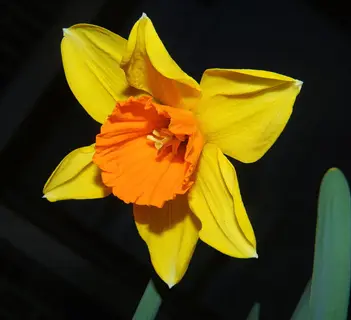
King Alfred Trumpet Daffodil
- Division: Division 1 Trumpet, where the corona is as long as or longer than the petals. This creates the classic daffodil shape most people picture.
- Appearance: Large golden yellow blooms measure 4 to 5 inches across with a single flower per stem and sturdy upright foliage.
- Growing Zones: Thrives in USDA Zones 4 through 8. Reaches 14 to 18 inches tall at full height.
- Bloom Time: One of the earliest spring bloomers. Flowers last 2 to 3 weeks per flush of color.
- Best Use: Great for naturalizing in lawns, meadows, and woodland edges where you want large drifts of golden color.
- Care Tip: Plant bulbs 6 inches deep in fall. Let foliage die back on its own after flowering to fuel next year's blooms.
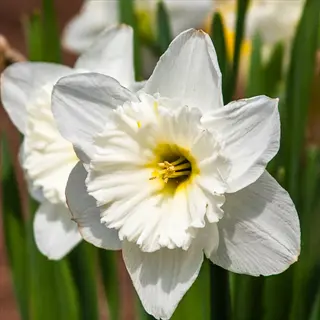
Ice Follies Large Cup
- Division: Division 2 Large Cup, where the corona is more than a third but less than the full length of the petals around it.
- Appearance: Opens with a creamy white base and a wide, frilled lemon yellow cup that fades to ivory as the bloom ages.
- Growing Zones: Hardy in USDA Zones 3 through 8. Grows 14 to 16 inches tall with strong stems that resist wind.
- Bloom Time: Blooms in mid spring and comes back strong year after year. Clumps get bigger over time without division.
- Best Use: Works well in perennial borders, containers, and mass plantings. Pairs great with tulips and hyacinths.
- Care Tip: Give it full sun to partial shade and soil with a pH around 6.0 to 7.0 for the best bulb growth.
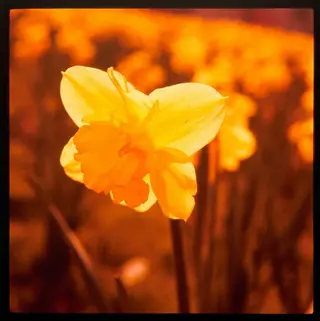
Barrett Browning Small Cup
- Division: Division 3 Small Cup, where the corona is no more than a third of the petal length. This gives a flatter, more delicate profile.
- Appearance: Pure white petals frame a small bright orange red cup. The contrast stands out in any mixed planting.
- Growing Zones: Does well in USDA Zones 3 through 8. Reaches 14 to 16 inches tall with solid weather resistance.
- Bloom Time: Flowers in mid to late spring. Pair it with earlier trumpet types to extend your daffodil season.
- Best Use: Looks great in rock gardens, formal borders, and cut flower setups where its compact cup adds a refined touch.
- Care Tip: Remove spent flowers right away to send energy back into the bulb. Leave all foliage until it yellows on its own.
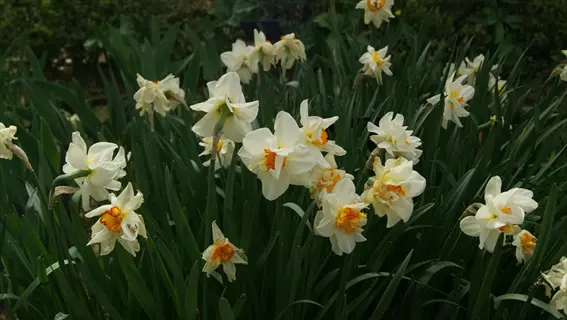
Cheerfulness Double Narcissus
- Division: Division 4 Double, with extra petals or corona segments that give blooms a full, rose like shape on each stem.
- Appearance: Clusters of creamy white multi petaled blooms carry a sweet, delicate scent. They look and smell great in indoor bouquets.
- Growing Zones: Suited to USDA Zones 4 through 8. Grows 12 to 16 inches tall with multiple flowers per stem.
- Bloom Time: Blooms in mid to late spring. Overlaps with late tulips and early perennials for a smooth seasonal transition.
- Best Use: Perfect for cottage gardens, mixed beds, and as a fragrant cut flower. The full blooms add texture to your bouquets.
- Care Tip: Plant in a sheltered spot because heavy double blooms can droop in strong rain. Staking helps in exposed areas.
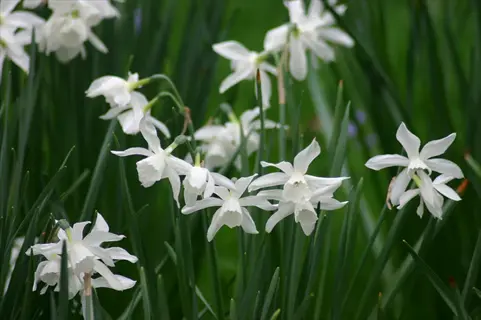
Thalia Triandrus Daffodil
- Division: Division 5 Triandrus, where each stem holds 2 or more nodding, bell shaped flowers with petals that curve backward.
- Appearance: Pure white elegant blooms with a sweet orchid like scent. They stand 12 to 16 inches tall on slender stems.
- Growing Zones: Thrives in USDA Zones 4 through 8. Handles partial shade better than most other narcissus divisions.
- Bloom Time: Flowers in mid to late spring. Each stem produces 2 to 3 blooms that last longer than most single flowered types.
- Best Use: Looks stunning under deciduous trees, along woodland paths, or in shaded borders. White blooms light up dark corners.
- Care Tip: Prefers neutral to acidic soil. A light dose of balanced fertilizer in early spring gives shoots a strong start.
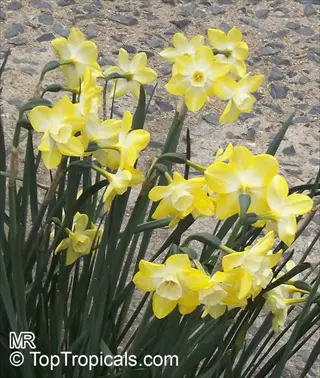
Jetfire Cyclamineus Daffodil
- Division: Division 6 Cyclamineus, known for swept back petals and a long narrow trumpet that gives the bloom a windblown look.
- Appearance: Bright golden yellow petals sweep back from a vivid orange trumpet. Compact stems reach just 8 to 10 inches tall.
- Growing Zones: Hardy in USDA Zones 4 through 8. One of the smallest narcissus forms, ideal for tight spaces and pots.
- Bloom Time: Among the earliest narcissus to flower. Blooms show up weeks before larger trumpet varieties open in your garden.
- Best Use: Excellent for rock gardens, containers, and front of border spots where its small size and early color fill gaps.
- Care Tip: Space bulbs 3 to 4 inches apart at 10 to 12 bulbs per square foot for a dense, natural carpet effect.
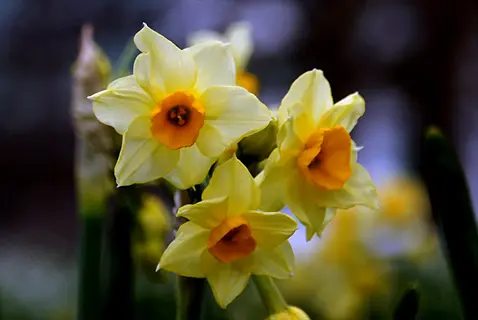
Pipit Jonquilla Narcissus
- Division: Division 7 Jonquilla, with multiple fragrant flowers per stem and round rush like foliage that sets this group apart.
- Appearance: Opens lemon yellow and fades to creamy white over time. Each stem holds 2 to 3 sweet scented blooms at 12 inches tall.
- Growing Zones: Does best in USDA Zones 4 through 8. Handles warmer weather better than most narcissus types thanks to its southern roots.
- Bloom Time: Flowers in mid to late spring. The strong sweet scent sets jonquils apart from other narcissus groups in your garden.
- Best Use: Outstanding for fragrance gardens and walkway borders. Plant them where visitors pass close enough to catch the perfume.
- Care Tip: Jonquils like drier conditions than other narcissus types. They do best in sandy or loamy soils with good drainage.
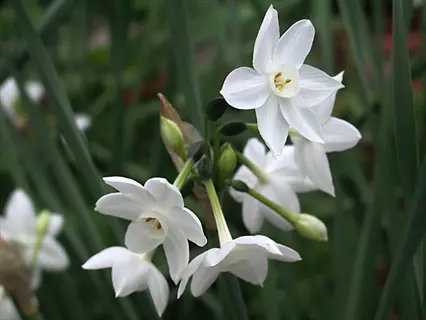
Paperwhite Tazetta Narcissus
- Division: Division 8 Tazetta, producing clusters of 3 to 20 small, sweet scented flowers per stem. The paperwhite is the most popular form.
- Appearance: Pure white petals surround a tiny white or pale yellow cup. Each stem carries a bouquet like cluster of 5 to 15 blooms.
- Growing Zones: Less cold hardy than other divisions. Does best in USDA Zones 8 through 10 outdoors, but you can force them indoors anywhere.
- Bloom Time: Flowers in late fall through winter in warm areas. You can force them indoors in just 4 to 6 weeks from bulb to bloom.
- Best Use: The top narcissus pick for indoor forcing during the holidays. Grow them in low dishes with water and decorative stones.
- Care Tip: Keep forced bulbs in a cool spot around 60°F with bright indirect light. This stops stems from getting too tall and floppy.
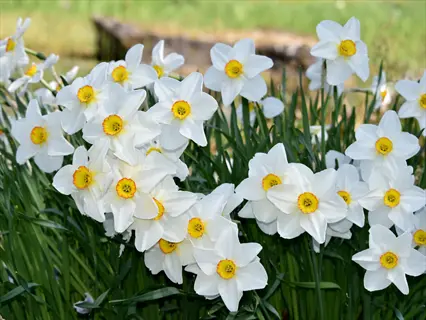
Actaea Poeticus Narcissus
- Division: Division 9 Poeticus, one of the oldest cultivated narcissus forms. Features a flat white base with a tiny red rimmed cup.
- Appearance: Snow white petals frame a small green centered yellow cup edged in deep red. Fragrant blooms stand 16 inches tall.
- Growing Zones: Hardy in USDA Zones 3 through 7. Prefers cooler climates and heavier soils than most other narcissus types.
- Bloom Time: Among the last narcissus to bloom each spring. It extends your daffodil season into late spring when others have finished.
- Best Use: Ideal for meadow plantings, cottage gardens, and natural settings. The old world charm and strong scent create a classic feel.
- Care Tip: Tolerates wetter soils than most narcissus types. It benefits from steady moisture during its growing season through late bloom.
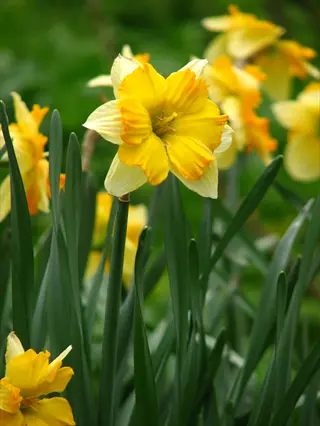
Cassata Split Corona Narcissus
- Division: Division 11 Split Corona, where the cup splits for more than half its length and lies flat. This creates a butterfly or orchid like look.
- Appearance: A bright yellow split corona sits against white petals and fades to ivory as the bloom ages over its 2 to 3 week display.
- Growing Zones: Grows well in USDA Zones 4 through 8. Reaches 14 to 18 inches tall with strong stems that hold up in spring winds.
- Bloom Time: Flowers in mid spring. Produces some of the most unique looking blooms in the entire narcissus genus.
- Best Use: A conversation starter in formal beds, patio containers, and cut flower setups. The unusual form draws attention every time.
- Care Tip: Plant at 10 to 12 bulbs per square foot, at a depth of 3 times the bulb height, same as other narcissus types.
Narcissus Meaning and Symbolism
You might know the narcissus symbolism from the Greek myth about a young man who fell in love with his own reflection. The gods turned him into a flower for his vanity. That tale gave us the word narcissism, but the daffodil meaning goes far beyond that one story. Most cultures around the world tie this bloom to rebirth, hope, and fresh starts in your life.
I first saw the flower symbolism of narcissus up close at a Chinese New Year narcissus market. Families there display the blooms for good luck and wealth during the new year. Traders moved the bulbs from the Mediterranean to China on the Silk Road around 690 CE. In Japan the flower shows up in ikebana as a sign of purity. Korean ink painters used it to stand for strength in cold months.
Wales claims the daffodil as its national flower of Wales and puts it at the heart of St. David's Day on March 1st. The link between Wales and this bloom goes back hundreds of years. The narcissus also serves as the March birth flower, which ties it to spring and new starts for anyone born that month.
Daffodils didn't catch on as garden plants until the late 1800s, well after tulips had their big moment. But their place in your culture kept growing. In my experience, people connect to these blooms on a deeper level when they hear the history. The American Cancer Society now uses the daffodil as a symbol of hope. That modern link adds real meaning to a flower tied to renewal since ancient Greece.
You can also give narcissus to mark a 10th wedding anniversary in many traditions. If you grow them for their beauty or give them to mark a special moment, you tap into deep layers of meaning. Your friends won't expect that much depth from a simple spring flower.
How to Grow Narcissus Flowers
If you want to learn how to grow narcissus, start with one simple rule. Get your bulbs in the ground during fall planting season. October through early November gives your roots time to settle before the first hard frost. I planted mine late one year and lost half the crop. Now I stick to the same weekend every fall and they come back stronger each spring.
Your narcissus will thrive in USDA hardiness zones 4a through 8b, which covers most of the country. Give them well-drained soil and at least 6 hours of sun each day. I found a smart trick for planting daffodil bulbs: pair them with daffodil companion plants like tulips and grape muscari. You get living flower setups that bloom in waves from early to late spring.
Planting Time and Depth
- When to Plant: Place bulbs in the ground during October through early November, before the first hard frost, so roots can establish during the cool fall months.
- Planting Depth: Set each bulb at a depth of three times its height, typically 4 to 6 inches (10.2 to 15.2 centimeters) deep, with the pointed end facing upward.
- Spacing: Plant 10 to 12 bulbs per square foot for dense natural-looking drifts, or space individual bulbs 4 to 6 inches (10.2 to 15.2 centimeters) apart in borders.
Sunlight and Location
- Sun Exposure: Narcissus performs best in full sun to partial shade, receiving at least 6 hours of direct sunlight daily during the spring growing season.
- Site Selection: Choose a location with good air circulation and avoid low-lying areas where water pools, as standing water causes bulb rot during winter dormancy.
- Orientation Note: Narcissus flowers follow the sun throughout the day, so plant them facing south or east for the best visual display from walkways and windows.
Soil Requirements
- Soil Type: Well-drained, moderately fertile soil with a pH between 6.0 and 7.0 provides the ideal growing medium for strong root development and healthy blooms.
- Drainage Test: If water pools on the surface after rain, amend the area with coarse sand or organic matter, or consider raised beds for reliable bulb drainage.
- Mulch Layer: Apply a 2 to 3 inch (5 to 7.6 centimeters) layer of organic mulch after planting to insulate bulbs and reduce the risk of cold damage in winter.
Watering and Temperature
- Watering Schedule: Water newly planted bulbs thoroughly after planting, then rely on natural rainfall through winter; supplement only during extended dry spells in spring.
- Root Initiation: Roots begin developing when nighttime temperatures drop to 55°F (12.8°C) or below, making fall the critical planting window.
- Cold Tolerance: Narcissus bulbs survive winters in USDA Zones 3 through 8, with flower buds remaining well protected below the soil surface even during hard freezes.
Narcissus Care After Blooming
Good narcissus care after the blooms fade keeps your bulbs strong for decades. This daffodil care guide walks you through every step. You will learn about deadheading daffodils after bloom and dividing daffodil bulbs when clumps get packed. The key is patience because your bulbs need time to store energy for next spring.
Post-bloom care starts the moment the last petal drops. Snap off the spent flower heads so the plant stops wasting energy on seed production. But leave every leaf and stem standing, even if they look messy in your beds. Those green leaves spend the next 6 to 8 weeks turning sunlight into food that fuels next year's blooms. I learned this the hard way when I cut my foliage too soon and got zero flowers the following spring.
If your narcissus produce fewer blooms each year, the problem is almost always too much shade or overcrowding. Lift and divide packed clumps in summer after the foliage dies back on its own. Replant the bulbs right away because there is no gain from storing them until fall. Naturalizing daffodils works best when you give each bulb enough room to spread on its own.
Narcissus Toxicity and Safety
You need to know about narcissus toxicity before you handle these bulbs. Every part of the plant holds two bad compounds. Those are the lycorine alkaloid and calcium oxalate crystals. The bulbs pack the most toxins, so they pose the biggest risk if eaten by mistake.
Search for "daffodil toxic to cats" or "daffodil toxic to dogs" and you will find plenty of warnings online. I learned early on that horses face the same danger from these bulbs. If your pet chews on a bulb or stem, watch for nausea, vomiting, and stomach pain. NC State rates the poison level as medium. Call your vet right away if your pet eats any part of the plant.
Most growers don't know about contact dermatitis daffodil skin rashes. Florists call it lily rash. The sap in the stems and bulbs makes your skin red, itchy, and sometimes blistered. I noticed it on my hands after my first big planting day without gloves. Now I always wear nitrile gloves when I cut or plant narcissus.
Here is the bright side of all those toxins. Deer, rabbits, and squirrels stay away from narcissus on their own. That makes daffodils one of the best pest proof spring bulbs you can grow. Many gardeners ring their tulip beds with daffodils to block hungry wildlife from getting to the other blooms.
Narcissus in Science and Medicine
The narcissus plant does more than fill your garden with color. I tried mixing cut daffodils with roses and they all died. That led me to narciclasine research. It turns out that narcissus alkaloids hold real promise for fighting cancer and other diseases.
The most studied narcissus medicinal properties come from one compound. Its name is narciclasine and fresh plants hold 30 to 200 mg per kg of it. This compound stops your cells from making new proteins. Cancer cells need fast protein output to grow, so that fact caught the eye of researchers.
Narciclasine as Protein Inhibitor
- Mechanism: Narciclasine functions as a potent eukaryotic protein synthesis inhibitor that interacts with the 60S ribosome subunit and blocks peptide bond formation in cells.
- Concentration: This compound occurs naturally at concentrations of 30 to 200 milligrams per kilogram in fresh Narcissus species, with particularly high levels in Narcissus tazetta.
- Significance: The ability to halt protein synthesis at the cellular level is what makes narciclasine both toxic to living organisms and potentially valuable for targeted medical treatments.
Anticancer Screening Results
- NCI Testing: Screening across 60 human cancer cell lines by the National Cancer Institute revealed mean GI50 values of 0.016 micromolar for narciclasine, indicating extreme potency.
- Pancratistatin Results: A related compound called pancratistatin showed 38% to 106% life extension in murine leukemia models during preclinical testing phases.
- Research Stage: These findings remain in laboratory and preclinical stages, meaning narcissus compounds are not approved treatments but represent a promising area of active scientific investigation.
The Vase Effect Explained
- What Happens: Daffodils release mucilage from their cut stems that contains narciclasine, which shortens the vase life of other flowers placed in the same water.
- Scientific Basis: Narciclasine in the mucilage inhibits wheat coleoptile elongation and suppresses auxin-induced ethylene production, disrupting normal plant cell processes.
- Practical Tip: Condition daffodils separately in water for 24 hours before combining them with other cut flowers, and do not recut the stems after conditioning.
Galantamine and Alzheimer's Research
- Background: Galantamine, an alkaloid originally extracted from Amaryllidaceae plants including narcissus species, has been approved for the treatment of mild to moderate Alzheimer's disease.
- How It Works: The compound acts as an acetylcholinesterase inhibitor, slowing the breakdown of the neurotransmitter acetylcholine to support memory and cognitive function in patients.
- Industry Impact: The pharmaceutical interest in narcissus alkaloids has driven research into sustainable cultivation and extraction methods for these naturally occurring medicinal compounds.
The daffodil vase effect shows you these anticancer narcissus compounds in action. When you cut daffodil stems they leak a slimy mucilage full of narciclasine into the water. That stuff kills other flowers in the same vase within days. Soak your daffodils in a separate jar for 24 hours before you mix them with other blooms. Don't trim the stems again after soaking.
5 Common Myths
Daffodils and narcissus are completely different flowers that belong to separate plant families.
Daffodil is simply the common English name for all flowers in the genus Narcissus, which belongs to the Amaryllidaceae family.
Narcissus bulbs are safe to handle without gloves because only eating them causes harm.
Handling narcissus bulbs, flowers, and stems can cause contact dermatitis known as lily rash, so wearing gloves is recommended.
Daffodils need to be dug up and stored indoors every winter to survive cold temperatures.
Narcissus bulbs are remarkably cold tolerant in USDA Zones 3 through 8, and flower buds stay well protected below the soil surface.
You should braid or cut daffodil leaves right after the flowers fade to keep the garden tidy.
Foliage must remain intact for several weeks after blooming so the plant can photosynthesize and store energy in the bulb for next year.
Mixing daffodils with other cut flowers in a vase has no effect on the other blooms.
Daffodil stems release narciclasine in their mucilage, which shortens the vase life of other flowers placed in the same water.
Conclusion
The narcissus flower gives you much more than a few weeks of spring color. With 32,000 cultivars across 13 divisions, you can find a daffodil for any yard size or climate zone. Trumpets, jonquils, and paperwhites are just the start of what these flowering bulbs bring to your garden.
I've spent years testing narcissus varieties in my own beds and the results speak for themselves. Plant your spring bulbs in fall, give them sun and good soil, and they come back stronger every year. Old daffodil patches still bloom along roadsides and forest edges. They mark spots where homes stood decades or even centuries ago. These bulbs outlast the gardeners who plant them.
The science side of this flower keeps growing too. Compounds like narciclasine show real promise in cancer research labs. A flower that ancient Greeks tied to vanity now stands as a symbol of hope. That shift from myth to medicine says a lot about what we still don't know.
You can grow a single pot of paperwhites on your counter or fill your whole yard with 500 daffodil bulbs this fall. Either way you join a tradition that goes back over 2,000 years. Few flowering bulbs reward your effort with so much beauty and so little fuss.
External Sources
Frequently Asked Questions
What does Narcissus flower symbolize?
The narcissus flower symbolizes rebirth, renewal, new beginnings, prosperity, and hope, with meanings varying across cultures.
Are daffodils and narcissus the same?
Yes, daffodil is the common English name for all flowers in the genus Narcissus, making them the same plant.
Why are they called Narcissus?
The name comes from the Greek myth of Narcissus, a youth who fell in love with his own reflection and was turned into a flower.
Why is Narcissus the flower for December?
Narcissus paperwhites bloom naturally in winter and are commonly forced indoors during December, earning this birth month association.
Is narcissus flower toxic?
Yes, all parts of the narcissus flower contain toxic alkaloids like lycorine and calcium oxalate crystals.
Is Narcissus a Christmas flower?
Paperwhite narcissus are popular Christmas flowers because they can be forced to bloom indoors during the holiday season.
Is Narcissus male or female?
In Greek mythology, Narcissus was a male youth, but the flowers themselves contain both male and female reproductive parts.
How toxic are daffodils to humans?
Daffodils have medium poison severity, causing nausea, vomiting, and diarrhea if ingested, with bulbs being most dangerous.
Why is Narcissus cursed?
In Greek mythology, Narcissus was cursed by the goddess Nemesis to fall in love with his own reflection as punishment for rejecting others.
What birth month is daffodil?
The daffodil is the official birth flower for March, while paperwhite narcissus also represents December.