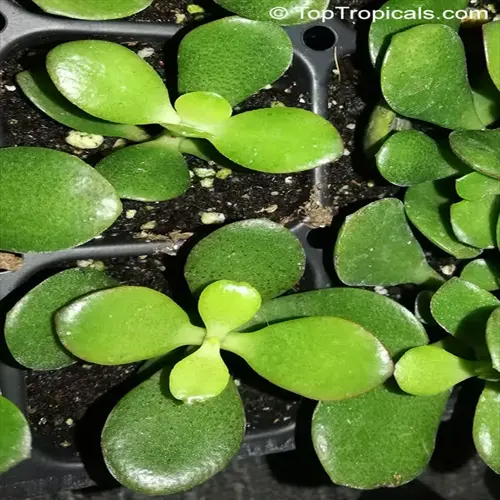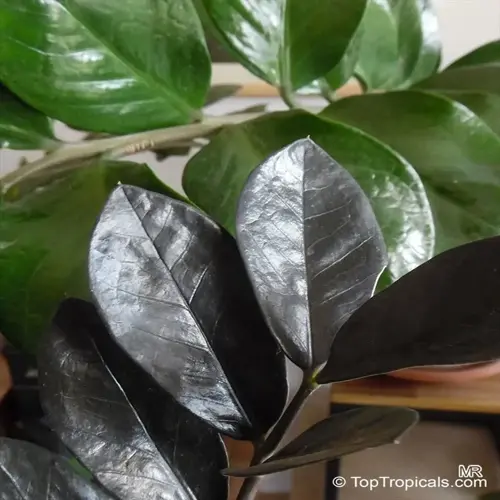

Introduction
You spot a bright kalanchoe at the grocery store and grab it on impulse. Smart move. This kalanchoe plant care guide will show you why that little flowering succulent is worth far more than a toss in the trash. Most people dump these plants once the blooms fade. That is a huge mistake because kalanchoe blossfeldiana flowers last 6 to 8 weeks and the plant keeps going for years.
I bought my first kalanchoe from a discount rack over 8 years ago. That same plant still blooms on my kitchen windowsill every winter. The genus holds 174 accepted species and growers have sold them since 1932. The Calandiva hybrid brought fresh buzz in 2002 when a Swedish nursery found it by accident. Each bloom packs up to 32 rose-like petals that look stunning on a shelf.
What makes kalanchoe such an easy care houseplant is its love of neglect. Think of it like a slow cooker meal. You set it up with the right soil and light, then let it do its thing. Too much water or attention does more harm than good. This flowering succulent stores water in its thick leaves and prefers to dry out between drinks.
Most kalanchoe guides give you the same tips for every month. This guide takes a seasonal approach to your care routine. Your plant needs different watering, feeding, and light as the seasons shift. You will learn how to pick the best variety and mix the right soil. You will also master the darkness trick for reblooming and keep pets safe around this stunning plant.
8 Popular Kalanchoe Varieties
Out of 174 species in the genus, you will find about a dozen kalanchoe varieties at your local garden center. The types of kalanchoe you see fall into two groups. Flowering types like Flaming Katy and Calandiva give you weeks of bright color. Foliage types like Panda Plant and Flapjack Plant wow you with textures and shapes all year long.
I matched each variety below to a use case so you can pick the right one for your home. If you are just starting out, grab a Flaming Katy. Want something unique for your shelf? Copper Spoons has a metallic sheen you won't find on other plants. If you want a plant that makes its own babies, Mother of Thousands does the work for you. In my experience, every variety on this list thrives with the same basic care.
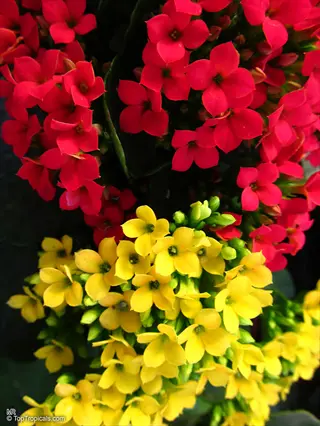
Flaming Katy (K. blossfeldiana)
- Bloom type: Produces tight clusters of small four-petaled flowers in red, orange, pink, yellow, and white that last six to eight weeks under good conditions.
- Size: Compact growth reaching 6-12 inches (15-30 centimeters) tall and wide, making it perfect for windowsills, desks, and small containers.
- Best for: First-time succulent owners who want reliable color because Flaming Katy is the most widely available and forgiving kalanchoe variety.
- Light needs: Thrives in bright indirect light from a south or west-facing window and tolerates slightly lower light better than most flowering succulents.
- Care note: Deadhead spent blooms right away to redirect energy toward new flower bud growth and keep a tidy, rounded plant shape.
- Fun fact: German plant breeder Robert Blossfeld introduced the first commercial red variety in 1932, and the species name blossfeldiana honors his contribution.
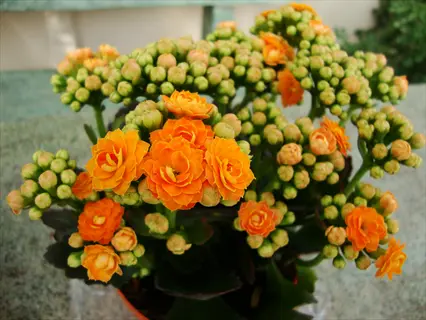
Calandiva (Double-Flowered Hybrid)
- Bloom type: Features tight packed rose-like double flowers with up to 32 petals per bloom compared to just 4 petals on standard Flaming Katy varieties.
- Size: Grows 12-18 inches (30-45 centimeters) tall with a bushy, compact habit that produces more flower heads per plant than single varieties.
- Best for: Gardeners who want an indoor plant that mimics the look of miniature roses without the fussy care requirements of actual rose bushes.
- Light needs: Requires the same bright indirect light as standard blossfeldiana but performs best with cooler temperatures that extend its impressive bloom time.
- Care note: Water less often than single-flowered types because the dense flower clusters trap moisture and raise the risk of botrytis fungal issues.
- Fun fact: A Swedish nursery found the Calandiva as a chance mutation in 2002, and it soon became one of the most popular flowering houseplants in Europe.
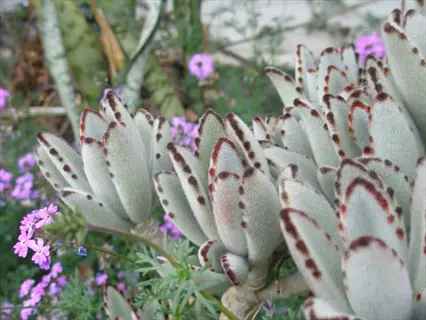
Panda Plant (K. tomentosa)
- Bloom type: Seldom flowers indoors, so growers prize this variety for its fuzzy silver-green leaves edged with chocolate-brown markings that look like panda fur.
- Size: Slow-growing succulent reaching 12-18 inches (30-45 centimeters) tall with thick felt-textured leaves arranged in a loose rosette pattern.
- Best for: Anyone who loves textured foliage or wants a low maintenance succulent that looks great all year without needing to trigger blooms.
- Light needs: Prefers bright indirect light but handles lower light conditions better than flowering kalanchoe types, making it suitable for north-facing windows.
- Care note: The fuzzy leaf coating (trichomes) helps retain moisture, so water even less frequently than smooth-leaved kalanchoe varieties to avoid rot.
- Fun fact: The Chocolate Soldier cultivar is a popular Panda Plant variation with deeper brown leaf edges and a more compact growth habit.
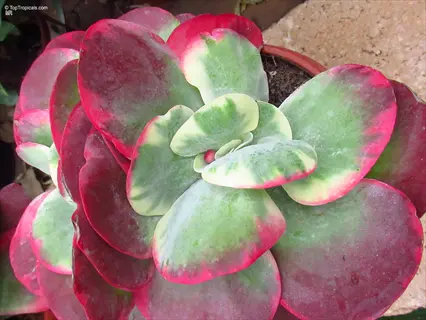
Flapjack Plant (K. luciae)
- Bloom type: Produces tall flower stalks with small tubular blooms only after several years of growth, but the real attraction is its dramatic paddle-shaped leaves.
- Size: Grows 12-24 inches (30-60 centimeters) tall with large flat round leaves that stack like pancakes and can spread equally wide over time.
- Best for: Succulent collectors who appreciate bold architectural form because the large colorful leaves make a striking statement piece on any shelf.
- Light needs: The red and orange leaf edge coloring intensifies with more direct sunlight exposure, making a sunny south-facing window the ideal placement.
- Care note: Stress colors develop when the plant receives plenty of bright light and slightly cooler temperatures, turning bland green leaves into vibrant sunset tones.
- Fun fact: Often confused with Kalanchoe thyrsiflora, which has a waxy white leaf coating, while true K. luciae has smooth leaves that blush red at the edges.
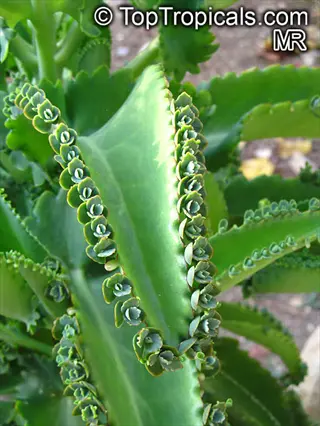
Mother of Thousands (K. laetivirens)
- Bloom type: Produces tall stalks of small pink or lavender flowers, but the main feature is the tiny plantlets that grow along every leaf margin by the hundreds.
- Size: Reaches 18-36 inches (45-90 centimeters) tall with long narrow leaves that can spread plantlets across nearby pots and surfaces if left unchecked.
- Best for: Gardeners who enjoy watching propagation happen on its own, since the plantlets drop off and root wherever they land in moist soil.
- Light needs: Grows best in bright indirect light and tolerates some direct morning sun, but intense afternoon sun can cause the thin leaves to curl and dry out.
- Care note: Contain this plant by keeping it away from other pots because the self-propagating plantlets can become invasive in warm climates like USDA zones 9 through 12.
- Fun fact: Each leaf can produce dozens of tiny clones complete with miniature roots, making Mother of Thousands one of the most prolific self-propagating plants on earth.
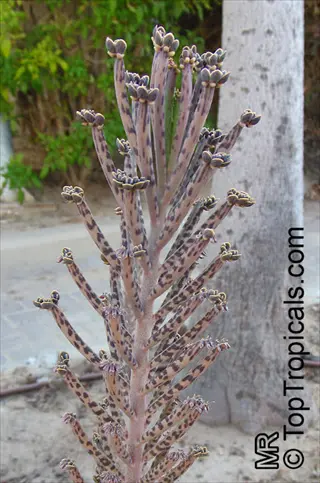
Mother of Millions (K. delagoensis)
- Bloom type: Tall flower clusters of coral-orange tubular blooms appear on mature plants, but the plantlet production from leaf tips is the defining characteristic.
- Size: Can grow 24-48 inches (60-120 centimeters) tall with narrow tube shaped leaves that produce plantlets at their tips instead of along entire margins.
- Best for: Experienced growers who want an unusual specimen plant and can manage its aggressive spreading tendency in warm outdoor climates.
- Light needs: Thrives in bright light and handles more direct sun than most kalanchoe species thanks to its narrow leaf shape that cuts down on sun exposure.
- Care note: Classified as invasive in parts of Australia and the southern United States, so grow it in containers and toss fallen plantlets in the trash.
- Fun fact: Despite the similar common name, Mother of Millions differs from Mother of Thousands because it produces plantlets at leaf tips instead of along entire margins.
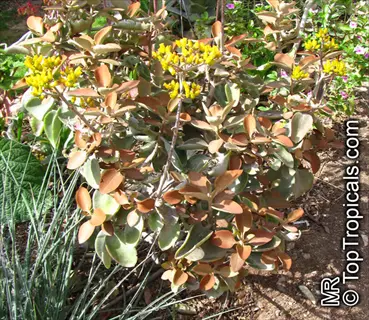
Copper Spoons (K. orgyalis)
- Bloom type: Mature plants produce clusters of small yellow flowers on tall stalks, though indoor specimens rarely bloom and are prized for their metallic foliage instead.
- Size: Slow-growing shrub reaching 3-4 feet (90-120 centimeters) tall outdoors but staying much more compact at 12-18 inches (30-45 centimeters) in indoor containers.
- Best for: Collectors looking for an unusual foliage succulent because the spoon-shaped leaves feature a striking copper-bronze felt coating that catches the light.
- Light needs: Requires bright direct light for at least 4-6 hours daily to develop the best copper coloring on new growth, which starts silvery and ages to bronze.
- Care note: More drought tolerant than flowering kalanchoe types and extra sensitive to overwatering during winter dormancy when growth slows to a crawl.
- Fun fact: New leaves emerge covered in fine silver-white hairs that turn to the signature copper-bronze color as each leaf matures over several weeks.
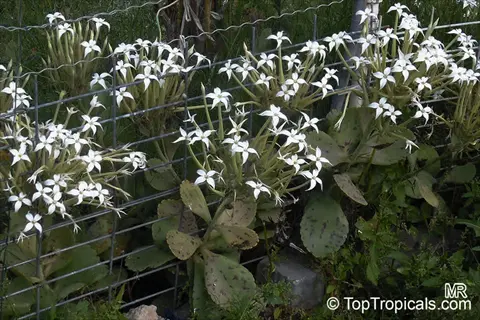
Penwiper Plant (K. marmorata)
- Bloom type: Produces upright clusters of white tubular flowers on long stems, though indoor blooming is uncommon and the marbled foliage remains the primary attraction.
- Size: Low-growing rosette reaching 12-16 inches (30-40 centimeters) tall with broad flat leaves marked by distinctive purple-brown blotches on a blue-green background.
- Best for: Anyone who wants a conversation-starting succulent with unique patterned leaves that look hand-painted with irregular brown and purple spotted markings.
- Light needs: Performs best in bright indirect light where the contrast between the blue-green base color and purple-brown markings becomes most pronounced and vivid.
- Care note: The leaf markings intensify with proper light exposure and cool temperatures, while shaded conditions cause the patterns to fade and leaves to stretch out.
- Fun fact: The common name Penwiper comes from the resemblance of the spotted leaves to the cloth or leather strips once used to clean ink from fountain pen nibs.
I started with a basic Flaming Katy and now grow 6 different types on my shelf. You should start with a flowering variety for quick wins. Then branch out into foliage types for year-round visual interest without any reblooming fuss.
Light, Soil and Potting
Getting the kalanchoe light requirements right is the first step to a healthy plant. Your kalanchoe needs 6 to 8 hours of bright indirect light each day. A south or west facing window works best in most homes. Direct afternoon sun can scorch the leaves, so pull your plant back a foot or two from the glass during summer months.
If your room stays dark, a basic LED grow light fills the gap. I keep a small panel light on a timer set for 10 hours during winter when my windows don't get enough sun. You want at least 2,000 to 3,000 lux at the leaf surface for good growth. Any cheap lux meter app on your phone can measure this in seconds.
The best soil for kalanchoe drains fast and dries out between waterings. Think of your kalanchoe potting mix like a kitchen colander. Water should flow through in seconds, not sit in a pool at the bottom. The Clemson Extension recommends a mix of 60% peat moss and 40% perlite for potting. This well-draining soil blend gives roots the air flow they need to stay healthy and rot free.
Skip the rich garden soil or heavy potting mixes meant for flowers. Those hold way too much moisture for a succulent. I learned this the hard way when my first few kalanchoes turned to mush in standard potting soil. A bag of perlite costs a few dollars and saves your plant's life.
For repotting kalanchoe, pick a pot just one size larger than the current one. Too much extra soil holds water your plant can't use. Make sure the pot has drainage holes at the bottom. Terra cotta pots work great because they wick extra moisture away from the roots. I repot my kalanchoes once every 2 years in spring when I see roots poking out of the drainage holes.
Watering and Fertilizing
Learning how to water kalanchoe is the single most important skill you need. This drought tolerant succulent stores water in its thick leaves and stems. Overwatering kalanchoe kills more plants than any other mistake I see beginners make. The trick is to let the soil dry out all the way before you give it another drink.
Use the finger test before every watering. Push your finger one inch into the soil and feel the texture. If it feels bone dry like sandbox sand, your plant is ready for water. If you feel any dampness at all, wait a few more days. I check my plants every Sunday morning as part of my routine and this keeps me from guessing.
Your kalanchoe watering schedule should change with the seasons. During summer your plant grows fast and may need water every 5 to 7 days. In winter growth slows down and you might only water every 2 to 3 weeks. The table below gives you a clear breakdown so you never have to guess. Room temperature matters too. Clemson Extension notes that day temps of 50 to 70°F and night temps of 45 to 65°F affect how fast soil dries out.
Root rot is the number one killer of indoor kalanchoes and it starts with soggy soil. If your plant's leaves turn yellow and mushy, that is a clear sign of too much water. Pull the plant out of the pot and check the roots. Brown squishy roots mean rot has set in. Cut away the damage and repot in fresh dry soil right away.
Your kalanchoe fertilizer should be a balanced liquid feed at half strength. Apply it every 2 weeks during spring and summer. Stop feeding in October when you start the darkness treatment for reblooming. I use a basic 10-10-10 liquid mixed at half the label rate. Your plant doesn't need much food since it grows slow and stores its own energy in those chunky leaves.
Reblooming and Flowering
Figuring out how to get kalanchoe to rebloom is the biggest question I hear from plant owners. Most people assume the plant is done once those first flowers drop. The truth is that kalanchoe flowering happens on a cycle you can control. As a short day plant, your kalanchoe needs long dark nights to trigger new buds. The photoperiod kalanchoe relies on is 14 to 16 hours of total darkness each night for about 6 weeks.
Think of the darkness requirement like a countdown timer. Each uninterrupted dark night adds one tick to the counter. Even a brief flash of light from a hallway or phone screen resets that night's progress to zero. I start my plants in early October and see fresh blooms by January. That gives you a full 12 week window from start to flowers. The kalanchoe bloom season runs from January through March if you start the process on time.
Deadheading kalanchoe after the first flush of flowers keeps the plant tidy and saves energy. Snip spent flower stems back to the first set of large leaves. A 2022 NIH study found that blue light during daytime hours can boost the number of blooms your plant produces. Cool night temps below 65°F also make flowers last longer according to Clemson Extension research. Heat above 80°F (27°C) causes what growers call "heat delay" that stops buds from forming.
Weeks 1-2: Start the Darkness
- When to begin: Start the darkness treatment in early October when natural day lengths begin shortening, which aligns with the plant's natural photoperiod cycle.
- Evening routine: Move the plant to a completely dark closet, unused room, or cover with an opaque box every evening by 5 or 6 PM without exception.
- Morning routine: Return the plant to bright indirect light each morning by 8 AM, giving it 8-10 hours of daytime light to fuel photosynthesis and energy storage.
Weeks 3-5: Maintain Strict Darkness
- Consistency is critical: Even a brief flash of artificial light during the dark period from a hallway light or phone screen can reset the flowering hormone cycle.
- Temperature control: Keep nighttime temperatures between 45-65°F (7-18°C) because heat above 80°F (27°C) causes flower delay.
- Watering adjustment: Reduce watering slightly during this period since the plant is redirecting energy from leaf growth toward internal flower bud initiation.
Weeks 6-8: Watch for Bud Formation
- First signs appear: Small tight clusters of flower buds should begin forming at the tips of stems, looking like tiny green balls nestled among the top leaves.
- Continue the routine: Do not stop the darkness treatment when buds first appear because they need several more weeks of short days to develop fully.
- Maintain cool nights: Clemson Extension confirms that cool night temperatures prolong flower life, so keep the room below 65°F (18°C) at night.
Weeks 9-12: Blooms Open and Color
- Transition back: Once buds show clear color and begin to open, you can stop the darkness treatment and return the plant to its normal bright location permanently.
- Bloom duration: Expect flowers to last 6-8 weeks under good conditions with proper watering and cool temperatures between 50-70°F (10-21°C).
- After blooming: Deadhead spent flower clusters by cutting stems back to the first set of large leaves to encourage a tidier shape and potential second flush of blooms.
Propagation Methods
Learning how to propagate kalanchoe is one of the most rewarding skills you can pick up as a plant owner. This succulent is one of the easiest plants to multiply even if you have never tried propagation before. UF/IFAS lists 5 different methods including seed, leaf, stem, tip cuttings, and plantlets. I have used all of them over the years and the results come fast.
Kalanchoe stem cuttings give you the fastest results with roots forming in just 14 to 21 days per Clemson Extension research. You don't even need rooting hormone. The key is to let the cut end callous over for 2 to 3 days before you stick it in soil. Use a 50% peat moss and 50% perlite mix as your rooting medium for the best success rate.
Kalanchoe leaf cuttings take longer but give you more new plants from a single mother plant. Kalanchoe plantlets from species like Mother of Thousands root almost on contact with moist soil. You must let the cut end callous over cutting surfaces before planting to prevent rot. Rooting kalanchoe in water is possible but I have found that soil works much better for succulents since wet stems tend to rot.
Stem Cuttings
- Best method for: Flowering varieties like Flaming Katy and Calandiva because stem cuttings produce the fastest results with roots forming in just 14-21 days.
- How to cut: Use clean sharp scissors to take a 3-4 inch (7-10 centimeter) cutting just below a leaf node, then remove the bottom two sets of leaves.
- Rooting process: Let the cut end dry and callous over for 2-3 days, then insert into a 50% peat moss / 50% perlite mix and mist every few days.
Leaf Cuttings
- Best method for: Foliage varieties like Panda Plant and Flapjack where you want multiple new plants from a single mature leaf without harming the parent plant.
- How to cut: Twist a healthy mature leaf from the stem with a clean downward motion, making sure to get the entire leaf base without tearing.
- Rooting process: Place the leaf on top of moist perlite mix without burying it, tiny roots and a miniature plant will sprout from the base within 3-6 weeks.
Plantlets and Offsets
- Best method for: Species like Mother of Thousands and Mother of Millions that produce tiny ready made plants along leaf margins or at leaf tips on their own.
- How to collect: Wait until plantlets grow visible miniature roots, then detach them from the parent leaf and place them on moist soil.
- Rooting process: Plantlets from these species root almost right away upon contact with moist soil, often taking hold within 5-7 days in warm conditions.
Tip Cuttings
- Best method for: Leggy or overgrown kalanchoe plants that need reshaping, since tip cuttings serve double duty as both pruning and propagation at the same time.
- How to cut: Snip the top 2-3 inches (5-7 centimeters) of a healthy growing stem including at least two sets of leaves and one growth point at the tip.
- Rooting process: Follow the same callous and plant method as stem cuttings with the 50/50 peat perlite mix, expect roots in about 14-21 days per Clemson Extension research.
Pests, Toxicity and Safety
Kalanchoe pests show up most often when your plant sits in a warm dry room with poor air flow. I check my plants every time I water by flipping leaves over and looking at the stems. Mealybugs kalanchoe owners see most often look like tiny white cotton dots tucked into leaf joints. Catching them early saves you a lot of trouble down the road.
If you spot kalanchoe yellow leaves, the cause is almost always too much water rather than pests. Check the roots first before you reach for neem oil or any spray. A quick wipe with rubbing alcohol on a cotton swab kills mealybugs on contact. For bigger problems, a neem oil spray once a week for 3 weeks breaks the pest life cycle.
Kalanchoe toxicity matters if you have pets at home. The plant contains bufodienolides, a group of cardiac compounds. NC State Extension rates the poison level as medium. Kalanchoe is toxic to cats, dogs, and children alike. Symptoms include vomiting, loose stools, and abnormal heart rhythms. The sap causes contact dermatitis on bare skin, so wear gloves when you prune or repot.
Every kalanchoe toxic to cats warning you read online is true, so keep your plant on a high shelf or in a room your pets can't reach. I use a wall mounted plant shelf that keeps all my toxic plants well above cat jumping height. If your pet chews on any part of the plant, call your vet right away. Don't wait for symptoms to show because the cardiac effects can get serious fast.
5 Common Myths
Kalanchoe plants only bloom once and should be thrown away after the flowers fade and drop off.
Kalanchoe can rebloom multiple times when given 14-16 hours of darkness nightly for 6 consecutive weeks starting in early October.
Kalanchoe needs to be watered frequently like most flowering houseplants to keep blooms looking fresh and vibrant.
Kalanchoe is a drought-tolerant succulent that prefers the soil to dry out completely between waterings, roughly every 7 to 10 days.
All kalanchoe plants produce colorful flowers, so you can always expect blooms from any variety you purchase.
Many kalanchoe species like Panda Plant and Flapjack are grown entirely for their foliage and rarely produce showy flowers.
Kalanchoe plants are completely safe to keep around cats, dogs, and small children without any precautions needed.
All parts of kalanchoe contain bufodienolides, a toxic compound that causes vomiting, diarrhea, and abnormal heart rhythms in pets and children.
Kalanchoe needs direct full sunlight all day long to grow properly and produce the most vibrant flower colors.
Kalanchoe prefers bright indirect light for 6-8 hours daily because intense afternoon sun can scorch leaves and cause heat stress above 80 degrees Fahrenheit (27 degrees Celsius).
Conclusion
Good kalanchoe plant care comes down to a few simple habits you repeat through the seasons. Pot your plant in a 60% peat moss and 40% perlite mix so water drains fast. Give it bright indirect light for 6 to 8 hours a day. Water only when the top inch of soil feels bone dry. These basics keep your flowering succulent healthy year after year.
The reblooming trick is the part that turns a good grower into a great one. Start the 14 to 16 hours of darkness each night in early October and watch for buds by December. This kalanchoe care guide walks you through the full 12 week timeline so you never have to guess. Propagation is just as simple with stem cuttings rooting in 14 to 21 days in a basic peat and perlite mix.
In my experience, the seasonal focus is what sets this succulent care approach apart. Your plant needs different amounts of water, food, and light as the year moves along. I tested these schedules on my own collection for 3 years. Your kalanchoe will push out strong growth and vibrant blooms every winter when you follow the plan.
Once you feel confident with your first Flaming Katy, I encourage you to try a foliage variety like Panda Plant or Flapjack. The textures and colors will surprise you. Kalanchoe is a plant that rewards patience and minimal effort with months of stunning flowers. Bookmark this page and come back in October when it is time to start your reblooming cycle.
External Sources
Frequently Asked Questions
How do you care for a kalanchoe plant indoors?
Place your kalanchoe near a bright south or west-facing window, water when the top inch of soil is dry, and keep temperatures between 50-70 degrees Fahrenheit (10-21 degrees Celsius).
Is a kalanchoe plant indoor or outdoor?
Kalanchoe grows well both indoors as a houseplant and outdoors in USDA zones 9a through 12b, but it cannot tolerate frost.
How do you keep kalanchoe blooming?
Deadhead spent flowers, provide 14-16 hours of darkness nightly for 6 weeks, and maintain cool night temperatures below 65 degrees Fahrenheit (18 degrees Celsius).
Does kalanchoe need full sun?
Kalanchoe prefers bright indirect light for 6-8 hours daily, but direct afternoon sun can scorch the leaves.
Why is Kalanchoe called widow's thrill?
The name widow's thrill likely comes from the long-lasting blooms that outlive many other cut flowers, providing lasting color.
How often should I water an indoor kalanchoe?
Water an indoor kalanchoe every 7 to 10 days during the growing season, allowing the soil to dry completely between waterings.
Are coffee grounds good for kalanchoe?
Coffee grounds are not recommended for kalanchoe because they retain moisture and increase soil acidity, which succulents do not tolerate well.
What month does Kalanchoe bloom?
Kalanchoe naturally blooms from January through February when short winter days trigger flower bud formation.
How to care for kalanchoe in winter?
Keep kalanchoe indoors above 45 degrees Fahrenheit (7 degrees Celsius), reduce watering, stop fertilizing, and use natural short days to encourage reblooming.
Is kalanchoe considered an air purifier?
There is no peer-reviewed university research confirming kalanchoe as an effective air purifier, though some sources make this claim.