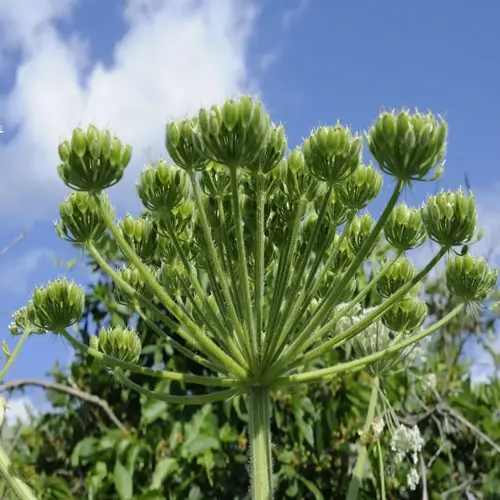

Yes, and that catches people out. A cut or sprayed plant stays poisonous, and a sprayed one can turn more appealing to grazing animals rather than less. The cut water hemlock danger sits in the rootstalk, which holds small chambers that leak a brown or straw-colored liquid the moment a stem breaks. Cutting moves the plant around your pasture without changing a thing about what is inside it.
Two mornings after I sprayed the spring-fed ditch line at the back of my own hay meadow, the cows were strung out along it with their heads down. They were working over the wilting stems they had walked past all summer. I spent that afternoon running a hot wire between the herd and the water.
Spraying makes the plant taste better before it kills it. Sprayed water hemlock holds its poison the whole time it dies, and the toxicity may climb until the plant is dead. That is the reverse of what you expect from a chemical doing its job. A dying stem goes soft, so stock will clean up green material from a ditch they had no interest in a week earlier.
Spot-treat with a systemic herbicide such as glyphosate or 2,4-D in late spring or early summer, once the plants are up and growing well. Use an aquatic-labeled product on anything standing in water or growing submerged, since this weed lives in wet ground. Move your animals off that pasture first if the layout of your place allows it. The pull toward a treated patch starts within a day or two.
Keep livestock away from treated plants for 3 weeks after spraying. USDA ARS ties most water hemlock losses to early spring and to the days right after a 2,4-D application.
Hay is the other place this bites you. Cut pieces end up mixed through a bale where nobody can pick them out again. Scout your wet corners and ditch edges before you cut, then dig out what you find. Grubbing a few plants in spring beats sorting a stack of bales in January.
Water hemlock disposal is where good work falls apart. If you grub the plants out, take all of the plant including the roots, because the rootstalk carries the most poison and a loose one lying in the grass looks a lot like a parsnip. Gather every piece and burn it. A compost heap, a brush pile, or the far side of the fence will not do.
- Dig wide: Lift the whole root mass and not just the top growth, since the crown and roots hold the strongest poison.
- Keep it off the ground: Cut surfaces stay wet with sap, so pile the pieces where stock, dogs, and children cannot reach them.
- Burn everything: Roots, stems, and green seed heads all go on the fire together, in one load if you can manage it.
- Walk the same ditch line again two weeks later and pull whatever you missed.
Green seed heads stay poisonous even after leaves and stems lose toxicity with age, and they have caused death losses in cattle on their own. Check the heads before you write a stand off as finished for the year. A stand that looks brown and finished in late summer can still hold green seed heads that carry that risk.
Treat anything you cut or spray as still hazardous until it burns. The research does not pin down how long dried plant material stays toxic, so I will not hand you a safe waiting period. Pick the material up, burn it, and keep your stock on other ground until the treated plants are dead and gone.
Read the full article: Water Hemlock: How to Identify and Stay Safe