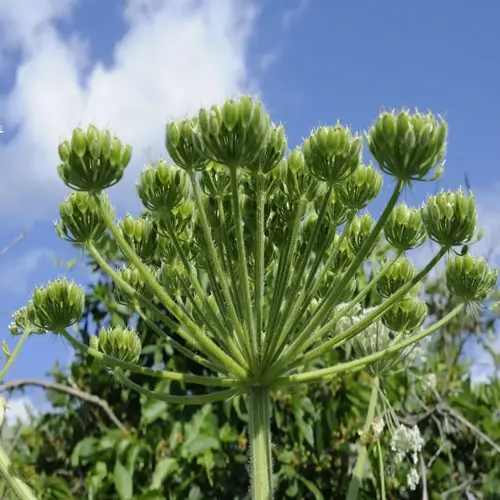
Treat water hemlock as poisonous to dogs, cats and horses, and act on that every single time. NC State Extension flags the plant as a problem for all three, which turns water hemlock pet safety into a question about ground rather than leaves. The roots taste better to grazing animals than the tops do. Roots also surface after plowing or ditch cleaning. A loose root on soft wet ground sits at nose height for a dog that likes to dig.
The water hemlock dogs meet on a walk is often an exposed root rather than a standing plant. A bank slumps after heavy rain, someone clears a drainage ditch, and pale chunks of root end up in the open where no digging was needed at all. Horses run into the plant a different way. They graze the wet pasture edges and boggy corners where it grows, and one hoof through a soft streambed can turn up the most toxic part of the plant in a second.
The numbers on record come from livestock, and that gap matters. USDA ARS reports that animals show signs 15 minutes to 6 hours after eating the plant, and death can follow 15 minutes to 2 hours after those signs start. A piece of root the size of a walnut can kill a cow-sized animal. None of those figures were measured in dogs or cats. The research holds no pet dose and no pet onset window, so nobody can tell you how much is too much for a 30 lb (14 kg) spaniel.
Dogs also get into trouble in ways cattle never do. A cow grazes in the open, but a dog carries a find off, works at it for a while, and does that down the bank out of sight. Cats spend less time in soggy ditches, though the hazard flag covers them too. Body size cuts against both of them. That walnut-sized piece of root was weighed against a cow, so the same mouthful is a far bigger share of a spaniel or a tabby.
Call a veterinarian the moment you think an animal chewed any part of this plant, and do not wait for symptoms to prove you right. No antidote exists. Care is supportive, which means the clinic treats what shows up in front of it, and that work goes better with a head start. Tell them which piece you think went down and how long ago. Grab a piece if you can do it safely, or snap a photo, and take it with you.
- Call first: Phone your veterinarian or an emergency clinic before any symptom shows up.
- Bring proof: Take a photo, or a bagged piece of the plant, so the clinic knows what it is treating.
- Note the time: Write down when the chewing happened and which part of the plant the animal had.
- Keep your other animals off that same stretch of ground until you know what is growing there.
You will find pages saying no dog poisonings have ever been reported from water hemlock. That line traces back to one extension agent's observation, and one observation is not a dataset. Nobody holds the pet data that would let anyone call this plant harmless. Keep it on your short list of toxic plants for pets, and treat any wet, freshly disturbed ground as off limits until you have checked what grows there.
Read the full article: Water Hemlock: How to Identify and Stay Safe