
Introduction
The iris plant is part of a genus with over 300 species spread across the globe. The USDA Forest Service counts 28 of those as native to the United States. You can find wild irises in forests, meadows, and wetlands across all lower 48 states. Few perennial flowers give you that kind of reach.
Irises fill a gap in the garden that most other flowers miss. They bloom right after spring bulbs fade and right before peonies open up. That timing gives you weeks of bold color when your beds would sit empty. I've grown irises for over 12 years and still count on them to carry my garden through that tricky late spring window.
Most online guides lump all iris types together and give generic advice. That causes real problems. Rhizome irises and bulb irises need different care. Think of them as two families sharing one name. Rhizome types spread underground like ginger. Bulb types store energy in compact packages like onions. The soil, depth, and water needs for each group differ so much that one set of tips can't cover both.
This guide covers 8 popular iris varieties with the exact growing conditions each one needs. You'll learn planting methods, seasonal care, and pest fixes. You'll also find companion plants that pair well with your irises. Whether you grow bearded iris types in full sun or Japanese iris types in a wet corner, this guide has you covered.
8 Popular Iris Varieties
The iris family splits into 2 main groups. Rhizome iris types grow from thick roots that sit near the soil surface. Bulbous iris types grow from true bulbs planted several inches deep. Each group has its own soil, sun, and water needs.
I've grown 6 of these 8 varieties in my own garden over the years. The bearded iris is the most popular pick. The Siberian iris and Japanese iris deserve your attention too. A well planned iris bed can give you blooms from late winter through mid summer if you mix the right types together.
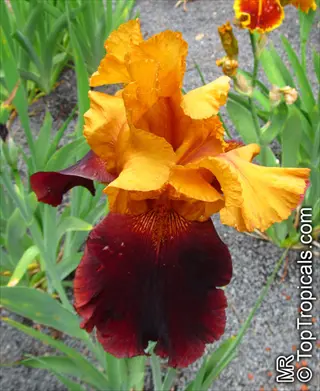
Tall Bearded Iris
- Height: Tall bearded irises reach 2 to 3 feet (61 to 91 centimeters) and produce the largest, most ruffled blooms in almost every color you can picture.
- Sunlight: These irises demand at least 6 to 8 hours of direct sunlight daily to produce their best flower displays each spring season.
- Soil: Plant in well-drained soil with a pH near 6.8, and keep rhizome tops exposed above the soil surface to prevent rot.
- Hardiness: Tall bearded irises thrive in USDA zones 3 through 9, making them one of the most versatile garden perennials you can grow.
- Bloom Time: Expect flowers from mid to late spring, with reblooming cultivars offering a second flush in early fall under the right conditions.
- Best For: Border gardens, cottage gardens, and cut flower arrangements where their tall stems and large flowers create bold focal points.
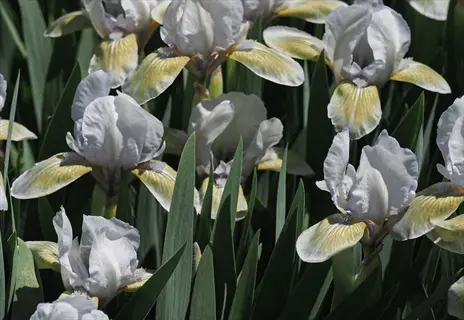
Dwarf Bearded Iris
- Height: Dwarf bearded irises stand just 4 to 9 inches (10 to 23 centimeters) tall, making them perfect for front borders and rock gardens.
- Sunlight: These compact plants need full sun for best blooming, though they handle a bit less light than their taller bearded relatives.
- Soil: Require the same well-drained, slightly alkaline soil as tall bearded types, with rhizomes planted at the soil surface level.
- Hardiness: Hardy in USDA zones 3 through 8, dwarf bearded irises are among the first iris types to bloom in early to mid spring.
- Bloom Time: Flowers appear 2 to 3 weeks before tall bearded varieties, extending the total iris blooming season in mixed plantings.
- Best For: Container gardens, rock gardens, and pathway edges where their small size creates colorful low borders without overwhelming the space.
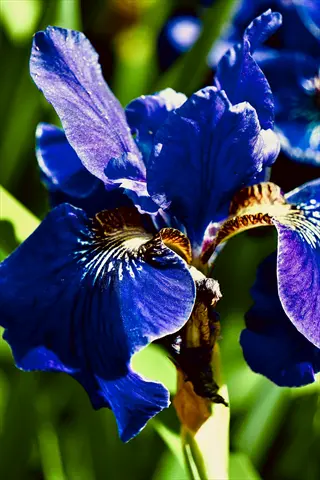
Siberian Iris
- Height: Siberian irises grow 2 to 4 feet (61 to 122 centimeters) with graceful, grass-like foliage that stays attractive long after blooming ends.
- Sunlight: Performs well in full sun to partial shade, making it more flexible than bearded types for gardens with mixed light conditions.
- Soil: Prefers moist, slightly acidic soil and tolerates heavier clay soils that would rot bearded iris rhizomes in a single season.
- Hardiness: Very cold-hardy in USDA zones 3 through 8, Siberian iris is one of the toughest and most low-maintenance iris types you can grow.
- Bloom Time: Blooms in late spring to early summer, overlapping with tall bearded irises and extending color into the early summer garden.
- Best For: Naturalized plantings, rain gardens, and pond edges where their dense foliage acts as a living mulch to suppress weeds.
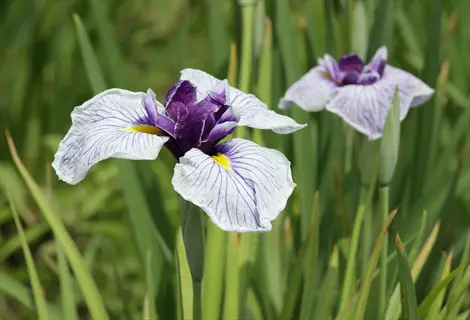
Japanese Iris
- Height: Japanese irises reach 2 to 4 feet (61 to 122 centimeters) and produce the largest flat blooms of any iris, up to 10 inches (25 centimeters) across.
- Sunlight: Grows in full sun to partial shade, and benefits from afternoon shade in hot southern climates to prevent bloom fading.
- Soil: Requires acidic soil with a pH of 5.0 to 6.5, which is quite far from the neutral soil that bearded irises prefer.
- Hardiness: Thrives in USDA zones 4 through 9 and needs consistent moisture during the growing season, unlike drought-tolerant bearded types.
- Bloom Time: Flowers in early to mid summer, after most other irises have finished, extending the overall iris season by several weeks.
- Best For: Water gardens, bog gardens, and moist borders where their large, exotic-looking blooms create a dramatic late-season display.
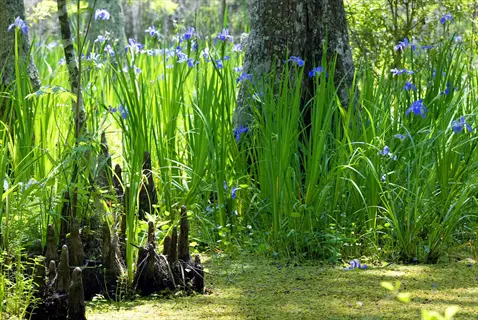
Louisiana Iris
- Height: Louisiana irises grow 2 to 3 feet (61 to 91 centimeters) tall and are native to the wetlands and swamps of the southeastern United States.
- Sunlight: Tolerates full sun to partial shade and performs best with some afternoon protection in the hottest southern regions.
- Soil: Thrives in wet, boggy conditions that would kill most other iris types, making it ideal for rain gardens and pond margins.
- Hardiness: Best suited for USDA zones 6 through 9, Louisiana irises are less cold-hardy than Siberian or bearded types but excel in heat.
- Bloom Time: Blooms in mid to late spring with flowers in rich reds, purples, blues, and yellows that are uncommon in other iris groups.
- Best For: Southern gardens, water features, and low-lying areas where standing water is common and other perennials struggle to survive.
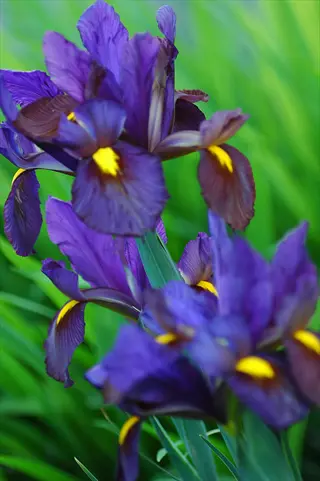
Dutch Iris
- Height: Dutch irises grow 18 to 24 inches (46 to 61 centimeters) on slender, upright stems that make them excellent for cutting gardens.
- Sunlight: Requires full sun for strong stem development and reliable flowering, and does not tolerate heavy shade in any season.
- Soil: Grows from true bulbs planted 4 to 5 inches (10 to 13 centimeters) deep in well-drained soil, unlike rhizome irises that sit at the surface.
- Hardiness: Hardy in USDA zones 5 through 9, Dutch iris bulbs may need winter mulch protection in the colder end of their range.
- Bloom Time: Flowers in late spring, typically blooming between the bearded iris season and the Japanese iris season for continuous garden color.
- Best For: Cut flower gardens, formal beds, and container plantings where their elegant, orchid-like blooms add a refined, upright accent.
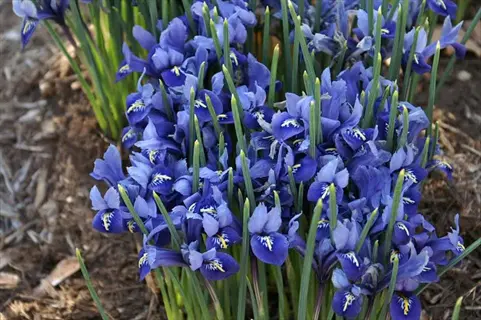
Reticulata Iris
- Height: Reticulata irises are tiny bulbous plants standing just 4 to 6 inches (10 to 15 centimeters) tall, among the earliest flowers to appear each year.
- Sunlight: Needs full sun during its brief spring growing season, but since it goes dormant early, summer shade from later-growing plants is acceptable.
- Soil: Plant bulbs 3 to 4 inches (8 to 10 centimeters) deep in fast draining soil, as sitting in wet winter ground rots these small bulbs fast.
- Hardiness: Hardy in USDA zones 3 through 8, reticulata irises handle bitter cold and often bloom through late snow in northern gardens.
- Bloom Time: Flowers appear in late winter to very early spring, often before crocuses, providing some of the very first garden color of the year.
- Best For: Rock gardens, alpine troughs, and front-of-border spots where these miniature blooms can be seen and appreciated up close.
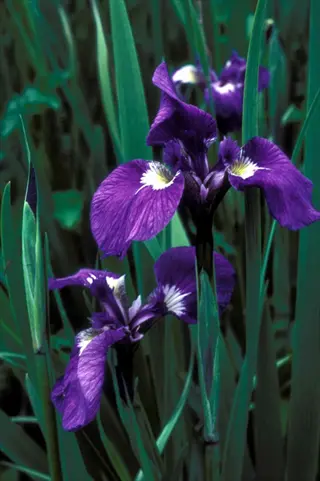
Crested Iris
- Height: Crested irises grow 6 to 12 inches (15 to 30 centimeters) tall with delicate flowers featuring a raised crest instead of the fuzzy beard found on bearded types.
- Sunlight: Unique among irises, crested types prefer partial to full shade, making them valuable for woodland gardens where other irises would fail.
- Soil: Thrives in moist, humus-rich, slightly acidic soil similar to what you would find on a forest floor with plenty of organic matter.
- Hardiness: Most crested irises are hardy in USDA zones 4 through 9, with Iris cristata being the most widely available native species for gardens.
- Bloom Time: Blooms in mid spring with dainty blue, white, or lavender flowers that spread slowly by rhizomes to form attractive groundcover patches.
- Best For: Shade gardens, woodland paths, and naturalized areas where their low spreading habit and shade tolerance fill a gap no other iris can.
Your best bet is to pick 2 or 3 iris varieties that match your garden's sun and soil conditions. Mix a dwarf iris with a tall type and you'll get blooms across a much longer window. I always suggest starting with a bearded iris since it forgives most beginner mistakes.
Planting and Soil Needs
Your iris planting depth and iris soil requirements matter more than most people think. Each iris type has its own rules for how deep to plant, how far apart to space them, and what soil pH for iris works best. I lost a whole row of bearded irises my first year because I buried the rhizomes too deep.
Start by loosening your soil at least 18 inches deep before planting irises. This gives roots room to spread and helps water drain away from the crown. For bearded types, the old saying "wet feet, but dry knees" sums up the drainage rule. The roots can sit in moist ground but the rhizome itself must stay dry and exposed to sunlight. Both leaf surfaces of an iris can absorb light, and that energy flows straight into the rhizome. Burying it cuts off that power source.
Iris spacing depends on the type you grow. Set bearded iris rhizomes 12 to 24 inches apart so air flows between the fans. Bulbous types like Dutch iris only need 4 to 6 inches of space. They grow from compact bulbs set several inches below the surface. The table below shows the exact iris planting depth and well-drained soil needs for each type.
The soil pH for iris is a detail most guides skip over. Bearded irises want a pH near 6.8 while Japanese irises need acidic soil between 5.0 and 6.5. A simple soil test from your local extension office tells you where you stand before you plant.
Seasonal Care and Maintenance
Good iris care follows a seasonal rhythm that you can track with ease. Your watering iris habits, fertilizing iris schedule, and pruning iris tasks change through the year. In my experience, a simple calendar on the fridge helps you stay on top of dividing irises and deadheading iris blooms.
The 2 biggest mistakes new growers make are overwatering and planting too deep. Bearded irises want dry ground after they bloom. Japanese and Louisiana types need steady moisture all season. Mulching iris beds with the wrong material at the wrong time traps moisture and causes rot. The guide below breaks your iris winter care, spring feeding, summer cleanup, and fall prep into clear steps you can follow all year.
Spring: Growth and Bloom Season
- Feeding: Apply a balanced fertilizer like 10-10-10 or 5-10-10 around iris clumps in early spring as new growth appears, avoiding direct contact with rhizomes to prevent burn damage.
- Sanitation: Remove all dead leaves, old flower stalks, and garden debris from around iris clumps as early as possible to eliminate overwintering iris borer eggs before they hatch.
- Watering: Water bearded irises only during extended dry spells in spring, but keep Japanese and Louisiana irises consistently moist throughout their active growing and blooming period.
- Monitoring: Watch for signs of iris borer damage starting when temperatures reach 72 degrees Fahrenheit (22 degrees Celsius), which triggers egg hatching in eastern United States gardens.
Summer: Division and Cleanup
- Deadheading: Remove spent flower stalks promptly by cutting them down to the base of the plant, which directs energy back into the rhizome instead of seed production overhead.
- Division: Divide overcrowded bearded iris clumps in late July through August, cutting rhizomes into sections with one or two leaf fans and letting cut surfaces dry before replanting.
- Foliage Care: Trim bearded iris foliage to about 6 inches (15 centimeters) in a fan shape after division, but leave Siberian and Japanese iris foliage intact throughout summer.
- Watering: Reduce watering on bearded irises after blooming as they enter summer dormancy, while continuing regular moisture for Japanese and Siberian types that stay active.
Fall: Planting and Preparation
- Planting: September is the final window for planting new iris rhizomes, giving roots at least 4 to 6 weeks to establish before the ground freezes in cold climate zones.
- Foliage Cleanup: Cut bearded iris foliage back to 4 to 6 inches (10 to 15 centimeters) after the first hard frost, removing all old leaves to eliminate borer egg hiding spots.
- Bulb Planting: Plant Dutch and reticulata iris bulbs in October through November at their specified depths, as these bulbous types need a cold period to trigger spring blooming.
- Inspection: Dig and inspect any iris rhizomes that showed signs of borer damage or soft rot during the growing season, discarding affected portions and treating cuts with sulfur.
Winter: Protection and Rest
- Mulching: Apply a light layer of straw or evergreen boughs over newly planted rhizomes after the ground freezes, but remove mulch in early spring to prevent moisture trapping and rot.
- Container Irises: Move potted irises to a sheltered location like an unheated garage where temperatures stay between 28 and 45 degrees Fahrenheit.
- Planning: Use winter months to plan next season's iris additions, noting which varieties performed best and which areas of the garden need more color during the iris blooming window.
- Tool Prep: Clean and disinfect all cutting tools used during the growing season with a 10% bleach solution, as iris diseases spread through contaminated garden equipment.
You should plan to divide your irises every 2 to 5 years to keep blooms strong. Crowded clumps produce fewer flowers and become more prone to disease. Seedlings from division take 2 to 3 years to bloom on their own, so don't panic if new divisions skip a season.
Pests, Diseases, and Fixes
Iris diseases and pests cause more grief than most growers expect. Penn State Extension lists 8 distinct diseases and over 10 viruses that can hit your irises. The iris borer alone wipes out entire clumps if you miss the signs early. I've lost a few prized plants to bacterial soft rot that came in right behind borer damage.
Good iris pest management starts with sanitation. Clean up all dead foliage and debris in fall so iris aphids and iris borer eggs have nowhere to hide over winter. The table below gives you a quick way to spot each problem, find the cause, and take the right action. If you garden east of the Rocky Mountains, the iris borer should be your top concern each spring.
Watch for iris leaf spot on older leaves during wet springs. The brown spots with yellow edges spread fast in damp weather. If you catch it early, pulling the bad leaves stops the problem before it takes over the whole clump. Good air flow between your plants is your best defense against most iris diseases.
Companion Planting for Irises
Picking the right iris companion plants turns a good perennial garden into a great one. Irises bloom after spring bulbs fade and before peonies open. That means what to plant with iris comes down to matching bloom times. I tested dozens of pairings in my own beds. The best iris garden ideas focus on 3 waves of color through the season.
Your iris landscape design gets a boost from plants that draw the same pollinators. Bumblebees visit irises more than any other insect. Pair your irises with other bumblebee favorites and you build a strong pollinator path through your yard. The list below groups the best companions by timing and warns you about plants to keep away from your irises.
Early Spring Partners
- Daffodils: Plant daffodil bulbs between iris clumps to provide bright yellow and white color in early spring while irises are still growing their foliage blades upward.
- Creeping Phlox: Low-growing creeping phlox fills the ground plane with pink, purple, or white flowers that fade just as bearded iris buds begin to open above them.
- Alliums: Ornamental allium bulbs send up tall spherical blooms that overlap with iris flowering, creating a striking vertical contrast between round and flat flower shapes.
Summer Bloom Successors
- Peonies: Peonies bloom just after bearded irises finish, creating a seamless handoff of large, showy flowers from late spring into early summer garden displays.
- Daylilies: Daylilies fill the mid-summer color gap after irises finish blooming, and their arching foliage hides the iris leaves that yellow and decline after flowering.
- Salvia: Upright salvia spikes provide vertical blue, purple, or red accents throughout summer, continuing the color palette that irises established in spring.
Foliage and Texture Plants
- Ornamental Grasses: Fine-textured grasses contrast with the sword-shaped iris foliage and add movement and sound to your garden when breezes blow through.
- Catmint: Low mounds of catmint foliage with lavender flower spikes soften the upright look of iris plantings and attract the same bumblebee pollinators.
- Lady's Mantle: The soft, rounded leaves of lady's mantle catch morning dew in silver droplets and create a beautiful low foreground to taller iris flower stalks.
Plants to Avoid Near Irises
- Tall Dense Shrubs: Avoid planting large shrubs that cast heavy shade over bearded irises, which need full sun exposure on their rhizomes to bloom well each season.
- Heavy Feeders: Aggressive spreaders like mint, bishop's weed, or bamboo will overwhelm iris clumps and compete for the nutrients and space that irises need to thrive.
- Moisture Lovers Near Bearded Types: Do not plant hostas or astilbe next to bearded irises, as the extra watering promotes the rhizome rot that kills them.
Native Irises in the Wild
Most garden guides skip over wild iris and native iris species, but these plants have a story worth knowing. The USDA Forest Service counts 28 iris species as native to the United States. You can find them in every state in the lower 48 and in Alaska too. Their iris habitat ranges from dry forest floors to soggy wetlands and open mountain meadows.
Native irises use a clever trick to power their large spring blooms. Both leaf surfaces absorb light, which is rare among flowering plants. That extra energy flows into the rhizome and fuels big flowers each spring. The plants put that energy into bold, colorful blooms that compete for bumblebee visits each spring. This makes them key pollinator plants in wild spaces across the country.
Iris ecology gets more complex when you look at how these species mix in the wild. Many native iris species cross with each other in the wild. This mixing creates hundreds of natural forms with blended traits from different parents. This is one reason you find so much variety in wild iris stands.
Pacific Coast Native Irises
- Species Range: The Pacific Coast harbors the highest concentration of native iris species in the United States, with multiple species growing from southern Oregon through California.
- Habitat: These irises grow naturally in open woodlands and meadow edges where they receive filtered sunlight and benefit from the mild, wet winters of the Pacific coast climate.
- Garden Use: Pacific Coast irises prefer acidic soil and excellent drainage, making them ideal for rock gardens and woodland borders in mild climate zones 7 through 9.
Southeastern Wetland Irises
- Species Range: The southeastern United States is home to multiple native iris species including the Louisiana iris complex, which grows wild in swamps and bayous of the Gulf states.
- Habitat: These irises thrive in standing water and soggy soil conditions along river banks, in floodplains, and in coastal marshes where most garden plants cannot survive.
- Ecological Role: Southeastern native irises provide critical early-season pollen and nectar for bumblebees, which are their primary pollinators according to USDA Forest Service research.
Northern and Mountain Species
- Species Range: Northern states and mountain regions host cold-hardy species like Iris missouriensis, the western blue flag, which grows in wet meadows across the interior West.
- Unique Biology: Unlike most flowering plants, both leaf surfaces of native irises can absorb light for photosynthesis, storing energy in rhizomes for large spring bloom displays.
- Conservation Note: Many native iris populations face threats from habitat loss, and it is illegal to dig or pick irises on national forest lands under federal protection.
Great Lakes and Eastern Species
- Species Range: The Great Lakes region is home to Iris lacustris, the dwarf lake iris, which is a threatened species found only along limestone shorelines.
- Natural Hybridization: USDA Forest Service notes that many native iris species undergo recurrent hybridization in the wild, producing hundreds of garden-worthy forms found in nature.
- Supporting Native Irises: You can support iris conservation by purchasing plants from nurseries rather than collecting from wild populations, and by preserving wetland habitats near you.
If you want to grow native irises, buy from a nursery that propagates them instead of digging plants from the wild. Iris conservation depends on protecting wild stands. I've added 3 native species to my garden over the years and they bring in more bees than any of my hybrid varieties.
5 Common Myths
All irises need full sun all day long or they will not bloom at all in your garden.
Bearded irises need 6 to 8 hours of sun, but Japanese and Louisiana irises actually perform well in partial shade with some afternoon cover.
Irises are completely pest-free plants that never have problems with insects or diseases.
Penn State Extension documents 8 distinct diseases and 10 or more viruses, while the iris borer is highly destructive east of the Rocky Mountains.
You should bury iris rhizomes deep in the soil just like you would plant a tulip or daffodil bulb.
Bearded iris rhizomes must sit at the soil surface with tops exposed to sunlight, as burying them deep promotes rot and reduces blooming.
All irises grow from rhizomes, so bulb-type irises do not really exist as a separate category.
Dutch, Spanish, and reticulata irises grow from true bulbs, not rhizomes, and they require different planting depths and care routines.
Irises only come in purple and blue colors, so they offer very limited options for garden color schemes.
Irises come in nearly every color including white, yellow, orange, pink, red, brown, and black, with over 300 species and thousands of cultivars.
Conclusion
The biggest lesson from this iris plant guide is simple. Rhizome irises and bulb irises are two different groups with their own rules for soil, depth, and water. Once you know which group your iris belongs to, every iris care choice gets easier. That single piece of knowledge will save you from the most common mistakes growing irises.
With over 300 species to choose from, there's an iris for almost any spot in your perennial garden. Full sun, partial shade, dry ground, or even standing water all have iris varieties that thrive in those conditions. You don't have to stick with bearded irises just because they're the most popular. In my experience, mixing 3 or 4 types gives you the longest bloom season and the most color in your beds.
You now have something most online guides don't offer. You know which companions to plant next to your irises. You understand native species and their role in pollinator support. You have season by season care steps for each iris type instead of generic advice that treats them all the same way.
Take a look at your garden's light, soil, and moisture levels before you pick your next iris. Match those conditions to the iris varieties in this guide and you'll set yourself up for years of strong blooms. Irises reward you for getting the basics right, and now you have everything you need to grow them well.
External Sources
Frequently Asked Questions
Is iris a sun or shade plant?
Most irises prefer full sun with 6 to 8 hours of direct sunlight daily, though some beardless types tolerate partial shade.
Do irises come back every year?
Yes, irises are perennials that return each year from their rhizomes or bulbs with proper care.
Where do irises grow best?
Irises grow best in well-drained soil with full sun in USDA hardiness zones 3 through 9.
What month is best to plant irises?
Late July through September is ideal for planting iris rhizomes, giving roots time to establish before winter.
Are irises easy to grow?
Irises are generally low-maintenance, but success depends on choosing the right type for your climate and soil.
Do coffee grounds help irises?
Coffee grounds can slightly acidify soil, which may help Japanese irises but can harm bearded irises that prefer neutral pH.
Do iris bloom in the winter?
Most irises bloom in spring and early summer, though some reticulata types flower in late winter in mild climates.
Can you grow irises in pots?
Yes, dwarf and Dutch irises grow well in containers with proper drainage and a deep enough pot.
What is the lifespan of an iris plant?
Individual iris rhizomes produce for 3 to 5 years, but clumps can persist indefinitely with regular division.
What not to plant near irises?
Avoid planting moisture-loving or shade-casting plants near bearded irises, as they need dry conditions and full sun.