
Introduction
The croton plant grabs your attention before any other tropical houseplant on the shelf. Its leaves glow with reds, oranges, yellows, and purples that most plants just can't match. Each leaf acts like a living painting that shifts its palette as it grows older. New growth starts green before it reveals bold, true colors over a few weeks.
I brought home my first Codiaeum variegatum about 5 years ago from a local nursery. In my experience, that single Petra sparked a full blown obsession. I soon found out that more than 300 cultivars exist with colorful foliage spanning red, orange, yellow, green, pink, and purple. These plants share the Euphorbiaceae family with poinsettias and carry that same flair for drama.
Most croton care guides give you the basics in a few hundred words. This guide covers cultivar selection and the science behind leaf color. You will also find proven propagation methods, outdoor growing tips, and a safety guide for homes with kids and pets.
Whether you want a compact desk plant or a bold floor piece, there is a croton variety built for your space. Let's start with the most popular types and what makes each one worth growing in your home.
10 Popular Croton Varieties
Picking the right croton cultivars for your home starts with matching the plant to your light and space. I tested over a dozen types of croton in my own rooms. Some keep their colors in medium light while others need a full sun window. The list below breaks down 10 popular croton varieties by leaf shape, color, and the best spot to place each one.
The UF/IFAS Extension calls out the croton Petra as the top pick for indoor growers. It holds its bright colors under household light better than most other croton cultivars on the market. If you want a Gold Star croton or a croton Magnificent, those need stronger light to show off their best patterns.
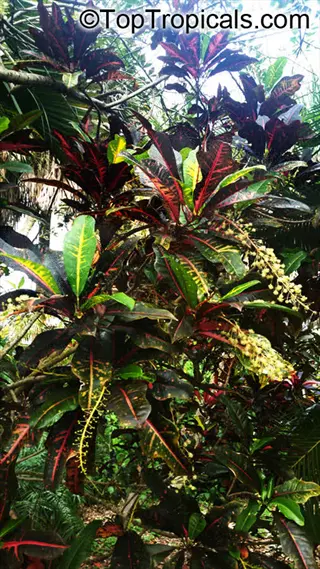
Petra Croton
- Leaf Color: Petra displays a bold mix of green, yellow, orange, and red along prominent veins, creating a stained-glass effect that intensifies with bright light exposure throughout the growing season.
- Leaf Shape: Broad, oval leaves grow 6 to 8 inches (15 to 20 centimeters) long with smooth edges and a slightly leathery texture that holds up well in indoor environments.
- Best Environment: University of Florida Extension calls out Petra for indoor growing because it retains vivid color better under typical household light conditions than most other cultivars.
- Growth Habit: Petra grows upright and bushy, reaching about 3 feet (91 centimeters) tall indoors with regular pruning, making it a manageable size for tabletops and floor displays.
- Care Tip: Rotate the pot a quarter turn every two weeks to ensure even light distribution and prevent the plant from leaning toward its light source.
- Ideal Placement: Position near a south-facing or west-facing window where it receives at least six hours of bright light daily for the most saturated foliage colors.
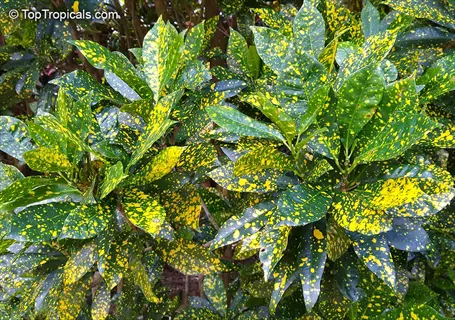
Gold Star Croton
- Leaf Color: Bright green leaves covered in golden-yellow speckles and spots that resemble a starry night sky, becoming more pronounced as the plant receives consistent bright light.
- Leaf Shape: Long, narrow, lance-shaped leaves grow 4 to 6 inches (10 to 15 centimeters) long and create a graceful, fountain-like silhouette that adds textural interest.
- Best Environment: Gold Star tolerates slightly lower light conditions compared to broader-leafed varieties, making it a solid choice for rooms with medium-bright indirect sunlight.
- Growth Habit: This cultivar grows compact and stays shorter than Petra, typically reaching about 2 feet (61 centimeters) tall indoors, perfect for desktops and shelving.
- Care Tip: The narrow leaves are less prone to collecting dust, but wiping them monthly with a damp cloth still helps maximize light absorption for photosynthesis.
- Ideal Placement: Works well on bookshelves or side tables near windows where its speckled pattern catches natural light and draws attention to the golden details.
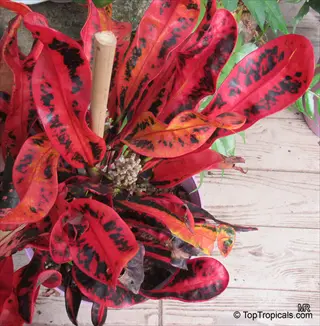
Mamey Croton
- Leaf Color: Broad leaves transition from deep green with yellow veining to rich burgundy-red and orange as they mature, giving the plant a warm, autumnal appearance year-round.
- Leaf Shape: Large, rounded leaves measuring 6 to 10 inches (15 to 25 centimeters) long with slightly twisted edges that curl gently, adding dimension and movement to the foliage.
- Best Environment: Mamey performs best in bright, direct light near a sunny window and tolerates warm temperatures well, thriving in rooms above 65 degrees Fahrenheit (18 degrees Celsius).
- Growth Habit: This cultivar grows upright and can reach 4 feet (122 centimeters) tall indoors, making it an excellent floor plant that serves as a living focal point.
- Care Tip: Mamey's large leaves lose moisture faster through transpiration, so maintaining humidity above 50% with a pebble tray or humidifier keeps the foliage healthy.
- Ideal Placement: Use Mamey as a standalone floor plant in a bright living room corner where its substantial size and rich coloring can serve as a natural accent piece.
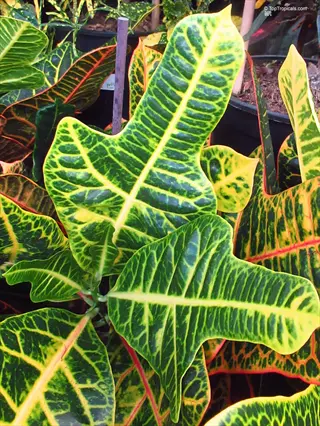
Magnificent Croton
- Leaf Color: Magnificent features a kaleidoscope of green, yellow, red, and orange markings that follow the veins in dramatic patterns, changing intensity as each leaf ages.
- Leaf Shape: Medium-sized oval leaves grow 5 to 8 inches (13 to 20 centimeters) long with prominent central veins that serve as color boundaries between different hues.
- Best Environment: This variety demands strong bright light to maintain its namesake magnificence, and its colors will fade fast in rooms with less than six hours of daily light.
- Growth Habit: Magnificent grows at a moderate pace and reaches 3 to 4 feet (91 to 122 centimeters) tall indoors with a bushy, branching form that fills out well with periodic pruning.
- Care Tip: Feed with a balanced fertilizer during spring and summer to support the heavy pigment production that creates its spectacular multicolored leaf patterns.
- Ideal Placement: Best positioned as a feature plant in a sunroom or near large south-facing windows where abundant light brings out the full spectrum of its color potential.
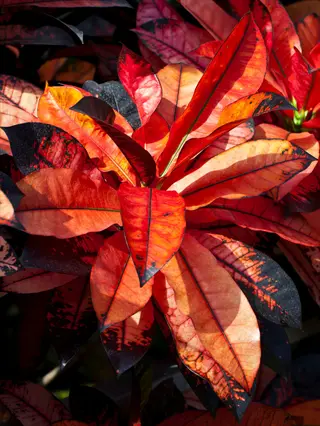
Mrs. Iceton Croton
- Leaf Color: Leaves progress through an extraordinary color journey from bright yellow-green in youth to deep rose-pink and finally rich red at maturity on the same plant.
- Leaf Shape: Broad, elliptical leaves grow 4 to 7 inches (10 to 18 centimeters) long with smooth edges and a glossy surface that reflects light and enhances the color display.
- Best Environment: Mrs. Iceton performs well indoors in bright indirect light but shows its fullest color range when it receives some morning direct sunlight for two to three hours.
- Growth Habit: This cultivar has a compact, rounded growth habit reaching about 2 to 3 feet (61 to 91 centimeters) tall, making it suitable for both tabletop and floor placement.
- Care Tip: The dramatic color transitions happen as leaves age, so avoid removing older red leaves too soon because they contribute to the plant's striking multicolored appearance.
- Ideal Placement: Display near an east-facing window where gentle morning sun illuminates the color gradient from young yellow leaves to mature pink and red foliage.
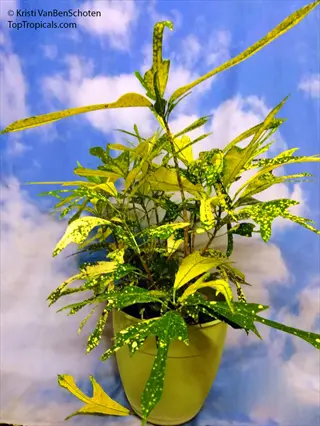
Oakleaf Croton
- Leaf Color: Dark green, red, orange, and yellow markings create a seasonal look reminiscent of autumn oak trees, with colors deepening in response to strong light exposure.
- Leaf Shape: Distinct lobed leaves resemble oak tree foliage with three to five pointed lobes per leaf, measuring 4 to 6 inches (10 to 15 centimeters) and providing unusual textural interest.
- Best Environment: Oakleaf adapts well enough to medium-bright indoor conditions and maintains its distinctive leaf shape even when colors are somewhat muted by lower light.
- Growth Habit: This cultivar grows at a moderate pace to about 3 feet (91 centimeters) tall indoors with a somewhat open, airy branching pattern that shows off individual leaf shapes.
- Care Tip: Prune leggy stems in early spring to encourage branching and a fuller silhouette, as Oakleaf tends to become sparse without occasional shape management.
- Ideal Placement: Works great as a mid-height accent on a plant stand near a window where its unique leaf silhouette creates interesting shadows in afternoon light.
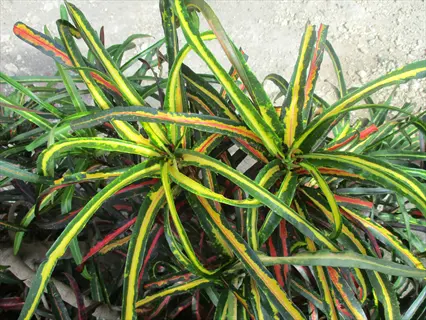
Zanzibar Croton
- Leaf Color: Slender leaves display stripes and bands of green, purple, red, orange, and yellow that run lengthwise along each narrow blade, creating a grass-like tropical effect.
- Leaf Shape: Super narrow, ribbon-like leaves grow up to 12 inches (30 centimeters) long but barely half an inch (1.3 centimeters) wide, creating a striking different texture.
- Best Environment: Zanzibar prefers bright indirect light and adapts well to indoor conditions where its unique shape adds visual variety among collections of broad-leafed houseplants.
- Growth Habit: This cultivar grows upright with a fountain-like form, reaching about 3 feet (91 centimeters) tall, and its narrow leaves give it a lighter, more delicate presence.
- Care Tip: The thin leaf blades dry out faster than broader varieties, so monitor soil moisture closely and maintain consistent humidity to prevent crispy leaf tips.
- Ideal Placement: Group with broad-leafed plants for textural contrast, or display as a standalone specimen where its unusual grass-like foliage can be seen up close.
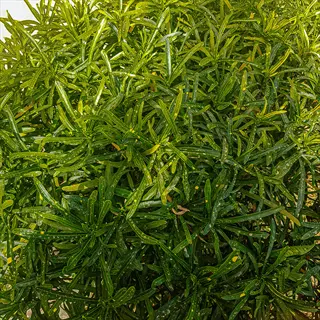
Gold Dust Croton
- Leaf Color: Deep green leaves covered with bright golden-yellow spots of varying sizes, creating a cheerful polka-dot pattern that brightens any indoor space.
- Leaf Shape: Oval to slightly elliptical leaves grow 3 to 5 inches (8 to 13 centimeters) long with smooth edges, giving the plant a neat and tidy overall appearance.
- Best Environment: Gold Dust tolerates slightly lower light than heavily variegated cultivars, making it one of the more forgiving croton varieties for rooms with moderate natural light.
- Growth Habit: This compact cultivar typically stays under 2 feet (61 centimeters) tall indoors, branching freely to create a dense, bushy form without requiring much pruning.
- Care Tip: The golden spots intensify with more light exposure, so move this plant closer to a brighter window if you want to maximize the speckled pattern.
- Ideal Placement: Excellent for bathroom windowsills or kitchen counters near windows where the natural higher humidity in these rooms supports healthy leaf development.

Eleanor Roosevelt Croton
- Leaf Color: Narrow leaves feature a striking combination of deep purple, green, and bright gold spots that become more vivid and contrasting as the plant matures in bright light.
- Leaf Shape: Slender, lance-shaped leaves grow 6 to 10 inches (15 to 25 centimeters) long and cascade slightly from the stems, creating an elegant, flowing visual effect.
- Best Environment: This variety thrives in bright light conditions and rewards consistent care with deep, dramatic purple tones that set it apart from most other croton cultivars.
- Growth Habit: Eleanor Roosevelt grows to a moderate height, reaching 3 to 4 feet (91 to 122 centimeters) indoors with a graceful, slightly arching habit that suits corner placements.
- Care Tip: The purple pigmentation in this cultivar responds well to light intensity, so position where morning or afternoon direct sun can reach the foliage for peak color.
- Ideal Placement: Use as a statement plant near a window in a home office or living room where its unusual purple and gold coloring provides a sophisticated color accent.
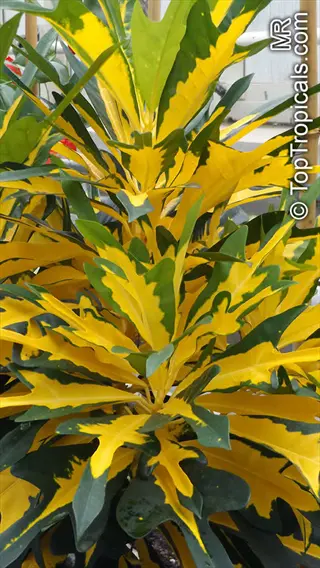
Banana Croton
- Leaf Color: Bright banana-yellow and green leaves create a cheerful, tropical look with colors that stay consistent even under moderate indoor light conditions.
- Leaf Shape: Medium-length, lance-shaped leaves grow 4 to 6 inches (10 to 15 centimeters) long with a slight curve that gives the plant an upright yet relaxed tropical feel.
- Best Environment: Banana croton adapts well to typical indoor conditions and maintains its yellow coloring better than red-toned varieties when light is slightly limited.
- Growth Habit: This cultivar grows to about 2 to 3 feet (61 to 91 centimeters) tall indoors with a bushy form that fills containers well without requiring heavy pruning.
- Care Tip: The lighter leaf color makes pest damage more visible, so inspect undersides often for spider mites and treat them right away with a gentle insecticidal soap spray.
- Ideal Placement: Place in a bright kitchen or dining area where the warm yellow tones complement natural wood furniture and add a tropical accent to gathering spaces.
Your best bet is to match the croton variety to the light you already have in your room. Narrow leaf types like Zanzibar and Gold Star handle medium light better than broad leaf types that need full sun windows.
Light and Leaf Color Science
Your croton light requirements come down to one simple rule. Give the plant 6 to 8 hours of bright indirect light each day and you will see the most vivid croton leaf color possible. The University of Wisconsin Extension says too little light turns leaves plain green. Too much direct sun makes them fade gray and dull.
Here is what happens inside the leaf. Every croton leaf has layers of pigments stacked like colored filters on top of each other. The base layer is green chlorophyll, which the plant needs to make food from sunlight. On top of that sit carotenoids and anthocyanins that produce your reds, oranges, and yellows. Bright light tells the plant to ramp up those colorful pigments.
I moved a Petra from a dim corner to a south facing window last year. The new leaves came in with deep reds and oranges that the old green leaves never showed. Those old leaves did gain some color back over a few weeks, but the real show came from fresh growth. This is why croton leaf color combinations change as each leaf ages on the plant.
You might also spot a shoot on your croton that looks nothing like the rest of the plant. These are called sports. They show up when a branch mutates and grows different variegated foliage. Many of the croton varieties you see in stores today started as sports that growers noticed and cloned.
The table above gives you a quick guide for placing your croton in the right spot. Most homes get the best results with a south or west facing window where colorful leaves get strong light without the harsh afternoon burn.
Watering and Soil Essentials
Croton watering trips up more plant owners than any other part of care. Some guides say to water when the top inch of soil feels dry. Others tell you to wait until the top 2 inches dry out. In my experience, the top inch rule works best for most indoor crotons in standard pots.
NC State Extension warns that overwatering and root rot kill more indoor crotons than anything else. Your pot must have drainage holes at the bottom so extra water can escape. Use a well-draining soil mix with perlite or bark chips to keep water moving through the pot instead of sitting around the roots.
You can check your soil moisture in 3 quick ways. Push your finger one inch into the soil and feel for dampness. Lift the pot and notice if it feels lighter than it did right after you watered. Look at the edges of the soil to see if it pulls away from the pot walls, which means the plant is too dry.
Your croton watering schedule will change with the seasons. In summer, I water my crotons about once a week because the warmth and light dry things out fast. In winter, I stretch that to every 10 to 14 days since the plant slows down and uses less water. Terra cotta pots also dry out faster than plastic or ceramic, so your pot material matters too.
The goal is consistent moisture without wet feet. Stick to the finger test before each watering. You will avoid root rot from overwatering and leaf drop from dry soil.
Croton Propagation Methods
Croton propagation is one of the most rewarding skills you can learn as a plant owner. Most guides skip this topic, but growing new plants from your favorites saves you money and lets you share with friends. I have used all 3 methods below and the stem cutting method works best for beginners.
The UF/IFAS Extension says softwood cuttings should be 3 to 4 inches long with 3 to 5 leaves on top. You cut at a 45 degree angle, dip the end in rooting hormone, and stick it in moist soil. Roots form in less than 1 month when temps stay between 70 and 80°F. Air layering takes longer but works great on thick stems that are hard to cut.
Stem Cutting in Soil
- Method: Take a 3 to 4 inch cutting from a healthy stem tip using clean, sharp pruning shears, making the cut at a 45 degree angle just below a leaf node.
- Preparation: Remove the bottom leaves and keep 3 to 5 leaves at the top, then dip the cut end in rooting hormone powder to encourage faster root development in the new cutting.
- Rooting Setup: Insert the cutting into a pot filled with moist perlite or a seed starting mix, then cover with a clear plastic bag to create a humid microclimate.
- Timeline: Roots establish in less than one month when temperatures stay between 70 and 80°F with consistent bottom warmth.
Air Layering Method
- Method: Make a small upward diagonal cut about one third through a healthy stem, then wedge the cut open with a toothpick to prevent it from closing and healing over.
- Wrapping: Surround the cut area with a generous handful of damp sphagnum moss, then wrap the moss tight with plastic wrap and secure both ends with tape or ties.
- Monitoring: Check the moss every few days through the plastic wrap and add water if it begins to dry out, looking for white roots growing through the moss within 4 to 8 weeks.
- Separation: Once a healthy root ball is visible through the plastic, cut the stem below the new roots and pot the rooted section in fresh, well draining potting mix.
Water Propagation
- Method: Place a prepared stem cutting in a clear glass or jar filled with room temperature water, ensuring at least 2 nodes are submerged while the remaining leaves stay above the waterline.
- Maintenance: Change the water every 3 to 4 days to prevent bacterial growth and keep the container in a warm spot with bright indirect light but no direct sun.
- Root Development: White roots should appear within 2 to 4 weeks, and the cutting is ready to transplant into soil once roots reach about 2 inches in length.
- Transition: Move water rooted cuttings to soil and keep the soil moist for the first 2 weeks as the roots adapt from water to a soil environment.
Why Seeds Produce Different Plants
- Genetics: Crotons grown from seed produce variable offspring because the parent plants are mixed hybrids, meaning each seed carries a unique mix of traits.
- Practical Impact: A seed from a Petra croton will not produce another Petra, as the seedling may have different leaf colors, shapes, and growth patterns than the parent.
- Industry Practice: Nurseries use vegetative propagation methods like stem cuttings and air layering to produce exact clones that preserve each cultivar's specific look.
- Interesting Fact: Even without seeds, crotons can produce sports, which are shoots that grow with different leaf traits than the rest of the parent plant.
No matter which method you pick, the key to success is warmth and humidity during the rooting period. A clear bag over your cutting or a warm spot near a window makes all the difference.
Outdoor Growing and Landscaping
Growing crotons outdoors is where these plants reach their full potential. In the right USDA hardiness zones, a croton can hit up to 10 feet tall and spread out into a dense, colorful shrub that stops people in their tracks. I have seen croton hedge rows in South Florida that look better than any flower garden on the block.
Your climate zone decides how you can use crotons in your croton landscape. In zones 11 and 12, you can plant them in the ground year round with no winter worries. Zones 9 and 10 let you grow them outside most of the year but you need to cover them during freezes. The UF/IFAS Extension notes that frost damage does happen, but crotons bounce back fast once warm weather returns.
For croton outdoor planting, space your plants 2 to 3 feet apart to give each one room to fill out. Crotons make great companion planting partners with lantana, pentas, and shrimp plants that share the same sun and water needs. A mixed border of crotons and these tropicals gives you color from both foliage and flowers all season long.
If you live in zones 7 or 8, you can still enjoy growing crotons outdoors as seasonal patio plants. Move them outside after your last frost date and bring them back in before nighttime temps drop below 50°F. Make the move gradual over about a week. This lets the plant adjust to new light and temperature without dropping leaves.
A croton hedge can serve as a living privacy screen that adds bold color to your yard without flowers. In warm climates, these hedges stay green and vibrant all year with minimal pruning.
Toxicity and Safety Guide
Most guides gloss over this, but you need to know that the croton plant poisonous nature extends to all its parts. NC State Extension rates the croton toxic level as Low on their poison scale. The compounds behind this are diterpene esters, which cause skin irritation and stomach upset if you eat any part of the plant.
The biggest risk comes from the croton sap. That milky white liquid causes itching and swelling on bare skin, and it stains fabrics forever. I learned this the hard way when I pruned a Petra without gloves and got sap on my favorite shirt. The brown stain never came out no matter what I tried. Pet safety matters too since cats and dogs can get sick from chewing on the leaves.
Safety for Adults
- Skin Contact: The milky white sap released from broken stems and leaves contains diterpene esters that cause mild skin irritation, itching, and temporary redness in most adults upon direct contact.
- Repeated Exposure: NC State Extension notes that repeated sap contact can cause allergic dermatitis with a more persistent skin rash, so wearing gloves during pruning is a must.
- Fabric Warning: Croton sap stains clothing, upholstery, and carpets with a brownish mark that cannot be removed through normal washing or dry cleaning processes.
Safety for Children
- Ingestion Risk: While poison severity is rated Low by university databases, children who chew or swallow croton leaves may experience stomach discomfort, nausea, or mild irritation.
- Placement Strategy: Keep croton plants on high shelves, tall plant stands, or in rooms that young children cannot access unsupervised to prevent accidental contact with broken leaves.
- First Response: If a child ingests croton plant material, rinse the mouth with water, wipe away any sap from the skin, and contact a poison control center for guidance.
Safety for Cats and Dogs
- Pet Toxicity: Crotons are toxic to both cats and dogs, with ingestion causing drooling, vomiting, diarrhea, and mild gut irritation from the diterpene ester compounds.
- Prevention Methods: Place crotons in hanging baskets, on high plant stands, or behind pet barriers, and consider training pets to avoid houseplants with positive reinforcement.
- Veterinary Guidance: Contact your veterinarian right away if your pet chews on a croton plant, and bring a sample of the plant material to help with quick identification and treatment.
Safe Handling Practices
- Protective Gear: Wear disposable gloves when you prune, propagate, or repot your croton plant, and wash your hands well with soap and water after handling even with gloves.
- Tool Cleaning: Clean pruning shears right after cutting croton stems because the dried sap can transfer to other plants or surfaces and is hard to remove once it hardens.
- Work Area: Spread newspaper or a plastic sheet beneath the plant when pruning to catch any dripping sap and protect surfaces from permanent staining damage.
The bottom line is that crotons are safe to own as long as you handle them with care. Gloves, smart placement, and a little awareness go a long way in homes with kids and pets.
5 Common Myths
Crotons are impossible to keep alive indoors because they always drop their leaves and eventually die.
Leaf drop is a temporary stress response to environmental changes, and crotons recover fully once conditions stabilize with consistent bright light, warmth, and humidity.
Crotons need direct, full sunlight all day long or they will lose all of their colorful foliage permanently.
Crotons thrive in bright indirect light for six or more hours daily, and excessive direct sun actually causes leaves to fade gray and dull rather than enhancing their colors.
You should mist your croton plant daily because that is the only effective way to give it enough humidity.
Misting provides only temporary moisture that evaporates within minutes, while a pebble tray, humidifier, or grouping plants together creates lasting humidity improvement around the plant.
Croton plants grown from seeds will produce offspring that look exactly like the parent plant with identical colors.
Seeds produce genetically variable offspring that rarely resemble the parent plant, which is why nurseries propagate crotons through stem cuttings or air layering to preserve specific cultivar traits.
Crotons are extremely poisonous and even briefly touching a leaf can send you to the hospital with severe reactions.
The toxicity level of crotons is rated low by university poison databases, and while the milky sap causes mild skin irritation, simply touching intact leaves is generally harmless.
Conclusion
You now have everything you need to grow a healthy, vibrant croton plant in your home or yard. With more than 300 croton varieties out there, you can find the perfect match for any room or garden spot. The right cultivar choice makes croton care so much easier from the start.
The key facts are simple. Give your tropical houseplant 6 or more hours of bright light each day for the best colors. Water when the top inch of soil feels dry. If you want to grow new plants, take a stem cutting and expect roots in less than 1 month. NC State Extension rates croton toxicity as low. Basic gloves and smart placement keep everyone safe.
I have watched my croton collection grow from a single Petra to over a dozen plants in the past few years. In my experience, crotons aren't fragile at all. Once you treat them as the tough tropical plants they are, everything clicks. They reward you with color that no other houseplant can match.
Pick a variety that fits your light and learn the basics of propagation. The bold colors make crotons one of the best values in the plant world today. Your next favorite plant might be waiting at your local nursery right now.
External Sources
Frequently Asked Questions
Is croton a good indoor plant?
Crotons make striking indoor plants when given bright light near a south or west-facing window, though they need consistent warmth and humidity above 50 percent to thrive.
Do Crotons like sun or shade?
Crotons prefer bright, indirect to direct sunlight for six to eight hours daily, as insufficient light causes their colorful leaves to fade to plain green.
How do you take care of a croton plant?
Care for crotons by providing bright light, consistent moisture without overwatering, temperatures between 60 and 85 degrees Fahrenheit (15 to 29 degrees Celsius), and moderate humidity.
Is croton toxic to humans?
Croton sap contains diterpene esters that cause mild skin irritation and allergic dermatitis on contact, and ingesting any plant part may cause stomach discomfort.
What are the disadvantages of croton?
Crotons drop leaves when stressed by temperature changes, drafts, or relocation, and their toxic sap permanently stains fabrics and irritates skin.
How often should I water a croton?
Water a croton when the top inch of soil feels dry, typically every one to two weeks depending on light, temperature, and humidity levels in your home.
What is the lifespan of a croton plant?
With proper care, indoor croton plants can live for many years, and outdoor specimens in tropical climates have been documented growing for decades.
Is croton a lucky plant?
In several Asian cultures, crotons are considered auspicious plants believed to bring positive energy and good fortune when placed at entrances or in living spaces.
Can I touch a croton plant?
You can touch croton leaves safely, but avoid contact with the milky sap released from broken stems or leaves, as it causes skin irritation and stains clothing.
Is croton low maintenance?
Crotons are medium-maintenance plants that reward attentive care with spectacular color, but they are not forgiving of neglect with light, humidity, or temperature.