
No, gnats lay eggs in your hair is a myth with no basis in biology. Fungus gnats can't and don't lay eggs in your hair, on your skin, or anywhere on your body. They need damp soil with organic matter to breed. Your hair gives them none of that.
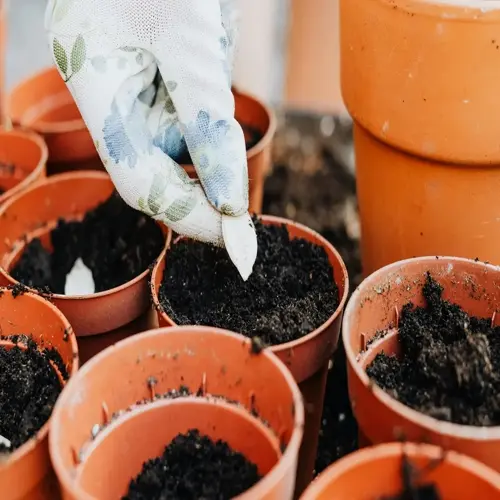
Knowing where do gnats lay eggs makes it clear why your hair is safe. Female gnats look for damp potting soil that's rich in fungi and rotting plant bits. UC IPM and Clemson data show that they tuck their eggs into cracks on the soil surface. The eggs go in the top half inch (1.3 cm) of growing media. They need constant moisture and fungal food to hatch. Your scalp can't provide any of those things.
I get why this fear exists, though. When I first had a gnat problem, these tiny flies kept buzzing right around my face. They landed near my eyes and flew past my ears. It felt like they were after me. The first time it happened, I caught myself checking my hair for eggs. But they weren't after me at all.
What pulls gnats to your face is the carbon dioxide you breathe out. Each breath you release makes a small cloud of CO2 that draws flying bugs toward you. The moisture and heat from your body add to the pull. They come to your face for the same reason mosquitoes do. But unlike mosquitoes, gnats can't bite and don't want to land on you for more than a second.
The fungus gnat eggs location tells you what these bugs truly need. Each egg is about 0.2 mm wide and clear white. Females lay them in groups of 30 to 200 in soil with at least 50% moisture. The eggs hatch in 4 to 6 days but only if they stay in contact with damp organic matter the whole time. Even if a gnat sat on your hair for a moment, the dry conditions would kill any egg within hours.
Moist Potting Soil Surface
- Top target: The top half inch of damp potting mix holds 95% of all fungus gnat eggs after females finish laying.
- Moisture need: Soil must stay at 50% moisture or higher for eggs to live, which is far wetter than your hair ever gets.
- Food source: Hatching larvae need fungi and rotting roots to eat right away, something your hair and skin can't provide.
Rotting Organic Material
- Compost and mulch: Rotting plant matter in compost bins or thick mulch layers gives gnats a backup spot to breed indoors.
- Drain buildup: Organic films inside your kitchen and bathroom drains can support small gnat groups when the grime stays damp.
- Old produce: Soft fruit or veggies left out can draw gnats in, though fruit flies are the more common kitchen pest.
Never on People or Pets
- Not body pests: Fungus gnats are not parasites in any form and have no way to breed on any living host at all.
- Face visits are CO2: Gnats fly near your face because you breathe out carbon dioxide, not because they want to use you for eggs.
- Brief stops only: Any gnat that lands on you is resting for a moment. It's not scouting your body for a place to lay eggs.
If gnats keep flying near your head, the fix is to cut the gnat count by treating your soil. Weekly Bti drenches kill larvae in the dirt. Letting your soil dry between waterings makes it a bad place for eggs. Once you shrink the group, you won't have gnats buzzing near your face anymore.
Your hair is safe. Your soil is the problem. Put your focus on the pots in your home and treat the damp soil where gnats are breeding. Within three to four weeks of steady treatment, the adults near your face will vanish along with the rest of the group.
Read the full article: Fungus Gnats: How to Identify and Stop Them