
Introduction
A good garden trellis does more than hold your plants up off the ground. It saves space, cuts down on disease, and makes picking your food much easier. I watched my own garden change once I started growing up instead of out.
Virginia Tech Extension found that trellising boosts air flow through your foliage and lowers disease pressure on crops. Think of a trellis as a high rise for your garden. It stacks food upward instead of letting it sprawl across the ground. My small raised bed now grows 3 times the food it used to before I went vertical.
Climbing plants like beans, peas, and cucumbers do best with proper trellis support. Their vines get more sun and stay dry after rain. This keeps fungal problems away and gives you cleaner fruit that doesn't sit in mud or attract slugs. Vertical gardening helps small space growers on patios and balconies the most.
This guide covers the best trellis types, materials, plants, and setup steps. I built every style in my own backyard over the past 5 years. You'll learn what works, what fails, and how to get your first trellis up this weekend with basic tools.
8 Best Garden Trellis Types
I built every one of these 8 trellis types in my own garden over the past few years. Each design fits a different crop, space, and budget. Research from 2022 ranked trellises first for DIY ease and low cost among all vertical growing setups.
UW Madison Extension says trellis posts should go 2 feet into the ground with tops standing 6 feet above the soil. These garden trellis ideas range from a $5 teepee trellis to an arched trellis costing around $80. You'll find picks like the obelisk trellis for flowers and the cattle panel trellis for heavy crops. I matched each type to the right plants so you can grab the best DIY trellis for your yard.
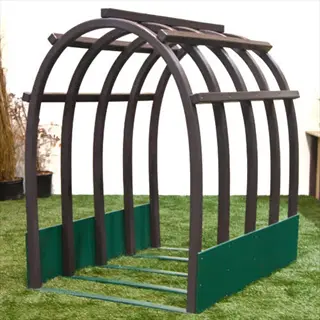
A-Frame Trellis
- Best for: Cucumbers, peas, and lightweight beans that benefit from growing on both sides of the angled panels for double the planting area.
- Construction: Two rectangular frames hinged at the top and spread at the base, typically built from lumber and wire mesh or string netting.
- Size range: Most A-frame trellises stand 4 to 6 feet (1.2 to 1.8 meters) tall and fold flat for off-season storage in a shed or garage.
- Cost estimate: A basic wooden A-frame with nylon netting costs roughly $25 to $50 in materials from a home improvement store.
- Key advantage: The foldable design makes this the most portable trellis option, perfect for gardeners who rearrange beds each season for crop rotation.
- Installation tip: Place the A-frame so its ridge runs east to west, allowing both sides to receive equal sunlight throughout the growing day.
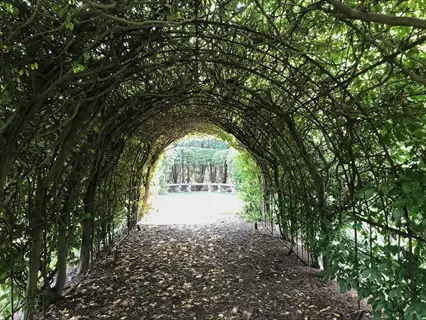
Arched Trellis
- Best for: Squash, gourds, and pole beans that produce heavy foliage and benefit from the strong curved frame for overhead growing and shaded walkways.
- Construction: Bent cattle panels or metal conduit curved into an arch shape, anchored with T-posts or rebar driven into the ground on each side.
- Size range: Standard arches span 4 to 6 feet (1.2 to 1.8 meters) wide and reach 7 to 8 feet (2.1 to 2.4 meters) tall at the peak.
- Cost estimate: A cattle panel arch with T-post anchors costs approximately $50 to $80, making it one of the sturdiest options at a moderate price.
- Key advantage: The tunnel shape creates a shaded walkway underneath where you can grow cool-season crops like lettuce and spinach during hot summer months.
- Installation tip: Drive T-posts at least 18 inches (46 centimeters) deep and secure the cattle panel with heavy-duty zip ties or hose clamps for stability.
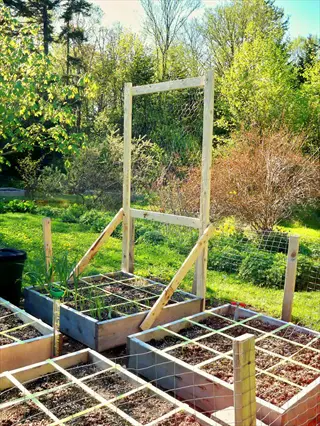
Panel Trellis
- Best for: Tomatoes, cucumbers, and peas that climb upward in a flat plane, making it easy to spot ripe fruit and prune from both sides.
- Construction: A flat vertical frame made from wood or metal with wire mesh, concrete remesh, or string grid attached to provide climbing surfaces.
- Size range: Panels typically stand 5 to 7 feet (1.5 to 2.1 meters) tall and stretch 3 to 8 feet (0.9 to 2.4 meters) wide between support posts.
- Cost estimate: A concrete remesh panel trellis costs as little as $15 to $30 total, since remesh sheets sell for around $7 each at hardware stores.
- Key advantage: The flat design fits flush against walls, fences, or raised bed edges, making it ideal for narrow garden spaces and side yards.
- Installation tip: Use 4-inch (10-centimeter) square mesh openings as recommended by university extension services for optimal vine grip and air circulation.
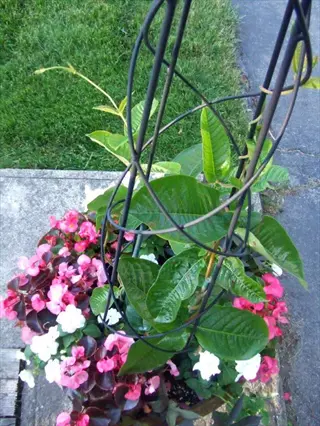
Obelisk Trellis
- Best for: Flowering vines like clematis, jasmine, and morning glory that wrap around vertical supports and create eye-catching garden focal points.
- Construction: Four vertical posts tapered inward toward the top and connected with horizontal cross braces, built from wood strips or metal rods.
- Size range: Garden obelisks range from 4 to 7 feet (1.2 to 2.1 meters) tall with a base footprint of about 18 to 24 inches (46 to 61 centimeters) square.
- Cost estimate: Wooden obelisks cost $30 to $60 to build from cedar, while pre-made metal versions sell for $50 to $150 depending on the finish.
- Key advantage: The freestanding pyramid shape needs no wall or fence attachment, so you can place it anywhere in the garden as a decorative vertical accent.
- Installation tip: Push the legs at least 6 inches (15 centimeters) into the soil and add a flat stone or paver beneath each leg to prevent sinking over time.
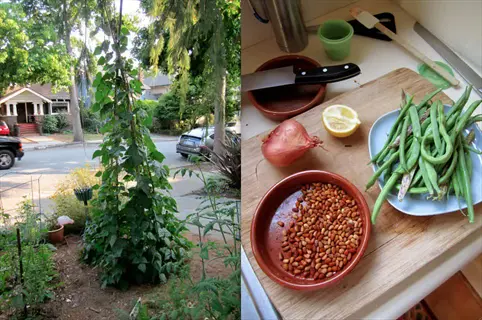
Teepee Trellis
- Best for: Pole beans and climbing peas that naturally twine around vertical poles without any tying, producing a dense cone of foliage and pods.
- Construction: Three to six bamboo poles or branches lashed together at the top and spread in a circle at the base, with optional twine wrapping.
- Size range: Teepees stand 6 to 8 feet (1.8 to 2.4 meters) tall with a base diameter of 3 to 4 feet (0.9 to 1.2 meters) for adequate airflow.
- Cost estimate: This is one of the cheapest trellis builds at $5 to $15 using bamboo stakes and garden twine from any hardware or garden store.
- Key advantage: Children love teepee trellises because the dense bean coverage creates a shaded hideaway inside, combining food production with garden play space.
- Installation tip: Push each pole 6 to 8 inches (15 to 20 centimeters) into the soil and wrap twine spiraling upward every 8 inches (20 centimeters) for extra climbing surface.
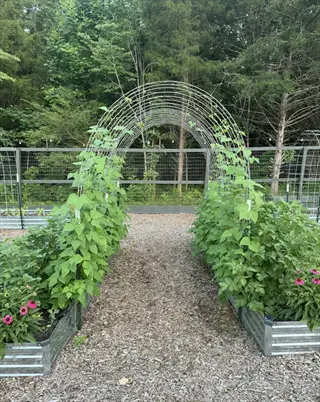
Cattle Panel Trellis
- Best for: Heavy crops like melons, winter squash, and large tomato varieties that need strong galvanized steel wire to bear the weight of mature fruit.
- Construction: A 16-foot (4.9-meter) galvanized cattle panel cut to size and attached to T-posts or wooden frames with zip ties, clamps, or wire fasteners.
- Size range: Standard cattle panels measure 16 feet (4.9 meters) long by 50 inches (127 centimeters) tall, often cut in half for raised bed installations.
- Cost estimate: One full cattle panel costs $25 to $40, and combined with T-posts the total runs about $40 to $70 for a very sturdy setup.
- Key advantage: Galvanized steel resists rust for 15 or more years outdoors, making this one of the longest-lasting trellis materials you can buy.
- Installation tip: Bend the panel into an arch or mount it flat, and always wear gloves when handling since cut wire ends are sharp enough to cause injury.
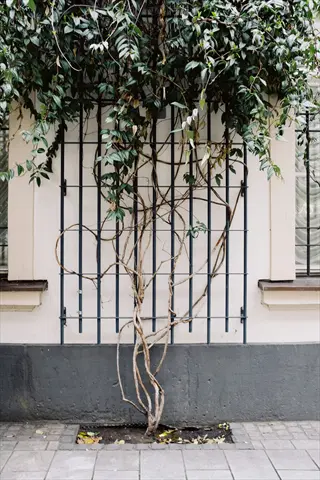
Lean-To Wall Trellis
- Best for: Small patios, balconies, and narrow side yards where you can lean the trellis against a wall or fence to grow vertically without taking floor space.
- Construction: A single panel of lattice, wire mesh, or string netting attached to a frame that leans against or mounts directly onto a vertical surface.
- Size range: Wall trellises range from 2 to 6 feet (0.6 to 1.8 meters) wide and 4 to 8 feet (1.2 to 2.4 meters) tall depending on the available wall space.
- Cost estimate: A basic lattice panel from a home center costs $15 to $30, and a framed remesh version can be built for roughly $20 to $40 in materials.
- Key advantage: The angled position maximizes sun exposure when leaned against a south-facing wall, and the UMN Extension confirms this orientation improves harvest access.
- Installation tip: Leave a 3 to 4 inch (8 to 10 centimeter) gap between the trellis and the wall to allow air to circulate behind the foliage and reduce mildew risk.
String and Stake Trellis
- Best for: Tomatoes grown using the Florida weave or stake-and-weave method, where plants are supported between parallel rows of twine for easy pruning.
- Construction: Wooden or metal stakes driven into the ground at regular intervals with garden twine woven horizontally between them on both sides of the plant row.
- Size range: Stakes stand 5 to 6 feet (1.5 to 1.8 meters) above soil when driven 1 foot (30 centimeters) deep, spaced 5 to 6 feet (1.5 to 1.8 meters) apart.
- Cost estimate: This is the most affordable option at $10 to $20 total for a 20-foot (6.1-meter) row, using wooden stakes and compostable sisal or cotton twine.
- Key advantage: UMN Extension recommends compostable twines like untreated sisal, cotton, or hemp that can be composted with the vines at the end of the season.
- Installation tip: Start the first run of twine 6 to 10 inches (15 to 25 centimeters) above the ground and add new runs every few weeks for 3 to 5 total runs per season.
Trellis Materials Compared
Bad trellis materials cause mid season collapse and lost crops. I learned this when my bamboo trellis snapped under butternut squash in August. Bamboo flexes under heavy melons while galvanized wire holds firm. Steel costs 3 times more upfront but lasts over a decade longer.
The table below lines up every common option side by side. You'll see a wooden trellis like cedar next to a metal trellis built with galvanized steel. I added concrete remesh too since it's my favorite budget pick at just $7 a sheet. A 2022 study tested these trellis materials on 5 factors. Garden groups in 7 locations backed up the results.
A cedar trellis gives you the best mix of good looks and long life if you want a wooden option. For heavy crops, a metal trellis made from galvanized wire or cattle panels can't be beat. My go to for most gardens is concrete remesh on a wood frame because it costs under $30 and lasts at least 5 solid years outside.
Best Plants for Trellises
Not all climbing plants grab onto your trellis the same way. Some vining vegetables twine on their own while others need you to tie them up every week. In my experience, knowing how each plant climbs saves you hours of work. I grouped them by climbing style so you know what your bean trellis, pea trellis, or tomato trellis needs from day one.
UMN Extension found that trellised crops give you straighter and cleaner fruit with less slug damage. When I first grew cucumbers on the ground, slugs ate half my harvest before I could pick them. Keep in mind that fruits over 3 pounds are too heavy for most trellis setups. Your cucumber trellis or squash trellis works great for smaller produce, but giant pumpkins need to stay on the ground. Flowering vines like clematis and jasmine also do well on the right support.
Self-Twining Crops
- Pole beans: Kentucky Blue, Kentucky Wonder, and Stringless Blue Lake varieties naturally wrap stems around any vertical support and need no tying throughout the season.
- Peas: Snow peas, snap peas, and shelling peas grip with tendrils and climb string, netting, or wire mesh up to 6 feet (1.8 meters) tall on lightweight supports.
- Hops and passion fruit: These vigorous perennial vines self-twine aggressively and need strong permanent structures like cattle panels or heavy wooden frames to handle their weight.
Crops Needing Ties
- Indeterminate tomatoes: Varieties like Early Girl, Big Beef, and Brandywine grow 6 to 8 feet (1.8 to 2.4 meters) and must be tied to stakes or woven through string supports every few weeks.
- Cucumbers: While tendrils grab mesh, heavy fruit can pull vines down, so securing main stems to the trellis with soft ties prevents breakage during peak production weeks.
- Melons and small squash: Fruits under 3 pounds (1.4 kilograms) can grow on trellises when cradled in slings made from old t-shirts, mesh bags, or nylon stockings.
Ornamental Climbing Vines
- Clematis: This popular flowering vine climbs by wrapping leaf stems around thin supports, making wire or string trellises a better fit than flat wooden lattice panels.
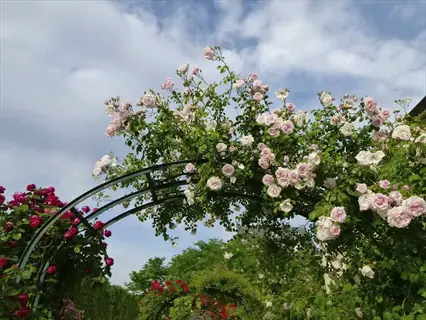
- Jasmine and honeysuckle: Both twine around supports and grow fast enough to cover an arch or obelisk trellis within a single growing season in warm climates.
- Nasturtium: An edible flowering vine that trails and climbs loose, perfect for obelisk trellises where it adds color while its flowers and leaves go into salads.
Fruit and Berry Vines
- Grapes: Grapevines need sturdy permanent trellises with heavy gauge wire strung between deep set posts, as mature vines carry big weight over many years of growth.
- Raspberries and blackberries: Cane berries benefit from a two wire trellis system that keeps thorny branches upright, improving air flow and making fruit picking much easier.
- Kiwi: Hardy kiwi vines grow fast and need a pergola style or T-bar trellis rated for heavy loads, with both male and female plants for fruit production.
How to Install a Trellis
Trellis installation goes wrong fast if you skip the basics. I set up my first panel with posts only 8 inches deep and the whole thing fell over in a storm 3 weeks later. When I learned how to set up a trellis the right way, every build after that stayed solid through the whole season.
Virginia Tech Extension says your trellis post depth needs to be 18 to 24 inches for a stable base. Get the trellis stake spacing and north south trellis orientation right from the start. Good trellis anchoring makes all the difference between a frame that holds and one that falls flat under your crops.
Choose Location and Orientation
- Sun exposure: Position the trellis so it runs north to south, allowing both sides of climbing plants to receive balanced sunlight as the sun moves east to west across the sky.
- Wind protection: Place trellises where surrounding structures or hedges block strong prevailing winds that could topple lightweight frames or snap vine attachments during storms.
- Shade planning: The trellis will cast a shadow on its north side, so plan to grow shade-tolerant crops like lettuce, spinach, and greens in that area for companion planting.
Set Posts to Proper Depth
- Depth standard: Drive posts 18 to 24 inches (46 to 61 centimeters) into the ground as recommended by Virginia Tech Extension for stability under full crop loads.
- Spacing guidance: Space posts 5 to 6 feet (1.5 to 1.8 meters) apart for standard vegetable trellises, or up to 12 to 20 feet (3.7 to 6.1 meters) for long row systems.
- Post height: After setting posts at the correct depth, the top should stand approximately 6 feet (1.8 meters) above the soil surface for most vegetable trellis applications.
Attach Climbing Surface
- Mesh selection: Use wire mesh or netting with 4-inch (10-centimeter) square openings, which UW-Madison and UMN Extension both confirm as the optimal size for vine grip.
- Fastening method: Secure mesh panels to posts using zip ties, hose clamps, or L-brackets spaced every 12 inches (30 centimeters) along the post for even weight distribution.
- String option: For budget setups, stretch compostable twine (untreated sisal, cotton, or hemp) horizontally every 8 to 10 inches (20 to 25 centimeters) between posts.
Test Stability Before Planting
- Load test: Push firmly against the top of the trellis from several directions to confirm it stays upright, since a weak structure will fail when loaded with mature wet foliage.
- Ground check: After heavy rain, inspect the base of each post for shifting or leaning, and pack additional soil or gravel around any posts that have loosened in saturated ground.
- Tie anchoring: For lightweight trellises in windy areas, add diagonal support braces or guy wires staked to the ground at 45-degree angles for extra wind resistance.
Trellis Care and Maintenance
Most gardeners build a trellis and forget about it until something breaks. I used to do the same thing until I lost a full row of tomatoes to a rusted post that snapped in July. Good trellis maintenance takes about 30 minutes per month and keeps your setup strong for years.
UW Madison Extension says you should let your vines dry on supports at the end of the season for easier cleanup. They also suggest rotating your trellised tomato crops on a 3 year cycle to cut disease risk. Training vines and pruning for trellis growth helps your fruit ripen faster. Use compostable twine so you can toss it in the compost bin during end of season cleanup.
I keep a simple note on my phone with the crop rotation plan for each bed. This way I know which spots had tomatoes last year and can move them to fresh soil. Trellis winter storage in a dry shed or garage will add years to your wooden frames.
Companion Planting with Trellises
Companion planting with your trellis turns wasted shade into free growing space. Virginia Tech Extension confirms that shade tolerant crops do great under tall trellis frames. In my experience, lettuce and spinach last weeks longer in the trellis shade of my bean frames than in full sun.
This trick is one of the top vertical gardening benefits for small space gardening. Your raised bed trellis can give you 2 crops from 1 spot when you stack growing areas up and down. The Three Sisters method uses corn as a living trellis for beans. Squash covers the ground below to hold in moisture.
Tall Beans with Leafy Greens
- The pairing: Grow pole beans on a trellis running east to west and plant rows of lettuce, spinach, or arugula in the shaded strip on the north side of the structure.
- Why it works: Beans fix nitrogen in the soil that feeds the leafy greens, while the trellis shadow keeps greens cool enough to avoid bolting during hot summer afternoons.
- Spacing guide: Plant greens 12 to 18 inches (30 to 46 centimeters) from the base of the trellis so roots do not compete directly with the bean root zone for moisture.
Cucumber Arch Over Root Crops
- The pairing: Train cucumbers over an arched trellis and grow carrots, radishes, or beets in the partially shaded ground beneath the canopy of cucumber leaves overhead.
- Why it works: Root crops tolerate light shade and benefit from the cooler soil temperatures that the overhead cucumber canopy maintains during the hottest weeks of summer.
- Spacing guide: Plant root crops at least 6 inches (15 centimeters) inside the arch edges so irrigation water dripping from the overhead vines reaches their root zone naturally.
Tomato Wall with Herb Border
- The pairing: Grow tomatoes on a panel trellis and plant basil, parsley, or cilantro along the base, creating a kitchen garden combo that makes harvest meal prep efficient.
- Why it works: Basil is widely believed to improve tomato flavor when planted nearby, and the shorter herbs fill the ground space that would otherwise grow weeds around trellis posts.
- Spacing guide: Keep herbs 8 to 12 inches (20 to 30 centimeters) from the trellis base to leave room for air circulation that helps prevent fungal issues on lower tomato stems.
Three Sisters Living Trellis
- The pairing: Plant corn as a living trellis for pole beans, with squash covering the ground beneath to shade the soil, following the traditional Native American Three Sisters method.
- Why it works: Virginia Tech Extension documents this approach where corn provides the climbing structure, beans add nitrogen to the soil, and squash suppresses weeds with broad leaves.
- Spacing guide: Plant corn in blocks of at least 4 rows for pollination, sow beans 4 inches (10 centimeters) from each corn stalk, and place squash seeds between corn rows.
5 Common Myths
You need expensive lumber and hardware to build a garden trellis that actually lasts more than one growing season.
A concrete remesh panel costing around $7 paired with basic stakes creates a trellis that lasts multiple seasons with minimal upkeep.
All climbing plants will naturally grab onto any trellis without any help from the gardener during the growing season.
Only self-twiners like peas and beans climb unaided, while tomatoes, melons, and squash must be manually tied to the trellis as they grow.
Trellises only work for small lightweight crops like peas and beans and cannot support heavier vegetables like squash or melons.
Trellises support fruits up to 3 pounds (1.4 kilograms) when you use slings made from old t-shirts or mesh bags to cradle heavier produce.
Metal trellises get too hot in summer sun and will burn plant stems, making wooden trellises the only safe option for gardens.
Plants insulate trellis surfaces with foliage as they grow, and metal conducts heat away quickly, so stem burns are extremely rare in practice.
Trellised plants produce less fruit than ground-grown plants because vertical growth restricts how large the plant can spread out.
University extension research shows trellised plants produce higher yields per square foot because improved air circulation reduces disease and sunlight reaches more leaves.
Conclusion
A garden trellis is one of the best things you can add to your growing space this year. Vertical gardening cuts disease, gives you cleaner fruit, and lets you grow twice the food in the same footprint. Every setup in this guide uses research backed methods that I've tested in my own backyard.
Your next step depends on what you grow. If you grow beans, start with a simple teepee. If you grow tomatoes, build a panel from concrete remesh for under $30. If you want to grow it all, invest in a cattle panel arch that handles heavy climbing plants and lasts for years.
Pick your trellis materials based on your budget and the crops you plan to grow this season. A DIY trellis made from basic parts at the hardware store will serve you just as well as a fancy kit. I built my best producing setup for $15 in materials and it's still going strong after 3 full growing seasons.
You don't need a workshop full of tools or years of building skills to get started. Grab some stakes, a roll of mesh, and a free afternoon. Your first trellis can go up this weekend and your garden will thank you for it all season long.
External Sources
Frequently Asked Questions
What is a garden trellis?
A garden trellis is a vertical support structure made from wood, metal, or other materials used to train climbing and vining plants upward, saving garden space and improving plant health.
What is a cheaper alternative to a trellis?
Cheaper alternatives include repurposed pallets, string tied between stakes, old bed frames, wire fencing scraps, and leaning branches gathered from your yard.
Is it cheaper to buy or build a trellis?
Building is usually cheaper, with a simple DIY stake-and-string trellis costing under $20 compared to $40 to $150 for store-bought versions.
What are common trellis building mistakes?
Common mistakes include setting posts too shallow, using mesh openings that are too small, underestimating crop weight, and choosing materials that rot quickly.
Can I make my own trellis?
Yes, making your own trellis is a straightforward project using basic tools and materials like bamboo, wood, or concrete remesh wire panels.
Are metal trellises better than wooden ones?
Metal trellises last longer and support heavier crops, while wooden trellises cost less upfront and blend naturally into garden settings.
Why is trellis so expensive?
Trellis prices reflect material quality, weather-resistant coatings, structural engineering for load-bearing, and retail markups on garden products.
Do you need neighbour's permission to put up a trellis?
Rules vary by location, but freestanding trellises on your property usually do not require permission, while attaching to a shared fence often does.
What trellis won't rot?
Metal trellises, HDPE plastic, and cedar or redwood with natural rot resistance last the longest without rotting in outdoor conditions.
How deep should a trellis be in the ground?
Trellis posts should be set 18 to 24 inches (46 to 61 centimeters) into the ground for stability, especially when supporting heavy fruiting crops.