
Introduction
Flowering trees do more for your yard than any other single planting you can make. The right tree turns a plain lawn into a space that draws you outside every morning during bloom season. The colors, shade, and scent change how your whole property feels.
I planted my first ornamental trees about 8 years ago and made every rookie mistake in the book. Wrong spot, wrong soil, wrong spacing. Two of those spring blooming trees died within a year. The ones that survived taught me more about yard landscaping than any class ever could.
Research backs up what gardeners feel in their gut. A 25% boost in tree canopy links to real drops in stress and anxiety on clinical scales. The US loses about 4 million urban trees each year. Every flowering tree you plant makes a difference for your block and your own health.
Think of flowering trees as the backbone of your yard the way a color palette anchors a painting. They set the tone for every planting decision you make around them. This guide covers the best species, bloom timing, planting care, and the science that proves these trees do far more than look pretty.
10 Best Flowering Trees
You want the best flowering trees for your yard. These 6 popular families give you the most to work with. I grew magnolia, cherry blossom, dogwood, redbud, crabapple, and crape myrtle over the past few years to find the top picks.
Every tree here grows in at least 3 hardiness zones so you have options no matter where you live. Ornamental trees should do more than just flower. These picks offer fall color, winter bark interest, or wildlife value on top of their blooms.
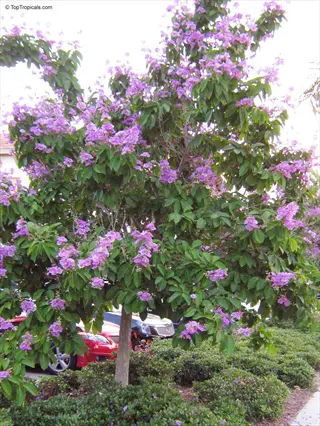
Crape Myrtle
- Hardiness Zones: Thrives in USDA zones 6 through 9, tolerating summer heat and humidity well across the southern and mid-Atlantic United States regions.
- Bloom Period: Produces vibrant pink, red, purple, or white flower clusters from midsummer through early fall, often blooming continuously for 100 to 120 days.
- Mature Size: Reaches 15 to 25 feet (4.5 to 7.6 meters) tall depending on variety, with dwarf cultivars staying under 10 feet (3 meters) for small spaces.
- Sun and Soil: Requires full sun with at least six hours of direct light daily and prefers well-drained soil with moderate moisture levels throughout the season.
- Landscape Use: Works beautifully as a specimen tree, street planting, or privacy screen, and its smooth peeling bark adds winter interest after leaves drop.
- Top Cultivars: Natchez produces white blooms on a vigorous frame, while Tuscarora offers deep coral-pink flowers and strong mildew resistance for humid climates.
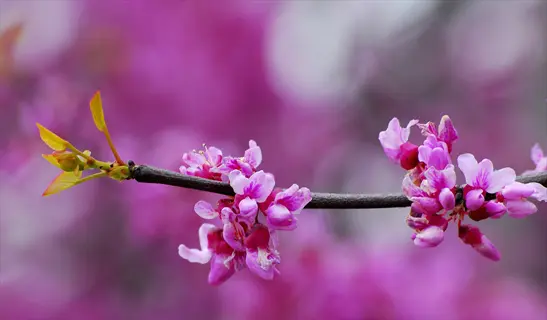
Eastern Redbud
- Hardiness Zones: Grows well in USDA zones 4 through 9, making it one of the most widely adaptable flowering trees across North American climates.
- Bloom Period: Produces clusters of pink-purple pea-shaped flowers directly along branches and even the trunk in early spring before leaves emerge.
- Mature Size: Typically reaches 20 to 30 feet (6 to 9 meters) tall with a spreading canopy that provides dappled shade during the summer months.
- Sun and Soil: Performs best in partial shade to full sun and adapts to most soil types including clay, though it prefers consistently moist and well-drained conditions.
- Landscape Use: Ideal as an understory tree beneath taller oaks or maples, and its heart-shaped leaves turn golden yellow in autumn for multi-season appeal.
- Top Cultivars: Forest Pansy features deep purple foliage throughout summer, while Rising Sun offers chartreuse to apricot leaves that change color as they mature.
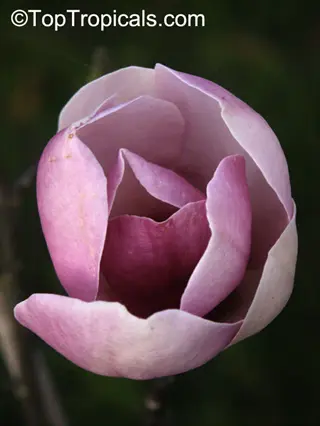
Saucer Magnolia
- Hardiness Zones: Performs well in USDA zones 4 through 9, making it a reliable choice across a wide range of temperate climates in the United States.
- Bloom Period: Opens large cup-shaped flowers in shades of pink, purple, and white in early spring, often before any leaves appear on the branches.
- Mature Size: Grows 20 to 25 feet (6 to 7.6 meters) tall with a rounded spreading canopy that can reach nearly equal width at maturity.
- Sun and Soil: Needs full sun to partial shade and rich, slightly acidic, well-drained soil with consistent moisture for best bloom production each spring.
- Landscape Use: Serves as a dramatic focal point in front yards or garden borders, and its large blooms create a carpet of fallen petals beneath the canopy.
- Top Cultivars: Alexandrina opens dark pink blossoms that fade to white, while Lennei produces deep magenta flowers that appear slightly later to avoid late frosts.
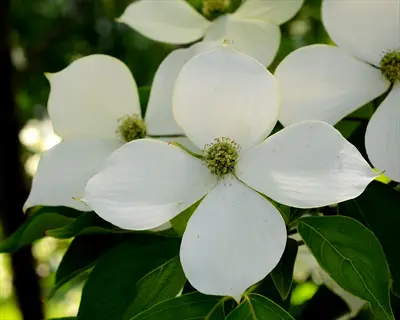
Kousa Dogwood
- Hardiness Zones: Hardy in USDA zones 5 through 8, this Asian native has largely replaced the native flowering dogwood due to superior disease resistance.
- Bloom Period: Blooms in late spring to early summer with pointed white or pink bracts that last four to six weeks, extending the flowering season past earlier dogwoods.
- Mature Size: Reaches 15 to 25 feet (4.5 to 7.6 meters) tall with a layered horizontal branching pattern that creates an elegant architectural silhouette.
- Sun and Soil: Prefers partial shade with afternoon protection in hot climates and thrives in moist, acidic, well-drained soil enriched with organic matter.
- Landscape Use: Perfect for small yards and understory plantings, and produces raspberry-like red fruit in fall that attracts birds and other wildlife visitors.
- Top Cultivars: Satomi offers deep pink bracts for a warmer color display, while Milky Way produces prolific white blooms and heavy fruit set each season.
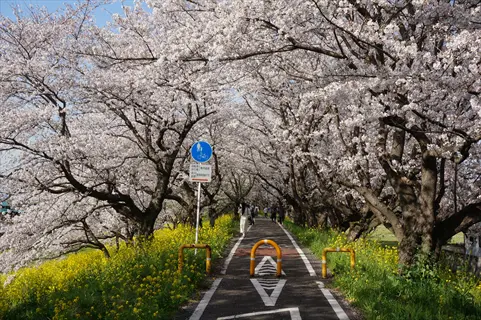
Yoshino Cherry
- Hardiness Zones: Grows in USDA zones 5 through 8, and is the same species responsible for the famous cherry blossom displays in Washington DC each spring.
- Bloom Period: Produces clouds of soft white to pale pink single blossoms in early spring, typically blooming for about two weeks in a breathtaking seasonal show.
- Mature Size: Reaches 25 to 35 feet (7.6 to 10.6 meters) tall with a graceful spreading or weeping habit that spans up to 25 feet (7.6 meters) wide.
- Sun and Soil: Requires full sun and well-drained loamy soil with regular watering during dry spells, especially during the first three years after planting.
- Landscape Use: Makes a stunning specimen tree or avenue planting, and its cultural significance in Japanese hanami festivals adds a meaningful dimension to any garden.
- Top Cultivars: Akebono produces pink flowers that fade to white, while Snow Fountains is a weeping form that stays under 12 feet (3.6 meters) for compact spaces.
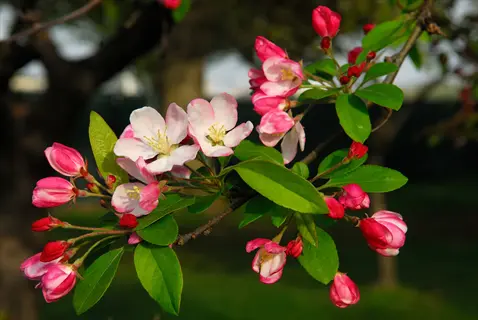
Prairifire Crabapple
- Hardiness Zones: Thrives in USDA zones 4 through 8 and stands out as one of the most disease-resistant crabapple cultivars recommended by university extension programs.
- Bloom Period: Opens deep pink to red-purple blossoms in mid-spring that cover the entire canopy for two to three weeks of intense seasonal color.
- Mature Size: Grows 15 to 20 feet (4.5 to 6 meters) tall with a rounded spreading crown that stays manageable for smaller residential lots and borders.
- Sun and Soil: Demands full sun for best flowering and disease resistance and tolerates a wide range of soil types including clay and slightly alkaline conditions.
- Landscape Use: Provides year-round interest with purple-tinged new leaves, spring flowers, dark red persistent fruit, and orange-red fall foliage on one tree.
- Top Cultivars: Prairifire itself is a cultivar, but other disease-resistant crabapples include Adirondack with white flowers and Cardinal with bright red blooms and compact form.
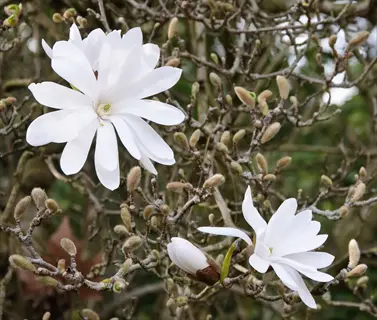
Star Magnolia
- Hardiness Zones: Hardy in USDA zones 4 through 8, making it one of the cold-hardiest magnolias available for northern gardeners seeking early spring blooms.
- Bloom Period: Opens fragrant white star-shaped flowers with 12 to 18 narrow petals in very early spring, often among the first trees to bloom each year.
- Mature Size: Stays compact at 15 to 20 feet (4.5 to 6 meters) tall, growing naturally in a multi-stemmed shrubby form or pruned into a single trunk.
- Sun and Soil: Prefers full sun to partial shade in moist, well-drained, slightly acidic soil and benefits from a sheltered location to protect early buds from late frosts.
- Landscape Use: Ideal for small yards, foundation plantings, and patio borders where a compact tree with maximum spring impact is needed in limited space.
- Top Cultivars: Royal Star blooms slightly later than the species to avoid frost damage, while Centennial produces larger flowers with up to 32 petals per bloom.
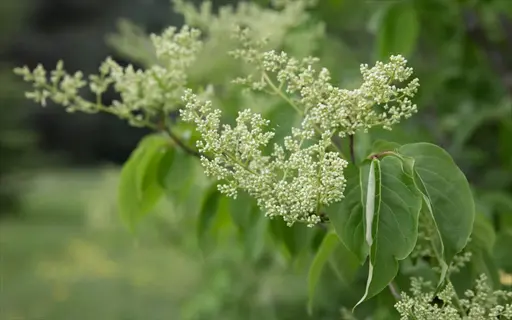
Japanese Tree Lilac
- Hardiness Zones: Extremely cold-hardy in USDA zones 3 through 7, making it an excellent flowering tree option for northern climates where other species struggle.
- Bloom Period: Produces large creamy white flower panicles up to 12 inches (30 centimeters) long in early summer, blooming after most spring-flowering trees have finished.
- Mature Size: Reaches 20 to 25 feet (6 to 7.6 meters) tall with a rounded to oval canopy and attractive reddish-brown bark that resembles cherry tree bark.
- Sun and Soil: Grows best in full sun with well-drained soil and tolerates urban conditions including pollution, compacted soil, and occasional drought once established.
- Landscape Use: Works well as a street tree, lawn specimen, or patio shade tree, and is considerably more resistant to powdery mildew, scale, and borers than common lilacs.
- Top Cultivars: Ivory Silk is the most popular selection for its compact form and heavy bloom production, while Summer Snow offers a slightly more upright growth habit.
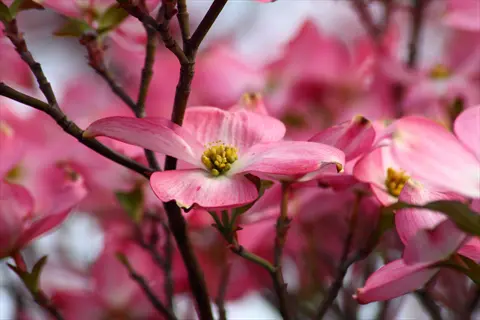
Flowering Dogwood
- Hardiness Zones: Native to USDA zones 5 through 9, this iconic American tree produces one of the most recognized spring bloom displays across the eastern United States.
- Bloom Period: Opens showy white or pink bracts in mid-spring that last three to four weeks, followed by clusters of bright red berries that attract migrating birds.
- Mature Size: Typically grows 15 to 25 feet (4.5 to 7.6 meters) tall with graceful horizontal branching and a layered canopy that provides filtered shade below.
- Sun and Soil: Prefers partial shade with morning sun and afternoon protection, plus rich, moist, acidic soil with a thick layer of mulch over the root zone.
- Landscape Use: Outstanding as a woodland edge tree or understory planting beneath taller shade trees, offering spring flowers, fall color, and winter berry interest.
- Top Cultivars: Cherokee Brave produces deep pink bracts, while Cloud Nine flowers heavily with pure white bracts and shows better resistance to dogwood anthracnose disease.
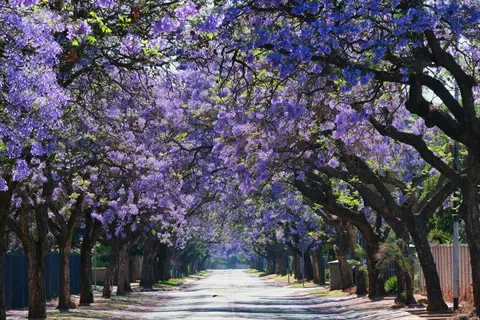
Jacaranda
- Hardiness Zones: Best suited for USDA zones 9 through 11, thriving in warm climates like southern California, Florida, and the Gulf Coast where frost is rare.
- Bloom Period: Covers the entire canopy in lavender-blue trumpet-shaped flowers during late spring and early summer, creating a purple carpet of fallen petals below.
- Mature Size: Can reach 25 to 50 feet (7.6 to 15 meters) tall with a wide spreading canopy that provides generous filtered shade during the hottest months.
- Sun and Soil: Requires full sun and sandy, well-drained soil, and actually blooms better in slightly poor soil since overly rich conditions encourage leaf growth over flowers.
- Landscape Use: Makes a stunning specimen tree for large yards and park-like settings, and its fern-like foliage adds a tropical texture even when not in bloom.
- Top Cultivars: Jacaranda mimosifolia is the standard species, while the cultivar Bonsai Blue stays compact at just 10 to 12 feet (3 to 3.6 meters) for smaller spaces.
Kousa dogwood now takes the place of flowering dogwood in many yards. It shrugs off diseases that kill the native species. For crabapple, stick with picks like Prairifire or Adirondack so you skip the scab and blight headaches.
Your best pick depends on your hardiness zones and yard size. Match the mature size to your space first. Then choose based on bloom season so you get color when you want it most.
Bloom Season Planning
Smart gardeners plan their flowering tree seasons so they get color from March through October instead of just one big burst in April. I learned this the hard way when my yard had 3 weeks of pink and then nothing but green for the rest of the year.
Spring flowering trees like star magnolia kick things off in early March. Then redbuds and dogwoods take over in mid spring. Summer blooming trees like crape myrtle carry the show all the way to fall color season. The table below maps out each bloom time so you can plan your own lineup.
One thing most guides skip is that bloom time is shifting earlier each year due to warmer springs. Research shows spring flowering trees now bloom about 3.28 days earlier for every degree Celsius of warming. Trees are 2.7 times more sensitive to this shift than flowers in your garden beds.
Crape myrtle stands out as the longest blooming trees option on this list with up to 120 days of color. If you want flowers from early spring through fall, plant at least one early bloomer and one summer bloomer to keep your yard interesting all season.
Planting and Care Essentials
Planting flowering trees the right way saves you years of trouble down the road. I wasted a whole season on a magnolia that died because I put it too close to my house and the roots had nowhere to go. The number one mistake in flowering tree care is getting the tree spacing wrong.
A young tree in a 5 gallon pot looks small, but that same tree might spread 20 feet wide at full size. Plant it at least as far from your house as the mature canopy spread. Most trees need full sun and well-drained soil, so check both before you dig. Use the steps below to get your watering schedule, mulch, and fertilizing right from the start.
Choosing the Right Location
- Spacing Rule: Plant your flowering tree at least as far from your house as the mature canopy spread to prevent root damage, foundation issues, and overcrowding later.
- Sun Exposure: Most flowering trees need six or more hours of direct sunlight daily, so observe your yard throughout the day before committing to a planting spot.
- Soil Testing: Test soil pH and drainage before planting because magnolias prefer acidic soil while crabapples tolerate slightly alkaline conditions, and poor drainage kills roots.
Planting Day Essentials
- Hole Size: Dig the planting hole two to three times wider than the root ball but only as deep as the root ball height, keeping the root flare at soil level.
- Root Preparation: Gently loosen circling roots on container-grown trees before placing them in the hole, as tightly bound roots can girdle the trunk over time.
- Backfill Method: Fill the hole with the original soil rather than amended soil, water thoroughly to eliminate air pockets, and avoid compacting the soil around the trunk.
Watering and Mulching
- First Year Watering: Water deeply two to three times per week during the first growing season, providing about 1 inch (2.5 centimeters) of water at each session.
- Mulch Application: Spread 2 to 4 inches (5 to 10 centimeters) of organic mulch in a ring around the tree but keep it 3 inches (7.5 centimeters) away from the trunk.
- Established Trees: After two to three years, most flowering trees need supplemental water only during extended dry periods of two weeks or more without rainfall.
Fertilizing and Pruning
- Fertilizer Timing: Apply a balanced slow-release fertilizer in early spring before new growth begins, and avoid high-nitrogen formulas that promote leaves over flowers.
- Pruning Season: Prune spring-blooming trees immediately after flowers fade, and prune summer-blooming trees like crape myrtle in late winter before buds form.
- Pruning Technique: Remove dead, damaged, or crossing branches first, then shape lightly if needed, and never remove more than one-quarter of the canopy in a single year.
Diseases and Common Problems
Most flowering tree problems start before you even plant. I lost a flowering dogwood to dogwood anthracnose because I didn't check for disease-resistant trees when I bought it. That one mistake cost me 3 years of growth and about $200 in replacement costs.
Tree diseases like powdery mildew and cedar-apple rust show up fast once conditions turn warm and humid. You can treat some of these with a fungicide spray in early spring. But the best fix is prevention. Choose resistant cultivars from the start and you will save yourself years of fighting infections.
The table below shows the most common flowering tree problems and how to stop them. Pay close attention to which trees are most at risk so you can make smarter choices at the nursery.
Kousa dogwood now replaces native flowering dogwood in many yards. It shrugs off disease with ease. Pick disease-resistant trees when you shop for crabapples too. The best picks like Prairifire and Cardinal fight off scab and fire blight on their own.
Ecological Benefits of Trees
Most guides treat flowering trees as nothing more than yard decorations. The truth is that your trees do serious ecological work every single day. About 87.5% of all flowering plants on Earth depend on animal pollinators to reproduce. Your pollinator trees feed the bees, butterflies, and beetles that keep that whole system running.
I noticed the change in my own yard within 2 years of planting native flowering trees. More birds showed up. Butterflies stuck around longer. Even the soil under the trees looked and smelled different. One tree won't save the planet, but it creates a wildlife habitat that supports a rich web of life right where you live.
Supporting Pollinator Populations
- Pollinator Dependency: About 87.5% of all flowering plants on Earth depend on animal pollinators for reproduction, and flowering trees provide critical nectar and pollen resources.
- Beyond Bees: Non-bee insects including butterflies, moths, beetles, and flies perform 25% to 50% of flower visits, making flowering trees important for the full pollinator community.
- Seed Quality: Plants visited by a wide mix of pollinators produce higher quality seeds in greater numbers, which means more variety in your garden helps trees spread and thrive.
Feeding Birds and Wildlife
- Fruit Production: Trees like dogwood, crabapple, and serviceberry produce berries and small fruits that feed dozens of bird species during fall migration and harsh winter months.
- Nesting Habitat: The branching structure and canopy cover of flowering trees provide protected nesting sites for songbirds, owls, and other cavity-nesting species year-round.
- Insect Food Web: Flowering trees host caterpillars and other insects that serve as the primary protein source for baby birds during the critical spring nesting season.
Improving Air and Soil Quality
- Air Filtration: Tree canopies trap particulate matter, absorb pollutants like nitrogen dioxide and sulfur dioxide, and release clean oxygen, measurably improving neighborhood air quality.
- Carbon Storage: A single mature flowering tree can absorb 48 pounds (22 kilograms) of carbon dioxide per year while storing carbon in its wood, roots, and surrounding soil.
- Soil Enrichment: Fallen leaves decompose into organic matter that feeds soil microorganisms, improves soil structure, increases water retention, and reduces erosion on sloped landscapes.
Reducing Urban Heat Islands
- Shade Cooling: Tree canopies can reduce surface temperatures beneath them by 20 to 45 degrees Fahrenheit (11 to 25 degrees Celsius) compared to full sun pavement surfaces.
- Energy Savings: Strategically placed flowering trees on the south and west sides of buildings reduce summer cooling costs by shading walls and windows from direct afternoon sunlight.
- Heat Mortality: Research projects that increased vegetative cover could offset heat-related mortality by 40% to 99% under projected 2050 heat wave conditions in urban areas.
The ecological benefits go far beyond what most people expect from a single tree. Every flowering tree you plant builds a small ecosystem in your yard. It feeds pollinators, shelters birds, cleans the air, and cools your block. That makes trees one of the smartest investments for any home.
Health Benefits of Tree Canopy
No other gardening guide talks about the health benefits of trees, but the science is clear. A review of 201 studies found that living near trees makes a real difference for your body and mind. Your flowering trees do more than look good. They can change how your family feels every day.
The US loses about 4 million urban tree canopy trees each year. That loss shows up in higher stress, worse air, and hotter streets. Planting even one tree in your yard pushes back against that trend and gives your household real trees and wellness gains you can measure.
Stress and Mental Health Relief
- Stress Reduction: A 25% boost in tree canopy across your area links to a 1 point drop on the clinical stress and anxiety scale, which means your street gets calmer as trees grow.
- Mental Health Boost: Time spent near trees lowers feelings of anger, confusion, and fatigue based on data from hundreds of studies on green spaces and mood.
- Window Views: Patients who could see trees from their hospital windows healed faster after surgery, so imagine what daily views from your own home can do for you.
Childhood Health and Development
- Obesity Prevention: Areas with more tree cover show 12% lower childhood obesity rates, which means your kids benefit just from playing in a yard with good shade.
- Outdoor Play: Trees create cool shaded zones that draw children outside more often, and more outdoor time links to better focus, stronger bones, and improved sleep patterns.
- Air Quality for Kids: Children breathe faster than adults and take in more pollutants per pound of body weight, so trees filtering your yard air matter even more for young lungs.
Physical Recovery and Air Quality
- Faster Healing: Research shows that views of trees and green spaces speed up recovery times after surgery, and daily exposure to nature supports your immune system as well.
- Air Filtration: Tree canopies trap dust and absorb harmful gases like nitrogen dioxide, and a single mature tree cleans more air than you might expect each growing season.
- Heat Protection: More tree cover could offset 40% to 99% of heat deaths projected under 2050 heat wave conditions, making shade trees a public health tool in your area.
Property Value and Community Wellbeing
- Property Value Boost: Mature trees on your lot can raise your home's property value by thousands of dollars, and buyers often pay more for streets lined with large canopy trees.
- Crime Reduction: Trees on public land showed a 40% greater impact on reducing crime than private trees in one major city study, so street trees help your whole block.
- Community Connection: Neighborhoods with good tree cover report stronger social ties and more outdoor interaction between residents, which builds safer and friendlier streets over time.
5 Common Myths
Flowering trees only bloom in spring and offer no visual interest during other seasons of the year.
Many flowering trees bloom in summer or fall, and varieties like crape myrtle provide 100-plus days of continuous color from July through October.
All flowering trees grow too large for small yards and will eventually crowd out other plants nearby.
Dozens of compact varieties like star magnolia and dwarf Korean lilac reach only 15 to 20 feet (4.5 to 6 meters) and fit well in tight spaces.
Flowering trees are purely decorative and serve no real ecological or environmental purpose in your landscape.
Flowering trees support 87.5 percent of pollinator species, improve air quality, reduce urban heat, and measurably lower stress and anxiety levels.
You should plant flowering trees as close to your house as possible so you can enjoy the blooms from your windows.
Trees should be planted at least as far from the house as their mature canopy spread to prevent root damage, foundation issues, and overcrowding.
All crabapple trees are messy and disease-prone, so they are not worth planting in a home landscape.
Disease-resistant cultivars like Prairifire, Adirondack, and Cardinal resist scab and fire blight while producing clean, long-lasting blooms each spring.
Conclusion
Choosing the best flowering trees for your yard comes down to 3 key decision factors. First, check your climate zone so you pick trees that can handle your winters. Second, measure your yard and match it to the tree's mature size. Third, decide on your bloom season so you get flowers when you want them most.
Most guides just list tree recommendations and stop there. This guide covers the practical, ecological, and health angles that shape good landscape design. About 87.5% of flowering plants depend on pollinators to reproduce. Every ornamental trees choice you make shapes how your yard supports bees and birds.
Tree planting also pays off in ways I didn't expect when I started my garden years ago. More tree canopy lowers stress and helps kids stay active. It cleans the air around your home too. The US loses about 4 million urban trees each year. Adding even one flowering tree to your yard helps push back against that trend.
Start with just one tree that fits your zone and your space. A single well chosen flowering trees selection changes the look, feel, and health of your whole property. You don't need a forest or a huge budget. You just need the right tree in the right spot to make a real difference for your yard and your community.
External Sources
Frequently Asked Questions
What is the most popular flowering tree?
The crape myrtle is widely considered the most popular flowering tree in the United States due to its long bloom period, hardiness across zones 6 through 9, and low maintenance requirements.
What is a flowering tree?
A flowering tree is any tree that produces visible blossoms, typically as part of its reproductive cycle, adding seasonal color and attracting pollinators to landscapes.
What flowering tree stays in bloom the longest?
Crape myrtles bloom continuously for up to 120 days from midsummer through fall, making them the longest-blooming flowering tree for most climates.
What are some common flowering plants?
Well-known flowering plants include roses, sunflowers, lavender, magnolia trees, and cherry blossoms, each offering distinct colors and growing requirements.
What is the most beautiful flower tree in the world?
The Japanese cherry blossom (Prunus serrulata) and the jacaranda are often considered the most beautiful flowering trees due to their dramatic canopy-wide bloom displays.
What is an example of a flower tree?
The eastern redbud (Cercis canadensis) is a classic example of a flowering tree, producing clusters of pink-purple blossoms along its branches each spring.
What is a seven letter word for flowering tree?
Catalpa is a seven-letter word for a flowering tree, referring to the genus known for large heart-shaped leaves and showy white flower clusters.
What is the most beautiful small tree?
The star magnolia (Magnolia stellata) is widely regarded as the most beautiful small flowering tree, reaching just 15 to 20 feet (4.5 to 6 meters) with fragrant white star-shaped blooms.
What is the king of flowering plants?
The rose is traditionally called the king of flowering plants due to its cultural significance, global popularity, and thousands of cultivated varieties spanning centuries.
What are the two major flowering plants?
The two major groups of flowering plants are monocots (grasses, lilies, orchids) and dicots (roses, magnolias, oaks), classified by seed leaf count and flower structure.