Houseplant · Orchidaceae
Oncidium Orchid
Oncidium
Offer bright indirect light and a bark mix that drains fast, and the dancing lady orchid will thank you with sprays of fall flowers.
Bright indirect
Every 2–10 days
55–84°F · 13–29°C
USDA 9–12
Overview
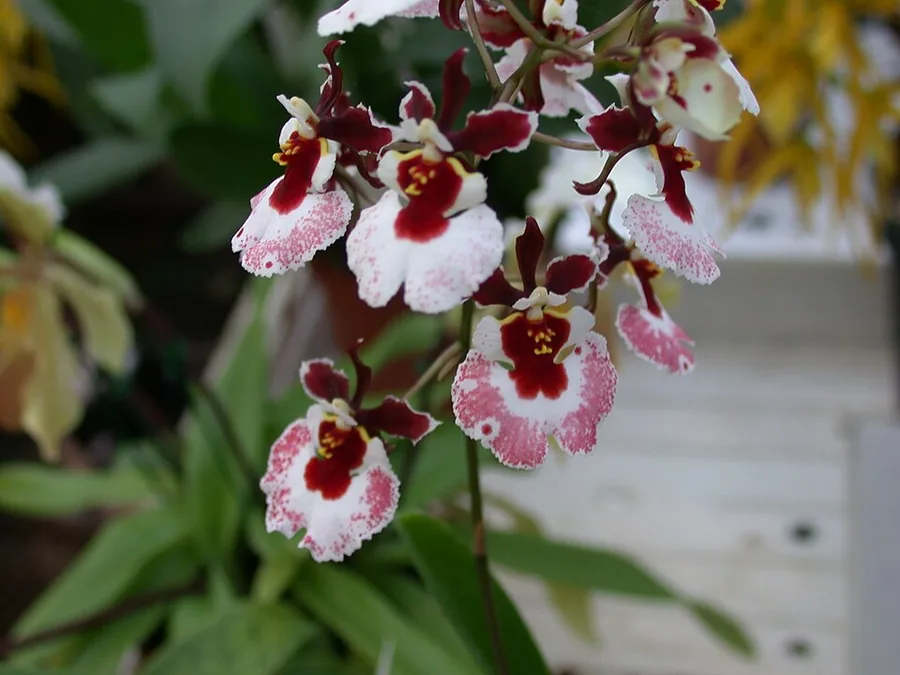
You are looking at the orchid many growers know fondly as the dancing lady, a name earned by the ruffled lip on each flower that swings out like a twirling skirt. It hails from the warm forests of the Americas, where it lives as an epiphyte, settling on tree bark instead of digging into the ground. That gentle wild habit guides every choice you make caring for it at home.
Rather than soil, an oncidium is happiest in a loose bark mix that lets water rush straight through. Its plump stem bases, the pseudobulbs, tuck away moisture to carry it through dry stretches, so the roots never like sitting wet. Most kinds flower in fall, lifting branching sprays that can hold dozens of small blooms at once and keep them going for three weeks or more.
Its moderate rating is nothing to fear. The oncidium simply asks for the right setup rather than plain houseplant treatment, and that is easy to give. Get the light, the bark, and the watering rhythm comfortable for it and this orchid settles in for years, offering a fresh flush of bloom season after season.
Care
The short version: give it bright indirect light, tuck it into a fast-draining orchid bark mix, and water only once the bark has dried about halfway, easing off through the winter.
Light
Give your oncidium bright, indirect light through most of the day and it will be content. An east-facing window with soft morning sun is a lovely fit, while fierce midday sun scorches the leaves and heavy shade leaves you with dark foliage and no flowers.
Water
Water well with room-temperature water once the bark mix has dried about halfway, which might mean every few days in summer warmth or as seldom as every 10 days when it is cool. Ease right back through winter. The single rule that matters most is to never let the fine roots sit soggy, since that is the quickest path to rot.
Soil
Leave potting soil on the shelf and reach instead for a well-drained epiphytic orchid bark mix. It echoes the loose tree bark this orchid clings to in the wild, holds a gently acidic pH around 5.0 to 6.0, and drains freely so the roots can breathe.
Temperature
Ordinary room temperatures keep it happy, anywhere from 55°F to 84°F (13°C to 29°C). It copes with a fairly broad range, so just keep it clear of cold drafts and the dry gusts from heating vents.
Humidity
This orchid enjoys air on the moist side, around 50% to 70% humidity. If your home runs dry, rest the pot on a tray of damp pebbles or set a humidifier close by, and keep the air moving so the leaves never stay wet.
Feeding
All through the spring-to-summer growing season, feed weekly with a balanced orchid fertilizer mixed to quarter or half strength. Give it right after watering so the diluted feed never lands on dry roots.
Pruning
When the flowers fade, cut the spent flower spike back to its base, and that is nearly all it asks of you. The only other tidying is the removal of dead or rotted roots and yellowed leaves.
Repotting
Refresh the pot about every 2 years in spring, when new growth is roughly half mature. Time it for when you notice roots climbing over the rim, pseudobulbs pressing at the edge, or bark crumbled into fine bits that no longer drain.
Size & spacing
Size varies a great deal across the genus, from little miniatures near 6 inches (15 cm) tall to big plants reaching 10 feet (3 m) in bloom, and spreading anywhere from 3 to 48 inches (8 to 122 cm) wide. Choose a variety that suits the spot you have in mind and you will be set.
Troubleshooting
Most oncidium hiccups begin quietly, down among the roots, or show up as a shift in leaf color. Notice those first hints and you can nearly always steer the plant back to health. Find what matches below, then step in gently before the trouble grows.
When the roots turn soft and brown and the plant droops after a drink
Take heart, because this is root rot and it is very fixable once you spot it. The usual cause is a mix staying too wet, not thirst, so when old bark stops draining the tender roots smother and go soft. Gently lift the plant out, snip away every brown, hollow root with clean tools, settle it into fresh bark, and hold off on watering for a little while.
Fix:
- Remove the plant from the pot and trim away all rotted roots with sterile tools
- Repot into fresh, well-drained orchid bark
- Resume watering only when the mix approaches half-dryness
When you find cottony white tufts or brown bumps and a sticky film
A sticky film paired with white fluff or hard little brown specks points to mealybugs or scale, and they love to hide in the leaf joints and around the pseudobulbs. There is no need to panic, since a cotton swab dipped in isopropyl alcohol lifts each one off, and a follow-up with horticultural soap or oil finishes the job. Keep the plant apart from your other orchids until every last pest is gone, and it will recover just fine.
Fix:
- Wipe insects off with a cotton swab dipped in isopropyl alcohol
- Treat with horticultural soap or oil
- Isolate the plant until the infestation clears
When the leaves flush reddish, look bleached, or grow oddly dark
Do not worry, because the leaves are simply sharing what they need in terms of light. A reddish or washed-out look tells you the sun is a touch too strong and singeing the foliage, while soft, deep green leaves are asking for a bit more brightness. Shift the plant into bright, indirect light and shade it from the fierce midday sun, and you will watch the color ease back to a happy mid-green.
Fix:
- Move the plant to bright, indirect light
- Shield from harsh midday direct sun
Toxicity
Here is real reassurance for a home with pets and little ones: the oncidium is non-toxic from its roots to its flowers. The ASPCA lists the dancing doll orchid as safe for cats, dogs, and horses, and the wider orchid family carries no known poisons. A pet that chews a leaf may drool or feel briefly queasy, but nothing here will do it lasting harm.
Safe for
People · Cats · Dogs · Horses · Rabbits · Livestock · Birds
Cats None
You can relax if your cat takes a nibble, because this orchid holds no toxins at all. At most a chewed leaf brings a bit of drool or one small bout of vomiting, and that clears up on its own.
Dogs None
Your dog is perfectly safe around the foliage. A curious pup that shreds a leaf might feel a little queasy for a moment, yet there is nothing poisonous to fear.
Horses None
Rest easy about horses, since the plant is harmless to them. A mouthful would bring nothing worse than a brief, gentle tummy upset.
Rabbits None
Rabbits have no toxic worry from any part of this orchid. Like any fresh green, a big helping in one go might just soften the stomach for a day.
Livestock None
Grazers like goats, sheep, and cattle can browse the leaves in comfort. There is nothing inside that would leave them feeling unwell.
Birds None
Your pet bird can perch on it or peck at it without any harm. No part is poisonous to them.
People None
The orchid is gentle and safe for people, children included, if they handle the flowers. It just isn't a plant meant for eating, so there is no reason to taste it.
No toxic compounds, but ingested fertilizer or pesticide residue on leaves could cause mild stomach upset, and eating plant material may cause transient vomiting.
Varieties
Thousands of oncidium species and hybrids are out there, yet a handful keep turning up on windowsills and in shops. These are the friendly few worth learning by name.
Oncidium 'Sharry Baby'
This much-loved hybrid is famous for filling a whole room with a warm scent of chocolate and vanilla.
Oncidium 'Twinkle'
A tiny miniature that crowds plenty of small fragrant flowers onto a plant petite enough to sit happily on a windowsill.
Oncidium sphacelatum
Fondly called the popcorn orchid, it sends out long branching sprays packed with cheerful yellow-and-brown flowers.
How to propagate
Over time an oncidium fills out into a tidy clump, and the kindest, simplest way to make more is to split that clump the next time you repot.
DivisionModerate
At repotting in spring, when new growth is about half mature · About 1-2 years to re-establish and bloom
Making more oncidiums is easier than it sounds: wait until you repot in spring, once the new growth is about half mature, and simply divide the clump. Keep at least three pseudobulbs and a good share of roots on each piece, because a division that is too small tends to sulk and skip flowering. Be patient and kind with the new starts, since each one needs 1 to 2 years to settle in and bloom again.
Myths
Orchids are parasites that feed off the trees they grow on.
You can set that worry aside, because an oncidium is an epiphyte and not a parasite. It rests on a tree purely for a foothold and gathers its water and food from rain, air, and the little bits of debris caught around its roots. It takes nothing at all from the host tree.
Watering any orchid with ice cubes is the right way to do it.
Oncidiums like intermediate-to-warm conditions, and a slow trickle of cold meltwater never wets the bark the way these plants truly need. Water them well with room-temperature water once the mix has dried partway, and leave the ice out of it.