Tree · Magnoliaceae
Jane Magnolia
Magnolia 'Jane'
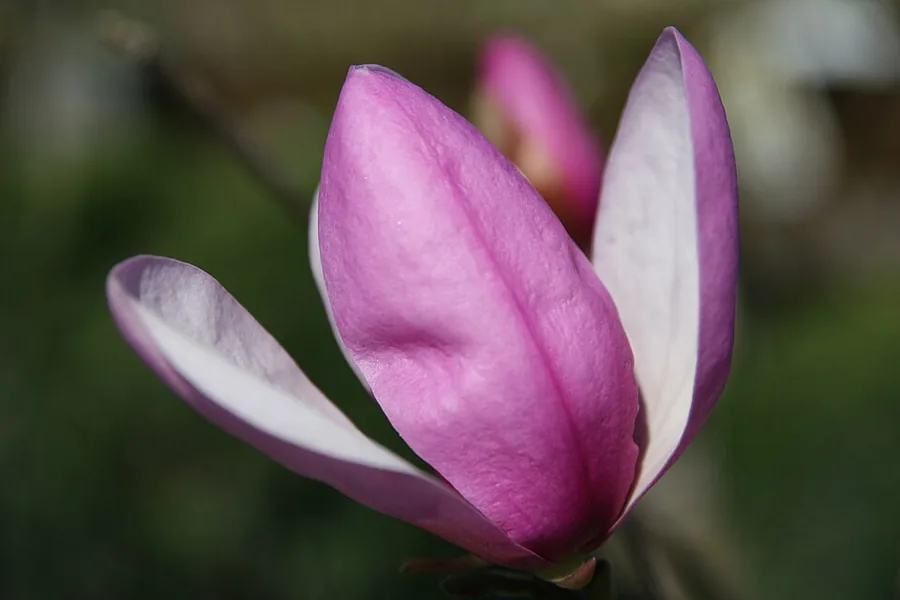
A forgiving little tree that opens tulip-shaped purple-pink flowers late enough to slip past the spring frost.
Full sun
Every 5–10 days
USDA 4–8
10–15 ft · 3–4.6 m
Overview
If you are new to growing trees, Jane magnolia is a kind place to begin. She is one of the eight Little Girl hybrids raised at the National Arboretum, a cross made on purpose to flower late, and she stays a compact tree or large shrub that reaches 10 to 15 feet (3 to 4.5 m) over the years. The tulip-shaped flowers open purple-pink outside and pale within, arriving before the leaves and asking nothing of you to earn the show.
The thing that truly sets Jane apart is her timing. She blooms in mid-to-late spring, a comfortable 2 to 4 weeks behind the star and saucer magnolias, and that patience is exactly why her flowers so often slip past a late frost that spoils the earlier kinds. Many trees even surprise you with a handful of extra blooms once summer arrives.
Best of all, she asks very little once she has settled in. Give her sun, room to spread, and steady water while she is young, and this slow grower rewards you with a long-lived, easygoing tree that earns her spot every spring. Small missteps along the way are almost always recoverable, so plant with confidence.
Care
The short version: give her full sun to part shade in rich, moist, slightly acidic soil, keep her watered while she settles in, mulch to hold that moisture, and prune only right after she flowers.
Light
Jane magnolia flowers her best in full sun, though she takes partial shade or partial sun in good humor. The more sun she catches, the fuller the bloom, so give her an open, bright spot whenever you can.
Water
Keep her soil evenly moist with regular watering, roughly every 5 to 10 days, leaning toward the wetter side while she is establishing or when a dry spell sets in. A generous ring of mulch keeps that moisture right where she needs it. Once she is settled, she handles moderate drought with ease.
Soil
Set her in rich, well-drained loam that runs acidic to neutral, ideally around a pH of 5.5 to 6.5. She copes with clay better than most trees, so heavier ground is no reason to worry as long as it drains.
Temperature
She is a hardy soul across a wide range, from deep cold of -29°F (-34°C) up to summer heat near 95°F (35°C). That toughness is just what lets her thrive through USDA zones 4 to 8.
Humidity
Ordinary outdoor humidity suits her perfectly, so there is no number to chase. Air movement matters more, since still, damp air is what tempts powdery mildew onto her leaves.
Feeding
Feed her once in early spring with a balanced or acid-forming fertilizer, and that single seasonal meal is truly all she asks. Piling on nitrogen only invites scale and soft, weak growth, so a light hand serves her best.
Pruning
Prune her right after she flowers, because next year's buds form on this year's growth and a late cut carries the blooms away with it. Beyond tidying dead or crossing branches, she needs almost none, which makes this an easy job to get right.
Repotting
This is a landscape tree that is rarely kept in a pot, so repotting seldom comes up at all. If one is held in a container, slowed growth, water rushing straight through, or roots circling the sides are your gentle cues to move her up.
Size & spacing
Look forward to a mature height of 10 to 15 feet (3 to 4.5 m) and a spread of 8 to 12 feet (2.4 to 3.7 m). Offer her that much open room from the very start so her crown can fill out in comfort, without crowding.
When to plant
Jane magnolia keeps to her own gentle schedule, and that works in your favor. Plant her in spring or early fall while the weather stays mild, then simply wait for the show in mid-to-late spring, when she flowers later than most magnolias and usually clears the frost with room to spare.
Northern hemisphere
Southern hemisphere
Typical months for a temperate climate: start earlier in warm zones, later where spring frosts linger.
- Plant: Spring or early fall
- Harvest: Mid-to-late spring (mid-April to early May), about 2-4 weeks later than star and saucer magnolias; often reblooms sporadically in summer
Hardiness
USDA hardiness zones: 4–8
Temperature: down to -34°C
Troubleshooting
Most years Jane magnolia stays healthy and easy, so trouble is the exception, not the rule. When something does turn up, it tends to show first on the leaves or twigs, where you can catch it. Match what you see to the notes below and step in early, and you will almost always set things right.
Little waxy bumps on the twigs with sticky leaves and a dark film below
Take heart, this common visitor is easy to spot: those raised bumps are magnolia scale, small sap-feeders that hide beneath a waxy shell. The sticky honeydew they leave behind lets a black layer of sooty mold settle on the leaves under them, which looks worse than it is. Snip out the most crowded twigs, dab the young crawlers with horticultural oil in summer or over dormancy, and helpful predators will handle much of the rest.
Fix:
- Prune out and destroy heavily infested twigs
- Apply horticultural oil during dormancy or treat crawlers in summer
- Encourage natural predators
Dark blotches on the leaves as some twigs begin to die back
When dark leaf spots come alongside sunken patches on the wood, you are usually looking at leaf spot or canker fungi, and that is fixable. As soon as a branch starts dying back, prune it away and get rid of the wood rather than letting it linger on the tree. Gather up the fallen diseased leaves, keep the tree watered and mulched, and it will carry on with plenty of strength to spare.
Fix:
- Prune out and destroy cankered or dead wood
- Rake and remove fallen diseased leaves
- Maintain plant vigor with proper watering and mulching
A pale, powdery dust settling over the leaves
You can breathe easy here, because this dusting is powdery mildew, a fungus that gathers on the leaf when the air sits humid and still. A healthy tree shrugs it off, so think of it as a cosmetic blemish rather than a real threat. Open up crowded growth so air can move, gather the fallen leaves in autumn, and only reach for a labeled fungicide if things get out of hand.
Fix:
- Rake and dispose of fallen infected leaves
- Improve air circulation by thinning
- Apply a labeled fungicide if severe
Toxicity
Here is welcome news for anyone with pets or children: every part of this tree is safe. The ASPCA lists magnolia as non-toxic to cats, dogs, and horses, with no toxic compounds in the leaves, bark, or flowers. A curious nibble might bring a passing stomach upset, as any plant can, but nothing here will poison a soul.
Safe for
People · Cats · Dogs · Horses · Rabbits · Livestock · Birds
Cats None
You can let a curious cat sniff and paw around a Jane magnolia with a clear mind, since the ASPCA counts it as non-toxic.
Dogs None
If a dog grabs a dropped leaf or bloom, it won't be poisoned, though as with any plant a large mouthful may leave a passing tummy upset.
Horses None
Rest a little easier with horses as well, because magnolia holds no toxic principles that would trouble them.
Rabbits Safe
A rabbit is in no danger from the leaves or the blooms, so there is nothing to fret over.
Livestock Safe
Grazing animals like goats and cattle can browse near the tree in perfect safety.
Birds Safe
Birds that settle in the branches or pick at the fruit come away just fine.
People Safe
You can plant it near children with confidence, as there is nothing harmful in the leaves, bark, or flowers.
No special handling precautions are required for toxicity.
Varieties
Jane is one of eight Little Girl hybrids, and her sisters share the same late-blooming, frost-dodging habit across a lovely spread of flower colors. These are the ones you are most likely to meet.
Ann
One of the friendly Little Girl sisters, Ann carries slim, upright reddish-purple flowers and opens among the first of the bunch.
Betty
Betty is a Little Girl hybrid whose generous blooms swing open to reveal purple-red on the outside and a clean white within.
Susan
Susan brings fragrant fuchsia-red flowers to the Little Girl group, each petal carrying a gentle twist.
Randy
Randy grows a touch more upright, with narrow purple-pink flowers hugged close against the stem.
Judy
Judy is one of the eight National Arboretum Little Girl hybrids, and this one greets you in a deep red-purple.
Pinkie
Pinkie is the Little Girl loved for softer pink flowers that take their time and open later than her sisters.
Ricki
Ricki spreads a little wider as a Little Girl hybrid and blooms in a rich deep purple-red.
How to propagate
Because Jane is a named hybrid, she only comes true when you clone her, and that is easier than it sounds. There are three ways to do it, each suited to a different level of patience and skill.
Stem cuttingsModerate
Early to mid summer using softwood to semi-hardwood growth · Several weeks to root; one or more seasons to establish
Gather softwood to semi-hardwood cuttings in early to mid summer, and know that a named hybrid like Jane only stays true when you clone it this way. Give them time, as the cuttings take several weeks to root and a season or more to settle in comfortably. Seed will not copy the parent, so cuttings are the welcoming path for a home gardener.
GraftingDemanding
Late winter to early spring onto compatible magnolia rootstock · One to several seasons
Nurseries join Jane to a compatible magnolia rootstock in late winter or early spring to keep her true to type. This is demanding work that needs one to several seasons to establish, which is why it tends to stay in professional hands.
LayeringModerate
Spring · One or more seasons to root before separation
In spring you can gently pin a low branch to the soil and let it root while it stays attached to the parent, a forgiving method to try. It wants a season or more to root before you free it, and what you get is an exact clone of the tree you began with.
Myths
Magnolias bloom too early and always lose their flowers to spring frost.
You can set that worry aside, because Jane and her Little Girl sisters open 2 to 4 weeks later than the star and saucer magnolias. That gentle head start usually carries the flowers safely past the worst spring frosts, and the tree often sends up a few more blooms in summer as a happy bonus.
Magnolia flowers and foliage are poisonous to dogs and cats.
You can relax around your pets, since the ASPCA lists magnolia as non-toxic to dogs, cats, and horses, with no toxic principles anywhere in the plant. A curious nose or a quick nibble at a fallen bloom will do no harm at all.