
A dahlia bulb is not a true bulb at all. Dahlias grow from tubers, which are swollen underground stems that store food and energy for the plant. People use the word "bulb" out of habit, but the difference matters for how you plant, store, and care for them.
The dahlia tuber vs bulb difference becomes clear the moment you hold one in each hand. I put a tulip bulb next to a dahlia tuber on my potting bench one spring and the contrast jumped out at me. The tulip was round, smooth, and wrapped in papery skin like a small onion. The dahlia bulb looked more like a sweet potato with a thick neck and a bumpy crown on top. They share almost nothing in common besides growing underground.
True bulbs like tulips and daffodils have layered scales packed inside a shell. Cut one open and you see rings of stored food, just like slicing an onion. Dahlia tubers have solid flesh throughout with no layers at all. Their growth points, called eyes, cluster near the crown where the tuber meets the old stem. Each eye can sprout a new shoot. This is why dahlia tubers work so well for division.
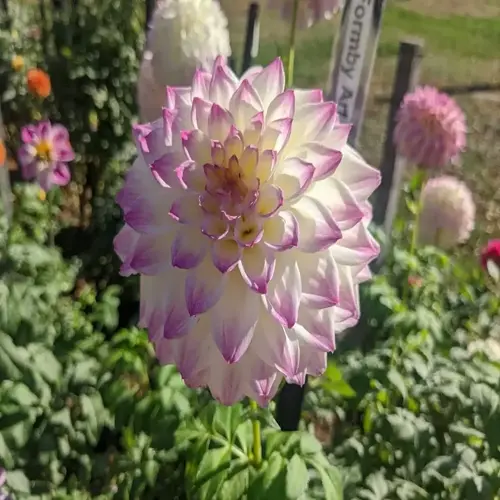
Oregon State and Colorado State both agree that dahlias grow from tubers. All 57,000 named types use this same root structure. A tiny Pompon and a huge Dinnerplate share the same setup below ground. The dahlia bulb pulls water through its skin and feeds the plant through the stem above.
Firm Flesh
- Squeeze test: A healthy dahlia tuber feels solid when you press it between your fingers, much like a fresh potato from the store.
- Red flags: Soft or spongy spots signal internal rot that will spread after planting and kill the tuber before it sprouts.
- Weight check: Good dahlia tubers feel heavy for their size because they hold stored moisture and food reserves inside.
Visible Eyes on Crown
- Location: Growth eyes appear as small bumps or pink nubs right where the tuber neck meets the central crown piece.
- Why it matters: A tuber without at least one visible eye cannot produce a new plant no matter how healthy it looks.
- Sprouting signs: Small green or white shoots from the eyes show you the tuber is alive and ready to grow this season.
Intact Neck Connection
- Critical link: The neck connects the tuber body to the crown and stem, serving as the path for nutrients and new growth.
- Breakage risk: A snapped or cracked neck means the tuber cannot send energy to new shoots and will fail to produce a plant.
- Handle with care: Always grip dahlia tubers by the body rather than the neck when you plant to avoid snapping this weak point.
When you shop for dahlia tubers at a nursery or online, skip any that feel light or show wrinkled skin. These signs mean the tuber dried out too much during storage. It may not have enough energy left to grow strong stems and blooms. A plump, firm tuber with at least one visible eye gives you the best odds of a healthy plant come summer.
The "bulb" label will stick around in garden centers and catalogs for a long time. Just know that your dahlias grow from solid storage tubers with eyes, not layered bulbs with scales. This knowledge helps you plant them at the right depth, store them at the right temperature, and divide them the right way each season.
Read the full article: Dahlia Bulbs: A Grower's Complete Guide