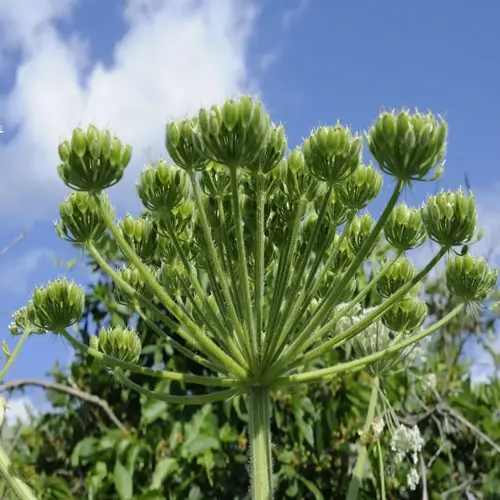
Yes. CDC reports that eating about 1 inch (2 to 3 cm) of the root can kill a healthy adult. That one number tells you most of what you need to know about water hemlock toxicity, because a dose that small leaves you no margin for error out in the field. There is no safe nibble and no safe taste test. Foragers have died after digging a root up and taking it for a wild vegetable they thought they knew. Most of the deaths on record start the same way, with a person who felt sure the root was food.
Water hemlock toxicity comes down to one compound called cicutoxin, and the root holds the highest concentration of it by far. That is why the lethal amount is so small. A piece of root the size of a walnut can kill an animal as heavy as a cow. The root is not the whole problem, though. Bark and stems hold the poison too, along with the leaves, flowers, fruits and seeds. The plant counts as poisonous at every stage of growth, and spring is when the danger peaks.
The USDA Agricultural Research Service calls water hemlock the most violently toxic plant that grows in North America. NC State Extension rates the poison severity as High and lists bark, flowers, fruits, leaves, roots, seeds and stems as poison parts.
Calling water hemlock the most toxic plant in North America sounds like hype until you read the death counts. From 1979 through 1988, at least 58 people in the US died after eating a poisonous plant they had misidentified as an edible fruit or vegetable. Water hemlock caused at least five of those deaths. Look further back and the odds get worse. Among water hemlock poisonings reported from 1900 through 1975, the case fatality rate was 30%.
The hollow stems deserve the same caution you give the root. Toy whistles made from water hemlock stems have been associated with deaths in children, so a child does not have to eat a root to end up poisoned. Teach kids to never chew or blow through a hollow stem they pick up outdoors. If this plant grows where your children play, learn it on sight before the season starts and show them what to stay away from.
The water hemlock lethal dose leaves you no time to experiment. No antidote exists for cicutoxin, and treatment is supportive care, so speed matters more than certainty. If you think someone has swallowed any part of this plant, call Poison Control at 1-800-222-1222 and get emergency medical care. Do not wait at home to see whether symptoms turn up, and do not try to manage a suspected poisoning on your own.
- Call: Phone Poison Control at 1-800-222-1222 without waiting for symptoms to appear.
- Get care: Head straight for emergency medical care. CDC records no antidote for cicutoxin, and treatment is supportive.
- Keep everyone else away from the plant, and never let a second person taste a piece to work out what it was.
Your best protection costs nothing. Do not eat a wild root you cannot name with total certainty, and do not let anyone in your group taste one to settle an argument. Many edible wild plants have a poisonous look-alike, and this one punishes a mistake harder than anything else growing on the continent. Certainty is the only standard that works here, and almost sure does not count. A 30% death rate among reported cases is not a gamble worth taking for a free dinner. Leave the plant in the ground and walk away.
Read the full article: Water Hemlock: How to Identify and Stay Safe