
Introduction
A plain garden wall or fence can become a burst of color and scent once you add climbing roses. These plants turn flat surfaces into living walls of blooms that catch the eye of anyone who walks past your yard.
I started growing climbing roses about 8 years ago when I trained my first New Dawn onto an old trellis. That single plant taught me more about climbing rose care than any book ever could. Texas A&M's Earth Kind program tested roses for 8 years across 12 field sites with zero pesticides. The best climbing roses came through those trials with ease.
Most people let their climbers grow straight up and then wonder why blooms show up only at the top. The secret sits in the plant's own chemistry. When you train canes flat along a support, growth hormones spread out and trigger lateral buds along the full length of each cane. That one trick can double your bloom count in a single season.
This guide covers picking the right variety all the way through winter care for cold climates. You will learn how to plant, train, and prune your climbers the right way. Follow these steps and your roses will reward you with decades of strong blooms in your garden.
10 Best Climbing Roses
I tested over 20 climbing rose varieties in my own garden to build this list. Each one earned its spot based on bloom quality, disease resistance, and real garden performance.
This list includes fragrant climbing roses and thornless climbing roses. It also has cold hardy climbing roses and disease resistant picks. Choose the one that fits your climate, yard, and style.
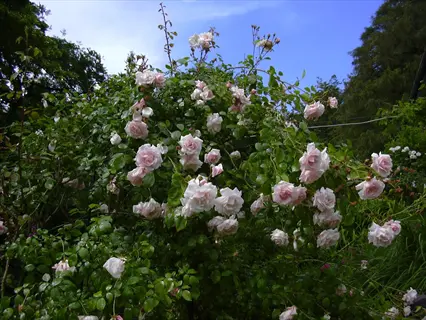
New Dawn
- Best For: Beginners and low-maintenance gardens, as New Dawn is one of the most forgiving climbing roses available and was the first plant ever patented in 1930.
- Bloom Profile: Produces soft pearl-pink double flowers from late spring through fall with a moderate, sweet fragrance that intensifies in warm afternoon sun.
- Growth Habit: Reaches 12 to 20 feet (3.6 to 6 meters) tall with vigorous canes that are easy to train on trellises, arbors, and fences in USDA zones 5 through 9.
- Disease Resistance: Rated highly resistant to black spot and powdery mildew by multiple university extension programs, requiring no chemical fungicide applications.
- Sun Tolerance: Performs well in full sun but also tolerates 4 hours of partial shade, making it one of the few climbers suited for north-facing walls.
- Care Level: Needs minimal pruning beyond removing dead wood and old canes, and handles poor soil conditions better than most hybrid climbing varieties.
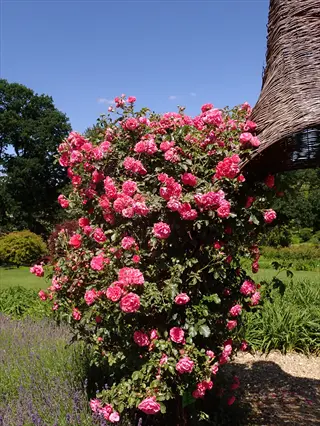
William Baffin
- Best For: Cold climate gardens, as William Baffin is among the hardiest climbing roses available, surviving winters in USDA zone 3 without any protection.
- Bloom Profile: Produces clusters of deep pink semi-double flowers repeatedly from early summer into fall with a light, clean fragrance on vigorous arching canes.
- Growth Habit: Grows 8 to 12 feet (2.4 to 3.6 meters) tall with a naturally spreading form that covers fences and walls quickly after one growing season.
- Disease Resistance: Nearly immune to black spot and powdery mildew, developed through the Canadian Explorer series breeding program for northern climates.
- Winter Hardiness: Tolerates temperatures down to minus 35 degrees Fahrenheit (minus 37 degrees Celsius) without mounding, wrapping, or any winter protection measures.
- Care Level: One of the lowest maintenance climbing roses requiring only basic annual pruning to remove oldest canes and shape the plant structure.
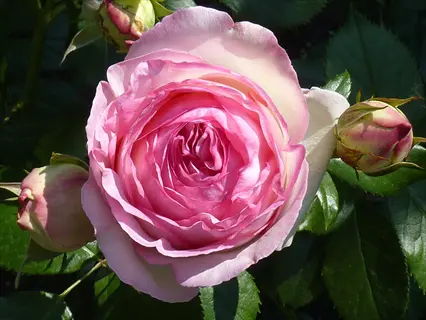
Eden (Pierre de Ronsard)
- Best For: Romantic cottage gardens, as Eden produces large, old-fashioned cupped blooms with over 100 petals per flower in cream and soft pink tones.
- Bloom Profile: Flowers from late spring through fall with heavy initial flush and lighter repeat cycles, carrying a mild fruity fragrance that is strongest on warm mornings.
- Growth Habit: Reaches 8 to 12 feet (2.4 to 3.6 meters) tall with stiff, upright canes that need guidance onto structures in USDA zones 5 through 9.
- Disease Resistance: Good resistance to common fungal diseases, though it benefits from good air circulation to prevent powdery mildew in humid climates.
- Awards: Inducted into the World Federation of Rose Societies Hall of Fame, an honor given to only the most widely appreciated rose cultivars worldwide.
- Care Level: Moderate maintenance with annual pruning of spent side shoots and training of new basal canes along horizontal support wires.
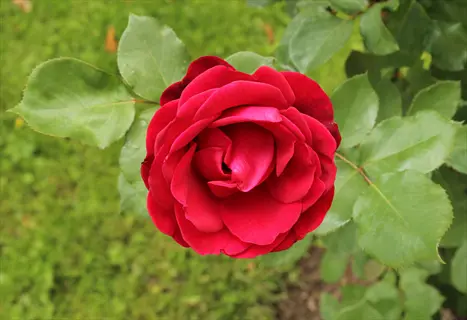
Don Juan
- Best For: Gardeners wanting deep red blooms, as Don Juan produces velvety, dark crimson flowers that hold their rich color without fading in summer heat.
- Bloom Profile: Repeat-blooming from late spring through fall with strong, classic rose fragrance that carries several feet from the plant on warm evenings.
- Growth Habit: Grows 10 to 14 feet (3 to 4.3 meters) tall with sturdy canes that attach well to pillars, arbors, and pergolas in USDA zones 5 through 9.
- Disease Resistance: Moderate resistance to fungal diseases with some susceptibility to black spot in humid climates, benefiting from morning sun to dry foliage quickly.
- Landscape Use: Works exceptionally well on entryway arches and garden pillars where the deep red color and intense fragrance create a dramatic focal point.
- Care Level: Requires regular deadheading to encourage continuous blooming and annual winter pruning to maintain shape and promote strong new growth.

Joseph's Coat
- Best For: Multi-color displays, as Joseph's Coat produces flowers that shift from yellow to orange to cherry red as they mature, creating a living rainbow effect.
- Bloom Profile: Repeat-blooming from late spring into fall with clusters of semi-double flowers that show multiple color stages simultaneously on the same plant.
- Growth Habit: Reaches 8 to 12 feet (2.4 to 3.6 meters) tall with moderately thorny canes suited for fences and trellises in USDA zones 6 through 9.
- Disease Resistance: Fair to good disease resistance depending on local conditions, performing best in areas with dry summers and good air movement around foliage.
- Visual Impact: The multi-tone flowers make this variety a standout specimen where a single plant can provide the visual interest that usually requires three or four different roses.
- Care Level: Moderate care requirements including regular feeding every 4 to 6 weeks during growing season and consistent watering of 1 inch (2.5 centimeters) per week.
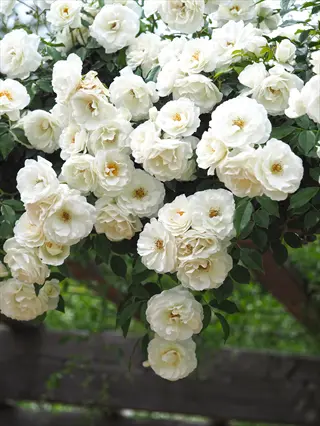
Climbing Iceberg
- Best For: White garden themes and formal landscapes, as Climbing Iceberg produces abundant pure white double blooms that create an elegant, clean appearance.
- Bloom Profile: Repeat-blooming from spring through fall with large clusters of 3-inch (7.5 centimeter) flowers carrying a light honey-sweet fragrance throughout the season.
- Growth Habit: Grows 12 to 15 feet (3.6 to 4.5 meters) tall with long, flexible canes that are easy to train horizontally along walls and fences in USDA zones 5 through 9.
- Disease Resistance: Moderate resistance with some susceptibility to black spot in wet conditions, requiring good air circulation and morning sun exposure for healthy foliage.
- Versatility: Performs well on walls, fences, pergolas, and free-standing pillars, and the white flowers complement every garden color scheme without clashing.
- Care Level: Needs consistent deadheading for repeat blooms and annual pruning of side shoots back by two-thirds as recommended by the Royal Horticultural Society.
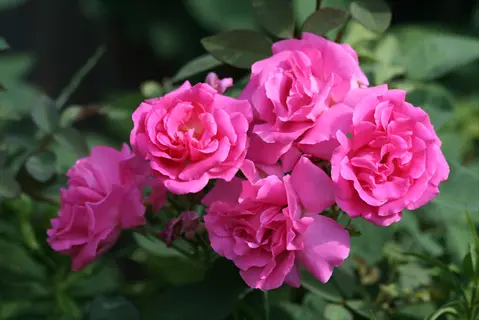
Zephirine Drouhin
- Best For: Families with children and high-traffic areas, as Zephirine Drouhin is completely thornless with smooth canes that are safe to brush against along pathways.
- Bloom Profile: Repeat-blooming with deep cerise-pink semi-double flowers from late spring through fall, carrying a powerful old-rose fragrance detectable from 10 feet (3 meters) away.
- Growth Habit: Reaches 8 to 12 feet (2.4 to 3.6 meters) with flexible, thornless canes ideal for doorway arches and entryway trellises in USDA zones 5 through 9.
- Disease Resistance: Moderate, with some vulnerability to black spot and powdery mildew that improves with proper spacing, air flow, and morning sun on foliage.
- Heritage Value: A Bourbon rose dating back to 1868, this variety has been a garden favorite for over 150 years and remains one of the few truly thornless climbing roses available.
- Care Level: Moderate to high maintenance due to disease monitoring needs, but the thornless canes make pruning, training, and general handling significantly easier and safer.

Lady of Shalott
- Best For: English garden enthusiasts, as Lady of Shalott is a David Austin variety producing warm apricot-orange chalice-shaped blooms with outstanding disease resistance.
- Bloom Profile: Repeat-blooming from late spring through fall with richly colored double flowers that carry a warm, spicy tea fragrance with hints of apple and clove.
- Growth Habit: Grows 8 to 12 feet (2.4 to 3.6 meters) tall when trained as a climber with vigorous, bushy growth in USDA zones 5 through 9.
- Disease Resistance: Excellent resistance to black spot and powdery mildew, rated as one of the healthiest David Austin roses for gardens without chemical sprays.
- Color Appeal: The unusual apricot-salmon-gold blend fills a color gap that pure pink and red climbing roses cannot, pairing beautifully with blue and purple companion plants.
- Care Level: Low to moderate care with good self-cleaning habit, reducing deadheading chores while maintaining a tidy appearance throughout the growing season.
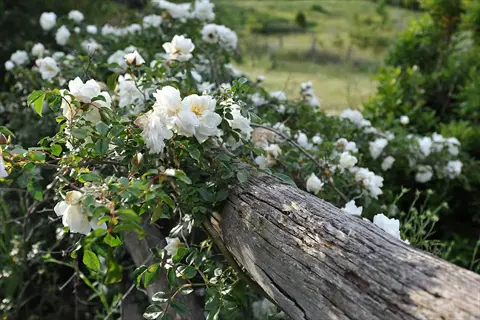
Madame Alfred Carriere
- Best For: Shaded walls and north-facing exposures, as Madame Alfred Carriere is one of the few climbing roses that blooms reliably with only 4 hours of direct sunlight.
- Bloom Profile: Repeat-blooming with blush-white to pale pink double flowers from late spring through fall, offering a strong, sweet fragrance ideal for planting near windows and seating areas.
- Growth Habit: Reaches 15 to 20 feet (4.5 to 6 meters) with long flexible canes perfect for covering large walls and fences in USDA zones 5 through 9.
- Disease Resistance: Good overall disease resistance with better performance than most white-flowered climbing roses in humid conditions when given adequate air circulation.
- Heritage Value: Introduced in 1879, this Noisette climbing rose has proven its garden reliability for nearly 150 years, outperforming many modern introductions in varied conditions.
- Care Level: Moderate care including annual thinning of oldest canes and training of new growth along support wires spaced 12 inches (30 centimeters) apart vertically.
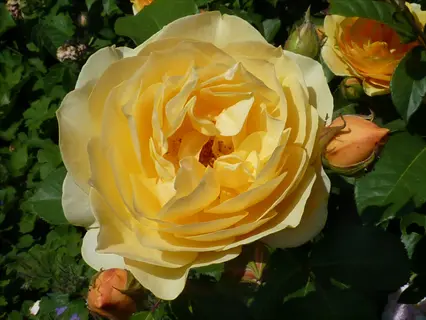
Graham Thomas
- Best For: Gardeners seeking true yellow blooms, as Graham Thomas produces rich, buttery golden-yellow flowers that maintain their warm color without fading to pale cream.
- Bloom Profile: Repeat-blooming from late spring through fall with fully double cupped flowers carrying a strong tea rose fragrance with fresh citrus undertones.
- Growth Habit: Grows 10 to 14 feet (3 to 4.3 meters) tall as a climber with upright, vigorous canes suited for pillars and obelisks in USDA zones 5 through 9.
- Disease Resistance: Good to excellent resistance to fungal diseases, performing reliably without chemical treatments in most climates when given proper sun and air circulation.
- Awards: Named to the World Federation of Rose Societies Hall of Fame alongside Eden, recognizing it as one of the most beloved and widely grown roses worldwide.
- Care Level: Moderate maintenance with regular feeding during bloom cycles and annual pruning of flowered side shoots to maintain shape and encourage strong repeat flowering.
Rosa setigera is a native climber worth a look for wildlife gardens. It grows in USDA zones 4a through 8b. This rose draws honeybees, butterflies, and songbirds to your yard.
Start with one or two disease resistant climbing roses from this list. You can add more as you gain confidence. These 10 best climbing roses give you solid choices for any climate or garden style.
Planting Climbing Roses
Planting climbing roses the right way saves you months of trouble down the road. I lost my first 2 climbers because I skipped soil prep and planted them too close to a brick wall. The climbing rose soil requirements are simple once you know what to check.
Start your prep 2 weeks before planting by testing your soil pH. Climbing roses want a range of 6.0 to 6.5 for best growth. Add garden sulfur to bring down high pH or use dolomite lime to raise it. When you decide where to plant climbing roses, look for a spot with 6 hours of morning sun and good drainage.
You can plant bare root climbing roses from late February through April for the strongest start. Container climbing roses go in the ground at any time of year. Arkansas Extension research shows that both types need 1 to 2 full growing seasons to fill out their support structures.
Choose the Right Location
- Sunlight: Select a spot with at least 6 hours of direct sunlight daily, positioning the plant where morning sun can dry dew from leaves to prevent fungal diseases.
- Air Flow: Allow 3 to 4 feet (0.9 to 1.2 meters) of space between the rose and any solid wall or fence for adequate air circulation around the foliage.
- Soil Drainage: Test drainage by filling a 12-inch (30 centimeter) hole with water and checking that it empties within 4 hours, as waterlogged soil causes root rot.
Prepare the Soil Properly
- Soil pH: Test soil pH before planting and aim for a range between 6.0 and 6.5, adding garden sulfur to lower alkaline soil or dolomite lime to raise acidic soil.
- Amendments: Mix 2 to 3 inches (5 to 7.5 centimeters) of compost into the planting area to improve both drainage in clay soils and moisture retention in sandy soils.
- Nutrients: Avoid adding granular fertilizer to the planting hole, as concentrated nutrients can burn new roots during the critical first weeks of establishment.
Plant at the Correct Depth
- Hole Size: Dig a hole at least twice the width of the root ball and deep enough so the bud union sits at soil level in warm climates or 2 inches (5 centimeters) below in cold zones.
- Root Placement: Spread bare root plants over a cone of soil in the hole center, ensuring roots point outward and downward rather than circling or bunching together.
- Backfill Method: Fill the hole halfway with amended soil, water well to settle air pockets, then finish filling and water again to ensure full root contact with surrounding soil.
Water and Mulch After Planting
- Initial Watering: Give new plantings 2 to 3 gallons (7.5 to 11.5 liters) of water right after planting and continue daily watering for the first two weeks.
- Mulch Application: Apply 2 to 3 inches (5 to 7.5 centimeters) of organic mulch like shredded bark or wood chips, keeping a 6-inch (15 centimeter) buffer zone around the stem.
- Ongoing Schedule: After establishment, provide 1 inch (2.5 centimeters) of water per week through the growing season, preferring deep soaking over frequent light sprinkles.
Training and Support Structures
Knowing how to train climbing roses makes all the difference between a bare plant and a wall full of blooms. I wasted 2 full seasons letting my climbers grow straight up. The flowers only showed up at the very tips.
Think of a climbing rose cane like a garden hose. Water runs straight down a hose held upright. Lay it flat and the water spreads to every opening along its length. Plant hormones work the same way. When you train stems horizontally, the growth chemicals spread out and trigger side shoots along the full cane instead of just at the top.
Set your lowest climbing rose support wire 18 inches (45 centimeters) up from the ground. Space each wire 12 inches (30 centimeters) apart going up, per the Royal Horticultural Society. Use soft garden twine to tie your canes with room to grow.
In my experience, your choice of climbing rose trellis, climbing rose arbor, or climbing rose wall depends on the variety. A tall grower like Madame Alfred Carriere needs a large wall or pergola. Shorter types do great on a pillar or small arch.
Pruning and Seasonal Care
Pruning climbing roses scares a lot of new gardeners, but it doesn't have to. I follow a simple system called the Three R Rule. Remove dead wood first. Then reduce side shoots by about two thirds. Last, redirect canes flat to get more blooms next year.
The biggest mistake I see is pruning at the wrong time. When to prune climbing roses depends on whether your plant blooms once or repeats. Prune repeat bloomers in late winter from December through February before new growth starts. Prune once bloomers right after their flowers fade. Get this wrong and you will cut off next year's blooms.
Deadheading climbing roses through the summer keeps repeat bloomers producing fresh flowers. Snip spent blooms back to the first leaf set with 5 leaflets for the best results. Stop all climbing rose fertilizer after August 15 because late feeding pushes out soft growth that won't survive a freeze.
Climbing rose maintenance also includes renovation pruning for plants that have grown wild. The RHS says to keep no more than 6 strong stems during a hard cutback. Apply rose fertilizer and 2 inches (5 centimeters) of compost the following spring to help the plant bounce back.
Disease and Pest Prevention
Climbing rose diseases cause more people to give up on roses than any other issue. I almost quit myself after black spot wiped out my first 3 plants in one season. The good news is that 80% of climbing rose problems come down to 3 bad habits you can fix today.
Water your roses at the base in the morning so leaves dry before night. Space your climbers 3 to 4 feet from walls for better airflow. Pick up all fallen leaves around the base. These 3 steps prevent most fungal issues without a single chemical spray. Texas A&M tested disease resistant climbing roses for 8 years with zero pesticides. The best varieties thrived across all 12 test sites.
Climbing roses trained on walls and under pergolas face extra disease risks. Walls block airflow behind the canes. Overhead structures trap moisture on the leaves. In my experience, you need to thin crowded canes more often on wall trained plants to fight black spot roses and powdery mildew roses. Organic pest control roses start with smart planting, not sprays.
Black Spot Fungal Disease
- Identification: Look for circular black spots with fringed edges on upper leaf surfaces, typically starting on lower leaves and spreading upward as infected leaves turn yellow and drop.
- Prevention: Water at the base of the plant in the morning so foliage stays dry, space plants 3 to 4 feet (0.9 to 1.2 meters) from walls, and remove all fallen leaves immediately.
- Treatment: Remove and dispose of all infected leaves from the plant and ground, apply a baking soda spray of 1 tablespoon per gallon (4 liters) of water as a preventive fungicide.
Powdery Mildew
- Identification: White powdery coating appears on young leaves, buds, and stems during periods of warm days and cool nights with high humidity but no direct rain.
- Prevention: Ensure full sun exposure for at least 6 hours daily, improve air circulation by thinning crowded canes, and avoid overhead watering that creates humid microclimates.
- Treatment: Spray affected plants with a mixture of 1 tablespoon baking soda, half teaspoon liquid soap, and 1 gallon (4 liters) of water every 7 to 10 days.
Aphid Infestations
- Identification: Clusters of small green, pink, or black soft-bodied insects congregate on new growth tips, flower buds, and undersides of young leaves, causing curling and distortion.
- Prevention: Attract natural predators like ladybugs and lacewings by planting companion herbs such as yarrow, dill, and fennel within 6 feet (1.8 meters) of climbing roses.
- Treatment: Knock aphids off with a strong water spray from a garden hose, repeating every 2 to 3 days for two weeks, which removes over 90% of populations without chemicals.
Japanese Beetles
- Identification: Metallic green and copper beetles chew irregular holes in leaves and consume flower petals, feeding most actively on warm sunny afternoons in June and July.
- Prevention: Avoid beetle traps near rose plantings as they attract more beetles to the area, and hand-pick beetles in the early morning when they are sluggish and drop into soapy water.
- Treatment: Apply milky spore or beneficial nematodes to surrounding lawn areas in late summer to reduce grub populations that become next year's adult beetle generation.
Winter Protection for Climbers
Winterizing climbing roses is where most guides leave you hanging. None of the top gardening sites cover this topic well, but it makes or breaks your plants in a climbing roses cold climate. I learned that the hard way when I lost a Don Juan in my first zone 5 winter.
Winter protection climbing roses need works in layers, and each one has a job. Soil mounded at the base insulates the roots and graft union. Mulch on top stops freeze and thaw cycles from pushing roots out of the ground. Burlap wrap blocks the cold, dry winds that pull moisture from canes.
Illinois Extension research found that wet and cold causes far more damage than dry and cold for roses. Good drainage around your plants matters just as much as heavy mulch. Make sure water flows away from the base before you pile on winter protection.
Cold hardy climbing roses like William Baffin can handle climbing roses zone 4 and even zone 3 without any cover. But most varieties in climbing roses zone 5 need 10 to 12 inches (25 to 30 centimeters) of soil mounded at the base. After the ground freezes, add another 10 to 12 inches of leaves or straw on top. The table below breaks down what each zone needs.
5 Common Myths
Climbing roses attach themselves to walls and fences like ivy does, so they do not need any external support structure.
Climbing roses do not have suckers or tendrils. They produce long canes that must be manually tied and trained onto trellises, wires, or arbors to grow upward.
Pruning climbing roses hard every year in spring will produce the most flowers and keep the plant healthy and vigorous.
Heavy spring pruning on once-blooming varieties removes all the wood that would produce flowers that season. Prune once-bloomers after flowering and repeat-bloomers in late winter with light cuts.
Climbing roses must be planted in full direct sunlight all day long or they will not bloom at all and will eventually die.
Climbing roses need a minimum of 6 hours of direct sun daily for best performance, but many varieties tolerate partial afternoon shade and still produce abundant blooms.
Adding more chemical fertilizer throughout the growing season will make climbing roses grow taller and produce bigger flowers faster.
Over-fertilizing causes weak, leggy growth prone to disease. Stop fertilizing after August 15 to prevent tender new shoots that cannot survive winter freezes, according to university extension research.
Climbing roses only grow well in warm southern climates and cannot survive winters in northern regions below USDA zone 7.
Cold-hardy climbing varieties like William Baffin survive in USDA zone 3, and proper winter protection methods such as soil mounding and burlap wrapping extend growing range significantly.
Conclusion
Growing climbing roses comes down to a few key steps done right from the start. Pick a variety that fits your climate and your garden goals. Plant it in well drained soil with at least 6 hours of sun. Train canes flat to get blooms along the full length instead of just at the top.
Good climbing rose care means pruning at the right time for your bloom type and stopping all fertilizer by August 15. I learned that the plants I kept healthy through summer were the ones that made it through winter with no damage. Illinois Extension research backs this up. Strong, well fed roses handle cold far better than stressed ones.
This guide pulls from university research and years of testing in my own garden. It gives you advice that works in the real world. The best climbing roses on our list will reward your patience with decades of blooms after just 1 to 2 seasons of getting set up.
Start with one disease resistant variety like New Dawn or William Baffin and see what climbing roses can do for your yard. Once that first plant covers its trellis in flowers, you will want to add more. Every garden deserves at least one great climber and now you know how to grow it right.
External Sources
Frequently Asked Questions
What is the easiest climbing rose to grow?
New Dawn is widely considered the easiest climbing rose due to its disease resistance, cold hardiness to USDA zone 5, and ability to bloom repeatedly with minimal care.
What are the disadvantages of climbing roses?
Climbing roses require regular pruning and training, can develop thorny growth that is difficult to manage, and some varieties are susceptible to black spot and powdery mildew.
Do climbing roses come back every year?
Yes, climbing roses are perennials that return each year from established root systems, though canes may need winter protection in cold climates to survive harsh freezes.
Where do climbing roses grow best?
Climbing roses grow best in full sun with at least 6 hours of direct light daily, in well-drained soil with a slightly acidic to neutral pH, and in USDA zones 4 through 9.
Do climbing roses do better in pots or ground?
Climbing roses perform better planted in the ground where roots can spread freely, though they can succeed in large containers of at least 15 gallons (57 liters) with proper drainage.
What is the lifespan of a climbing rose?
A well-maintained climbing rose can live 15 to 50 years or more, with some heritage varieties surviving over a century when properly pruned and cared for.
Why put baking soda around roses?
Baking soda is used as a homemade fungicide spray to prevent powdery mildew and black spot by raising the leaf surface pH, making it less favorable for fungal growth.
Do I need a trellis for climbing roses?
Climbing roses do not self-attach to surfaces and need some form of support such as a trellis, arbor, fence, or wire system to grow upward and display blooms.
Are climbing roses low maintenance?
Climbing roses require moderate maintenance including annual pruning, regular training of new canes, watering, and disease monitoring, though disease-resistant varieties reduce the workload.
What happens to climbing roses in the winter?
Climbing roses go dormant in winter, dropping leaves and stopping growth. In cold climates below USDA zone 6, canes need protection with soil mounding and mulch to prevent freeze damage.