
To Rispenhortensie pflegen well, you just need four basics: full sun, water during dry spells, one prune per year, and decent soil. These Rispenhortensie Pflege Tipps cover 90% of what your plant needs. The rest takes care of itself.
I have kept panicle hydrangeas and roses side by side for years now. The roses need spraying, feeding, and fussing. My panicle hydrangeas just grow on their own. I found they need no pest control, no disease treatment, and no winter prep. The gap in effort is huge. I spend more time on three rose bushes than on seven panicle hydrangeas combined.
One thing that makes this plant so easy is its soil tolerance. Bigleaf hydrangeas need acid soil below pH 5.5 or they suffer. Panicle hydrangeas grow in almost any garden soil you throw at them. The Chicago Botanic Garden grew theirs in heavy clay-loam at pH 7.4 for 20 years. No soil prep, no amendments, no problems at all.
That same trial used zero fertilizer, zero deadheading, and zero winter cover for 20 full years. All 45 tested varieties bloomed well every year. That tells you how tough this plant is. You could forget about it and still get flowers.
For Rispenhortensie giessen und duengen, less is more. Water your new plant once a week for the first year so the roots grow deep. After that, you only need to water during long dry spells in summer. A deep soak once a week beats a light sprinkle every day. Let the soil dry out a bit between each watering.
For feeding, one dose of slow-release fertilizer in spring does the job. A balanced 10-10-10 formula works fine. But even without fertilizer, your plant will bloom well. The CBG trial proved that. Don't overthink the feeding schedule.
The most important date on your calendar is the late winter prune. Cut all stems back by about one-third between February and March. Take out weak branches and any that cross each other. This one task gives you strong new shoots with big flower heads in summer. If you prune too late, your blooms just come a few weeks behind schedule.
You should also know that you can Rispenhortensie pflegen without worrying about soil pH. Most garden soils work fine. You don't need to add acid or lime. Just plant and let it grow. That alone saves you hours of prep work compared to acid-loving bigleaf hydrangeas.
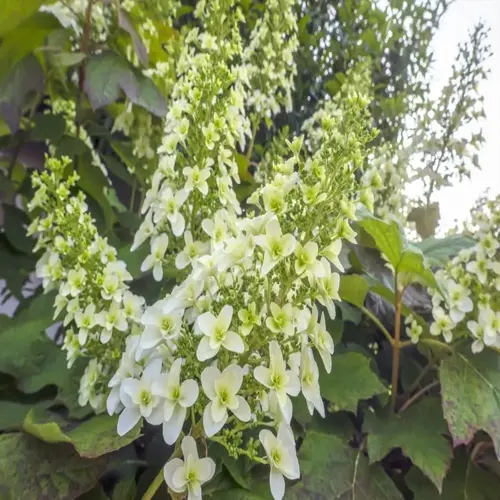
In fall, your blooms shift from white to pink to copper brown. This color change happens on its own over several weeks. You don't need to do a thing. Just sit back and watch your garden put on a show. The dried panicles then stay on the plant through winter and add texture to your yard on frosty days.
Don't stress about your panicle hydrangea. This plant forgives care mistakes better than any other shrub in your garden. Give it sun, water during dry spells, and cut it back once a year. That's the full plan. Your reward is a wall of huge white panicles from July through October with almost no work from your side.
Read the full article: Panicle Hydrangea Growing Guide