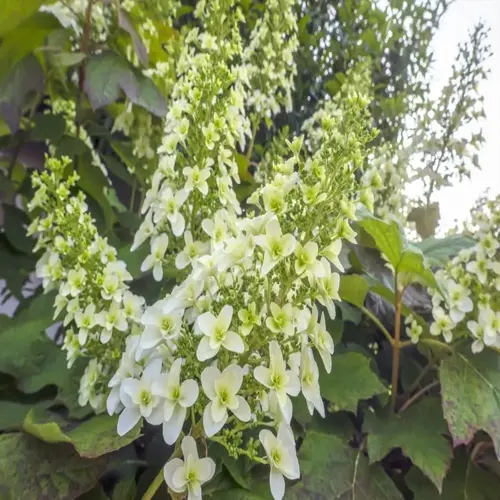

Hydrangea paniculata Pflege is the easiest of all hydrangea care. This plant asks for very little and gives you huge flower panicles from July through October. No other flowering shrub offers you such a good return for so little work.
I tried growing both bigleaf and panicle hydrangeas in my garden for years now. The difference in daily effort is striking. My bigleaf hydrangeas need acid soil, part shade, and constant worry about winter bud damage. The panicle hydrangeas next to them? I found they just grow in normal soil and full sun. They bloom every year without fail. I spend three times more time on my bigleaf plants than on all my panicle hydrangeas combined.
A big part of why this plant is so easy is that it blooms on new wood. Every spring it pushes out fresh shoots and sets flower buds on those new branches. If you make a pruning mistake and cut too much, the plant fixes it by the next season. With bigleaf hydrangeas, one bad cut can wipe out a full year of flowers. You never face that risk with paniculata.
For the best Hydrangea paniculata Standort, pick a sunny spot. NC State Extension says this plant grows 2.4 to 4.6 meters (8-15 feet) tall. It handles air pollution and salt spray well. Full sun with six to eight hours of direct light each day gives you the strongest blooms. Part shade works too, but you get fewer flowers there.
The Rispenhortensie Boden needs are very relaxed. Any normal garden soil with a pH between 5.5 and 7.5 works fine. Heavy clay and sandy ground both work as long as water drains away. Good drainage is the one soil factor that matters most. Standing water kills roots fast.
Planting Depth and Setup
- Hole size: Dig your hole twice as wide as the root ball but only just as deep. Too-deep planting leads to root rot over time.
- Soil level: Keep the top of the root ball flush with the ground surface or one centimeter above it for good drainage.
- First water: Soak the plant with 10 to 15 liters right after planting so the soil settles tight around the roots.
First-Year Watering Plan
- Frequency: Water deep once a week for the first 12 months instead of giving light sprinkles each day.
- Amount: Give about 10 liters per session right at the root zone and keep water off the leaves.
- Stress signs: Droopy leaves at noon are normal in heat. Droopy leaves in the morning mean your plant needs water fast.
Annual Late Winter Prune
- Timing: Cut between mid-February and mid-March before new buds start to push out on the stems.
- How much: Shorten all stems by one-third to one-half for big flower panicles in the coming summer months.
- Clean up: Remove dead, weak, and crossing branches to let air and light reach the center of your plant.
From the second year on, your Hydrangea paniculata needs almost no care at all. One prune in spring, water during long dry spells, and one optional dose of fertilizer. That's it. No other flowering shrub gives you so much color for so little work from your side.
You can also skip the deadheading step with this plant. Old blooms dry out on the stem and look great through fall and winter. No need to cut off spent flowers like you would with roses. This saves you time and gives you bonus winter interest in your garden.
I always tell new gardeners to start with a panicle hydrangea. You learn the basics without the stress of fussy plants. The blooms are massive and you feel like a pro even in your first year of growing them. Give your Hydrangea paniculata Pflege the small amount of effort it asks for and it gives you months of flowers in return.
Read the full article: Panicle Hydrangea Growing Guide