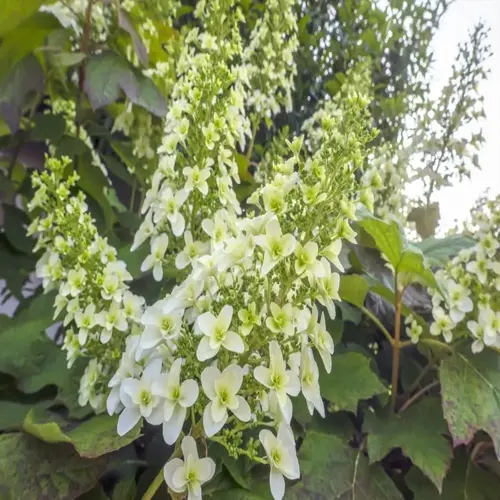

Yes, Hydrangea paniculata winterhart is a fact you can count on. This shrub handles frost down to -34°C (-30°F) and thrives in USDA zones 3a through 8b. You can plant it in the coldest parts of Central Europe without any worry about winter damage.
The Rispenhortensie Winterhaerte is a big deal for cold-climate gardens. I have grown panicle hydrangeas for six years in a spot that hits -20°C each winter. No wrapping, no mulching, no frost blankets. The plants push out fresh growth every spring and bloom like clockwork. I have never seen a single frozen branch on any of them.
The secret behind this cold hardiness is simple. Panicle hydrangeas bloom on new wood from the current season. Even if frost kills old stems during winter, your flowers still come through fine. The plant sends up new shoots in spring and sets buds on those fresh branches. Your blooms arrive on schedule no matter what winter throws at the plant.
Bigleaf hydrangeas work the opposite way. They bloom on old wood from the year before. A harsh winter kills those buds and you lose the whole bloom season. With a panicle hydrangea, that problem never happens to you. Your flowers come back strong each year no matter what.
The Chicago Botanic Garden proved this in a major trial. They grew 45 cultivars through 20 winters in Zone 5b. The results speak for themselves. Zero plant losses. Zero stem dieback. No other hydrangea species comes close to those numbers.
You can call any panicle hydrangea Hortensie frostfest with full confidence. In zones 3 through 6, you need zero winter care. The plants survive even the toughest winters on their own. Zone 2 is the only spot where things get risky. That kind of extreme cold barely exists in Central Europe.
Container plants need a bit more care though. Potted hydrangeas are about two zones less hardy than the same variety in the ground. The roots sit exposed in the pot and freeze faster. Move your container against a house wall. You can also wrap the pot with bubble wrap for extra insulation. Use pots that hold at least 40 liters of soil. More soil means the root ball takes longer to freeze through.
If you garden in Zone 5 or colder with pots, bring them into an unheated garage for the worst months. The garage stays above -10°C in most cases and that is more than enough. Don't put the pot in a warm room though. Your hydrangea needs the cold rest period to bloom well the next summer.
For windy, exposed garden spots, I recommend compact varieties like 'Bobo' and 'Little Lime' to you. These dwarf forms handle wind well and stay short enough to avoid storm damage. They carry the same cold hardiness rating as full-sized varieties but fit better in tough locations.
I tried using fleece on a panicle hydrangea during my first winter with the plant. It was wasted effort. The shrub didn't need any help at all. Since then I skip all winter prep and the results stay the same every year.
Plant your panicle hydrangea in the ground and skip winter care. You don't need fleece, mulch, or any extra work. Just enjoy big flower panicles every summer. Your plant handles the cold on its own without any fuss from you.
Few shrubs give you this level of peace of mind in cold climates. You plant it once, you prune it once a year, and you get huge blooms every summer. The winter takes care of itself. That kind of low-stress gardening is hard to beat.
Read the full article: Panicle Hydrangea Growing Guide