
Introduction
Soil Organic Matter: The Essential Guide starts with a fact that changed how I think about the dirt under my boots. The ground beneath your feet stores four times more carbon than all living plants on Earth combined. That dark, crumbly material in healthy soil does far more work than most farmers and gardeners realize. I learned this the hard way after years of ignoring what lay beneath my crops.
Research from Yale found that 61% of corn and 64% of wheat grows in ground that falls below the ideal levels. Most cropland runs on empty for this critical resource. I added synthetic fertilizers to my plots for years before I saw what I was missing underground. The numbers shocked me when I first ran soil tests on my own fields.
Here is what typical soil health guides skip over. Each 1% of organic material in your fields holds roughly $500 worth of nutrients per acre. That includes nitrogen, phosphorus, sulfur, and potassium your plants need to thrive. Think of building up your soil carbon like opening a savings account. It pays interest in higher crop yields and better water storage.
This guide covers the organic matter benefits that make the biggest difference for you. You will learn what works, what fails, and how long real changes take to show up. I share both research findings and lessons from my own trial and error over the years.
8 Key Benefits of Soil Organic Matter
The NRCS reports that organic matter holds 10 to 1,000 times more water and nutrients than the same amount of soil minerals alone. I tested this when I split my field in half and built up one side over three years. The difference in drought stress was clear to me from 50 feet away.
These eight benefits show why boosting your organic levels pays off. Water retention goes up and erosion control gets stronger. Better nutrient cycling and higher microbial activity mean real money saved on your land.
Water Retention and Drought Resistance
- Storage Capacity: Soil organic matter absorbs up to 90% of its weight in water, boosting moisture available to plant roots during dry periods between rainfall events.
- Extended Intervals: Increasing organic matter from 3% to 4% in silt loam soils provides about 3 extra days before irrigation becomes needed, according to University of Minnesota research.
- Drought Buffering: NRCS research confirms organic matter holds 10 to 1,000 times more water than equal amounts of soil minerals, creating essential reserves during water stress.
Nutrient Supply and Cycling
- Nitrogen Release: Each 1% of soil organic matter in the top 6 inches releases 10 to 20 pounds of nitrogen each year through microbial action.
- Stored Value: University of Minnesota research values 1% organic matter at about $500 per acre when counting nitrogen, phosphorus, sulfur, and potassium content.
- Reduced Inputs: The Yale study found that 7% of global nitrogen fertilizer use on maize could be cut while keeping yields if soil organic matter improved.
Improved Soil Structure
- Aggregate Formation: Organic matter binds soil particles into stable aggregates, creating pore spaces for water to soak in and roots to push through compacted layers.
- Tilth Enhancement: Well structured soil with good organic matter needs less tillage force and resists compaction from equipment traffic better than worn out soils.
- Root Development: Stable soil aggregates create channels for roots to explore more soil volume, reaching extra water and nutrients than roots stuck in compacted ground.
Erosion Prevention
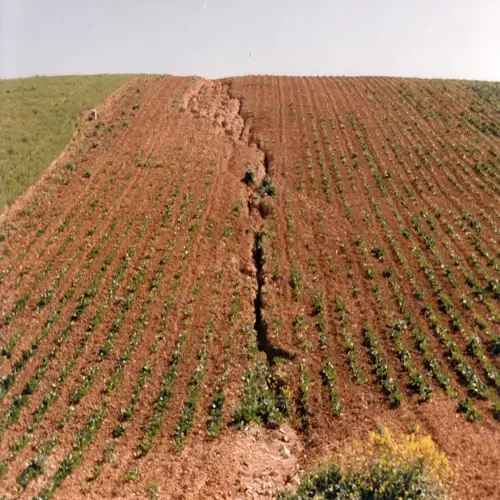
- Measurable Protection: Increasing soil organic matter from 1% to 3% cuts erosion by 20% to 33% through better aggregate stability and surface cover.
- Wind Resistance: Minnesota research recorded wind erosion losses of 18,200 pounds per acre that removed 55 pounds of total nitrogen, showing the cost of poor management.
- Surface Protection: Organic residues on the soil surface block raindrop impact and wind, stopping soil particles from breaking loose before erosion starts.
Enhanced Microbial Activity
- Population Growth: University of Minnesota research found manured soils contain 40% more fungi and 43% more bacteria than fields without manure, proving organic matter drives biological variety.
- Biomass Increase: Fields getting regular organic matter show 45% higher microbial biomass compared to those using only synthetic fertility programs.
- Nutrient Processing: Varied microbial communities break down organic matter into forms plants can use while blocking soil pathogens through competition.
Cation Exchange Capacity
- Nutrient Holding: Humus provides cation exchange capacity of 100 to 300 meq per 100 grams, far above clay minerals at 10 to 150 meq per 100 grams.
- Reduced Leaching: High cation exchange capacity stops nutrient leaching by holding potassium, calcium, and magnesium on exchange sites until plants take them up.
- pH Buffering: Organic matter moderates soil pH changes by providing exchange sites that resist rapid acidification from fertilizer or natural weathering.
Increased Crop Yields
- Documented Gains: A Michigan study showed about 12% yield increase for each 1% rise in soil organic matter content across multiple crop years.
- Dramatic Response: Maryland corn experiments showed yields jumping 80 bushels per acre when organic matter rose from 0.8% to 2%, more than doubling output.
- Optimal Threshold: The Yale study found yield gains level off near 2% soil organic carbon, suggesting this level works as a useful target for most cropland.
Carbon Sequestration Value
- Global Storage: Soils hold 1,700 gigatons of carbon worldwide compared to 885 gigatons in the atmosphere and 450 gigatons in plants, making soil the largest land based carbon sink.
- Sequestration Potential: MIT Climate Portal reports farm soils could store over 1 billion extra tons of carbon each year through better management.
- Climate Connection: Each percentage point of organic matter in seven inches of soil locks up carbon equal to the entire atmospheric column above that same field area.
These eight factors work together to create a soil system that powers itself. When I tested my soil after building up organics, my fertilizer costs dropped once levels passed 3%. Your tractor will burn less fuel too when your soil structure gets better.
The Three Pools of SOM Explained
Most guides split organic matter into just two groups: active and stable. That simple view misses the real story of how your soil carbon pools work over time. I learned this the hard way when my quick fixes kept fading within a single growing season.
Think of the three pools like bank accounts. Your active organic matter works like a checking account with fast access but limited funds. The slow pool acts like a savings account. Your stable organic matter or humus is the retirement fund that takes decades to build.
University data shows the active pool makes up only 10% to 20% of your total. Stable humus holds 60% to 90% of the carbon in your soil. Fresh plant bits and particulate organic matter break down fast through decomposition. True humus lasts for centuries before it breaks down.
Once I grasped the three pools, my soil building plan changed. You can dump compost for quick active pool gains. But your long term success depends on feeding all three levels at once.
Building Soil Organic Matter
Every field choice you make either adds to or subtracts from your soil carbon bank. Most farms run a deficit without knowing it. Moldboard plowing burns through 3,800 pounds of carbon per acre in just 19 days after tillage. No-till systems lose only 767 pounds in that same window.
Building organic matter takes time no matter what method you use. Expect 3 to 5 years to see changes in low organic matter soils below 2%. Soils already at 4% to 7% need 7 to 10 years or more for gains to show up on tests. I started my own project expecting fast results and had to adjust my thinking after year two showed no change.
Cover Cropping
- Continuous Inputs: Cover crops provide living roots and above ground growth all year, adding carbon during periods when cash crops would leave soil bare.
- Root Contributions: Living roots release food for soil microbes and build the active pool, with some species adding 1,000 to 3,000 pounds of organic matter per acre each year.
- Mix Benefits: Multi species cover crop mixes provide varied carbon types with different breakdown rates, feeding both fast cycling pools and building longer lasting stable pools.
Reduced or No Tillage
- Carbon Preservation: University of Minnesota research found moldboard plowing loses 3,800 pounds of carbon per acre versus only 767 pounds with no-till in the 19 days after tillage.
- Aggregate Protection: Cutting back on tillage saves the soil clumps that shield organic matter from rapid microbial breakdown inside stable pockets.
- Long Term Gains: Michigan State research showed no-till raised topsoil carbon by about 40% over time compared to fields that got worked each year.
Compost and Manure Applications
- Sustained Additions: Yearly dairy compost at 2 tons per acre raised soil organic matter by 50% over a decade according to Michigan State research.
- Microbial Boost: Fields getting regular manure show 45% higher microbial mass, 40% more fungi, and 43% more bacteria than fields without added organics.
- Quality Matters: Well aged compost provides stable carbon that resists fast breakdown while raw manure feeds mainly the quick cycling active pool.
Varied Crop Rotation
- Root Variety: Different crops put down varied root types and release different compounds, building organic matter through the whole soil profile.
- Perennial Inclusion: Michigan State data shows alfalfa boosted soil carbon by 60% compared to corn, soybean, and wheat rotation thanks to deep perennial roots.
- Residue Variety: Rotating crops gives you residues with different carbon to nitrogen ratios and breakdown rates, keeping organic inputs steady across seasons.
Smart Residue Management
- Surface Protection: Leaving crop residue on fields guards soil from erosion while providing steady carbon inputs as material breaks down into organic fractions.
- Harvest Considerations: University of Minnesota calculates that pulling residue for biofuel or livestock feed needs careful math to avoid draining your organic matter bank.
- Decomposition Rates: High carbon residue like corn stalks breaks down slow and feeds the stable pool. Low carbon materials cycle fast through the active pool.
I now run cover crops on every acre and cut my tillage passes in half. Smart crop rotation and good residue management made the biggest difference for me. My soil tests started climbing after year three when I stacked these practices for compound gains.
Measuring and Testing SOM Levels
Soil testing tells you where you stand and whether your practices work. Think of it like a yearly health checkup that tracks your soil analysis results over time. I test my fields every fall and compare the organic matter percentage to past years. This simple habit caught problems I never would have spotted otherwise.
Most labs report either soil organic carbon or total organic matter. Multiply your soil organic carbon by 1.72 to get your organic matter number. Carbon makes up about 58% of organic matter. This simple math helps you compare numbers from different labs.
Normal ranges vary a lot by region and soil type. Typical farm soils run between 1% and 6% organic matter. Upper Midwest prairie soils hold 4% to 7% thanks to deep grass roots that grew for thousands of years. Desert soils may drop below 0.5% while wetlands can reach 10% or higher when monitoring soil health across land types.
I send samples to the same lab each year so my numbers stay consistent. Your first test sets the baseline. Tests in years two and three show if your practices deposit or withdraw from your soil bank.
Carbon Sequestration and Climate Impact
Your soil works like a giant carbon sponge. It pulls carbon storage down from the air and locks it below ground. MIT reports that soils hold 1,700 gigatons of carbon worldwide. That beats the atmosphere at 885 gigatons and all plants at 450 gigatons. Every acre you manage affects this global balance.
Farming has released about 110 billion metric tons of soil carbon over the past 12,000 years. That equals 80 years of US emissions according to MIT data. The good news is that regenerative agriculture can put much of that carbon back where it came from.
Farm soils could store over 1 billion extra tons of carbon each year through better practices. SARE says that 64 million acres in the Southeast using conservation could pull 47 million tons of carbon dioxide from the sky. This carbon sequestration makes soil one of our best tools for fighting climate change.
A workshop on regenerative agriculture changed how I think about my dirt. Building organic matter now means more than yields for me. Every ton of soil carbon I store cuts greenhouse gas in the air above my land. The climate gains stack on top of my crop gains.
Warmer temps speed up the breakdown of organic matter in soil. This releases more carbon and creates a harmful cycle. Your choices can break this cycle or feed it. Farmers who build soil carbon today will have stronger fields when bad weather hits.
5 Common Myths
More organic matter is always better, so adding unlimited amounts of compost and manure will continuously improve soil quality without any drawbacks.
Excess organic matter can tie up nitrogen, deplete soil oxygen, and create imbalances; most agricultural soils perform optimally between 3 and 6 percent organic matter content.
Dark soil color reliably indicates high organic matter content, meaning you can judge soil quality simply by looking at its appearance.
Soil color depends on multiple factors including mineral content and moisture levels; accurate organic matter assessment requires laboratory testing, not visual inspection alone.
Adding sand to clay soil improves drainage and structure the same way organic matter does, providing an effective alternative approach.
Sand additions often create concrete-like conditions in clay soils; organic matter uniquely improves both clay and sandy soils through aggregation and water-holding capacity.
Synthetic fertilizers destroy soil organic matter, so using chemical inputs automatically degrades soil health over time without exception.
Fertilizers do not directly destroy organic matter; however, relying solely on synthetics without residue return can reduce organic inputs that would otherwise build soil carbon.
You can quickly build organic matter in one growing season by adding large amounts of compost and mulch to depleted soils.
Building stable organic matter takes 3 to 10 years depending on starting levels; quick additions decompose rapidly and must be sustained for long-term soil improvement.
Conclusion
Soil organic matter acts as your underground savings account. Each 1% stores $500 worth of nutrients per acre and holds 10 to 1,000 times more water than bare minerals. Those numbers add up fast when you commit to building organic matter across your fields.
Most farms sit below the 2% soil organic carbon level that research shows works best for crops. The Yale study made this clear. Your fields probably have room to grow. I know mine did when I started testing and tracking my numbers five years ago.
This kind of change takes time. Expect 3 to 10 years of steady work before major shifts show up in your soil health reports. The wait pays off in higher yields, lower input costs, and fields that handle drought and flood better than before.
Building organic matter creates a legacy that lasts beyond your time on the land. Sustainable agriculture means handing off better soil to whoever farms after you. My goal is to leave my ground in better shape than I found it while still making a profit today.
External Sources
Frequently Asked Questions
What actually constitutes soil organic matter?
Soil organic matter includes all living and dead plant, animal, and microbial material in soil, from fresh residues to stable humus.
Why is organic matter crucial for healthy soils?
Organic matter improves water retention, nutrient availability, soil structure, microbial activity, and erosion resistance.
How does decomposition timing vary for different materials?
Decomposition varies based on C:N ratio: green materials break down in weeks, woody materials take months to years.
Can coffee grounds effectively improve soil quality?
Coffee grounds add nitrogen and improve soil structure when composted, but fresh grounds can temporarily acidify soil.
What defines truly organic soil?
Organic soils contain more than 30 percent organic matter, typically found in wetlands, peatlands, and bogs.
Which management practices boost organic matter most effectively?
Cover cropping, reduced tillage, compost application, crop rotation, and leaving residues boost organic matter most effectively.
Does organic certification guarantee optimal soil health?
Organic certification restricts synthetic inputs but does not guarantee high organic matter levels or optimal soil biology.
What are common misconceptions about humus?
Many confuse humus with compost; true humus is highly stable material that takes centuries to form and resists decomposition.
How does organic matter combat climate change?
Soil stores more carbon than plants and atmosphere combined; increasing organic matter sequesters atmospheric carbon dioxide.
Can soils become overloaded with organic matter?
Most agricultural soils cannot be overloaded, but excess fresh material can cause nitrogen tie-up and oxygen depletion.