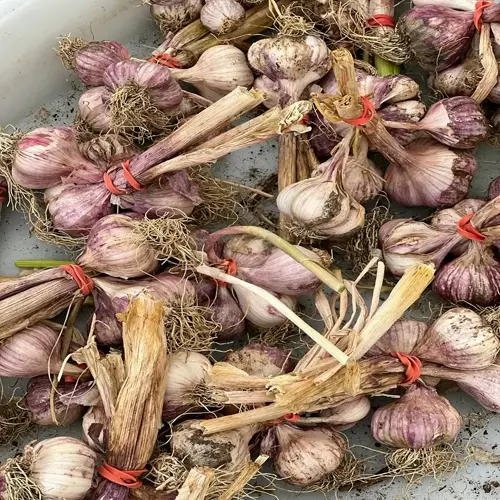

Your onion curing time will fall between two and four weeks under normal conditions. The exact length of onion curing time depends on the weather, your curing setup, and how wet the bulbs were when they came out of the ground. Plan for at least two weeks minimum and check your onions often to know when they're done and ready for long term storage.
I've tested many batches and seen huge swings in how long to cure onions based on the summer weather each year. One dry August, my bulbs finished curing in just under two weeks with their papery skins ready for storage. The next year brought humid weather and those same varieties needed four full weeks before the necks dried down enough. You have to watch your onions rather than just count days.
The curing process does important work inside each bulb over those weeks of drying time. Moisture moves out from the outer layers and the neck toward the outside air. This leaves behind dry, papery skin that protects the bulb during storage. The neck shrinks and tightens as it dries out. This seal keeps air and bacteria from reaching the juicy inner layers where they would cause rot and spoilage.
Nebraska Extension shares helpful tips for this process. They say to cure onions at 75-90°F (24-32°C) in a spot with good air flow for two to four weeks. Airflow matters as much as heat for drying onions for storage. Still air traps moisture around the bulbs and slows down the whole drying process quite a bit.
In my experience, your curing setup can speed things up or slow them down quite a bit. I cure my onions on wire racks in my garden shed with the windows open for cross breeze. The mesh lets air reach every side of each bulb. Onions spread on solid surfaces take longer because moisture gets trapped underneath where they sit on the wood or concrete.
Check your bulbs every few days as the curing duration stretches into the second week of the process. Roll each onion gently in your hands and feel the outer skin. It should rustle like paper and feel loose around the bulb. Squeeze the neck gently near the top. A fully cured onion has a thin, dry neck that gives no moisture when pressed.
The tops tell you a lot about where your onions stand in the curing process. Green tops mean more waiting ahead. Dry, brown tops that break away easily when you bend them signal that curing is nearly complete. You can also try trimming the tops with scissors. Clean cuts through dry tissue are good. If the scissors crush or leave wet marks, give those bulbs more time.
When I first started growing onions, I rushed the curing process and paid for it with lost bulbs. Cool nights slow down the drying process even when daytime temps run warm. I now move my curing onions to a covered porch in September when night temps start dropping below 60°F (15°C). The roof keeps off any dew that would undo the drying work from the day before.
Don't rush the process to get your onions into storage faster. Bulbs that go into storage with damp necks will rot within weeks and ruin your whole harvest effort. The extra patience during curing pays off with months of storage life later on. A well-cured onion can last six months or longer in good storage conditions. Compare that to just weeks for a poorly cured one and you'll see why the wait is well worth it every single time.
Read the full article: 7 Essential Signs for When to Harvest Onions